
Why the best leadership decisions are often the ones that refuse a false choice
32% of employees are engaged at work. If you lead people, that number is not an abstract workforce problem; it is a signal that many decisions made in your organization are landing as pressure, not clarity (Gallup, 2025).
You know the scene. In a quarterly review, a regional services director is told to raise output, protect margins, and keep the team motivated after a difficult restructure. Push harder, and people disengage. Slow down to coach, and the numbers slip this month. The tension is not theoretical. It is the job.
That is why weak engagement matters so much here. Gallup also found that only 31% strongly agree that someone at work encourages their development (Gallup, 2025). When leaders treat decisions as a choice between performance or growth, they usually damage both: short-term execution gets brittle, and long-term capability never compounds. This article is about how to make better decisions when the real problem is not complexity alone, but the habit of forcing a false choice.
The real leadership problem is simultaneous demand
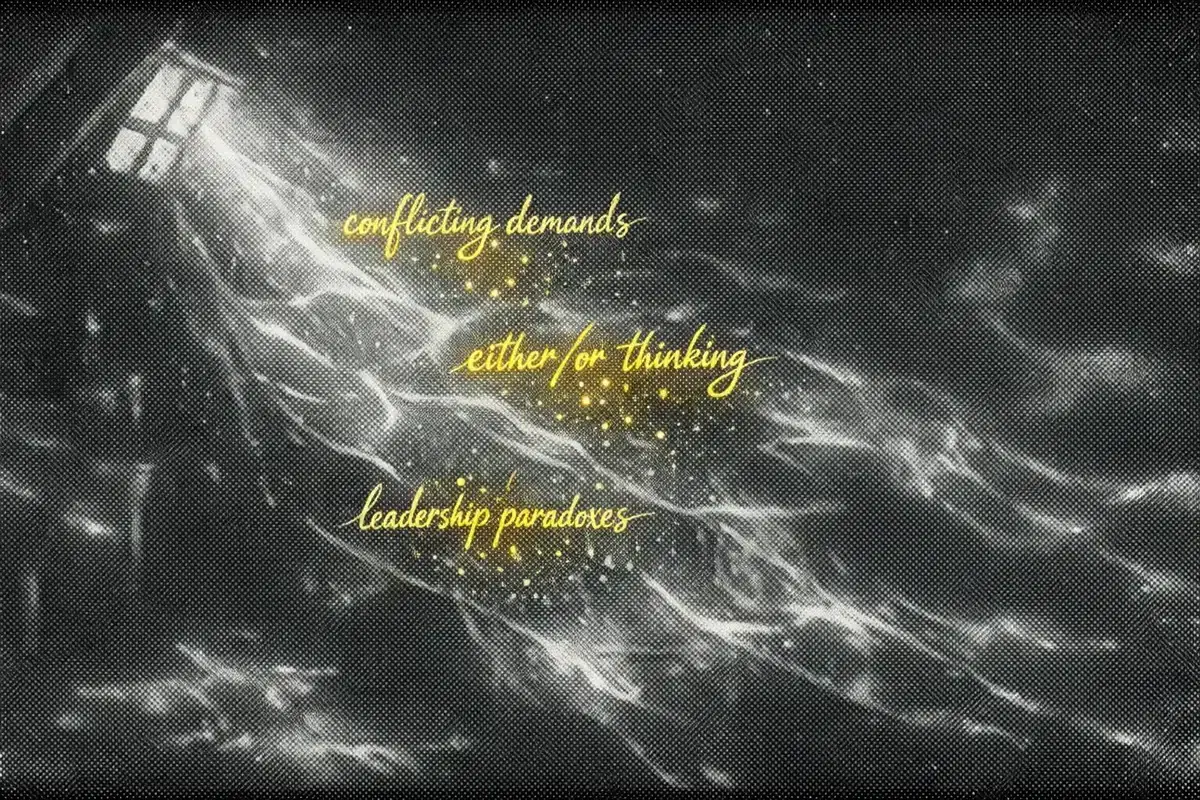
Most leadership failures do not begin with obviously bad choices. They begin when a leader assumes one valid demand must cancel another. Move fast or reflect carefully. Tighten control or give autonomy. Deliver results or invest in development.
In practice, leaders are asked to do these things at the same time. That is what makes leadership paradox so persistent. It shows up in budget cycles, client escalations, hiring freezes, product launches, and team redesigns. Not at the edge. At the center.
This is also where both/and thinking stops sounding philosophical and starts becoming operational. The question is no longer, “Which side is right?” It is, “What decision lets me honor both realities without pretending the tension has disappeared?”
Where AI coaching helps — and where it does not
AI coaching matters because it can surface patterns fast. It can reflect back the tradeoffs in your language, expose where you are overcorrecting, and help you see the tension before it hardens into a habit. Used well, it shortens the distance between reaction and reflection.
But it cannot do the hardest part for you. It cannot replace judgment. It cannot decide how much control is enough in a fragile team, or when protecting this quarter will quietly weaken next year. That work still belongs to the leader.
So the promise of this article is practical: to move from abstract paradox language to usable decisions you can make under pressure. Because once you see that many leadership dilemmas are not tradeoffs but competing truths, a sharper question appears: when two priorities are both legitimate, how do you know whether to balance them, sequence them, or hold the tension longer?
What is a leadership paradox, and why is it not the same as a tradeoff?
Paradox management matters here because most leaders still ask the wrong question: Which priority should win? What if the real mistake is assuming one side must lose at all? That assumption feels practical in the moment, especially under pressure. It is often what creates the mess.
A leadership paradox is not simple indecision. It is a persistent tension between two demands that are both legitimate and keep returning. Think of a mid-market healthcare VP in a budget cycle: standardize care protocols to reduce variation, while giving clinicians enough discretion to respond to patient complexity. Pick one side cleanly, and the other problem comes back fast — either quality drifts or professional judgment gets squeezed.
Not a compromise. Not ambiguity.
This is where leaders blur categories and make weaker calls.
A tradeoff usually means you give up some of one thing to gain more of another. A compromise splits the difference. Ambiguity means the right answer is unclear because the facts are incomplete. A paradox is different: the facts may be clear, the priorities may both be valid, and the tension does not disappear after one decision. The task is not to solve it once. The task is to manage it repeatedly and intelligently over time.
The Center for Creative Leadership makes this distinction directly: leaders who handle paradox well do not treat competing demands as a one-time choice but as interdependent forces that must be worked together for better performance (Center for Creative Leadership, n.d.). INSEAD Knowledge makes a similar point from another angle: paradoxes are not anomalies at the edge of leadership; they are built into modern organizational life (INSEAD Knowledge, n.d.).
Why integral wisdom changes the picture
Integral wisdom helps because it asks a more precise question: At what level are these opposites both true? Individual, team, function, enterprise — each level can make a different demand look rational.
That is why a leadership paradox often feels contradictory only when viewed from one slice of the system. At the team level, autonomy may improve responsiveness. At the enterprise level, consistency may protect quality and trust. Both are true. The leader’s job is to see the whole pattern without flattening it into a slogan.
This is also why “balance” is sometimes too weak a word. Some tensions need sequencing. Others need clear guardrails. Some need to stay unresolved for a while because premature clarity creates hidden costs.
And that raises the harder issue. If both demands are real, when do leaders push for this quarter’s result — and when does that choice quietly mortgage the future?
Why do short-term results and long-term vision keep colliding in real leadership work?
88% of organizations now use AI in at least one business function. That sounds like maturity. It is not. Only about one-third have begun scaling AI across the enterprise in a coordinated way (McKinsey, 2025).
That gap explains a lot about modern leadership. Most organizations believe they are building for the future because they have tools in play, pilots running, and dashboards improving. The evidence shows something harder: adoption is easy to count, but capability is much harder to build. Leaders get rewarded for what moved this quarter, then judged later for whether the organization actually learned, adapted, and became stronger.
The collision is built into the role
A regional manufacturing VP sees it during annual planning. Operations wants faster throughput in the next 90 days. HR is warning that critical technical roles are getting harder to fill. Finance wants tighter cost control. No one in that room is wrong. But the incentives are uneven: this quarter’s output is visible now; next year’s capability gap becomes obvious only after the damage is already expensive.
39% of workers’ core skills are expected to change by 2030 (World Economic Forum, 2025)
That number matters because long-term vision is not just about market position or product roadmap. It is also about whether your people, systems, and managers are becoming fit for the next cycle of work. When leaders defer capability building, they are not postponing a nice-to-have. They are increasing the cost of future execution.
Why leaders collapse into the nearest pressure
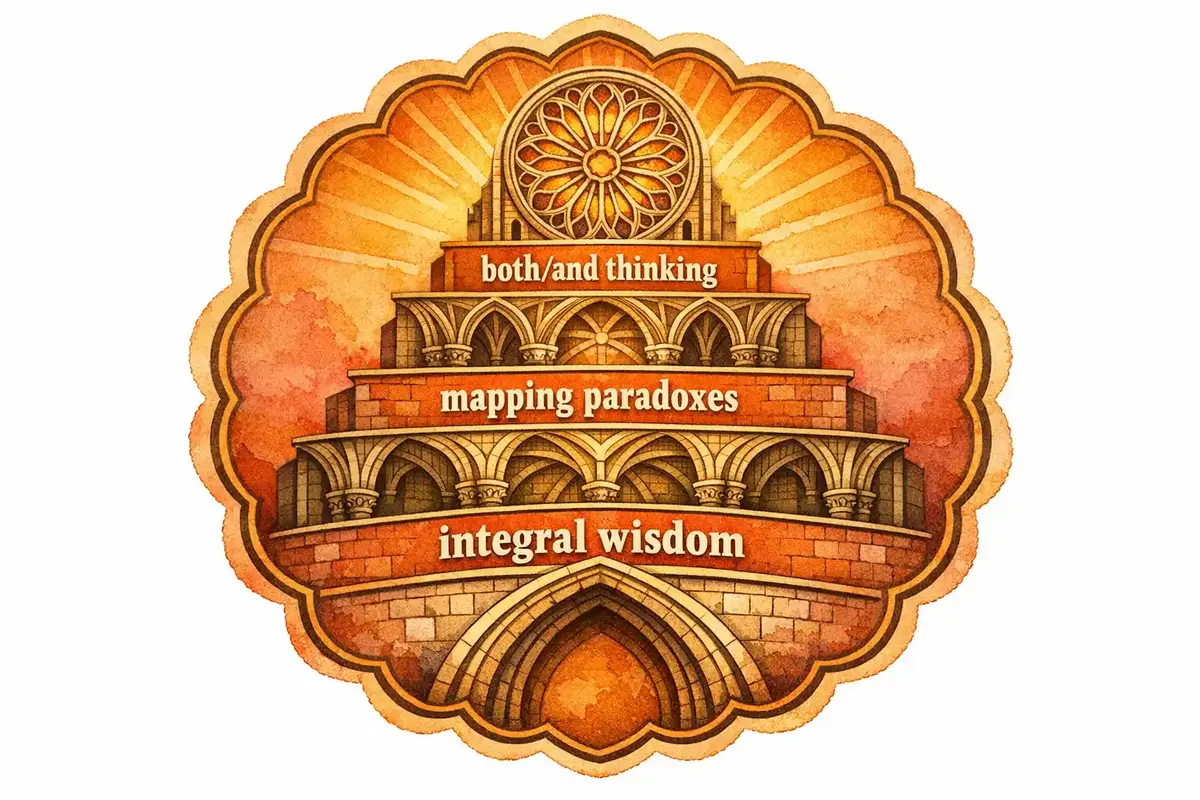
Urgency is concrete. Strategy is often abstract until a leader makes it operational.
This is where AI coaching becomes useful in a very practical way. Not because it replaces judgment, but because it helps a leader test scenarios before pressure narrows the field. If we freeze hiring now, what work gets delayed six months from now? If we push managers only on utilization, what happens to coaching quality, internal mobility, or readiness for a broader rollout? Good coaching keeps both clocks visible.
McKinsey’s numbers make the point indirectly. If AI is present in most organizations but scaled in only a minority, then many leaders are still operating in a fragmented middle ground — local wins, uneven habits, weak integration (McKinsey, 2025). The problem is not lack of activity. It is short-term activity without enough long-term design.
The practical move is simple, but not easy: define what must be delivered now, then name what cannot be sacrificed while delivering it. Skills. trust. managerial attention. process discipline. Those are not side issues. They are the assets that make future speed possible.
And that is where the tension sharpens. When individual workloads, ambitions, and limits enter the picture, whose needs bend first — the person’s, or the team’s?
How does integral wisdom change the coaching conversation from either/or to both/and?
47% of organizations plan to use AI for real-time feedback and coaching. If that coaching reduces leadership to faster answers, the cost is predictable: trust thins out, good people leave, and decisions that looked efficient start creating expensive rework (Harvard Business, 2025).
That is the real test. If nearly half of organizations want AI for coaching, what must be true for that coaching to deepen judgment instead of flattening it?
The lens gets wider before the advice gets sharper
Integral wisdom changes the conversation by refusing to treat one visible problem as the whole problem. A leader says, “My team is resisting change.” Standard coaching might stay at the level of behavior: communicate more clearly, set firmer expectations, track follow-through. Sometimes that helps. Often it misses the structure underneath.
An integral lens asks four questions at once: what is happening in the individual, in the team, in the wider system, and in the leader’s values? Resistance may be skill anxiety in one manager, role confusion across the team, conflicting incentives from senior leadership, and an unspoken value conflict about speed versus quality. Same meeting. Different map.
That shift matters because coaching stops chasing a single fix. It starts mapping the full field of tension.
From problem-solving to context-mapping
Picture a mid-market retail COO in a post-restructure quarter. Store managers are asking for more autonomy. Finance wants tighter controls after margin pressure. Employee sentiment is slipping, and two strong district leaders have already resigned. If the coaching question is “Should I centralize or delegate?” the leader is already trapped.
A better coaching conversation sounds different: where does standardization protect the business, where does local discretion improve performance, and what signals are people reading from your choices? That is both/and work. Not compromise — design.
Research points in this direction. 55% of organizations prioritize generative AI and machine learning in leadership development, which tells you the appetite for scale is real (Harvard Business, 2025). But scale without a richer frame just produces more frequent feedback, not better leadership.
This is where integral wisdom becomes practical. It gives coaching a structure for seeing more than one truth at the same time.
What AI can do — and what it cannot
AI is useful here because it can spot patterns a tired leader may miss. It can show recurring language, surface overused responses, and prompt reflection across multiple levels of context. In that sense, it is a strong reflective partner.
It is not the moral center of the conversation. It cannot fully read fear in a high performer, judge when fairness matters more than speed, or repair a strained relationship after a hard call. Human discernment still carries the ethical and relational weight.
And once a leader can see the whole field more clearly, a harder tension appears: when the person in front of you needs one thing, and the team needs another, which claim gives way first?
What happens when individual needs and team goals pull in opposite directions?
Workers who feel most aligned with leadership goals are 78% more motivated than those who feel the least aligned. For a leader, that means the tension between supporting one person and protecting the team is not just emotional; it directly affects energy, effort, and follow-through (PwC, 2025).
A director in a mid-market technology company knows this moment well. A strong engineer wants more flexibility and less process, but the rest of the team is already missing handoffs because coordination has slipped.
The mistake is treating fairness and performance as separate conversations
This is one of the most common leadership paradoxes in practice: you want to back a capable person’s growth, ambition, or working style without weakening the shared standards everyone else depends on. If you over-index on the individual, the team reads inconsistency. If you over-index on the team, your best people can feel managed down rather than developed.
The real issue is usually not generosity versus discipline. It is whether the leader can make the logic visible. People accept difficult decisions more readily when they can see how autonomy connects to contribution, and how support connects to accountability.
Alignment with leadership goals is strongly linked to motivation — workers who feel most aligned are 78% more motivated (PwC, 2025)
That finding matters because many leaders try to solve this tension with personalized accommodation alone. Motivation does not come only from being understood. It also comes from knowing what the team is trying to do, what standards hold, and why one person’s exception will not quietly become everyone else’s burden.

Where AI coaching helps without taking over
This is where AI coaching earns its place. Not by writing a script, but by helping a leader prepare for a conversation that has to be both clear and humane. It can help test language, anticipate likely reactions, and show whether your message is drifting toward apology on one side or blunt enforcement on the other.
That matters more now because AI use is already normal at work. 54% of workers across industries have used AI in the last 12 months, and 14% use GenAI daily (PwC, 2025). In other words, using AI to sharpen leadership development practice is no longer unusual; the real differentiator is how you use it.
Used well, AI helps a leader say: here is the flexibility I can support, here is the coordination the team still needs, and here is how we will review whether this is working. That is not compromise. It is disciplined empathy.
And once you see that, the next question gets sharper: where should a leader begin without turning paradox management into another heavy framework — simple habit, or formal method?
Where should leaders start if they want to practice paradox management without overcomplicating it?
The “Both/And Lens” matters here because most leaders make paradoxes harder than they are. What if the problem is not that you need a more sophisticated model, but that you keep naming only one side of the tension? And what if that habit — more than complexity itself — is what keeps producing reactive decisions?
Start there.
Name the tension before you manage it
In practice, the simplest repeatable move is to state the two valid demands plainly, without trying to collapse one into the other. A regional healthcare VP in a budget cycle might need to protect staffing discipline and preserve care quality. If she names only cost, quality gets framed as resistance. If she names only care, financial limits disappear from the conversation until they return as a crisis.
That is why the first useful question is not “Which side wins?” It is: what does each side protect, what does each side risk, and what would be lost if I ignored it? The Center for Creative Leadership argues that leaders perform better when they treat competing demands as interdependent rather than mutually exclusive (Center for Creative Leadership). INSEAD makes the same point more bluntly: paradox is not a rare leadership event; it is part of the terrain (INSEAD Knowledge).
This is the core of practical paradox management. Not a template. A discipline of seeing both claims clearly before pressure narrows your field of view.
Use AI to widen judgment, not replace it
AI coaching is useful when it helps you test scenarios, surface patterns, and hear your own reasoning more clearly. It can show that you always tighten control after a client escalation, or that your language about “high standards” often masks avoidance of a harder people conversation.
That kind of reflection matters because leadership consistency is still fragile in many workplaces. Gallup found that employee engagement remains weak, which is often a sign that leaders are sending mixed signals about priorities and development (Gallup, 2025).
Better paradox practice does not mean equal weight in every moment. It means fewer unexamined swings between extremes.
The final call, though, cannot be outsourced. Values, timing, trust, and local context still decide what good judgment looks like.
And that is the real standard: not perfect balance, but steadier leadership under pressure. Because once you stop rushing to resolve every tension, a harder question appears — how long can a strong leader hold that tension before action starts to look like hesitation?
Why the strongest leaders learn to hold tension instead of rushing to resolve it
88% of organizations now use AI in at least one business function. If leaders respond by forcing faster, cleaner answers to every messy people problem, the bill shows up in missed judgment, eroded trust, and good talent walking out the door (McKinsey, 2025).
That is the contrast worth sitting with. AI is becoming ordinary at work, while leadership is not becoming simpler.
The real advantage is not speed alone
A regional services CEO in a client escalation knows this moment. Revenue is at risk this quarter, the team is tired, and a top manager is pushing for tighter control over every decision. The instinct to resolve the tension fast is understandable: standardize everything, centralize calls, move on. But that kind of clarity often creates a second problem — people stop thinking, local judgment weakens, and the same issues return in a different form.
Paradoxical leadership is not a niche skill for unusually complex roles. It is now part of ordinary management because the environment itself keeps producing competing truths.
39% of workers’ core skills are expected to change by 2030 (World Economic Forum, 2025)
That number matters because leaders are not just managing performance anymore. They are managing adaptation while still delivering results. In that kind of setting, the strongest move is often not immediate resolution. It is staying with the tension long enough to see what each side is protecting.
What AI coaching is actually for
This is where AI leadership coaching earns its place. Not as a machine for certainty, but as a way to help leaders notice patterns, test assumptions, and hear where their own reasoning has become too narrow.
Used well, AI coaching helps you see more clearly, reflect more honestly, and decide more wisely. Integral wisdom is what keeps that process grounded. It preserves context, values, and human judgment when the pressure is to simplify everything into a binary choice.
That is the closing discipline: do not ask how to eliminate paradox. Ask whether you are becoming more capable inside it. When the next tension lands on your desk, will you rush to closure — or hold it long enough to lead well?
Key Takeaways
- Leadership paradoxes are persistent tensions between two legitimate demands, not simple tradeoffs or ambiguity.
- AI coaching can surface patterns and widen reflection, but it cannot replace judgment, values, or human discernment.
- Integral wisdom helps leaders see individual, team, system, and values-level dynamics at the same time.
- Strong paradox management starts by naming both sides clearly and deciding what each side protects.
Frequently Asked Questions
What is a leadership paradox?
A leadership paradox is a persistent tension between two legitimate demands that both matter and keep returning, such as speed and reflection or control and autonomy. It is not the same as a simple tradeoff, because the goal is not to eliminate one side but to manage both intelligently over time.
How is a leadership paradox different from a tradeoff or compromise?
A tradeoff usually means giving up some of one priority to gain more of another, while a compromise splits the difference. A paradox is different because both priorities remain valid, the tension does not disappear after one decision, and leaders must keep working with it rather than solving it once.
Why do short-term results and long-term capability often conflict in leadership?
Short-term results are visible immediately, while long-term capability building is easier to postpone and harder to measure. Leaders who focus only on this quarter’s output can weaken future execution by underinvesting in skills, trust, and organizational learning.
How can AI coaching help leaders manage conflicting demands?
AI coaching can surface patterns, highlight recurring tradeoffs, and help leaders test scenarios before pressure narrows their thinking. It is useful for reflection and pattern recognition, but it cannot replace human judgment, ethical reasoning, or relationship repair.
What is the best first step in paradox management?
The best first step is to name both valid demands clearly instead of collapsing them into one side. Then identify what each side protects, what each side risks, and whether the right response is balancing, sequencing, or holding the tension longer.