
Why Weekly Feedback Changes Performance More Than Annual Reviews Ever Can
Annual reviews fail mostly on timing, not intent. You have seen the scene: a manager in a mid-market technology company sits down in December, trying to reconstruct ten months of wins, misses, tension, and growth from scattered notes and memory. The employee nods, but both know the real coaching moment passed weeks ago—during the product launch, the client escalation, the handoff that slipped.
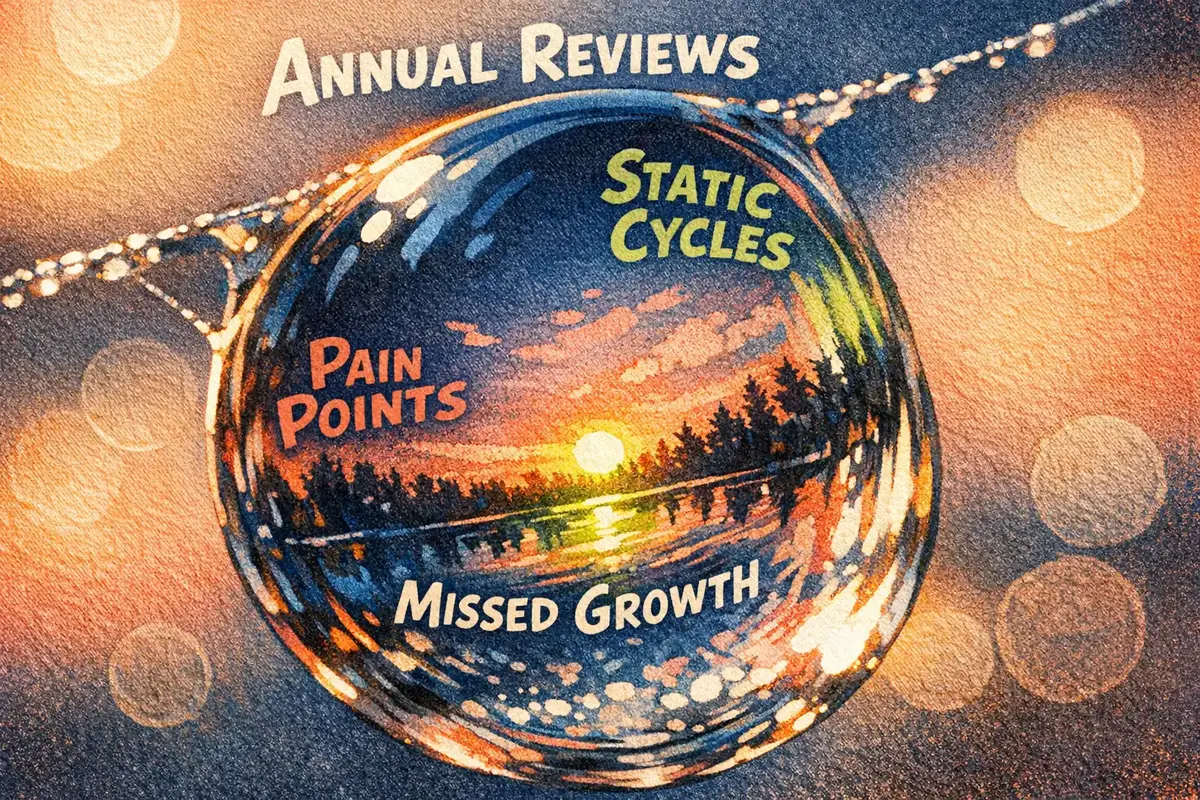
That is the core mismatch. Work now moves in weekly cycles, sometimes daily ones, while performance conversations in many organizations still run on an annual clock. Gallup found that employees who receive feedback weekly are 2.7 times more likely to be engaged at work (Gallup). In the same research, only 14% of employees strongly agree that performance reviews inspire them to improve (Gallup). One number shows what works; the other shows how little the old ritual changes behavior. This article addresses that gap: why performance improves when conversations move closer to the work itself.
The issue is not whether people need evaluation. They do. The issue is whether a once-a-year event can shape judgment, habits, and motivation while the work is still unfolding.
The performance problem is proximity
Useful feedback has a short shelf life. When it arrives close to the decision, meeting, or missed expectation, people can connect it to context. They can adjust. They can test a different approach the same week. When it arrives months later, it becomes interpretation rather than coaching.
This is why continuous feedback is not just a softer management style; it is a better operating model for modern work. A weekly rhythm creates smaller corrections, fewer surprises, and a more accurate picture of contribution over time. It also changes the emotional tone. Instead of one high-stakes judgment, performance becomes an ongoing conversation about what is working, what is stuck, and what to try next. If you need a practical grounding in that shift, this explanation of continuous feedback is a useful starting point.
Why AI coaching matters now
The obvious objection is managerial capacity. Most managers do not resist frequent coaching because they dislike development; they resist it because calendars are full, priorities move, and good coaching takes preparation.
That is where AI coaching starts to matter. Not as a replacement for managerial judgment, but as infrastructure that makes weekly conversations realistic: prompting reflection, surfacing patterns, and helping managers respond while the work is still fresh. The annual review asked leaders to remember. AI-supported coaching helps them notice.
And that raises the real decision for organizations: is performance management a documentation exercise, or a system for improving performance while there is still time to change it?
What Is Continuous Performance Management, and How Is It Different From Feedback?
Continuous performance management is the framework that matters here because it turns performance from an annual event into an operating system for how work gets guided over time. Without that distinction, organizations buy tools for “feedback,” ask managers to “coach,” and still end up with a process that is episodic, vague, and hard to trust.
That confusion is common. The terms get used as if they mean the same thing. They do not.
Three terms, three jobs
Start with the broadest layer. Continuous performance management is an ongoing approach to managing employee performance rather than a one-time review cycle (AIHR). Think of it as the system: expectations, check-in cadence, goal adjustment, documentation, development, and accountability all working together. If you want a practical view of that structure, this guide to continuous performance management is a useful reference point.
Inside that system sits continuous feedback. HiBob defines it as regular input given throughout the year rather than through a traditional review alone (HiBob). PerformYard makes the same distinction more plainly: continuous feedback is feedback delivered on a regular basis (PerformYard). That is the input layer. It tells someone what happened, what worked, what missed, or what needs to change.
Coaching is different again. Coaching takes the signal and turns it into movement. It asks: what pattern is showing up, what skill is missing, what should you try next, and how will we know it worked?
Feedback says, “Your client update was too detailed for that audience.” Coaching says, “You tend to answer with completeness when the moment calls for prioritization — let’s practice a three-point executive summary before the next steering meeting.”
Why the distinction matters in practice
Picture a director in a regional healthcare provider during a team restructure. She tells a manager every two weeks that handoffs between clinical operations and scheduling are inconsistent. That is feedback. Useful, but limited.
The system only becomes continuous performance management when those observations connect to clearer role expectations, recurring check-ins, a development goal around cross-functional coordination, and a record of whether behavior actually changes over the quarter. Coaching is the bridge in the middle. It helps the manager reflect, test a new approach, and improve in context.
This is where many implementations fail. Leaders think they have built a modern performance model because people are talking more often. In reality, they have increased conversation volume without creating a shared method.
Before AI, get the architecture right
AI can support reminders, pattern detection, and preparation. It cannot fix conceptual mess. If your organization cannot tell the difference between evaluation, feedback, and coaching, it will automate noise faster.
And once people feel managed by noise rather than helped by clarity, distrust sets in quickly. Is the problem the process — or the credibility gap underneath it?
Why Do Managers and Employees Distrust Performance Management So Much?
72% of workers do not trust their organization’s performance-management process. What should an executive conclude from that number when the process is supposed to clarify expectations, not create suspicion?
And what happens when the people running the process do not trust it, and the people experiencing it trust it even less? The easy answer is to blame employee defensiveness. The harder one is more useful: skepticism is often rational when the system is delayed, inconsistent, and hard to use.
Deloitte’s 2025 data makes the trust gap impossible to dismiss. 61% of managers say they do not trust the process either, which means disbelief is not sitting on one side of the table; it is built into the interaction itself (Deloitte, 2025). That is why annual review cycles so often feel performative. People are not just debating ratings. They are acting out a ritual that neither side fully believes will help anyone get better.
Distrust grows when judgment arrives without support
In a manufacturing enterprise during budget season, a plant VP asks frontline managers to “be more rigorous” in year-end evaluations because compensation decisions are under scrutiny. The managers comply. They gather examples late, calibrate under pressure, and deliver feedback tied to months-old incidents. Employees hear a verdict, not guidance. Managers feel exposed rather than equipped.
That pattern matters because manager effectiveness is the real bottleneck in many systems. Deloitte found that only 26% of organizations say their managers are very or extremely effective at enabling performance (Deloitte, 2025). Read that carefully. The issue is not simply whether managers care. It is whether they have the time, skill, context, and structure to turn observation into useful coaching.
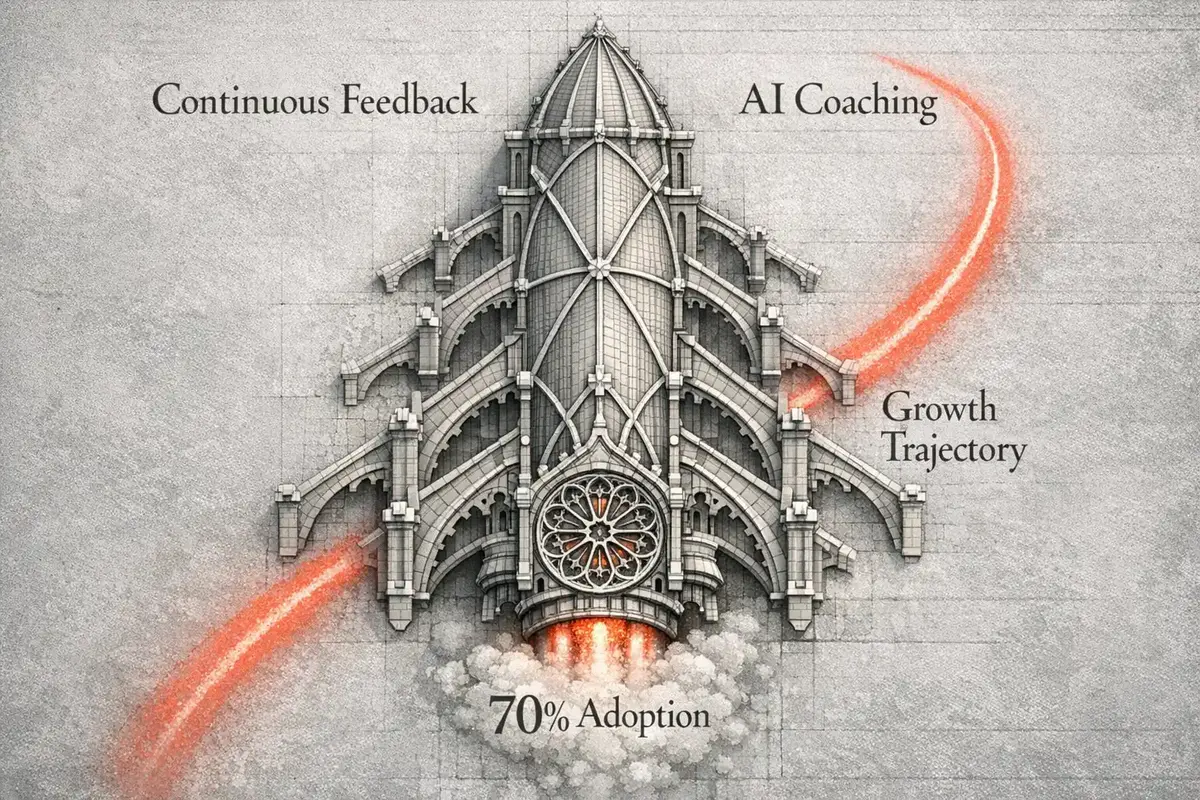
72% of workers and 61% of managers do not trust the process meant to evaluate and improve performance (Deloitte, 2025)
This is why redesign efforts fail when they focus only on forms, scales, or software. If a manager cannot explain what good looks like this month, cannot document patterns without administrative drag, and cannot hold a direct conversation without escalating anxiety, the process will be experienced as control rather than development. Better manager enablement is not a side initiative. It is the operating condition for credibility.
The real test is simple: does this help me improve?
Employees will tolerate measurement if they believe it leads to fairer decisions and better support. Managers will tolerate the burden if they believe the process helps them lead, not just document. Distrust rises when performance management answers the organization’s need for records but ignores the individual’s need for progress.
That is the hinge point. If conversations happen closer to the work, what makes them actually useful rather than merely more frequent?
What Makes Feedback Useful When It Happens Close to the Work?
The feedback loop is the right framework here because usefulness depends less on volume than on distance from the work itself. Most organizations still act as if good feedback can be stored, summarized, and delivered later; the evidence and practice show something else entirely: delay strips out the very details that make feedback teachable.
If feedback is delayed until the review cycle, what gets lost before the conversation even begins? Usually three things: memory, context, and motivation.
The three things delay destroys
Take a regional services firm. On Tuesday, a team lead watches an account manager mishandle a client escalation by answering every question in detail instead of clarifying the one decision the client actually needed. It is fixable. The manager notices it. Then says nothing because quarter-end is busy and “we’ll cover it in the review.”
By the time that conversation happens months later, the learning window has closed. The employee barely remembers the exchange. The manager remembers the frustration, not the sequence. The client context is gone. What could have been a ten-minute coaching moment becomes a vague critique about “executive presence.”
That is why close-in feedback works better. When the event is fresh, people can replay the moment accurately, test a different response quickly, and connect the advice to a live standard rather than an abstract judgment. The conversation stays behavioral. Specific. Useful.
Informal first, planned by design
This does not mean everything should be spontaneous. SHRM makes the balance clear: most feedback should be informal, impromptu, on-the-spot, and close to the actual performance, but planned feedback still matters (SHRM, 2008).
Most useful feedback happens near the performance moment — but planned conversations still have a distinct role (SHRM, 2008)
The mistake is treating these as substitutes. Informal coaching handles the immediate adjustment: what happened, what to change, what to try next. Planned feedback does a different job. It spots patterns across several moments, checks whether improvement is sticking, and links day-to-day behavior to broader expectations.
The strongest systems do both. They use quick interventions in the flow of work, then reinforce them through a light rhythm of structured check-ins. That is how organizations avoid two common failures: constant reactive commentary with no thread, or polished quarterly conversations with no immediacy. If you are serious about building a feedback culture, this balance matters more than the form itself.
Useful feedback is not just timely. It is timely and organized. The hard part is making that sustainable at scale — manager by manager, week by week. Human discipline alone, or something more reliable?
How Does AI Coaching Make Continuous Conversations Sustainable?
Manager infrastructure is the right frame here because it changes the question. What if the real barrier to continuous coaching is not manager intent, but the repeated effort of preparing for every conversation from scratch?
That is where many executives still misread AI coaching. They assume the technology matters only if it can evaluate performance better than a human can. But that is the wrong test. The practical test is simpler: can it reduce the friction that causes good coaching habits to collapse under real operating pressure?
The workflow problem hiding inside performance management
A regional retail director heading into peak season does not usually fail at coaching because she lacks judgment. She fails because each conversation requires five small acts of discipline: recall what happened, identify the pattern, choose the right question, document the discussion, and remember to follow up two weeks later. Miss one, and the whole system starts to feel improvised.
That is why continuous performance management only works when the operating burden is manageable. AIHR defines it as an ongoing approach to managing employee performance, which sounds straightforward until you ask managers to sustain that rhythm across eight or ten direct reports every week (AIHR).
AI helps by acting as a support layer around the conversation rather than a substitute for it. It can surface recent priorities before a check-in, suggest prompts based on prior notes, and preserve continuity so the next discussion starts where the last one ended. The manager still decides what matters. The system reduces the blank-page problem.
What sustainable support actually looks like
Used well, AI coaching does four jobs that managers rarely have time to do consistently on their own.
First, preparation. Before a weekly check-in, it can help a manager review commitments, recent work signals, and unresolved issues. Second, reflection. After the conversation, it can help convert a vague impression into a sharper coaching note: not “needs better communication,” but “tends to over-explain when a decision summary is needed.” Third, consistency. It keeps the cadence from depending entirely on memory and personal admin habits. Fourth, follow-through. It reminds both sides what was supposed to happen next.
This is why the best implementations should be understood as workflow design, not surveillance design. A support layer that helps leaders prepare better questions is fundamentally different from a system that simply watches employees more closely. If you want a clearer view of that distinction, this explanation of AI coaching is useful.
The value of AI is not that it replaces the manager. It makes the manager more reliably present.
That reliability matters more than novelty. Continuous conversations become sustainable when preparation time drops, continuity improves, and follow-up stops depending on heroic discipline.
But sustainability alone is not enough. If the conversation happens every week, what should managers actually say — and what should they avoid?
What Should a Good Weekly Coaching Conversation Actually Look Like?
Most organizations still treat weekly coaching as a lighter version of the annual review. That is the mistake, because a useful weekly conversation is not a mini-evaluation; it is a short working session tied to something that actually happened.
If continuous feedback is supposed to be practical, the conversation has to stay close to the work. Not “How are things going?” Not “Anything you want to discuss?” Those prompts sound supportive, but they usually produce polite summaries and vague reassurance. Good coaching is narrower than that — and more useful.
A simple structure: context, reflection, next step
In a mid-market finance company during a quarterly review push, a team lead meets with an analyst after a client memo went sideways. A weak check-in sounds like this: “Communication needs work.” A corrective-only meeting sounds worse: “Do not let that happen again.” Neither helps the analyst improve.
A better conversation has three parts.
Context: what happened, in a specific moment? “In yesterday’s memo, the analysis was solid, but the recommendation came too late in the document for the client audience.”
Reflection: what does that suggest? “What were you optimizing for when you wrote it that way?” This is where the employee thinks, not just receives. Research and practice consistently show that coaching works better when people make sense of their own choices rather than simply absorb a manager’s conclusion.
Next step: what will change in the next piece of work? “For the next memo, put the recommendation in the opening section and send me the draft headline first.”
That is a coaching conversation. Short. Specific. Actionable.
Make it two-way or it becomes performance theater
The employee has work to do too. They should arrive with progress, blockers, and questions — not just wait for judgment. That changes the meeting from manager commentary into shared problem-solving.
A useful employee update sounds like this: “The stakeholder meeting went better after I shortened the opening. I am still getting stuck when objections come fast. Can we work on that?” Now the manager has something real to coach.
This is the standard many teams miss. Weekly coaching is not a status meeting with nicer language. It is a disciplined conversation designed to create developmental clarity: what happened, what it means, and what to do next.
When that rhythm holds, performance conversations stop feeling episodic and start behaving like a system. But a system for what — accountability alone, or learning that compounds over time?
Why Continuous Performance Conversations Work Best as a Learning System
Poor performance systems do not just waste time. They lose deals through repeated mistakes, drain trust from manager relationships, and push capable people out the door because improvement feels arbitrary instead of supported.
What if the real goal is not to eliminate reviews, but to build a workplace where improvement never has to wait for one?
Learning is the point, not just process
In an enterprise software company during a market shift, a C-suite leader watches two product teams respond to the same pressure. One team treats performance conversations as isolated check-ins: a missed handoff here, a tense customer call there, each discussed and then forgotten. The other team keeps a thread. They notice patterns, revisit commitments, and connect this week’s coaching to last month’s friction. One team manages events. The other builds capability.
That is the difference a learning system makes.
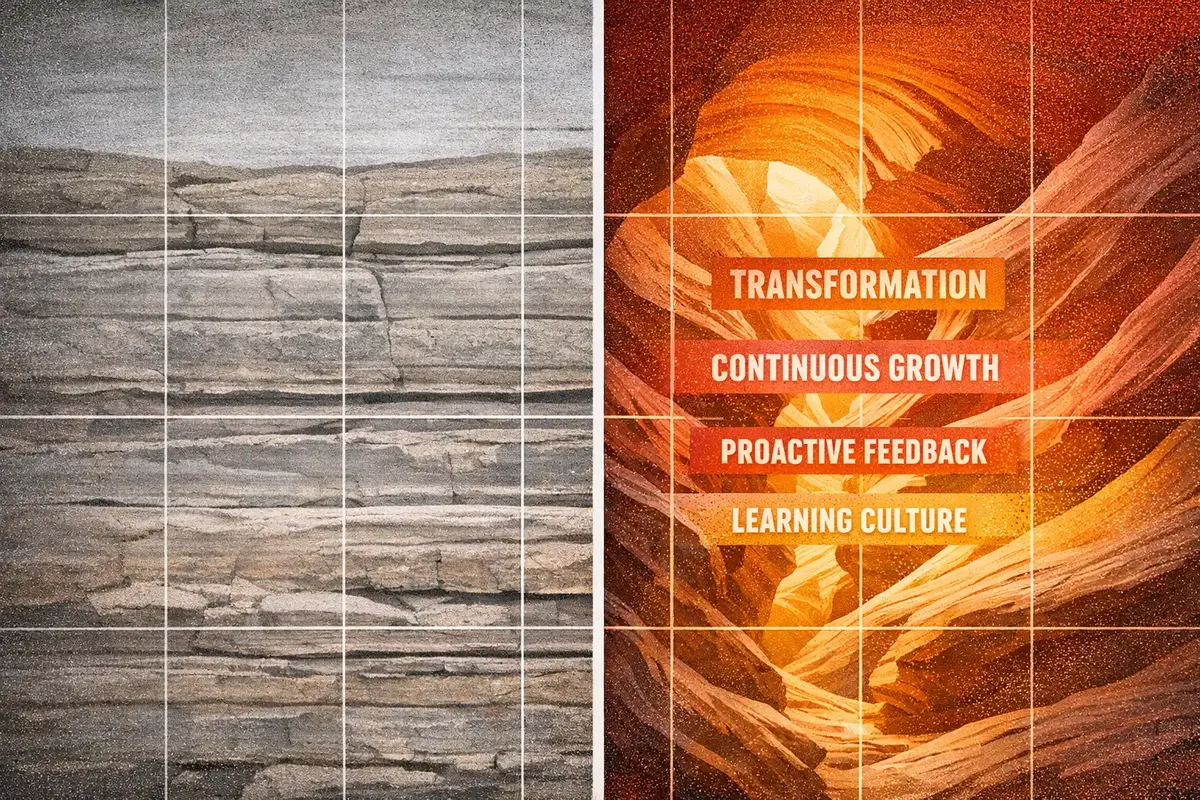
A continuous conversation only creates value when it feeds the next decision. Feedback names what happened. Coaching helps interpret it. Manager habits make sure the insight shows up again in the next meeting, the next draft, the next client interaction. Over time, those loops do something annual reviews rarely can: they turn scattered observations into accumulated judgment.
This is also the cultural shift many organizations underestimate. Moving from episodic judgment to ongoing development does not require a complicated model. It requires a stable rhythm, clear expectations, and managers who return to the same questions often enough for learning to stick. Consistency beats sophistication here.
Durable change comes from reinforcement
Most performance systems break at the handoff between intention and routine. A manager means to follow up, an employee means to apply the advice, and both get pulled back into delivery.
The fix is not more ceremony. It is reinforcement.
When feedback, coaching, and manager follow-through reinforce each other, people stop experiencing performance management as a separate HR exercise. It becomes part of how work gets better. That is the real promise of AI coaching as well: not replacing judgment, but helping teams preserve the thread of learning between conversations so progress compounds instead of resetting each week.
In practice, this is what executives should look for. Are managers revisiting prior commitments? Are employees getting better at self-correction? Are conversations producing sharper decisions, not just cleaner documentation?
If the answer is no, the system is still centered on review. If the answer is yes, you are no longer running a process. You are building a workplace that learns.
That is the mindset shift underneath this entire topic. Not annual review or no annual review — but judgment delayed, or learning sustained?
Key Takeaways
- Weekly feedback works better than annual reviews because it happens close to the work and is easier to act on.
- Continuous performance management, feedback, and coaching are related but distinct parts of the same system.
- Trust breaks down when performance management feels delayed, inconsistent, or unsupported by managers.
- AI coaching can make weekly conversations more sustainable by reducing preparation and follow-up friction.
Frequently Asked Questions
What is continuous performance management?
Continuous performance management is an ongoing approach to guiding, documenting, and improving employee performance throughout the year instead of relying on a single annual review. It combines regular check-ins, goal adjustment, feedback, development, and accountability into one operating system for performance.
How is continuous feedback different from coaching?
Continuous feedback is the regular input someone receives about what happened, what worked, or what needs to change. Coaching goes a step further by helping the person interpret the pattern, reflect on choices, and decide what to try next.
Why do annual reviews often fail to improve performance?
Annual reviews usually happen too far from the work to be useful, so people have to rely on incomplete memory and lost context. By the time feedback arrives, the moment for adjustment has passed, which makes the conversation feel more like judgment than development.
Why do managers and employees distrust performance management systems?
Trust breaks down when performance management feels delayed, inconsistent, and disconnected from real improvement. People are less likely to trust the process when managers are not equipped to explain expectations, document patterns easily, or turn observations into helpful coaching.
How can AI coaching support weekly performance conversations?
AI coaching can make weekly conversations more sustainable by helping managers prepare, surface recent priorities, identify patterns, and follow up consistently. It reduces the administrative friction that often prevents good coaching habits from continuing over time.