


Why the CEO role makes well-being a performance issue
A CEO leaves a board meeting with three unresolved issues: a pricing decision, a senior leadership conflict, and a cash-flow risk no one else can fully see. By dinner, the room is full of people, but the burden is still solitary.
That is why CEO well-being is not a lifestyle topic. It is a performance system. When the person carrying the most consequential decisions is mentally depleted, the damage rarely shows up first as collapse; it shows up as slower judgment, narrower thinking, avoidable friction, and a rising tendency to confuse urgency with importance.
Gallup’s latest data makes the tension hard to dismiss: leaders are more likely than others to report high stress, anger, sadness, and loneliness on the previous day—by 7, 12, 11, and 10 points respectively (Gallup, 2026). At the same time, global employee engagement has fallen to 20%, down from 23% in 2022 (Gallup, 2026). That combination matters. If leaders are carrying more emotional strain while the workforce is less engaged, the quality of executive attention becomes a business variable, not a private concern. This article examines that exact question: what happens to performance when the CEO’s internal condition becomes a hidden operating constraint?
The role itself creates the strain
In a regional healthcare company, a CEO heading into budget season may know that one acquisition is underperforming, one key executive is likely to leave, and one lender conversation could reshape the next two quarters. None of that can be processed openly with the broader organization. Some of it cannot even be shared with the full executive team.
Structural loneliness starts there.
It comes from confidentiality, because the most important facts are often the least discussable. It comes from power distance, because people edit what they say in front of authority. And it comes from constant responsibility, because even when decisions are delegated, accountability is not. This is why the role can feel isolating in a crowded calendar: proximity is not the same as candor.
Performance follows inner condition
The practical implication is simple. A CEO who treats well-being as optional is often asking judgment to perform without recovery, perspective, or honest reflection. That works for a quarter. Sometimes two. Then the costs compound in tone, timing, and decision quality.
The better frame is operational, not therapeutic. CEO well-being is part of how leaders protect strategic clarity when the signal is noisy and the stakes are asymmetric. But that raises a sharper question: if the role is structurally isolating by design, what does real well-being actually need to include—beyond sleep, exercise, and good intentions?
What does integral well-being actually mean for a CEO?
The four-quadrant model is the most useful way to define integral well-being for a CEO because it shows the full operating system, not just the visible habits. Without it, leaders tend to optimize one corner—sleep, fitness, calendar control—while the real breakdown happens somewhere else.
A practical map, not a philosophy lesson
At its simplest, integral well-being means managing four dimensions at once: inner life, relationships, body and behavior, and systems and environment. For a CEO, that translates into a practical set of questions. What is happening internally—attention, mood, fear, reactivity? What is happening between people—trust, candor, conflict, dependence? What is happening in the body and in daily behavior—sleep, movement, recovery, decision rhythms? And what is happening around the leader—meeting design, governance, information flow, travel load, digital intrusion?
That last dimension is where many smart executives miss the point. They treat well-being as a personal discipline problem when it is often an operating-design problem. If every important conversation is compressed into back-to-back meetings, if bad news reaches the CEO late, if the board packet lands at midnight, resilience will not fix what structure keeps breaking.
Research points to the same gap. The World Economic Forum noted that while 56% of employers believed their well-being programs encouraged healthier lifestyles, only 32% of employees agreed (World Economic Forum, 2019). The lesson for CEOs is blunt: what leaders think supports performance and what people actually experience are often different.
Why the CEO version is different
In a mid-market manufacturing company during annual planning, a CEO can look outwardly composed while all four quadrants are under strain. Internally, she is carrying uncertainty about a plant investment. Relationally, her team is deferring too quickly. Behaviorally, she is sleeping less and making more decisions late in the day. Systemically, the planning process is rewarding speed over dissent.
That is not a wellness issue in the abstract. It is a capacity issue.
The CEO version of well-being is not about “balance” as a lifestyle ideal. It is about preserving judgment under pressure, keeping perspective when signals conflict, and staying accessible without becoming porous. This is why approaches such as integral coaching matter: they work on the person and the context together, rather than assuming better habits alone will carry the load.
The American Psychological Association found that 77% of workers were satisfied with employer support for mental health and well-being (American Psychological Association, 2023). Useful, but incomplete. Satisfaction with support does not tell you whether the person with the highest decision burden has the conditions required for clear thinking.
Solitude is not loneliness
A CEO needs solitude. It is where synthesis happens. Strategy rarely emerges in the meeting itself; it forms after the noise, when competing signals can be sorted without performance pressure.
Loneliness is different. It is the absence of honest contact.
A leader can have too little solitude and become reactive, or too much loneliness and become cut off. Both are costly—one floods judgment, the other narrows it. And because authority changes how others speak, CEOs often experience both at once. Surrounded, yet under-informed. Visible, yet not fully met.
That tension matters more than it first appears. If the role itself distorts connection, how does isolation start to take hold even in a crowded organization?
Practical implications for CEOs
Recognizing the four-quadrant model as a diagnostic tool, not just a checklist, is crucial. For example, a CEO who invests in personal fitness (body/behavior) but ignores the toxic cadence of board meetings (systems/environment) may still experience chronic exhaustion. Similarly, a leader who cultivates self-awareness (inner life) but avoids difficult conversations with key reports (relationships) risks blind spots that can cascade into organizational issues.
Integral well-being also reframes how CEOs should approach support. Rather than relying solely on personal resilience or external wellness programs, leaders can audit their own ecosystem: Are decision-making forums structured to allow dissent? Is there a mechanism for unfiltered feedback? Does the CEO’s calendar protect time for reflection, or is it optimized for throughput at the expense of synthesis?
Finally, the distinction between solitude and loneliness has direct implications for performance. CEOs can intentionally design “white space” for strategic thinking—protected from interruptions—while also building trusted relationships where candor is possible. This dual focus helps prevent the subtle erosion of judgment that comes from either reactivity or isolation.
In sum, integral well-being for a CEO is not a luxury or a soft benefit; it is foundational to sustained leadership capacity. The four-quadrant model offers a way to diagnose and address the invisible factors that shape not just personal health, but organizational outcomes.
Why do CEOs feel isolated even when they are surrounded by people?
Nearly 70% of the C-suite are seriously considering quitting for a job that better supports their well-being. If the people with the most access, status, and resources are thinking that way, what does it say about the real experience of leadership at the top (Deloitte, 2022)?
Why do so many CEOs feel alone in a room full of advisors, direct reports, and board members? The usual assumption is that proximity solves isolation. It does not. Visibility is not intimacy, and authority often widens that gap rather than closing it.
The room is full. The conversation is not.
A CEO can spend ten hours in meetings and still have nowhere to say the one thing that matters most. Not because people are absent, but because the role changes what can be said, to whom, and at what cost.
Confidentiality is part of it. So is authority. Once you are the final decision-maker, people start managing your reactions, your time, and their own exposure. Some protect you from noise. Some protect themselves from risk. Either way, the CEO receives a filtered version of reality.
In a regional services company during a team restructure, the CEO may know that one senior leader is under review, one client contract is fragile, and one board member has lost confidence in the current plan. He cannot process all of that with his executive team. He should not process it with the broader organization. And if he brings it home, he turns private strain into household strain. The result is familiar: constant contact, very little peer-level openness.
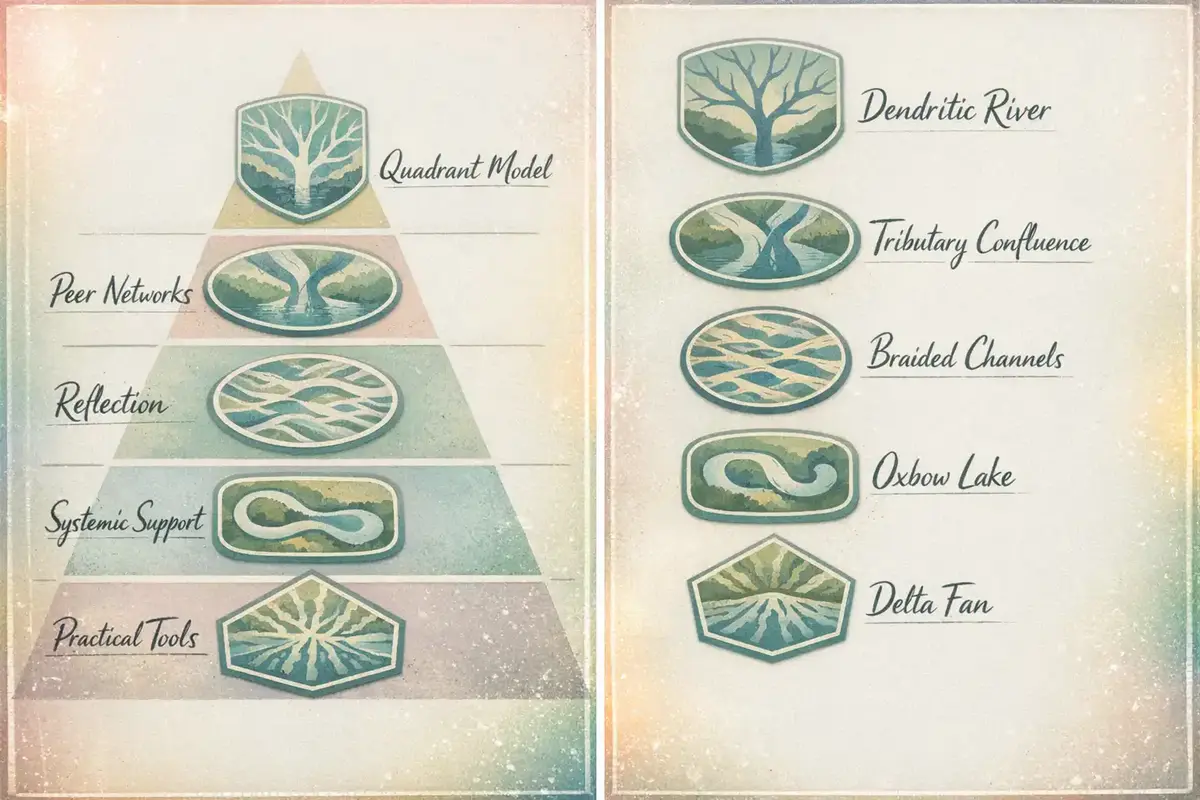
More interaction is not the cure
This is why isolation at the top is a design problem, not a calendar problem. More meetings usually make it worse. They increase exposure while reducing reflection.
76% of C-suite leaders said the pandemic negatively affected their well-being (Deloitte, 2022).
That number matters less as a pandemic artifact than as a signal. Under sustained pressure, leaders do not just need stamina. They need support architecture: places where candor is safe, context is understood, and status does not distort the exchange.
The strongest versions are usually quiet. A trusted peer group with no reporting lines. A chair or board lead who knows when to challenge and when to listen. A reflective relationship—coach, mentor, or seasoned former operator—that helps the CEO process pressure before it hardens into defensiveness. None of this weakens authority. It protects it by giving the leader one place where performance is not the only acceptable posture.
A CEO without that architecture often becomes more decisive in public and less clear in private. That looks like strength for a while. Then the costs show up elsewhere—fatigue, irritability, narrowed judgment, and eventually turnover risk. Is the issue simply loneliness, or is the body already keeping score?
What does the research say about burnout, sleep, and CEO turnover?
42% of working adults reported experiencing burnout in the past six months (American Psychological Association, 2024). At that level, the cost is not abstract: missed signals, slower calls, frayed trust, and good people deciding they no longer want to work for a leader who is technically present but cognitively depleted.
When burnout is this widespread, how can a CEO tell the difference between normal strain and a structural problem? Start with duration and spillover. A hard quarter is part of the job. A pattern of irritability, compressed thinking, and recovery that never quite happens is something else. Burnout becomes a leadership risk when pressure stops being episodic and starts shaping how the CEO interprets people, risk, and time.
Burnout changes judgment before it changes titles
In a finance company during a quarterly review, a founder-CEO can look sharp in the room and still be operating with reduced range. He cuts debate short, defaults to familiar operators, and reads challenge as drag. Nothing dramatic. Yet over six months, those small shifts can cost more than one bad decision because they change the quality of every decision around him.
That is the executive problem with burnout: it rarely announces itself as collapse. It shows up as narrower pattern recognition, less patience for ambiguity, and a stronger pull toward speed over synthesis. The organization feels it quickly. Direct reports become more cautious. Succession candidates disengage. Board confidence softens at the edges before it hardens into concern.
Sleep is not a preference
97.5% of all humans require at least seven to eight hours of sleep to feel fully rested (Boston Consulting Group, 2025).
Most adults do not have a special exemption from biology. CEOs do not either.
This matters because many leaders still treat sleep as a negotiable input — something to trade for output. That logic breaks under scrutiny. If a CEO is consistently under-rested, the issue is not just fatigue. It is degraded attention, weaker emotional regulation, and more variable judgment at exactly the moments that require steadiness. Sleep is a performance variable in the same category as capital allocation discipline: ignore it long enough, and the numbers eventually reflect it.
Turnover is the lagging indicator
Boston Consulting Group reports that CEO turnover at public companies hit an all-time high in 2024 (Boston Consulting Group, 2025). Not every departure is caused by exhaustion, of course. But the trend should sharpen the question boards and CEOs ask: how much of leadership continuity is being treated as a governance issue when it is also a human-capacity issue?
Turnover is expensive because it interrupts strategy, resets trust, and forces an organization into explanation mode. The deeper risk is quieter. If burnout and sleep debt are already distorting judgment before anyone leaves, what weekly practices actually keep a CEO mentally strong enough to lead for the long haul — not just survive the next cycle?
Which weekly practices actually protect a CEO’s mental fortitude?
The Weekly Maintenance System matters here because a CEO’s resilience is rarely lost in one dramatic moment; it erodes in the small decisions that leave no room to think. By Thursday afternoon, after a pricing debate, a board prep call, and an unexpected client escalation, a regional retail CEO is not asking whether well-being matters in theory—she is asking whether her judgment is still clean.
That is the right question. Deloitte found that 83% of C-suite leaders say they expect to improve or expand their organization’s well-being benefits over the next one to two years (Deloitte, 2022). The practical implication for CEOs is sharper than the headline: if well-being is becoming a business priority for the workforce, it cannot remain unmanaged at the top, where decision quality has the widest blast radius.
Three practices that work as one system
The most effective weekly rhythm combines reflection, delegation, and peer support. Not as separate habits. As a maintenance system.
Reflection creates distance from the noise. One protected hour each week—without slides, without updates, without a decision queue—helps a CEO sort signal from emotional residue. What is actually urgent? Which conflict is structural, not personal? Where is fatigue making a problem look larger or smaller than it is?
Delegation protects cognitive bandwidth. This is not about doing less. It is about refusing to spend executive attention on work that does not require executive judgment. In practice, that means pushing ownership of recurring decisions downward, clarifying decision rights, and resisting the temptation to re-enter work that has already been assigned.
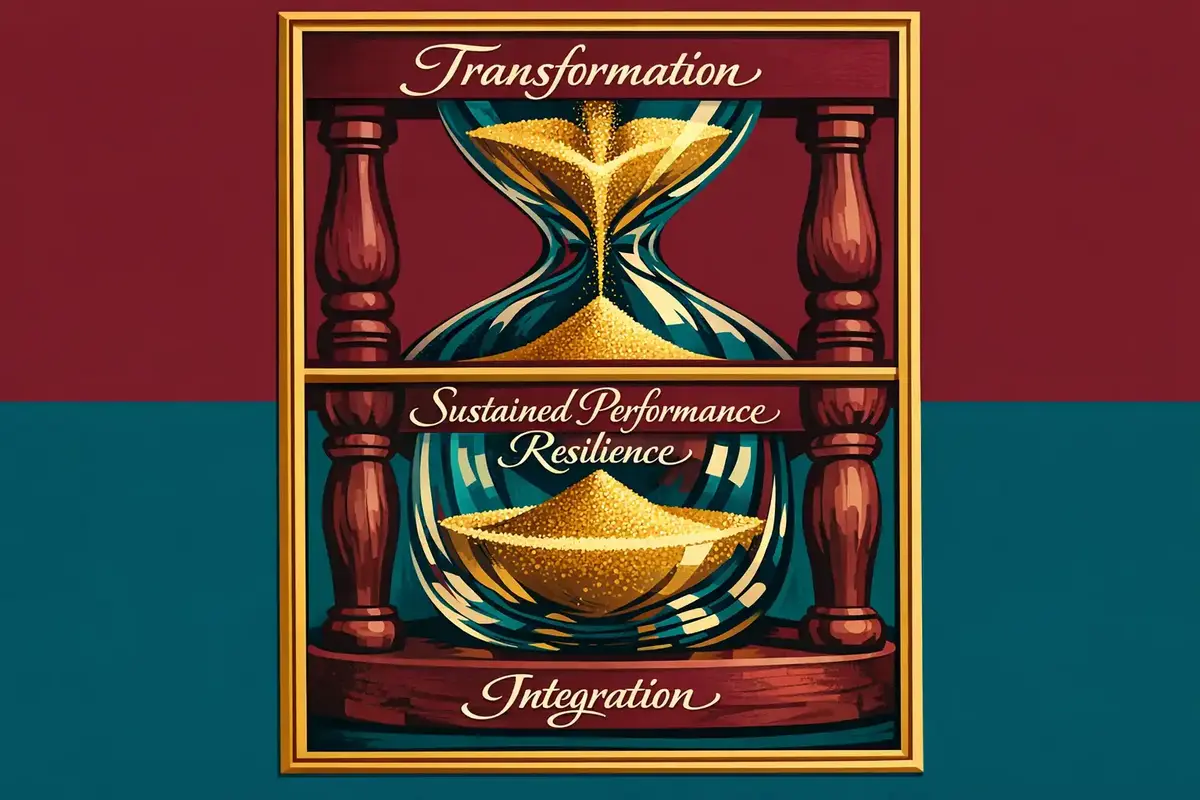
Peer support restores perspective. A confidential conversation with another operator, a chair, or a skilled integral coaching partner can interrupt the distortions that come with carrying too much alone. Research from the American Psychological Association shows that 87% of employees believe actions from their employer would help their mental health (American Psychological Association, 2021). CEOs should read that inward too: support changes performance when it changes conditions, not when it becomes a slogan.
Boundaries are an executive discipline
Boundaries are often misread as softness. In reality, they are a way to defend scarce attention.
A weekly rhythm should include three things on purpose: recovery, perspective-taking, and deliberate connection. Recovery may be one evening without work spillover or a block of unbroken sleep. Perspective-taking may be a walking review of the week’s hardest decisions. Deliberate connection may be one candid conversation with someone who has no reason to flatter you.
This is where many CEOs fail themselves. They protect time for everyone except the person making the final call.
The deeper question is not whether these practices help. It is whether a CEO can build this kind of support without looking less decisive—or whether the absence of support is already weakening authority in ways others can feel before the CEO can name them.
How can CEOs build support without losing authority?
Authority is lost faster through hidden strain than visible support. Revenue slips, trust thins, and strong people leave when a CEO keeps carrying too much alone and starts calling that discipline.
What does sustainable leadership look like when the CEO stops treating support as weakness and starts treating it as infrastructure?
Build support that fits the role
In an enterprise technology company during a market shift, a CEO may need to reassure investors, steady an anxious leadership team, and make a product bet with incomplete information — all in the same week. The mistake is to assume that “having people around” counts as support. It usually does not.
Support works when it is structured, confidential, and role-appropriate. Structured means it happens before the crisis, not only after a bad quarter. Confidential means the CEO does not have to manage optics while trying to think clearly. Role-appropriate means the conversation is with someone who understands the burden of asymmetric decisions, not just the language of encouragement.
This is where many organizations fool themselves. The World Economic Forum noted a clear perception gap between what employers believe their well-being efforts are achieving and what employees actually experience (World Economic Forum, 2019). CEOs should take that lesson personally. If support is vague, symbolic, or generic, it will not reach the place where executive pressure actually accumulates.
Make pressure visible before it becomes chronic
The goal is not to remove pressure. The role comes with pressure.
The goal is to stop pressure from becoming chronic and invisible — the kind that slowly changes tone, patience, and judgment while everyone keeps calling the leader “high functioning.” Gallup’s latest workplace data shows only modest movement in employee thriving, which is a useful reminder that performance systems improve slowly when underlying conditions stay the same (Gallup, 2026).
Integral well-being is the long game. It protects the person carrying the hardest decisions so the organization is not being led by accumulated depletion disguised as strength.
A useful next step is simple: look at your current support and ask one honest question. Is it real infrastructure — or just something that sounds responsible from a distance?
Key Takeaways
- CEO well-being is a performance issue because mental depletion shows up first in judgment, timing, and decision quality.
- Integral well-being for CEOs spans inner life, relationships, body and behavior, and systems and environment.
- Isolation at the top is driven by role design, confidentiality, and filtered feedback, not just by a busy calendar.
- Weekly reflection, delegation, peer support, and clear boundaries help protect long-term leadership capacity.
Frequently Asked Questions
Why is CEO well-being considered a performance issue rather than a personal lifestyle choice?
CEO well-being affects the quality of judgment, the speed of decisions, and the ability to sustain strategic focus under pressure. When a leader is mentally depleted, the first signs are often narrower thinking, more friction, and weaker prioritization rather than obvious collapse.
What does integral well-being mean for a CEO?
Integral well-being means managing four dimensions together: inner life, relationships, body and behavior, and systems and environment. For CEOs, this includes self-awareness, candid relationships, recovery habits, and an operating design that supports clear thinking.
Why do CEOs often feel isolated even when they are surrounded by people?
Isolation at the top comes from confidentiality, power distance, and the fact that many important decisions cannot be fully discussed with the broader organization. A CEO may have many interactions but still lack honest, peer-level candor.
What weekly practices help protect a CEO from burnout and mental fatigue?
The most effective weekly rhythm combines reflection, delegation, and peer support. Protected time for thinking, clear decision rights, and confidential conversations with trusted peers help preserve judgment and reduce the buildup of stress.
How can CEOs build support without weakening their authority?
Support strengthens authority when it is structured, confidential, and role-appropriate. A CEO does not lose credibility by getting help; the real risk is hidden strain that quietly erodes clarity, patience, and decision quality.