
Why the same coaching prompt can fail in different states of mind
20% is the global employee engagement rate in 2025, and you can feel what that means in practice: the same coaching prompt that helped one manager reset can make another shut down (Gallup, 2026). In a quarterly review, a mid-market technology director asks an AI coach for help before a difficult team conversation; one day the response feels clarifying, the next day it feels oddly off.
That gap is not trivial. Gallup estimates low engagement cost the world economy about $10 trillion, or 9% of global GDP, in lost productivity last year (Gallup, 2026). When guidance misses the moment, the cost shows up as slower decisions, avoidable friction, and leaders who stop trusting the tool precisely when complexity rises. This article addresses that failure directly: not why coaching prompts matter in theory, but why their quality changes with the user’s state of mind.
The prompt is not the whole unit of value
Most buyers evaluate AI coaching through the lens of personalization. Does it remember context? Does it adapt to role, goals, and history? Useful questions, but incomplete ones.
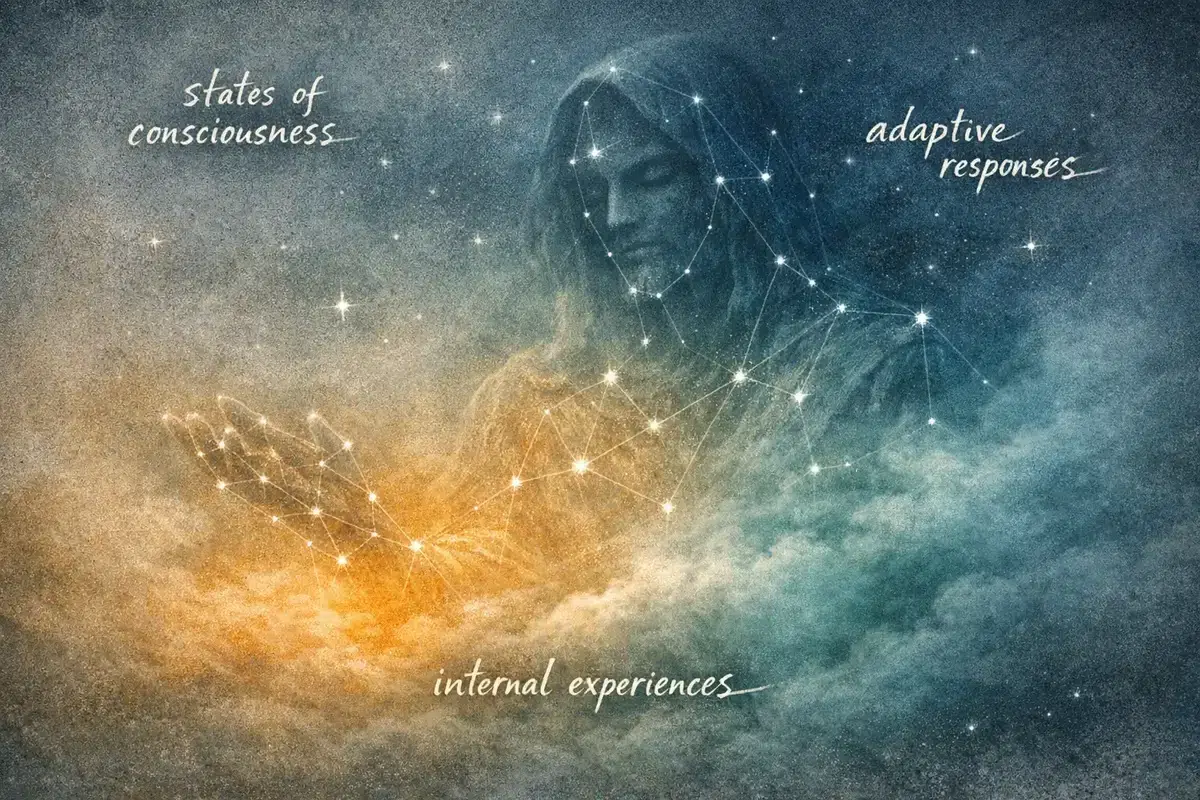
What matters in live coaching is not only who the user is. It is when the intervention lands, how it sounds, and how deep it goes relative to the user’s current capacity. A reflective state can work with ambiguity. An anxious state often cannot. A moment of expansion may need challenge; a moment of overload may need containment. That is why state-aware coaching is different from generic tailoring or better prompt design. It is closer to what experienced practitioners in integral coaching have long understood: the same question can open insight in one condition and create resistance in another.
Misreading the state changes the meaning of the response
This is where many AI coaching experiences flatten out. If the system reads anxiety as readiness, it may push for action too early. If it reads reflection as indecision, it may interrupt useful sense-making. If it reads expansion as simple optimism, it may miss the chance to help the user integrate what is emerging.
The result is rarely dramatic at first. It just feels wrong.
A response can feel flat when the user needs resonance, intrusive when they need space, or unsafe when they are already dysregulated. Once that happens, trust drops fast. And when trust drops, even technically correct guidance loses value.
The real question is not whether AI can coach, but whether it can recognize the difference between a mind that needs structure and one that needs room.
That raises the issue underneath the interface: what exactly are these states, and why do they change what good coaching sounds like?
What are states of consciousness, and why do they matter in coaching?
Integral theory matters here because it asks a deceptively simple question: is the coach responding to the person, or to the person’s current state? If states are temporary, how can a coach use them without mistaking them for personality, maturity, or long-term potential? That confusion is common. It is also costly in a field large enough to demand better judgment—the global coaching industry reached $4.56 billion in 2022 (ICF, 2023).
In plain English, states of consciousness are short-term modes of experience. They come and go. They are not fixed traits like introversion, and they are not developmental levels that describe how a person tends to make meaning over time.
That distinction changes everything.
Temporary state, not permanent identity
A healthcare VP in a regional provider enters a team restructure meeting after three nights of poor sleep and a client escalation. She asks an AI coach for help “getting decisive.” A generic system may read hesitation as weak leadership. A better coach asks a different question: is this uncertainty a capability gap, or is she simply in a narrowed, overloaded state?
Those are not the same problem. One calls for skill-building. The other calls for regulation, pacing, and clearer framing.
This is where integral coaching becomes practical rather than abstract. The point is not to label people. The point is to notice the mode they are in before deciding what kind of intervention has a chance of landing.
A usable framework for real coaching moments
At a basic level, the state lens helps a coach distinguish among waking, dreaming, meditative, and peak states. Not as mystical categories. As operating conditions.
In a waking state, the person is usually oriented to tasks, consequences, and decisions. Coaching can clarify. In a dream-like or imaginal state—common when someone is processing symbols, fragments, or half-formed concerns—the right move may be to reflect rather than force action. In a meditative state, where attention is steadier and less reactive, the coach may need to slow down and let insight consolidate. In a peak or expanded state, the most useful response may be to witness without immediately converting the moment into goals.
The same sentence can be helpful in one state and disruptive in another.
That is why state-awareness is not a philosophical extra. It is a decision rule for timing, tone, and depth.
A coach that misses state will keep sounding technically competent and practically wrong. So the real issue is no longer whether adaptation matters. It is whether adaptation comes from better wording—or from a fundamentally different model of what the user is experiencing.
Why state-sensitive coaching is more than better prompting
54% of workers across industries have used AI in the last 12 months, which tells you the issue is no longer access but fit (PwC, 2025). Most organizations still treat disappointing AI coaching as a prompt problem—write better instructions, add more context, tighten the wording—when the evidence points to a different failure: the system often misses the user’s current condition.
That gap explains why AI can feel impressive in demos and unreliable in live moments. PwC also found that 14% of employees use GenAI tools daily at work (PwC, 2025), yet Gallup reports 49% of U.S. workers say they never use AI in their role (Gallup, 2026). Adoption is real. Usefulness is uneven.
Better coaching is often better selection, not more output
A state-sensitive coach does not win by producing longer answers or more sophisticated language. It wins by choosing the right move.
A reflective user usually needs pacing. They may be sorting signal from noise, testing language, or noticing something they do not yet fully understand. In that moment, a strong response might be one clarifying question and then silence. A user in urgency needs something else: tighter framing, fewer options, and a shorter path to action. Distress changes the equation again. There, the wrong question can increase pressure rather than create insight.
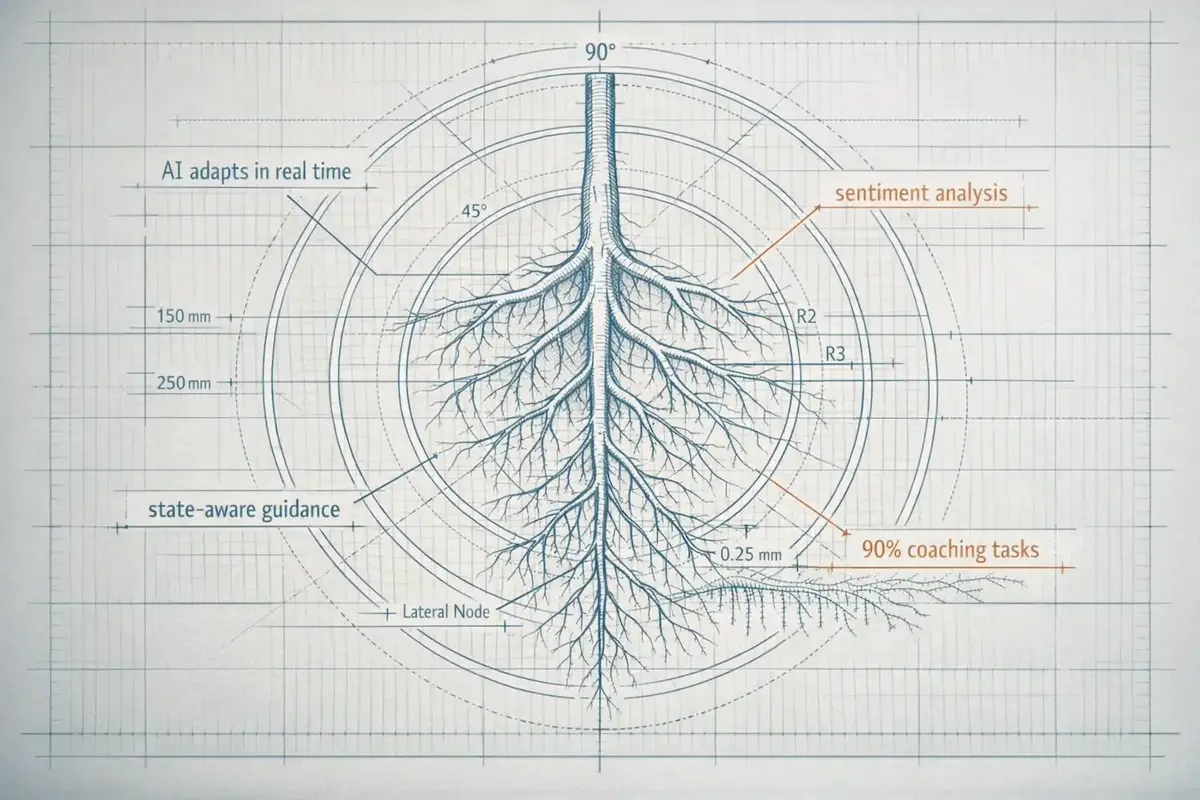
Consider a manufacturing plant manager at a regional company during a budget cycle. He opens an AI coach after a supplier miss and asks for help “getting the team aligned.” If he is in a reflective state, the best intervention may be to mirror back the competing pressures and help him name the real tradeoff. If he is in acute urgency, the same mirroring will feel slow. He needs sequencing: what must be decided today, what can wait, and what should not be said in the next meeting.
That is not prompt engineering. It is response calibration.
Ask, mirror, or pause
The practical discipline is simple to describe and hard to do well: know when to ask, when to mirror, and when to pause. Asking works when the user has enough capacity to inquire. Mirroring works when they need to hear their own thinking organized. Pausing works when any additional push would crowd the moment.
The highest-value coaching response is often the one that does less—but does the right less.
This is why state-sensitive coaching changes quality at the system level. Not because it sounds smarter, but because it knows which intervention belongs to which state. And that raises the harder question: if timing and mode matter this much, how should an AI coach respond across waking, dreaming, meditative, and peak states?
How do waking, dreaming, meditative, and peak states change the coaching response?
The state-response fit framework matters here because getting it wrong costs money before it costs elegance: decisions stall, trust in the coach drops, and good people start solving hard moments alone. In a labor market where 44% of workers’ skills are expected to be disrupted in the next five years and six in 10 will need training before 2027, coaching that misreads the moment becomes an operational risk, not a UX flaw (World Economic Forum, 2023).
What does an AI coach actually do differently when the user is grounded, symbolic, reflective, or expansive? It changes tone, pacing, and question depth.
Waking state: narrow the field, make the next move clear
In a finance enterprise setting, a CFO heads into a board prep meeting after a sudden margin miss. She asks the AI coach, “How do I handle pushback without sounding defensive?” If the system detects a mostly waking state—task-focused, linear, consequence-aware—the response should be practical.
That means short sentences. Clear options. Action verbs.
A strong reply might sound like this: Name the miss directly. Separate cause from accountability. Offer two corrective actions and one decision you need today. The question depth should stay close to execution: What is the board most likely to challenge? What can you say in one sentence? What should wait?
This is not the moment for abstract self-inquiry. It is a moment for grounding.
Dreaming state: follow the image before forcing the plan
A dreaming or symbolic state looks different. The user may speak in fragments, metaphors, or oddly charged details: “I keep feeling like I’m carrying a project that no one else can even see.” If the coach responds with a checklist, it will miss the signal.
Here the move is softer. Reflect first. Then look for patterns.
The AI coach might say: That image of carrying something alone seems important. Where else does that feeling show up—this week, not just today? Or: What does “no one can see it” mean in your team right now? The tone is less directive. The pacing slows. Meaning comes before action.
In symbolic states, the fastest route to clarity is often not faster questioning but better listening.
Meditative and peak states: intervene less, distort less
In meditative states, attention is steadier and less defended. In peak states, the user may feel unusual clarity, connection, or possibility. Both can be highly productive. Both are easy to ruin.
The common mistake is over-interpretation. The coach rushes to convert a quiet insight into a framework, or a moment of expansion into a goal stack. That is usually too much.
A better response is spacious: Stay with that for a moment. What feels newly obvious? Or simply: Do you want to name this, or just notice it? Minimal language. No premature meaning-making. No urge to package the experience.
That restraint matters more than it sounds. If the future of work requires repeated reskilling at scale, as the World Economic Forum suggests, then adaptive coaching cannot just be informative; it has to know when not to intrude (World Economic Forum, 2023). The hard question is no longer whether a system can respond — it is whether it can tell when responding will help, and when it will break the moment.
What the research says about why adaptive support matters now
20% is the global employee engagement rate in 2025, and that should change how you think about coaching quality. When four out of five employees are not engaged, generic support is no longer a minor design flaw; it is part of the operating environment (Gallup, 2026).
A services startup founder opens an AI coach at 10:40 p.m., halfway through rewriting a client proposal after two team members pushed back on scope. She does not need a polished answer. She needs the system to tell the difference between fatigue, frustration, and actual strategic confusion.
That distinction matters because the workplace strain is broad, not local.
Low engagement cost the global economy about $10 trillion, or 9% of GDP, in lost productivity last year (Gallup, 2026).
That number is useful because it reframes the problem. Low engagement is not just an HR metric, and it is not solved by adding more content, more nudges, or more cheerful coaching language. In practice, disengagement often shows up as reduced cognitive bandwidth: slower judgment, thinner patience, less appetite for reflection. If an AI coach responds to every user as though they have the same capacity in that moment, it will keep missing the real constraint.
Uneven adoption raises the bar
This is where rising AI use gets misunderstood. More people are trying AI, but they are not arriving with the same trust, fluency, or expectations. Some users want rapid iteration and know how to work with a system. Others arrive skeptical, test it once in a high-pressure moment, and decide quickly whether it is worth using again.
For the first group, adaptive coaching improves precision. For the second, it determines credibility.
A state-aware system therefore has to serve both audiences at once: the frequent user who wants sharper calibration, and the cautious user who will abandon the tool after one response that feels tone-deaf. That is a much harder standard than “helpfulness” in the abstract.
Reskilling pressure makes timing more valuable
The labor market is not getting simpler. The World Economic Forum estimates that 44% of workers’ skills will be disrupted in the next five years (World Economic Forum, 2023). Under those conditions, coaching has to do more than answer questions. It has to help people learn while under pressure, decide while uncertain, and adapt without adding noise.
That is why adaptive support matters now. Not because personalization is fashionable, but because the cost of mistimed guidance is rising.
And once that is true, the design question sharpens fast: when should an AI coach press forward — and when should it deliberately step back?
Where should an AI coach slow down, reflect, or step back?
What if the strongest coaching move is restraint? What if the system proves its value not by producing a sharper answer, but by refusing to push when the user is not ready for push?
That is where many AI coaching designs still overreach. They assume responsiveness is always helpful. In practice, the safest first step is simpler: detect whether the user needs grounding, reflection, or challenge before choosing a response.
Start with the condition, not the content
Picture a retail enterprise team lead during a client escalation. She opens the coach and types fast: “Give me the exact words for this call. I know I’m missing something.” A weak system hears urgency and starts prescribing. A better one notices the signs of narrowing attention — compressed language, rising certainty, low tolerance for ambiguity — and slows the exchange down.
It might respond: Before we script the call, what is happening in your body right now — scattered, steady, or flooded? If she is overloaded, the next move is grounding. If she is coherent but conflicted, reflection helps. If she is clear and avoiding a hard truth, then challenge belongs.
That sequence is not softness. It is judgment.
Boundaries matter most when the user is vulnerable
The risk rises when the user is dysregulated, highly suggestible, or using spiritual language in a fragile way. If someone says, “I think the universe is telling me to quit today,” an ethical coach should not amplify the claim or dress it up as insight. It should slow down, reflect the language carefully, and test for stability.
This is where ethical AI coaching becomes concrete. The system should avoid pretending to diagnose a state. It should avoid certainty it has not earned. And it should never encourage emotional dependence by implying, Only I can help you interpret this moment.
Research on workplace AI adoption makes the governance point sharper: leaders tend to use available AI tools more frequently than others, which means poor boundary design can scale quickly through management behavior (Gallup, 2026).
Step back before the system becomes too central
Sometimes the right move is not better coaching. It is less coaching.
A responsible system can say: I may not be the best support for this moment. That is not failure. It is discipline — and probably the clearest sign the coach understands its role.
Because once an AI coach knows how to pause, a harder question appears: is that pause a brief technique, or the core of what makes guidance trustworthy at all?
Why the most useful AI coaching is the kind that knows when to pause
The state-response fit framework matters here because getting it wrong shows up fast — trust erodes, good people disengage, and expensive decisions get made in the wrong mental condition. If coaching is meant to help people think more clearly, the real test is not how quickly a system answers, but whether it knows when answering would make the moment worse.
That is the practical value of integral states. They become useful only when they help an AI coach match its response to lived experience, not just to the words on the screen.
Match the moment, not just the prompt
Take a technology startup founder in a market shift, staring at a hiring plan she no longer believes. She types: “Help me decide whether to cut now or wait.” A conventional system treats that as a decision request. A stronger one reads the surrounding signals: is she clear but conflicted, mentally flooded, or reaching for certainty because the stakes feel unbearable?
Those are different moments. They require different responses.
One may call for a hard tradeoff analysis. Another may need the coach to slow the pace, reflect what is actually known, and stop the user from converting stress into false clarity. The distinction sounds subtle. In practice, it is where coaching quality lives.
The best AI coach is not the one with the most to say. It is the one that makes the fewest wrong assumptions.
This is also why the market size of coaching matters less than many people think. Yes, the global coaching industry reached $4.56 billion in 2022 (ICF, 2023). But scale alone does not make guidance trustworthy. Trust comes from response discipline.
Personalization without restraint is just confident guessing
Many systems now personalize well enough to sound informed. They remember goals, role context, prior conversations. Useful features. Not sufficient ones.
The stronger standard is restraint paired with ethical clarity. A state-aware coach should know when to ask, when to summarize, when to challenge, and when to say: I should not push this further right now. That is not a limitation. It is judgment.
This is where ethical AI coaching stops being a policy topic and becomes a design requirement. A system should not confuse intensity with readiness. It should not reward urgency with overconfidence. And it should not treat every vulnerable moment as an opportunity to deepen engagement.
Better timing, better listening, fewer assumptions
In the end, state-aware coaching is less about sophistication than about attention. Better timing. Better listening. Fewer assumptions.
That is the discipline. Recognize the state, choose the response, respect the boundary — then stop when stopping serves the person better than speaking. In your own context, that may be the most useful question to ask of any AI coach: does it merely respond, or does it know when a pause is the real help?
Key Takeaways
- The same coaching prompt can help in one state of mind and fail in another.
- State-aware coaching focuses on timing, tone, and depth, not just personalization.
- Waking, dreaming, meditative, and peak states call for different coaching responses.
- The most trustworthy AI coaching knows when to ask, mirror, challenge, or pause.
Frequently Asked Questions
What are states of consciousness in AI coaching?
States of consciousness are temporary modes of experience, such as waking, dreaming, meditative, or peak states. In AI coaching, they matter because the same person may need a different kind of response depending on whether they are focused, reflective, overloaded, or expanded in awareness.
Why can the same coaching prompt work well one day and fail the next?
A coaching prompt can fail when it does not match the user’s current mental condition. For example, a person in an anxious or overloaded state may need grounding and simplicity, while the same prompt may be useful when they are calm and ready for reflection or challenge.
How should an AI coach respond differently in waking, dreaming, meditative, and peak states?
In a waking state, the coach should be practical, concise, and action-oriented. In a dreaming state, it should reflect symbols and patterns; in a meditative state, it should slow down and let insight settle; and in a peak state, it should witness the experience without rushing to turn it into goals.
What is the difference between state-aware coaching and better prompt engineering?
Better prompt engineering improves wording, but state-aware coaching changes the type of intervention based on the user’s condition. It focuses on timing, tone, and depth, choosing whether to ask, mirror, challenge, or pause rather than simply generating a more polished answer.
When should an AI coach slow down or step back instead of pushing forward?
An AI coach should slow down when the user seems dysregulated, highly pressured, or not ready for more input. In those moments, restraint can be more helpful than advice because it reduces the risk of adding confusion, pressure, or false certainty.