
Why Leadership Pipelines Break Before They Become Visible
82% of organizations fail to choose the candidate with the best talent fit for manager roles. If your succession process still feels disciplined, that number should unsettle you (Gallup, 2024).
You see the scene before the risk is ever named. A regional healthcare VP resigns during budget season, the board asks for ready-now options, and HR produces a polished slate of internal names that everyone recognizes but no one fully trusts. The meeting does not fail because there are no candidates. It fails because familiarity is mistaken for preparedness.
That gap is expensive. Deloitte found that only 31% of CEOs strongly agree their company has a strong slate of viable future CEO candidates (Deloitte, 2024). So the problem is not confined to frontline management or mid-level benches; it runs straight into enterprise continuity, investor confidence, and execution risk at the top. This article addresses that exact failure point: why succession systems can identify people without materially increasing readiness—and what closes the distance between the two.
Identification Is Not the Same as Readiness
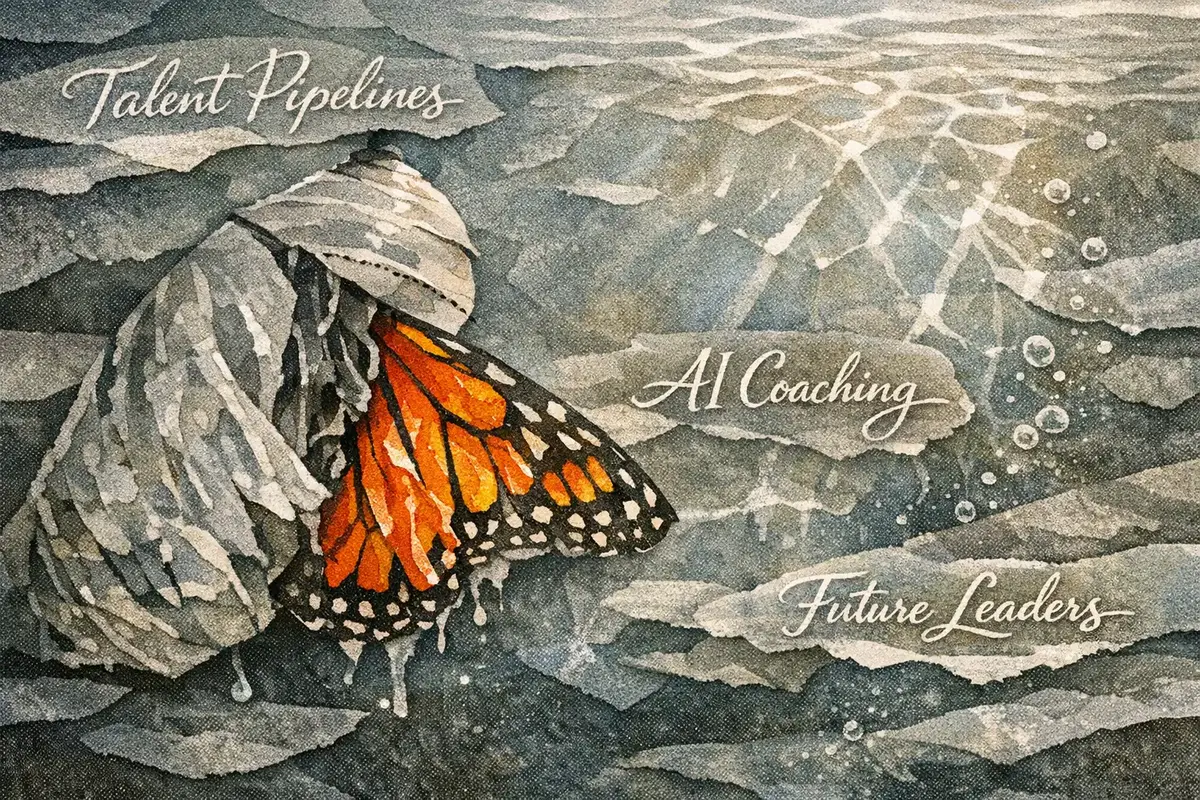
Most succession planning systems are better at ranking visibility than building capacity. They produce lists, calibrate potential, and label people as ready in one year or ready in three. What they rarely do is change the speed at which a high-potential leader becomes dependable under pressure.
That distinction matters because leadership failure usually appears first in context, not in assessment data. A director can look strong in annual reviews and still stall when the role suddenly requires sharper judgment, broader influence, or steadier communication across conflict. The pipeline appears healthy on paper right up until a real transition exposes that development has been episodic, generic, or too late.
The Missing Layer Between Promise and Performance
This is where AI coaching enters the conversation—not as a replacement for human judgment, but as the operating layer between talent identification and actual preparedness. If assessment tells you who might grow, coaching changes whether that growth happens in time.
Used well, AI coaching gives organizations a way to turn leadership development from an event into a cadence. It can reinforce decision habits, reflection, communication discipline, and role-specific behavior in the flow of work, which is exactly where readiness is either built or exposed. That makes it relevant not only to talent development efforts, but to the credibility of the entire succession planning process.
The hard question is no longer whether you can identify promising people. It is whether your system can reduce the distance between being named and being ready. And if most HiPo programs still struggle with that gap, is the real failure in selection—or in what happens after selection?
Why Traditional HiPo Programs Miss the Readiness Gap
Only 21% of HR professionals report having a formal succession plan. If succession is truly strategic, why are so few organizations operating with a system robust enough to survive a real leadership transition (SHRM, 2024)?
The contradiction gets sharper when you look at priorities. SHRM reports that 47% of CHROs who are prioritizing talent management say succession management is their top priority (SHRM, 2025). Priority is not the same as operating discipline, though. In many companies, succession is discussed seriously, funded selectively, and executed loosely.
56% of HR professionals had no succession plan at all (SHRM, 2024)
That is the readiness gap in plain terms: strong intent at the top, weak machinery underneath.
The Label Feels Precise. The Development Often Is Not.
A high-potential designation creates the appearance of progress. Someone is identified, discussed in talent reviews, maybe added to a leadership cohort, and marked as part of the future. But the label itself does not build judgment, range, or consistency under pressure.
In a mid-market manufacturing company during annual budget season, a plant director is suddenly asked to take on broader regional responsibility after an unexpected departure. She has been on the HiPo list for two years. She has attended workshops, received strong performance ratings, and is well known to senior leaders. What she has not had is repeated practice in cross-site influence, conflict navigation, and decision-making at a wider enterprise level. The organization did not misidentify talent. It mistook recognition for readiness.
That is where many high-potential programs stall. They are built around moments — nomination, calibration, annual review — when readiness is built through repetition.
Why HiPo Programs Turn Political Faster Than Leaders Admit
Once development is episodic, manager opinion starts carrying too much weight. A sponsor’s confidence, a polished presentation in a talent review, or recent visibility with senior leadership can outweigh evidence of whether someone is actually expanding their leadership range. Annual cycles make this worse because they freeze judgment in time. Static reviews reward who looked promising in the room, not who is improving in the work.
This is why traditional HiPo systems often become political without anyone intending them to. The process looks objective on paper, but the operating inputs are subjective, infrequent, and hard to challenge. A succession process can name talent while still failing to convert that talent into dependable bench strength.
AI coaching only matters if it changes that cadence — from occasional evaluation to repeated developmental action in the flow of work. If it cannot shorten the distance between nomination and real role capacity, it is just another layer of program design. So what actually improves readiness faster: better labels, or better practice?
How Does AI Coaching Improve Leadership Readiness Faster?
The readiness acceleration loop matters here because most organizations still treat development as content delivery: assign a program, schedule a workshop, hope capability follows. The evidence points the other way. Fewer than 40% of organizations are implementing coaching, mentorship, and adaptability training at all, which means the real constraint is not talent identification but the lack of a mechanism that builds adaptive behavior repeatedly and at scale (World Economic Forum, 2025).
That is the opening for AI coaching.
The Real Gain Is Cadence, Not Convenience
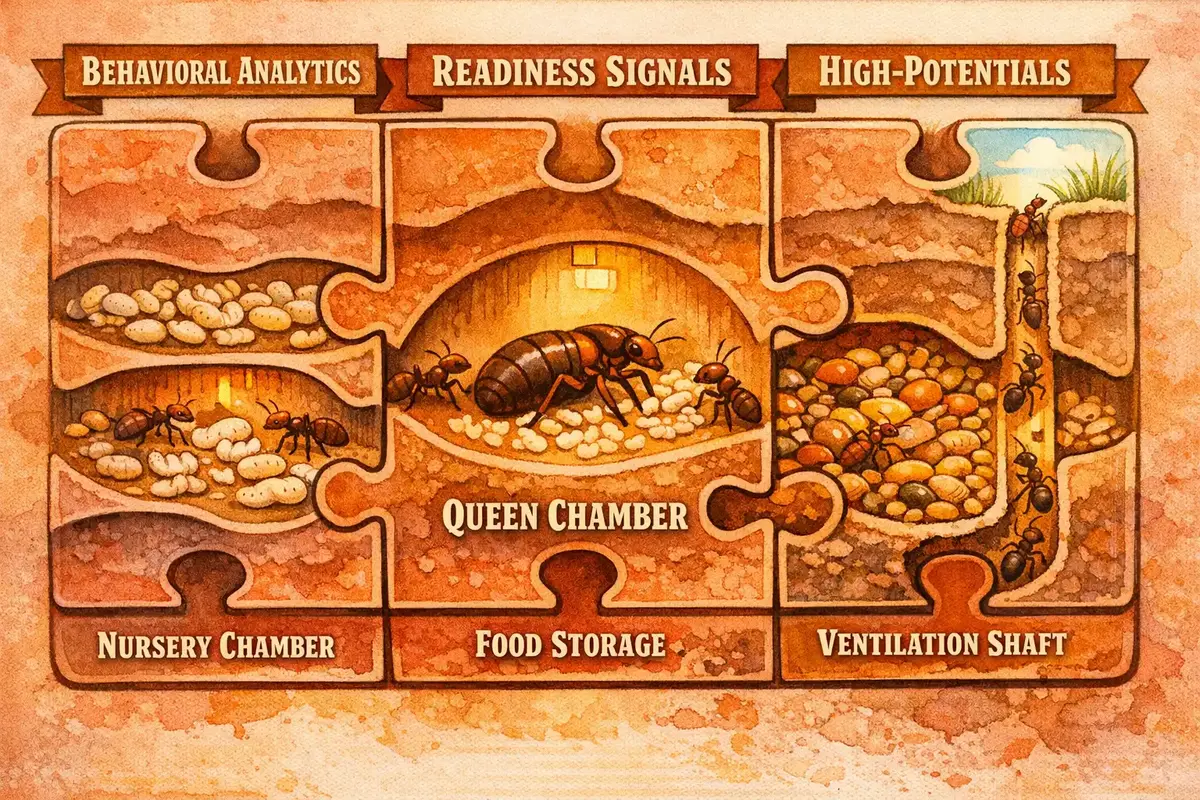
AI coaching improves leadership readiness faster when it acts as an operating layer: assess, prompt, reinforce, and track. Not once a quarter. In the work itself.
A regional services company offers a useful example. During a team restructure, a newly promoted VP has to lead difficult role-clarity conversations across functions while keeping delivery stable. Traditional support would give her a manager check-in, maybe a mentor conversation, and a leadership module she may not revisit. AI coaching can do something more practical: surface the specific gap — say, conflict framing or decision clarity — prompt rehearsal before the meeting, ask for reflection after it, and adjust the next prompt based on what actually happened.
That is how readiness velocity changes. Development stops being generic and starts becoming situational.
Personalization Only Matters If It Is Tied to the Role
This is where many buyers get distracted. The strongest use case is not an endless stream of motivational nudges or generic coaching content. It is targeted acceleration against role expectations.
If a finance director needs to become succession-ready for an enterprise controller role, the useful questions are concrete: Can she influence peers without formal authority? Can she communicate risk without overloading detail? Can she make trade-offs under time pressure? Good AI coaching can translate those expectations into repeated micro-practice, feedback loops, and visible progress markers. That is far more valuable than broad leadership advice because it links development to the actual bar the next role will demand.
In other words, personalization is not about style. It is about fit-for-role behavior change. That is what makes leadership readiness measurable rather than aspirational.
Human Judgment Still Carries the Weight
The best systems do not replace managers, mentors, or talent partners. They make them sharper.
AI can widen access to coaching and maintain developmental momentum between human conversations. Human leaders still interpret context, test judgment, and decide whether observed growth will hold under pressure. That division of labor matters because readiness is not just a pattern in the data; it is a pattern in behavior, over time, in consequential moments.
Fewer than 40% of organizations are building coaching, mentorship, and adaptability training into practice at scale (World Economic Forum, 2025)
So the question is no longer whether coaching matters. It is whether your system can show who is actually becoming more ready — or only who has had the most exposure.
What the Data Says About Predictive Talent Assessment and Manager Success
Top-quartile managers are 46% more likely to succeed when organizations use predictive talent assessment for managerial roles (Gallup, 2024). Get that choice wrong, and the cost is rarely confined to one bad promotion — it shows up in missed numbers, weaker trust on the team, and strong people deciding they no longer want to work for that leader.
If predictive assessment changes manager outcomes this much, why are so many succession decisions still made with weak evidence?
Better Manager Selection Is a Business Decision, Not an HR Preference
In a regional technology company during a quarterly review, a high-performing engineering director is being considered for a broader people leadership role. Everyone in the room knows she is smart. Everyone respects her execution. What no one has tested with enough rigor is whether she can create clarity through ambiguity, coach underperformers, and sustain team confidence when delivery pressure rises.
That is the gap predictive assessment is built to close.
Most succession debates still overweight visible performance, executive familiarity, and manager sponsorship. Those inputs matter, but they are incomplete. A strong individual operator does not automatically become a strong manager, and a polished talent review does not tell you much about how someone will lead when priorities collide. Gallup’s finding matters because it shifts the conversation from intuition to probability: selection quality improves when assessment is designed to predict managerial success, not just describe past performance (Gallup, 2024).
When predictive talent assessment is used for managerial roles, the top 25% of managers have a 46% greater probability of success (Gallup, 2024)
That should change how executives think about succession risk. The issue is not whether leaders can spot promise. It is whether the system can distinguish between admired talent and manager fit.
The Upside Extends Beyond the Individual Manager
The more useful part of the Gallup data is that the gains do not stop at the manager level. Teams led by managers selected with predictive talent assessment show 13% higher engagement, and organizations see 37% higher financial outcomes (Gallup, 2024).
Team engagement is 13% higher, and financial outcomes are 37% higher when predictive talent assessment is used for managerial roles (Gallup, 2024)
That is the real executive case. Better manager selection improves the social system around the role and the economic output attached to it. Engagement rises because employees experience more consistency, clearer expectations, and better day-to-day leadership. Financial performance rises because manager quality compounds — through retention, execution, decision speed, and fewer avoidable people problems.
This is also where AI coaching should be positioned correctly. Its insights are valuable, but not as a standalone verdict on who should be promoted. They are strongest when combined with predictive assessment, observed performance, and human judgment — one signal in a stronger system, not a shortcut around one.
Because once you accept that better evidence changes outcomes, the next question becomes unavoidable: where across the talent pipeline does AI coaching actually create the most practical advantage — early identification, transition support, or role-specific acceleration?
Which AI Coaching Use Cases Matter Most Across the Talent Pipeline?
The stage-to-outcome map is the only useful way to evaluate AI coaching here. In a retail enterprise’s quarterly talent review, the CHRO is staring at four very different problems at once: who to watch, who to accelerate, who to stabilize after promotion, and who could move laterally into a critical role.
That is why generic buying logic fails. 90% of organizations say succession planning matters, but only 37% support it with substantial action or investment (Korn Ferry, 2025). The gap is not just budget. It is design. When every stage of the pipeline needs something different, how do you decide where AI coaching creates the most leverage first?
Use Case 1: Identification and Early Signal Capture
At the identification stage, AI coaching is not there to decide who has potential. That remains a human call, informed by assessment and observed performance. Its value is earlier signal capture: how consistently someone reflects, adapts, follows through, and responds to stretch assignments over time.
That matters because early potential is often noisy. A strong team lead may look impressive in delivery reviews but show weak learning agility when priorities shift. AI coaching can surface those patterns through repeated prompts, self-reflection, and manager-visible progress markers. Not verdicts. Signals.
The right outcome here is simple: better evidence for talent discussions, not automated selection.
Use Case 2: Readiness Acceleration for Successor Pools
This is usually the highest-value use case. Once someone is in a successor pool, the question changes from could they grow to are they moving.
AI coaching works best when tied to role-specific readiness outcomes: decision quality, stakeholder influence, conflict handling, executive communication. If those behaviors are not defined, the coaching becomes motivational wallpaper. If they are defined, you can compare cohorts, see movement, and intervene earlier when progress stalls.
This is where many organizations should start.
Use Case 3: Emerging Leader Support and Promotion Transitions
New managers and first-time leaders need frequency more than prestige. Human-led development should remain primary for identity shifts, political judgment, and high-stakes feedback. But AI coaching can hold the middle ground between workshops and manager check-ins — before a difficult one-on-one, after a missed delegation moment, during a team reset.
That makes it especially useful for emerging leaders who are learning in public.
Use Case 4: Internal Mobility and Lateral Readiness
The overlooked use case is internal mobility. Lateral moves often fail not because the employee lacks talent, but because the receiving role demands unfamiliar influence patterns, faster context-building, or different decision rhythms.
AI coaching can support that transition if the outcome is observable: faster ramp-up, fewer escalation points, stronger cross-functional trust. If you cannot define the movement, do not buy the use case.
That is the real filter. Is AI coaching being used to create visible development movement — or just more coaching activity? Once those signals start informing promotion and succession decisions, the harder question arrives: who governs the system, and where should human judgment overrule it?
How Should Governance and Human Oversight Shape AI-Assisted Talent Decisions?
What if the real risk in AI-assisted talent decisions is not bad technology, but ungoverned confidence in it? If AI can improve consistency, what keeps that consistency from hardening into a cleaner-looking version of old bias?
That question matters because talent systems rarely fail in obvious ways. They fail when a recommendation feels objective enough to stop debate.
Governance Starts Where Enthusiasm Should Stop
In an enterprise technology company during a quarterly review, a VP sees an AI-generated readiness summary for two succession candidates. One profile looks sharper: clearer patterns, stronger coaching engagement, more positive language. The temptation is immediate — treat the output as a tie-breaker. But the system may be capturing responsiveness to prompts, manager input quality, or role exposure rather than true promotion readiness.
That is why governance has to do three things upfront: define what the system is allowed to inform, specify what it cannot decide, and make every meaningful output reviewable by humans. Without that structure, AI does not reduce politics. It can simply disguise them.
Gallup’s finding that organizations often miss the best talent fit for manager roles shows why better decision support is needed in the first place (Gallup, 2024). Deloitte’s reporting on weak confidence in future CEO benches shows the same problem at the top of the house (Deloitte, 2024). But neither problem is solved by handing more authority to a model.
Human Oversight Is Not a Courtesy Layer
Human judgment remains the control point.
Managers, HR leaders, and talent committees have to interpret context the system cannot fully see: a stretch assignment that failed for structural reasons, a leader carrying an unstable team, a candidate whose growth is real but recent. AI can surface patterns. It cannot carry accountability for the decision.
That is why strong oversight includes named reviewers, documented escalation paths, bias checks across groups, and explicit human sign-off for promotions, succession slates, and high-stakes development investments. Auditability matters here. If leaders cannot explain why a recommendation was accepted, challenged, or ignored, they do not have a governed process. They have a black box with executive sponsorship.
And that creates the final tension. When readiness signals become visible, does the organization use them to make better calls — or just faster ones?
What Changes When Readiness Becomes a Managed System Instead of a Guess?
Succession mistakes do not stay inside HR. They show up in missed revenue, slower decisions, frayed trust on critical teams, and strong people quietly deciding their future is elsewhere.
What changes first is not the technology. It is the operating assumption. The organization stops treating readiness as a label assigned in a talent review and starts treating it as a capability built, observed, and adjusted over time.
From Talent Labels to Development Evidence
Picture a regional finance company in the middle of a market shift. A business unit VP leaves, the CFO needs a successor quickly, and two internal directors look equally credible on paper. In the old model, the decision leans on reputation, visibility, and who has the stronger sponsor in the room. In a managed-readiness model, the conversation is different: who has actually expanded decision range, improved stakeholder handling, and shown steadier judgment in harder assignments over the past year?
That is the real shift. Continuous readiness building produces evidence that annual planning cannot.
SHRM reports that succession management sits at the top of the agenda for many CHROs focused on talent management (SHRM, 2025). The strategic intent is clear. The harder question is whether the organization has built a system that can turn that intent into repeatable development, not just cleaner succession charts.
Coaching as Infrastructure, Not an Event
This is where AI coaching becomes useful in a more serious way. Not as another program. Not as a stream of activity to report upward. As infrastructure.
When coaching is built into the talent system, succession becomes less vulnerable to politics because progress is harder to fake. You can still debate potential. You should. But the discussion is anchored in observed movement — how someone is handling broader scope, tougher conversations, and more ambiguous trade-offs — rather than in polished impressions from a calibration meeting.
The gap is not whether organizations value succession planning; it is whether they support it with enough action to make readiness visible in the work (Korn Ferry, 2025).
Korn Ferry makes that gap hard to ignore (Korn Ferry, 2025). Many organizations say succession matters. Far fewer build the operating discipline to support it. That is why the end state is not more dashboards, more prompts, or more AI activity. It is a stronger leadership pipeline with clearer proof that people are becoming more ready for the roles that matter.
The practical test is simple: if a critical leader left tomorrow, would your bench discussion rely mostly on opinion — or on evidence of growth? And if the answer is still opinion, what would have to change for readiness to be managed like the business risk it already is?
Key Takeaways
- Leadership pipelines often fail because identification is mistaken for readiness.
- AI coaching helps most when it creates repeated, role-specific development in the flow of work.
- Predictive talent assessment improves manager success, engagement, and financial outcomes.
- Governance and human oversight are essential so AI supports, rather than replaces, talent judgment.
Frequently Asked Questions
What is AI coaching in talent development and succession planning?
AI coaching is a development layer that reinforces learning, reflection, and behavior change in the flow of work. It helps organizations move people from being identified as high potential to becoming genuinely ready for broader leadership roles.
Why do high-potential programs often fail to create real readiness?
Many high-potential programs rely on labels, annual reviews, and occasional workshops, which do not build judgment or consistency under pressure. They often recognize talent without giving people enough repeated practice in the specific behaviors their next role requires.
How does AI coaching improve leadership readiness faster?
AI coaching improves readiness by creating a repeatable cadence of assessment, prompts, rehearsal, and feedback tied to real role expectations. This makes development more specific and timely than generic training, so leaders can build the exact behaviors needed for promotion.
What role does predictive talent assessment play in succession planning?
Predictive talent assessment helps identify candidates who are more likely to succeed in managerial roles, rather than simply those with strong past performance or visibility. Research shows that using predictive assessment improves manager success and is associated with higher engagement and better financial outcomes.
How should organizations govern AI-assisted talent decisions?
AI should inform talent decisions, not make them. Strong governance requires clear rules for what the system can recommend, human review for high-stakes decisions, and checks for bias, context, and auditability.