
{‘rendered’: ‘
Risk mitigation and consistency in coaching are now business-critical, not just “nice to have.” This approach is central to developing leaders who can navigate complexity and drive measurable business results. Companies using AI in talent development see 25% improvement (McKinsey). According to DDI World research, only 14% of CEOs believe they have the leadership talent needed to drive growth, making structured leadership development a strategic imperative.
\n
\n
Why Does Coaching Consistency and Risk Matter for Organizations?
\n
Let’s start with a reality check. Most teams assume that coaching is a standardized experience: you hire a certified coach, and everyone gets the same value. But in practice, human coaching is highly variable. Coaches bring their own methodologies, personalities, and even unconscious biases to the table. That means outcomes can differ dramatically from one employee to the next. The ICF/PwC Global Coaching Study confirms that executive coaching delivers an average ROI of 529%, with organizations reporting measurable improvements in leadership effectiveness and business outcomes.
\n
This inconsistency isn’t just a people problem—it’s a business risk. Think about compliance-driven industries, where uneven coaching could lead to misaligned behaviors or even regulatory slip-ups. Or consider talent development: if high-potential employees in one region get world-class coaching while others get a less impactful experience, you’re not just wasting budget—you’re undermining your succession pipeline.
\n
Here’s the thing: risk mitigation in coaching isn’t just about avoiding disaster. It’s about ensuring that every investment in people development delivers predictable, measurable returns. That’s why organizations are increasingly scrutinizing not just the “effectiveness” of coaching, but its consistency and availability.
\n
\n
What Is the Difference Between AI Coaching and Human Coaching?
\n
At the most basic level, AI coaching uses artificial intelligence to simulate the guidance, questioning, and feedback a human coach would provide. These systems are trained on thousands of real coaching sessions, often grounded in proven methodologies—like the Integral Model’s multi-level framework—to ensure their advice is both evidence-based and context-sensitive.
\n
Human coaching, on the other hand, relies on the expertise, intuition, and relational skill of a certified professional. While this can lead to deep, personalized insights, it also introduces variability: two coaches may approach the same problem in entirely different ways.
\n
So, what does this mean for organizations? With AI, you get standardized delivery—every user receives guidance based on the same playbook, free from individual quirks or biases. Human coaching offers relational depth and adaptability, but at the cost of potential inconsistency and limited availability.
\n
\n
How Consistent Is the Quality of AI Coaching Compared to Human Coaching?
\n
Most leaders assume that human coaches, with their emotional intelligence and experience, will always outperform AI. But research tells a different story.
\n
\n
“No significant difference in working alliance ratings between clients coached by a simulated AI coach and those coached by a human coach; both groups reported moderately high levels.” (Frontiers in Psychology, 2024)
\n
\n
This finding challenges the assumption that AI can’t build rapport or trust. In fact, when it comes to the consistency of the coaching experience, AI has a distinct edge. Every session is delivered according to the same standards and frameworks, regardless of time zone, language, or coach availability.
\n
Let’s look at outcomes. In a longitudinal randomized controlled trial, both AI and human coaches significantly outperformed control groups in goal attainment, with no significant difference between the two (human: ηp² = 0.265, p < 0.001; AI: ηp² = 0.269, p < 0.001) (PLOS, 2022). That means, from a results standpoint, AI can deliver at the same level as a skilled human coach—without the risk of coach-to-coach variability.
\n
\n
\n
\n
What Are the Risks and Benefits of Each Approach?
\n
Let’s get specific about risk. With human coaching, organizations face several challenges:
\n
- \n
- Variability in delivery: Even among certified coaches, approaches differ. This can lead to uneven development outcomes.
- Scheduling bottlenecks: Human coaches have limited availability, leading to delays that can stall momentum.
- Coach-dependent outcomes: If a coach leaves or underperforms, the entire program’s impact can suffer.
- Potential for unconscious bias: Human coaches, despite training, may bring personal biases that influence guidance.
\n
\n
\n
\n
\n
AI coaching, by contrast, offers:
\n
- \n
- Standardized methodologies: Every user receives guidance based on the same evidence-based frameworks.
- 24/7 availability: Employees can access support whenever they need it, reducing downtime and scheduling risk.
- Scalability: AI can serve thousands of users simultaneously, with no drop in quality.
- Bias mitigation: Well-designed AI systems can be programmed to minimize bias, ensuring fair treatment for all.
\n
\n
\n
\n
\n
But AI isn’t a cure-all. There are limitations:
\n
- \n
- Handling complex, ambiguous, or emotionally charged scenarios can still be challenging for AI.
- Ethical and data security considerations must be carefully managed.
- Perceived empathy may be lower in certain contexts, even if working alliance metrics are similar.
\n
\n
\n
\n
So, how do organizations weigh these trade-offs? Risk mitigation becomes a key differentiator. AI’s consistency and availability directly reduce the risk of uneven outcomes, compliance failures, and missed development opportunities.
\n
\n
How Do You Quantify the ROI or Effectiveness of AI vs. Human Coaching?
\n
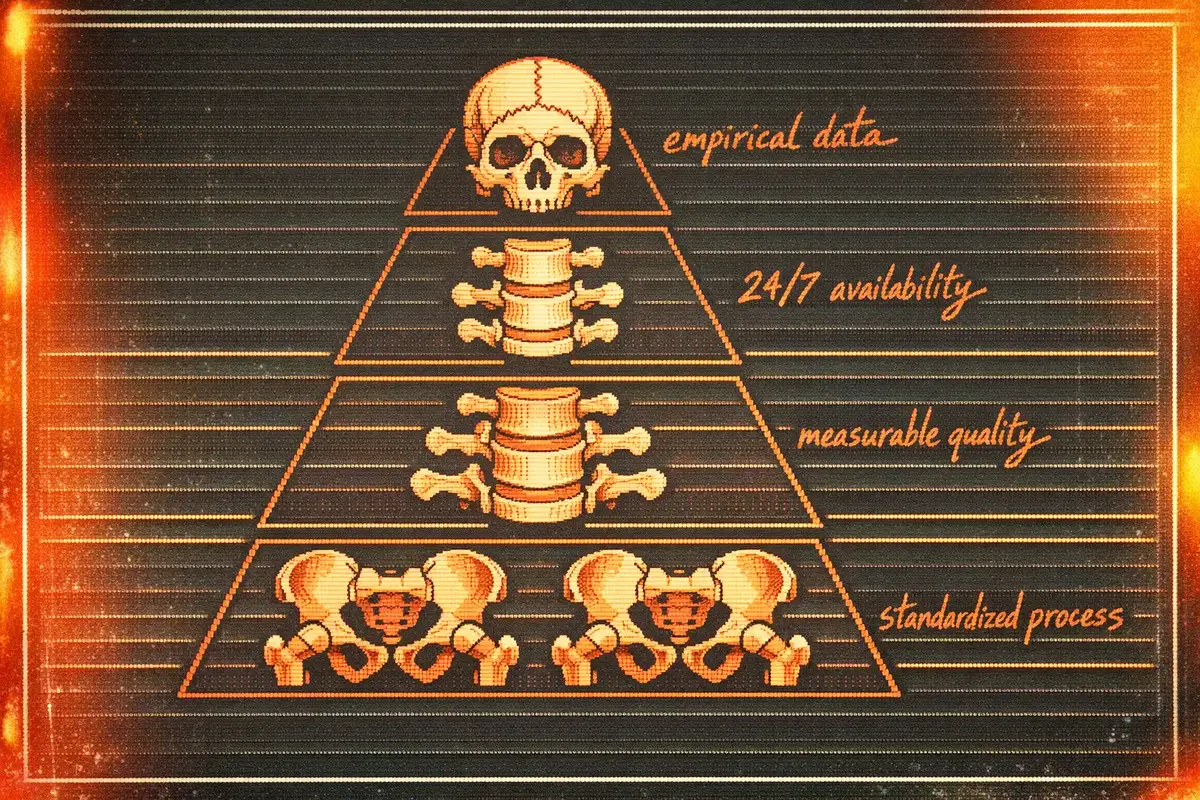
This is where most organizations get stuck. It’s easy to compare hourly rates, but much harder to put a number on risk reduction and consistency. Let’s break it down:
\n
- \n
- Effectiveness: As we’ve seen, both AI and human coaches can drive significant goal attainment, with no meaningful difference in outcomes (PLOS, 2022).
- Consistency: AI delivers the same quality of coaching to every user, every time. Human coaching is subject to individual variation.
- Availability: AI is accessible 24/7, eliminating scheduling delays and making support available at the moment of need.
- Engagement and retention: AI interventions report 90-93% completion/retention rates, similar to human coaching (PMC, 2024).
\n
\n
\n
\n
\n
But here’s a perspective shift: most organizations overlook the hidden costs of inconsistency. If one department’s coaching program falters due to coach turnover or scheduling gaps, the resulting performance dip can far outweigh any savings from cheaper hourly rates.
\n
Behavioral economics adds another twist. There’s a “Price Placebo” effect—people sometimes value coaching more when it costs more, driving higher engagement. But if AI and human coaching are equally effective, organizations can design hybrid programs that combine cost efficiency with perceived value, maximizing both impact and buy-in.
\n
For those looking to dive deeper into quantifying these returns, frameworks for AI coaching effectiveness and coaching ROI can help translate consistency and risk mitigation into financial terms.
\n
\n
\n
\n
Is AI Coaching Available 24/7? What Does That Mean for Risk Mitigation?
\n
Absolutely. AI coaching availability 24/7 is a game-changer for organizations operating across time zones, with remote teams, or in fast-paced environments where waiting for a coach isn’t an option. This always-on access means employees can get support in the moment—whether it’s preparing for a tough conversation at midnight or reflecting after a challenging meeting.
\n
But why does this matter for risk? When coaching is only available during limited windows, employees may miss the critical “teachable moment.” Delays can lead to missed opportunities, unresolved issues, or even compliance risks if urgent guidance isn’t available.
\n
By offering round-the-clock support, AI coaching reduces the risk of:
\n
- \n
- Delayed development: Employees don’t have to wait weeks for a session.
- Unaddressed challenges: Issues can be surfaced and resolved in real time.
- Burnout and disengagement: Immediate support can help employees manage stress and stay engaged.
\n
\n
\n
\n
For organizations seeking to minimize these risks, 24/7 AI coaching isn’t just a convenience—it’s a strategic asset. You can explore more about coaching availability 24/7 and its impact on business outcomes.
\n
\n
How Do Organizations Measure and Monitor Coaching Consistency at Scale?
\n
Here’s where many companies stumble. Most rely on post-session surveys or anecdotal feedback to assess coaching quality, but these methods miss the bigger picture. To truly measure consistency and mitigate risk, organizations should:
\n
- \n
- Track goal attainment rates across all users and cohorts, comparing results over time.
- Monitor engagement and retention data to identify drop-off points or uneven participation.
- Standardize feedback mechanisms so every session—AI or human—uses the same evaluation criteria.
- Audit session transcripts (where privacy allows) to ensure adherence to core frameworks and ethical standards.
\n
\n
\n
\n
\n
AI platforms make this easier by automatically logging every interaction, enabling real-time oversight and rapid course correction. Human coaching programs can benefit from similar rigor, but it often requires more manual effort and oversight.
\n
Drawing on TII’s two-decade integral methodology, some organizations are now blending AI-driven analytics with human oversight to create a closed-loop system—one that flags inconsistencies before they become business risks.
\n
\n

\n
\n
What Are the Real-World Risks (Bias, Data Security, Dehumanization) and How Are They Mitigated?
\n
Let’s address the elephant in the room: AI systems can introduce their own risks, from algorithmic bias to data privacy concerns. But here’s a counterintuitive insight—well-designed AI can actually reduce certain organizational risks compared to human-only coaching.
\n
For example, AI can be programmed to deliver feedback without unconscious bias, ensuring that every employee receives the same level of support regardless of background. This is particularly valuable in compliance-heavy industries, where even the perception of unfairness can trigger audits or legal exposure.
\n
Data security is another concern. Leading AI coaching platforms adhere to strict privacy and encryption standards, often exceeding what’s feasible in decentralized human coaching programs. Still, organizations must vet vendors rigorously and ensure data governance protocols are in place.
\n
And what about the “dehumanization” risk? While AI may lack the warmth of a seasoned coach, research shows that working alliance ratings are comparable (Frontiers in Psychology, 2024). For many users, the trade-off for instant, unbiased support is worth it—especially when hybrid models can fill the empathy gap where needed.
\n
\n
How Do Hybrid Coaching Models Optimize Risk and Consistency?
\n
Most organizations don’t have to choose between AI and human coaching—it’s not an either/or decision. Hybrid coaching models combine the best of both worlds: the scalability and consistency of AI with the relational depth of human coaches.
\n
Here’s how a hybrid approach can work:
\n
- \n
- AI handles routine, scalable coaching needs—goal setting, progress tracking, and foundational skills.
- Human coaches step in for complex, ambiguous, or emotionally sensitive scenarios where empathy and judgment are paramount.
- Data from AI sessions informs human coaching, creating a seamless development journey.
\n
\n
\n
\n
This model allows organizations to deploy resources where they’re most impactful, while minimizing risk and maximizing ROI. For a deep dive into how these systems are built and deployed, see hybrid coaching models.
\n
\n
What Should Organizations Measure to Ensure Coaching Consistency and Risk Mitigation?
\n
To move beyond intuition and anecdote, organizations should focus on a few key metrics:
\n
- \n
- Goal attainment rates (by cohort, coach, and modality)
- Session completion and retention rates
- Time-to-access support (average wait times, 24/7 availability metrics)
- User satisfaction and working alliance scores
- Bias and fairness audits (for both AI and human coaches)
- Compliance with standardized coaching frameworks
\n
\n
\n
\n
\n
\n
\n
By tracking these indicators, organizations can identify gaps, course-correct quickly, and ensure that every dollar invested in coaching delivers measurable, risk-mitigated value.
\n
\n
FAQ: Risk Mitigation & Consistency Value in AI vs. Human Coaching
\n
How do AI and human coaches compare in terms of effectiveness?
\n
Peer-reviewed research shows that both AI and human coaches significantly outperform control groups in goal attainment, with no significant difference between the two. This suggests that, when measured by outcomes, AI can match the effectiveness of skilled human coaches in many scenarios (PLOS, 2022).
\n
Can AI coaching really provide the same quality of relationship as a human coach?
\n
Surprisingly, yes. Studies found no significant difference in working alliance ratings between clients coached by AI and those coached by humans. Both groups reported moderately high levels of trust and rapport, challenging the assumption that AI can’t build meaningful coaching relationships (Frontiers in Psychology, 2024).
\n
What are the main risks of relying solely on human coaching?
\n
The biggest risks are inconsistency in delivery, scheduling delays, coach-dependent outcomes, and potential for unconscious bias. These factors can lead to uneven employee development, compliance risks, and wasted investment if not managed proactively.
\n
How does 24/7 AI coaching availability benefit organizations?
\n
AI’s round-the-clock accessibility means employees can get support whenever they need it, reducing delays and ensuring critical issues are addressed in real time. This immediate access helps mitigate risks related to missed opportunities, unresolved challenges, and disengagement.
\n
Are there any risks unique to AI coaching?
\n
AI coaching introduces concerns around data privacy, algorithmic bias, and perceived lack of empathy. However, these risks can be mitigated through rigorous vendor selection, regular audits, and by blending AI with human coaching for complex or sensitive cases.
\n
How can organizations measure the consistency of their coaching programs?
\n
Organizations should track goal attainment, session completion rates, user satisfaction, and compliance with standardized frameworks across all coaching modalities. AI platforms often provide built-in analytics, while human programs may require more manual oversight.
\n
When is a hybrid coaching model the best choice?
\n
Hybrid models are ideal when organizations want to maximize consistency and scalability with AI, but still need human expertise for complex, ambiguous, or emotionally charged scenarios. This approach allows for targeted resource allocation and optimal risk mitigation.
\n
\n
Continue Your Leadership Journey
\n
The debate over AI versus human coaching isn’t just about technology—it’s about how organizations manage risk, ensure fairness, and deliver consistent value to every employee. As coaching becomes a strategic lever for talent development and organizational resilience, the ability to quantify and mitigate risk isn’t just a technical detail; it’s a competitive advantage. What would it mean for your organization if every employee had access to high-quality coaching, anytime they needed it—and you could prove the impact?
\n
\n
Explore Further
\n
- \n
- AI coaching effectiveness — Discover proven methods to measure coaching effectiveness and maximize ROI with data-driven frameworks.
- Coaching risk mitigation — Learn how to strategically implement enterprise AI coaching to boost leadership development and secure executive buy-in.
- Coaching availability 24/7 — See how complete AI coach access and 24/7 availability can transform your organization’s support model.
- Hybrid coaching models — Explore how AI and human insight combine in next-generation coaching systems for scalable, personalized development.
\n
\n
\n
\n
\n’, ‘protected’: False}