

Why the cheapest coaching option can still be the most expensive mistake
ROI decision modeling starts with an uncomfortable number: traditional executive coaching often costs $3,000 to $15,000 per manager annually, while AI coaching can cost $120 to $150 (Hey Pinnacle, 2026). If you treat that gap as the decision, the analysis breaks before it begins. The tension is not that one option is expensive and the other is cheap; it is that both can be mispriced if you confuse cost with business value.
In a budget review, that mistake spreads fast. A regional healthcare VP may see a line item for coaching, compare it to a lower-cost AI option, and assume the cheaper program is automatically the better ROI case—or reject coaching altogether because the traditional number looks too high. Either move can be costly: underinvest in behavior change and performance stalls, or overspend on prestige without proving impact. This article is about how to calculate ROI for AI coaching versus executive coaching without collapsing two different investment models into one shallow price comparison.

Price is visible. Value is not.
The market encourages bad comparisons because price is easy to quote and hard outcomes are not. You can pull a number from a proposal in seconds. You cannot, in the same moment, tell whether that program will reduce manager derailment, improve decision quality, or help a newly promoted leader stop burning out their team.
That is why AI coaching and executive coaching should be evaluated as different investment models, not just different price points. One may offer broad access, high frequency, and lower marginal cost. The other may offer depth, context sensitivity, and stronger support for complex leadership transitions. Those are not interchangeable benefits. They create value in different ways, on different timelines, for different populations.
A useful starting point is to stop asking, “Which is cheaper?” and start asking, “What problem are we paying to solve?” The answer changes the math. It also changes what counts as evidence.
The only ROI that matters is defensible ROI
Finance does not approve coaching because it sounds progressive. HR cannot defend it on enthusiasm alone. Senior leaders will support it only if the case survives scrutiny after the pilot glow fades.
Traditional coaching at $3,000–$15,000 and AI coaching at $120–$150 are not competing line items; they are competing theories of how leadership behavior changes (Hey Pinnacle, 2026).
That is the standard this article will use. Not sticker price. Not vendor language. A defensible view of whether the program creates measurable business value that finance, HR, and leadership can stand behind.
If that sounds harder than comparing cost of coaching, it is. But it is also the only way to avoid a familiar executive error: buying the cheapest option and discovering later that it was the most expensive mistake—or dismissing the low-cost option before asking whether it could outperform on the metrics that actually matter.
What does ROI actually mean in coaching decisions?
The ROI stack starts with a seductive number: 529% average ROI for coaching among organizations that measured it (ICF, 2023). That sounds decisive, but it is exactly why coaching business cases often fail in the boardroom—big percentages hide weak definitions.
ROI is not the fee divided by enthusiasm
In plain English, ROI is net business value divided by fully loaded cost. Net business value means the measurable gains you can reasonably tie to the intervention, minus what you spent to get them. Fully loaded cost means more than the vendor invoice: participant time, manager time, implementation effort, procurement friction, reporting, and any internal support needed to make the program stick.
That distinction matters because many coaching proposals quietly substitute softer math. They take program fee on one side, then compare it to satisfaction scores, self-reported confidence, or completion rates on the other. Useful signals? Yes. ROI? No.
A finance leader will spot the gap immediately. If a mid-market technology company puts 20 directors through a coaching program during annual planning, the real question is not whether they liked it. It is whether decision quality improved, whether cross-functional delays dropped, whether regrettable attrition eased, and whether those gains exceeded the total cost of the program and the time leaders spent in it.
Separate ROI from cost savings and broader value
This is where teams get tangled. Cost savings, ROI, and business value are related, but they are not interchangeable.
Cost savings are the narrowest category: lower spend on external coaches, fewer travel costs, less admin time. Those matter, especially when comparing AI delivery with human coaching. But a cheaper program can still produce weak ROI if it solves the wrong problem.
Broader business value is wider than ROI. It includes leadership bench strength, better succession readiness, stronger manager consistency, and lower burnout risk. Those outcomes may be strategically important even when they are hard to monetize cleanly in the first quarter.
ROI sits in the middle. It asks a harder question: of the value created, what can you defend in financial terms today? That is why 86% of organizations that tracked coaching ROI reported positive returns (ICF, 2023). The important phrase is that tracked it. Measurement discipline—not belief—is what turns coaching from a people initiative into an investment case.
Per-person ROI and total ROI can point to different winners
A high per-participant ROI can still represent a small absolute gain. If a boutique executive coaching program delivers strong returns for eight senior leaders, the percentage may look excellent while the total organizational impact remains modest.
The reverse is also true. A lower per-person return across 800 managers can create far more total value because the effect compounds across a larger population. That is why comparing AI and traditional coaching without separating unit economics from portfolio economics leads to bad decisions. One model may win on depth per leader; the other may win on enterprise value.
If you cannot monetize outcomes without inflating them, the ROI case collapses. And that raises the next problem: what exactly should count as value—and what should stay out of the spreadsheet?
How do you monetize coaching outcomes without overstating the case?
The monetization ladder starts with a hard filter: teams that know and use their strengths see 10% to 19% higher sales and 14% to 29% higher profit (Gallup, 2020). Without a model like this, coaching claims collapse into “better leadership” language that finance cannot price, challenge, or approve.
What happens when a leadership behavior improves, but the finance team cannot see a dollar value attached to it? Usually, the value gets ignored. Not because it is unreal, but because it was never translated into a business proxy.
The strongest proxies are usually retention, productivity, time saved, promotion readiness, and reduced escalation. They are close enough to operations to measure, and close enough to money to defend. That matters because only about two in 10 managers naturally know how to engage employees, develop strengths, and set clear expectations in everyday conversations (Gallup, 2020). Coaching is often trying to improve exactly those managerial behaviors; the ROI model should follow the same path.
A practical rule helps: monetize the outcome, not the aspiration. “Better leadership” is not a line item. Lower regrettable attrition is.
Convert behavior into dollars — once
Take retention. In a mid-market services firm during annual planning, a director group goes through coaching after a team restructure. Six months later, regrettable exits among their teams fall. You do not assign all avoided turnover to coaching. You estimate the share plausibly influenced by improved manager behavior, then multiply by the replacement cost your company already uses—recruiting, onboarding, ramp time, and lost output.
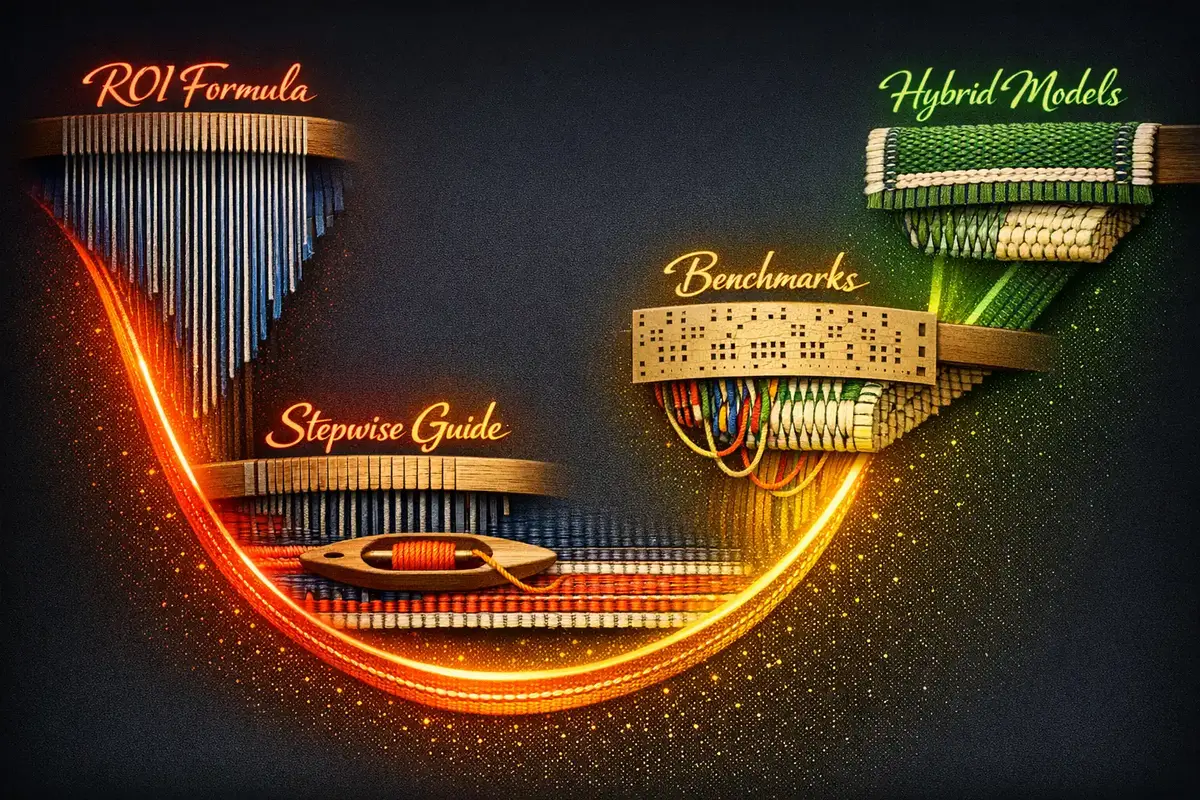
Productivity works the same way. If coached managers reduce rework, shorten decision cycles, or improve sales conversion through stronger strengths-based management, the gain can be tied to output per employee, revenue per team, or margin improvement. Gallup’s strengths data is useful here because it ties manager-led behavior to commercial outcomes, not just sentiment (Gallup, 2020). The key is restraint: pick one financial expression of the gain. If faster decisions already show up in revenue, do not also count the same hours saved as a separate benefit.
Separate direct returns from indirect savings
A defensible model has two buckets. Direct outcomes are the gains you can tie to a measurable business result within a defined period—say, 6 or 12 months. Indirect savings are supporting effects: fewer HR interventions, less senior-leader firefighting, smoother internal promotions, and stronger coaching outcomes.
The fastest way to overstate coaching ROI is to count the same behavior change three times — once as productivity, again as time saved, and again as engagement.
Set the measurement window before the program starts. Decide what counts, what does not, and where attribution stops. Otherwise every positive shift in the business starts drifting into the coaching column.
That discipline matters even more when you compare delivery models. If one option changes behavior at scale and the other changes it in depth, which economics should matter more—unit impact, or enterprise reach?
Why AI coaching scales differently than executive coaching
The coverage-depth framework matters here because most organizations still buy coaching as if the only real option is a scarce, high-touch service for a few senior people. The evidence shows something different: digital delivery is already part of the operating model, with nearly one-quarter of organizations using a digital coaching platform and most formal programs delivered virtually or in hybrid form (ATD).
That gap matters. It changes the ROI question.
Scale economics and depth economics are not the same thing
What if the best use of AI is not replacing coaches, but extending coaching to the managers who never get one?
In practice, that is where many companies are stuck. Picture a regional manufacturing company in budget season: 420 managers, a thin L&D team, and enough budget for human coaching for perhaps 15 VPs and directors. Everyone else gets a workshop, a manager guide, and good intentions. The organization says it values leadership quality broadly. Its spending says leadership support is reserved for a tiny tier.
This is why AI coaching behaves like a scale solution, not just a cheaper substitute. Once the system is in place, the marginal cost of serving the 200th or 500th manager is low compared with adding more one-to-one human coaching capacity. That matters when the business problem is widespread manager inconsistency — uneven feedback, weak delegation, poor meeting discipline, slow conflict handling. If the issue is distributed, the intervention has to be distributed too.
ATD’s data points in that direction. Nearly one-quarter of organizations already use a digital coaching platform, while 40% offer mostly virtual sessions and 43% use a hybrid model (ATD). The market is not waiting for a philosophical answer. It is adapting to access constraints.
The better unit of comparison is behavior change
Executive coaching, by contrast, is a depth solution. It is built for complexity, not coverage.
That makes it well suited to a smaller population facing higher-stakes leadership demands: a newly promoted CFO, a founder struggling to hand off decisions, a divisional president navigating board pressure after a failed integration. In those cases, the value is not broad reach. It is concentrated change where the cost of poor judgment is unusually high. That is what executive coaching is designed to do.
The mistake is comparing these models on cost per seat alone. A better lens is cost per leader improved and, better still, cost per behavior change sustained. If an AI coaching program helps 180 frontline managers hold better one-on-ones every week, the enterprise value may exceed a smaller premium program with stronger outcomes for 12 executives. If the challenge is succession risk at the top, the opposite may be true.
Different economics. Different jobs to be done.
And that creates the real tension: when coaching reaches more people, do outcomes dilute — or does scale unlock returns that small elite programs can never touch?
What does the research show about coaching ROI at scale?
A quarterly review goes sideways, and the CHRO is asked a familiar question: if coaching works so well, why is the proof always so slippery? The room is not doubting development. It is doubting whether the numbers behind it can survive comparison.
The headline evidence is strong. 86% of organizations that tracked coaching ROI reported positive returns, and the reported average reached 529% (ICF, 2023). Those figures matter because they tell leaders something important: coaching is not a fringe investment with purely anecdotal value. But they do not settle the harder question of this article. Positive ROI is evidence that coaching can work. It is not proof that two coaching models are directly comparable on the same terms.
Strong returns do not remove measurement risk
Methodology is where the real work starts. A 529% return can mean very different things depending on what was counted, what was excluded, and how long the organization waited before measuring (ICF, 2023). A six-month window will favor outcomes that show up quickly — manager confidence, promotion readiness, reduced escalation. A longer window may capture retention, profit contribution, or stronger bench strength. Same intervention. Different math.
That is why scale changes the interpretation. In a regional healthcare system, for example, a VP may see one business unit improve sharply after coaching while another barely moves. The instinct is to question the program. Often the better question is whether manager quality, local leadership support, and follow-through were consistent enough for the program to have a fair test.
Large samples tell you where variance lives
This is where Gallup becomes useful. Its manager research drew on 49,495 business units, 1.2 million employees, 22 organizations, seven industries, and 45 countries (Gallup, 2020). That kind of breadth does not give you a neat universal ROI percentage. It gives you something more valuable: a reminder that manager effects are uneven, context-dependent, and large enough to move business results materially.
Workers who know and use their strengths average 10% to 19% increased sales and 14% to 29% increased profit (Gallup, 2020).
Read carefully, that is not a shortcut to claiming coaching caused those gains. It is evidence that manager-led behavior change can show up in commercial outcomes when the conditions are right. The bridge from coaching to ROI still has to be built inside your own operating context.
Read ROI claims with population and context attached
A 300% return for 25 senior leaders and a 90% return for 2,500 managers are not saying the same thing. One may reflect deep impact in a concentrated group. The other may reflect smaller gains spread across a much larger population. Both can be excellent investments. Neither should be judged in isolation from the size of the affected population, the business unit involved, or the implementation discipline behind the result.
That leaves a practical tension. If scale changes both the upside and the noise, when does it make sense to stop choosing between AI and human coaching — and start combining them?
When does a hybrid coaching model outperform either option alone?
The fit-to-problem framework matters here because it asks a harder question than most budget reviews do: what if the highest-return coaching strategy is not choosing one model, but designing the right combination? Many leaders still assume hybrid means compromise — a watered-down middle ground for teams that cannot decide. That assumption misses where the economics actually improve.
The better view is architectural. Use one modality for reach and reinforcement, the other for judgment and nuance.
Match the tool to the leadership problem
A hybrid coaching model outperforms either option alone when the organization has two realities at once: broad manager inconsistency across the middle, and a smaller set of leaders facing high-stakes moments at the top. Those are different problems. Forcing one delivery model to solve both usually wastes money.
ATD’s market data suggests organizations are already moving this way. 40% offer mostly virtual sessions and 43% offer a hybrid of virtual and in-person coaching, while nearly one-quarter use a digital coaching platform (ATD). That does not prove hybrid is always superior. It does show that mature programs are increasingly built as systems, not single-channel interventions.
In practice, AI is often strongest where repetition matters. Weekly reflection. Meeting prep. Feedback rehearsal. Follow-through after a difficult conversation. Human coaching is strongest where context is messy and the stakes are high — role transitions, political friction, executive presence under pressure, or behavior patterns the leader cannot see alone.
That division of labor is where ROI usually sharpens.
The return comes from sequencing, not blending everything
Consider a mid-market finance company during budget season. The CHRO has 300 people managers, rising promotion pressure, and a handful of senior leaders stepping into enterprise roles after a reorganization. If she buys only human coaching, most managers get nothing. If she buys only AI, the leaders in pivotal transitions may get support that is too standardized for the moment.
A better design is sequential. Start broad: give the larger manager population AI support for habit formation, consistency, and reinforcement. Then add targeted human coaching where the business risk is concentrated — senior leaders, succession candidates, and managers whose patterns are not shifting.
That is not a compromise. It is resource allocation.
A good hybrid coaching model lowers the cost of over-serving simple needs and under-serving complex ones. It also improves measurement. You can evaluate AI on adoption, frequency, and sustained manager behaviors, while judging human coaching on narrower but more consequential outcomes tied to transitions and decision quality.
Hybrid wins when precision matters more than purity
The mistake is ideological buying. Some teams want AI to replace everything. Others protect human coaching as if scarcity itself proves value. Neither stance is financially serious.
Hybrid works best when leaders stop asking which model is better in the abstract and start asking which population needs what kind of help, in what order, for what business reason. That sounds obvious. It rarely happens.
And once you accept that design logic, a tougher question appears: before approving any coaching budget, what evidence should a leadership team demand — and what should it refuse to pretend it knows?
How should leaders think about coaching ROI before they approve the budget?
Bad coaching decisions rarely fail on the invoice. They fail later — in missed revenue, thinning trust, and strong people deciding they have had enough of a manager who never learned how to lead.
That is why the most useful ROI question is not Which model is better? It is Which model gives us the right mix of reach, depth, and measurable business impact for the problem we actually have?
Start with the performance problem, not the coaching category
In a retail enterprise during budget season, a COO may be staring at two proposals while the real issue sits elsewhere. Store managers are inconsistent. Regional leaders are overloaded. High-potential directors are being promoted faster than they are being prepared. If that organization buys coaching based on format preference — AI because it feels efficient, human coaching because it feels premium — it is solving for optics, not outcomes.
The design should follow the failure pattern.
If the business is losing momentum because everyday management is weak across a broad population, the investment case should favor reach and repetition. Gallup’s research is useful here because it reminds leaders how uncommon strong coaching behavior really is: only a small share of managers naturally know how to engage employees, develop strengths, and set clear expectations in day-to-day conversations (Gallup, 2020). That is not a moral judgment. It is a budgeting implication.
Build the case before you choose the model
A defensible business case compares three things before anyone recommends AI, human coaching, or a hybrid design: fully loaded cost, outcome attribution, and measurement window.
Fully loaded cost means more than vendor price. It includes leader time, implementation effort, reporting burden, manager follow-through, and the internal friction required to make the program real. Cheap programs can become expensive when adoption is weak. Expensive programs can be justified when the cost of leadership failure is higher.
Outcome attribution matters just as much. If a healthcare system is trying to reduce escalation between clinical and operational leaders, the question is not whether participants report feeling more supported. It is whether conflict gets resolved faster, decisions stick, and fewer issues climb to the executive layer. You do not need perfect attribution. You need honest attribution.
Then set the measurement window before launch. Some coaching effects show up quickly. Others do not. If leaders skip that step, they end up arguing about anecdotes after the fact.
Approve the investment that fits reality
The strongest decision is usually the least ideological one. A startup founder in a market shift may need deep, human challenge. A services firm with uneven middle management may need broad behavioral reinforcement. A large organization with both problems may need both — but for different populations, with different success measures.
That is the lens to keep. Not universal superiority. Not vendor language. Fit.
Before you approve the budget, ask one hard question: are you buying a coaching format — or are you funding a solution to a specific leadership problem you can actually measure?
Key Takeaways
- Coaching ROI should be judged on defensible business value, not sticker price or enthusiasm.
- AI coaching and executive coaching solve different problems and create value in different ways.
- Monetize outcomes carefully, using direct results and indirect savings without double counting.
- Hybrid coaching can outperform either option alone when reach and depth are both needed.
Frequently Asked Questions
What is the right way to calculate ROI for AI coaching versus traditional executive coaching?
ROI should be calculated as net business value divided by fully loaded cost, not just by comparing vendor fees. Fully loaded cost includes participant time, implementation effort, internal support, and any other resources needed to make the program work.
Why is a simple price comparison misleading when choosing between AI coaching and executive coaching?
Price alone does not show whether a coaching program will improve retention, decision quality, productivity, or leadership effectiveness. A lower-cost option can still produce weak ROI if it does not solve the right business problem, while a higher-cost option can be justified if it creates larger measurable gains.
How can coaching outcomes be monetized without overstating the business case?
The most defensible approach is to convert measurable outcomes such as retention, productivity, time saved, promotion readiness, or reduced escalation into financial terms. To avoid double counting, each behavior change should be counted once in the most relevant business metric.
When does AI coaching tend to outperform traditional executive coaching?
AI coaching tends to outperform when the organization needs broad reach, frequent reinforcement, and low marginal cost across many managers. It is especially useful for improving everyday leadership habits at scale, such as feedback, delegation, and follow-through.
When is a hybrid coaching model the best ROI choice?
A hybrid model is often best when an organization needs both broad behavior change across many managers and deeper support for a smaller group of leaders in high-stakes roles. In that case, AI can provide scale and repetition while human coaching handles complex transitions, nuance, and judgment.