

Why Purpose-Driven Leadership Fails When Stakeholders Cannot See It
Purpose-driven leadership does not improve reputation on intent alone. It changes reputation only when people can see purpose shaping decisions, promises, and behavior in ways that affect them.
You have seen the scene. A regional services CEO opens the quarterly review by talking about values, long-term impact, and doing right by customers. Then the meeting turns to budget cuts, service delays, and a policy exception for a high-value account. Employees leave thinking one thing: the speech said purpose; the decision said something else.
That gap is where reputation starts to fail.
When stakeholders cannot observe purpose-driven leadership in action, they do not treat it as evidence. They treat it as messaging. Customers hear the brand promise but judge the complaint response. Employees hear the town hall but watch who gets promoted, what gets funded, and which trade-offs leaders accept under pressure. If you are serious about purpose-driven leadership, this is the real test: not whether the narrative is clear, but whether the operating choices make the narrative believable.
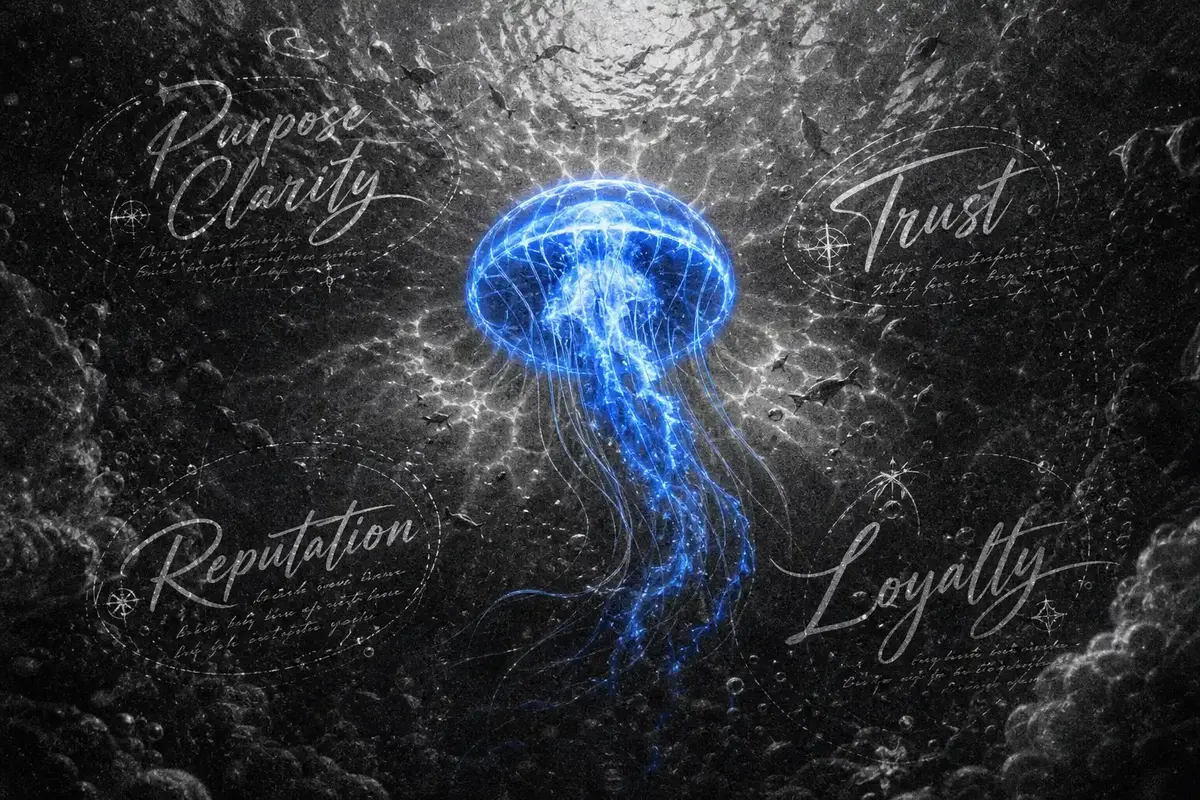
The cost is not abstract. It shows up in slower buy-in, weaker retention, more skeptical media coverage, and a market that discounts what leadership says because prior actions trained people to wait for proof. That is why the measurement problem is harder than most leadership teams assume. The question is not whether purpose sounds good on a slide. The question is whether it changes trust, loyalty, and external perception in ways the market can actually register.
Purpose becomes reputation only after it survives contact with a hard decision.
So what counts as proof — a better story, or a measurable shift in belief? That is where the numbers have to enter.
What Do the Numbers Say About Trust, Promises, and Purpose?
Only 27% of employees strongly agree that their organization always delivers on the promises it makes to customers (Gallup, 2021). That number turns purpose from a branding idea into a measurable credibility problem.
Gallup’s data shows the trust gap from both sides of the relationship. Inside the company, belief is weak. Outside it, customers are not much more convinced: less than half of B2B customers — 46% — strongly believe the companies they work with always deliver on their promises (Gallup, 2021). If employees and customers already doubt delivery, leadership purpose has a high bar to clear before it can become a reputation asset.
That is the practical point. Reputation does not start in the market. It starts in whether people believe promises will survive ordinary execution.

A mid-market technology VP sees this during the quarterly review. The company talks about customer impact, but product delays are reframed as “temporary friction,” support tickets climb, and frontline teams are told to hold the line. Purpose is still on the slide. Trust has already moved to the trust indicators people use every day: response times, exceptions, follow-through.
The internal chain is weaker than many leaders assume. Only four in 10 employees strongly agree that their organization’s mission or purpose makes them feel their job is important (Gallup, 2021). When purpose does not make work feel important, employees do not carry it into decisions, service, or recovery moments.
Purpose fails quietly first — in the gap between what leaders declare and what people expect will actually happen.
So the real question is not whether purpose exists. It is whether purpose changes belief before the next broken promise does.
How Does Purpose Become Trust Before It Becomes Reputation?
BCG’s four trust dimensions give the clearest answer to a question many leaders skip: what exactly has to happen between a leader’s values and a customer’s willingness to trust the brand? If purpose is sincere, is that enough? Usually not. Until stakeholders can judge purpose through observable signals, it remains a statement, not a market cue.
The bridge is trust. And trust grows when a company consistently delivers what its stated purpose promises, not when it merely repeats the promise.
That sounds obvious. In practice, it is where most reputation strategies break.
Boston Consulting Group argues that trust is not one thing but four distinct judgments: competence — can you do the job well; fairness — do you treat people equitably; transparency — do you explain decisions honestly; and resilience — do you hold up under pressure. This matters because stakeholders are rarely asking, “Do I like this company’s purpose?” They are asking narrower questions: Will this team follow through? Will they be straight with me? Will they stay fair when trade-offs get hard?
In a regional healthcare system during budget season, a COO says patient access is the purpose priority. Staff then watch which clinics keep funding, how schedule changes are explained, and whether overloaded teams get support or slogans. Leader behavior shapes employee belief first. Employee belief then shapes the tone, speed, and care patients experience. Only after that does the market form a reputation judgment.
Reputation is trust seen from a distance.
This is why a good measurement framework starts inside the operating system, not in external messaging. If trust is the bridge, which signals actually prove it is being built — competence, fairness, transparency, or resilience?
Which Metrics Actually Prove Purpose Is Working?
Fifty-eight research papers sit behind the Purpose-to-Reputation Measurement Model, which is why leaders need a framework instead of intuition when they assess whether purpose is working. Without that separation, teams confuse a well-told purpose story with evidence that purpose is changing behavior, trust, or brand reputation.
The model is simple: measure purpose clarity, purpose activation, trust indicators, reputation indicators, and business outcomes as distinct layers. Administrative Sciences found purpose-driven leadership is associated with higher work engagement, stronger organizational commitment, better employee performance, and improved organizational performance. Useful. But those are not all the same signal, and treating them as one dashboard is how weak measurement hides weak execution.
The practical contrast belongs in a side-by-side view:
| Layer | What it asks | Typical indicator type | What it proves |
|---|---|---|---|
| Purpose clarity | Do people understand the purpose? | Leading, internal | Message comprehension |
| Purpose activation | Do decisions and operations reflect it? | Leading, internal-to-external | Behavioral proof |
| Trust | Do stakeholders believe the company will act accordingly? | Transitional | Credibility forming |
| Reputation outcomes | Do loyalty, advocacy, and retention move? | Lagging, external | Market recognition |
Purpose signaling is communication. Purpose activation is observable behavior embedded in pricing decisions, escalation rules, hiring, service recovery, and trade-offs.
A retail VP sees this during a margin squeeze. The company launches a purpose campaign about customer fairness, then quietly tightens return exceptions and cuts frontline discretion. Clarity scores may rise. Trust will not.
If purpose only changes the language, it has not changed the company.
That distinction matters because trust compounds into value. The most trusted companies generate 2.5 times as much value creation as companies at the market average. So which measures deserve executive attention first—understanding, activation, or the reputation outcomes the market eventually rewards?
What Should Leaders Measure First If They Want Reputation Gains?
What if you are not measuring the wrong reputation metric, but the wrong stage of the reputation chain? That matters because most leadership teams start at the visible end — brand sentiment, share of voice, external perception — after the real failure has already happened somewhere upstream.
The first job is diagnosis. Before leaders ask whether reputation improved, they need to ask where belief stopped forming.
Start in sequence. First, test whether people can clearly explain the company’s purpose-driven leadership in plain language. Then test whether leaders’ actual decisions match that purpose in moments that carry cost — pricing, staffing, escalation, exceptions, investment choices. Only after that should you measure stakeholder trust and reputation movement through trust indicators and external perception.
A regional manufacturing CEO usually learns this during a plant consolidation review. Leadership says the purpose is long-term community stewardship. Employees then watch which site gets protected, how redeployment is handled, and whether managers explain the trade-offs honestly. If the decision behavior breaks the story, reputation damage has already started inside the company before it appears outside.
Measure the chain, not just the mood
The most credible systems do not rely on sentiment alone. They combine three evidence types:
- Survey data that shows whether employees and customers understand and believe the purpose
- Behavioral indicators that show whether decisions, policies, and recovery actions align with it
- Stakeholder perception data that shows whether trust is turning into reputation
Reputation improves last. Credibility breaks first.
That is why the practical first step is not building a bigger dashboard. It is locating the break: leader behavior, employee experience, customer perception, or external reputation.
If you misdiagnose the break, you will fund more messaging when the real problem is inconsistency. And if consistency is the real driver, what matters more — a stronger narrative, or a pattern people can verify?
Why Reputation Strength Comes From Consistency, Not Messaging
Revenue slips first. Trust thins next. Then good people leave because they are tired of defending a purpose the business does not consistently honor.
What if the strongest reputation strategy is not saying more about purpose, but proving it more consistently? That is usually the answer. Reputation strength grows when stakeholders see the same logic repeated across hiring, pricing, service recovery, investment choices, and hard trade-offs — not when they hear a sharper story about values.
A founder in a growing financial services firm learns this during a client escalation. The company says it exists to simplify decisions for customers, yet the fee dispute is routed through three approvals, legal language leads the response, and the relationship manager is told to protect margin first. No one needs a brand tracker to know what happened. The client just learned what the purpose is worth under pressure.
This is why purpose-driven leadership should be treated as a trust-creation system, not a communications campaign. Gallup’s work on promise delivery showed the credibility gap long before leaders call it a reputation issue (Gallup, 2021). Boston Consulting Group’s trust lens makes the operating implication clearer: people judge firms by whether they remain competent, fair, transparent, and resilient when conditions tighten. Administrative Sciences adds the measurement discipline — purpose matters when it is activated in behavior, then recognized in trust and reputation outcomes.
Stakeholders do not award reputation for what a company believes. They award it for what a company repeatedly does.
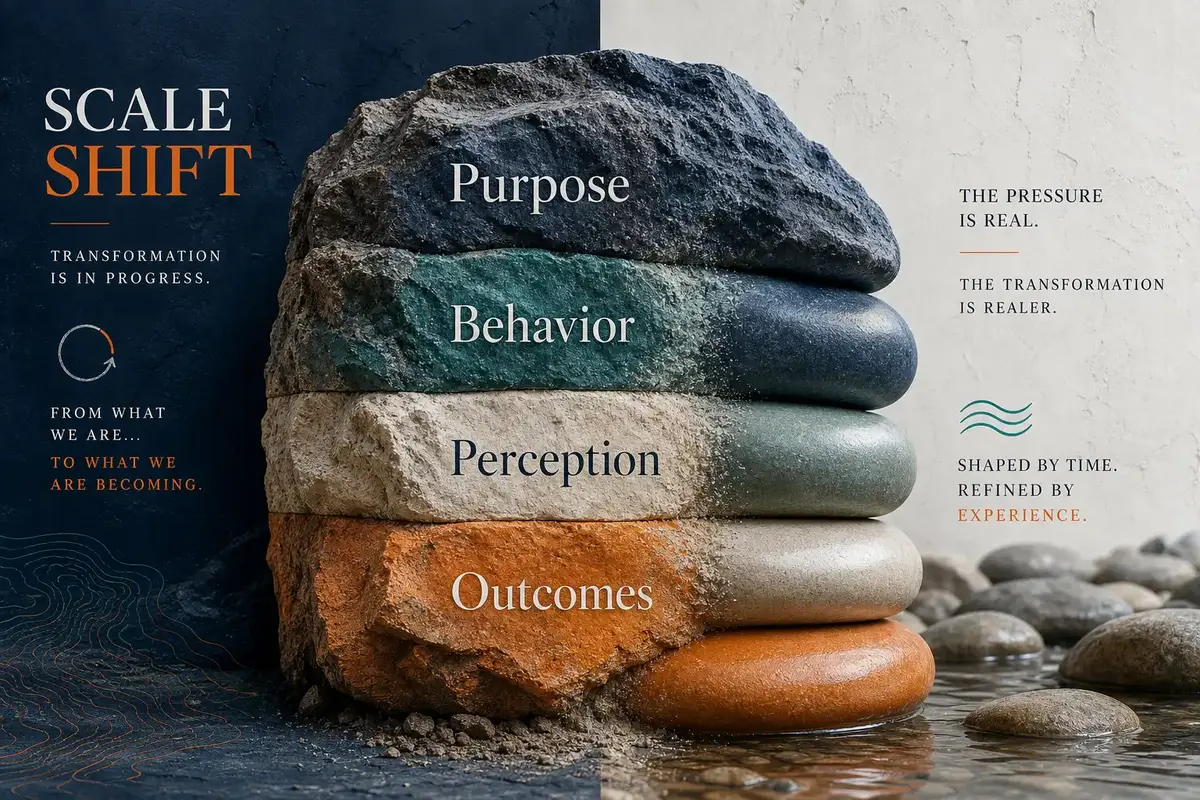
The durable chain is simple: purpose shapes behavior, behavior builds trust, trust hardens into reputation, and reputation supports business outcomes. Your next step is not another message test. It is a harder question — where, exactly, does your behavior still contradict your purpose?
Key Takeaways
- Purpose becomes reputation only after it survives contact with a hard decision.
- Purpose fails quietly first — in the gap between what leaders declare and what people expect will actually happen.
- Reputation is trust seen from a distance.
- If purpose only changes the language, it has not changed the company.
Frequently Asked Questions
How can purpose-driven leadership be quantitatively measured to assess its impact on brand reputation?
Measure purpose-driven leadership with a chain of indicators: purpose clarity, purpose activation, trust indicators, reputation indicators, and business outcomes. Quantitative evidence comes from surveys, behavioral data, and external perception metrics that show whether purpose is understood, enacted in decisions, and translated into stronger reputation.
What analytical methods are most effective for linking a leader’s commitment to purpose with changes in customer loyalty?
The most effective methods combine correlation analysis, regression modeling, and time-lagged tracking across purpose activation, trust, and loyalty metrics. This helps separate a genuine effect from a strong narrative by showing whether observable leadership behavior precedes changes in retention, repeat purchase, advocacy, or complaint recovery.
Which key performance indicators best reflect the influence of authentic leadership on market trust?
The most useful KPIs include promise delivery, customer trust scores, employee belief in the mission, complaint resolution quality, retention, and advocacy. These indicators reflect whether leadership is seen as competent, fair, transparent, and resilient under pressure, which are the core drivers of trust.
Why is quantifying the impact of purpose-driven leadership important for evaluating external brand perception?
Quantifying impact shows whether purpose is changing stakeholder belief or only improving messaging. External brand perception improves only when customers and other stakeholders can observe consistent behavior, so measurement is necessary to prove that purpose is building credibility rather than just creating awareness.
Is there a standardized framework for assessing how a leader’s values-driven approach affects customer loyalty and brand perception?
Yes. A practical standardized framework measures purpose clarity, purpose activation, trust, reputation, and business outcomes as separate stages. This structure makes it possible to see where the chain is working, where belief breaks down, and whether values-driven leadership is actually improving loyalty and brand perception.