
Why static succession plans break first in fast-moving organizations
Only 20% of employees worldwide were engaged in 2025. If your succession planning assumes stable managers, stable roles, and stable motivation, that number should unsettle you from the start (Gallup, 2026).
You have likely seen the scene. A regional healthcare provider promotes a high-potential director into a broader operating role just as a restructuring begins, only to discover that the successor was assessed for last year’s job, not the one now taking shape. The plan exists on paper. Readiness does not.
That gap is expensive. Gallup estimates that low engagement cost the global economy about $10 trillion in lost productivity, or 9% of GDP (Gallup, 2026). In practice, that cost shows up less as a dramatic leadership failure and more as drag: slower decisions, hesitant delegation, stalled transitions, and managers who spend critical quarters catching up instead of leading. This article addresses that exact problem: why succession planning in fast-moving organizations must operate as a continuous readiness system, not an annual replacement exercise.
The annual cycle fails before the successor does
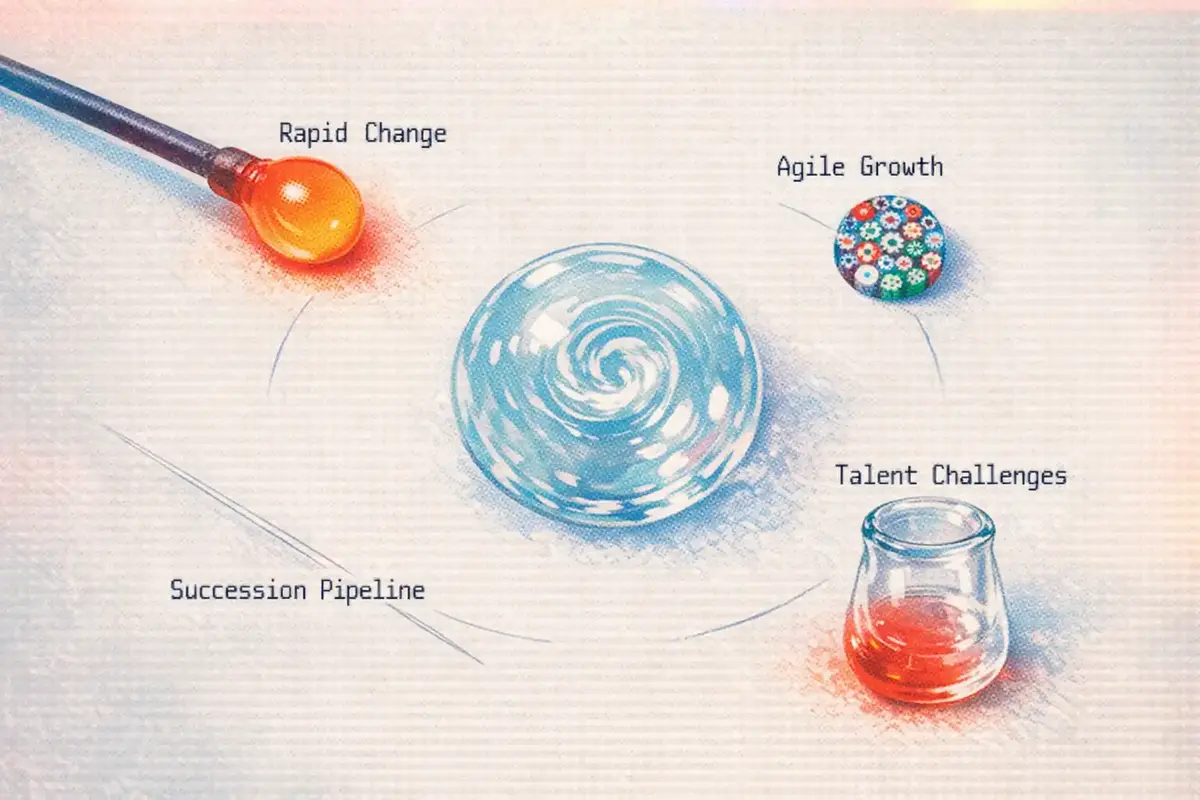
Static succession plans were built for organizations where roles changed slowly, reporting lines held, and capability models stayed relevant for years. That is not the operating environment in most agile or high-growth businesses now. Strategy shifts midyear. Teams reorganize around products, markets, or client pressure. The leadership bench can look healthy in January and misaligned by April.
This is the core reframing. Succession planning is not mainly about naming replacements. It is about preserving continuity when the shape of leadership work keeps moving.
That distinction matters because readiness decays. A successor who looked strong for a functional leadership role may be underprepared for a cross-functional one. A team lead who was developing well under one market strategy may now need judgment, influence, and operating range that were never part of the original plan. Annual reviews cannot absorb that level of motion.
Why AI coaching becomes the missing layer
This is where AI coaching starts to matter—not as a decision-maker, but as infrastructure for staying current. Between talent reviews, promotion committees, and formal development conversations, people still need to practice judgment, reflect on feedback, and adapt to changing expectations. A living pipeline depends on that in-between work.
Used well, AI coaching creates continuity between formal moments. It can reinforce goals, surface patterns, and support continuous feedback loops in AI coaching so development does not stall while the organization moves on. The result is not a perfect forecast. It is a more current view of who is actually becoming ready.
And that raises the harder question: if roles themselves keep changing, what exactly should organizations be preparing successors for—today’s position, or tomorrow’s version of it?
What does succession planning mean when roles keep changing?
Skills-based planning is the framework that matters here. If the role itself keeps evolving, what exactly are you planning for: a person, a title, or a capability set?
Most leaders think they know the answer until a reorg, acquisition, or growth spike changes the job faster than the talent process can react. Then the old assumption breaks: that succession planning is about naming who is next. It is not that simple.
In plain language, succession planning is the process of preparing people to step into critical roles with confidence and continuity. A leadership pipeline is the group of people being developed for that future. Readiness is not a badge someone earns once a year; it is the current evidence that they can handle the work now, in this context, under these conditions.
From title matching to capability matching
Consider a mid-market technology company two quarters after an acquisition. During the integration review, a VP role that used to be mostly operational now requires product judgment, cross-border coordination, and calm decision-making under ambiguity. The successor identified last year may still be strong. But strong for what, exactly?
That is why title-based planning starts to fail in high-growth environments. When roles are being split, combined, or invented, the more useful question is not “Who can replace the incumbent?” but “Which capabilities will this role demand next?” 365Talents makes this case directly: a skills-based approach turns succession planning into something more concrete and usable because it focuses on observable skills rather than static job labels (365Talents).
Skills-based planning does not ignore roles. It translates them. It breaks a moving job into component parts—decision quality, stakeholder influence, operating range, learning speed—so development can keep pace even when org charts do not.
For example, a company expanding into new markets may find that its next general manager needs cross-cultural negotiation skills and digital fluency, not just P&L experience. By mapping these capabilities, HR can target development, mentoring, and project assignments that actually prepare people for the real work ahead, not just for a title.
Why readiness has to stay current
Eightfold AI argues that succession planning now has to be always on, not episodic, because business conditions change too quickly for annual snapshots to stay reliable (Eightfold AI). That framing is more than process design. It changes how leaders should interpret readiness.
Readiness is contextual and time-sensitive. A director may be ready to lead a stable function and not ready to lead a merged one. A team lead may be one market shift away from being a credible successor—or six months away because the role has expanded faster than their judgment has.
This is where AI coaching becomes practical. Qooper positions AI in succession planning as a bridge between development planning, mentoring, and day-to-day growth—not a replacement for human judgment, but a way to keep development active between formal reviews (Qooper). In practice, that means people can work on specific gaps continuously, often through a custom AI coaching competency framework aligned to the role that is emerging, not the one that existed last year.
For instance, if a future leader needs to build influence across a global matrix, AI-driven feedback and microlearning can target that gap in real time, rather than waiting for the next annual review cycle. This agility helps organizations avoid the common trap of “paper readiness”—where successors look good on a list but are unprepared for the realities of a changing role.
The real shift is simple: succession planning stops being a list of names and becomes a system for building capabilities in motion.
That sounds clean on paper. It gets harder in transformation work, where organizations often report progress while actual successor readiness quietly stalls—why does that happen so often?
Why do agile transformations look successful but still fail to create lasting readiness?
94% of companies in BCG’s global research had launched agile initiatives. That sounds like progress until you see the harder number: only 53% said they had actually achieved their transformation targets and created lasting change in culture, ways of working, and teaming (Boston Consulting Group, 2024).
Most organizations mistake visible motion for durable capability. New rituals appear. Squads are renamed. Decision forums multiply. Talent reviews start using the language of adaptability. Yet the succession system underneath often remains frozen in an older model—annual assessments, static role profiles, and vague development plans that no longer match the work.
That is how transformation theater happens. The organization looks modern from the outside while its readiness engine still runs on delayed signals.
Activity is easy to see. Readiness is harder.
BCG found that 66% of companies claimed successful agile transformations, even though far fewer reported lasting change (Boston Consulting Group, 2024). Executives should take that gap seriously. It suggests many firms are measuring implementation, not absorption.
Picture a mid-market manufacturing company during a quarterly restructure. The COO has moved to product-based teams, shortened planning cycles, and pushed more decisions closer to the floor. On paper, the transformation is working. But when a plant director suddenly exits, the identified successor has never led across a matrix, handled conflicting priorities in real time, or coached managers through ambiguity. The org changed faster than the bench did.
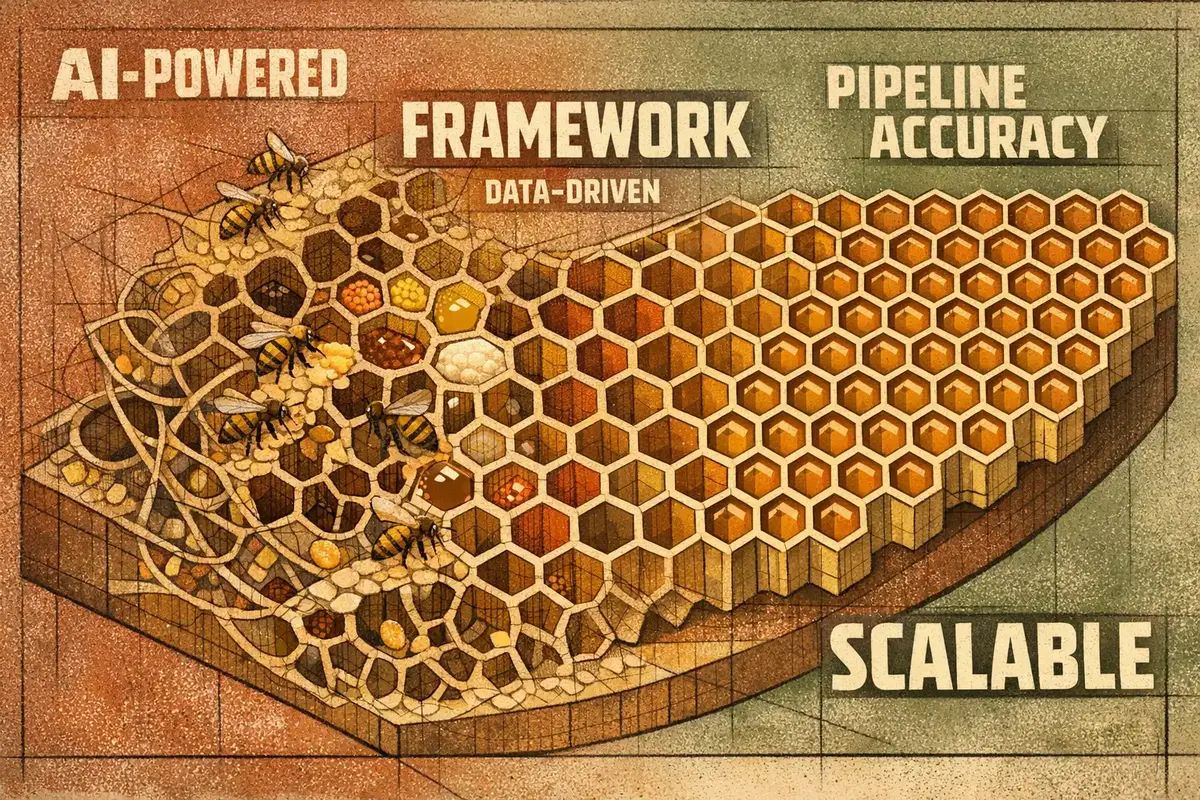
The failure was not in the agile rollout. It was in assuming structural change would automatically produce leadership depth.
Managers are the multiplier
This is why leadership development is not a side program. It is the operating mechanism. Gallup’s research shows that 70% of a team’s engagement is influenced by managers (Gallup). If managers shape engagement, they also shape whether people get stretch, feedback, and the confidence to grow into larger roles.
Succession readiness is built there—in weekly one-to-ones, project debriefs, and how managers respond when pressure rises. Not in the slide deck.
That is also where AI coaching earns its place. Used well, it supports managers between formal conversations: prompting reflection, reinforcing priorities, and helping leaders stay consistent in how they develop people. It should strengthen managerial judgment, not replace it. The real value is continuity—especially when managers are carrying too much span and too little time. In practice, that makes leadership development less episodic and more usable.
An agile transformation can change workflows in a quarter. Can it change how managers build successors every week—or does readiness still depend on chance?
How does AI coaching keep successors developing between formal reviews?
The Continuous Readiness Layer is the right frame here: what changes when development stops being an event and becomes a continuous operating layer? Most executives still assume succession progress happens in talent reviews, calibration meetings, and promotion discussions. But if those are the only moments that count, what exactly is happening in the other eleven months?
Usually, not enough.
That is the gap AI coaching can close. Not by deciding who gets promoted. Not by screening people into or out of a succession slate. AI coaching is not AI screening. Screening sorts and ranks candidates against selection criteria. Coaching supports development in motion—through feedback prompts, reflection questions, practice nudges, and reminders tied to the capabilities a future role will require.
The difference is continuity
Take a regional financial services firm during a quarterly review. A director has been marked as a likely successor for a broader market role, but the role is changing faster than the formal process. Client complexity is rising. Cross-functional influence matters more. The next calibration meeting is months away.
Without an ongoing layer, that director waits.
With AI coaching, the system can reinforce specific behaviors between reviews: prompt reflection after a difficult stakeholder meeting, suggest practice on decision framing, or surface recurring themes from manager feedback. Research from AI Coach System argues that continuous feedback loops matter precisely because development conversations are otherwise too intermittent to shape day-to-day growth (AI Coach System).
That is the practical value. Successors do not have to wait for annual calibration to get useful guidance.
Where the system earns trust
The strongest use case is not prediction. It is pattern recognition. Eightfold AI makes the case that skill-based growth and succession planning are tightly linked because organizations need a clearer view of how capabilities are developing over time, not just where people sit today (Eightfold AI). That matters at talent-pool level. Leaders can see who is consistently closing gaps, where progress is stalling, and which capabilities are weak across an entire bench.
AIHR’s work on succession planning points in the same direction: repeatable processes outperform ad hoc ones because they make development easier to track, compare, and improve over time (AIHR). AI should handle that repetition—tracking signals, reinforcing goals, prompting follow-through. Human leaders should keep the judgment.
That division of labor is the point. Machines can sustain the rhythm. Leaders still decide what readiness means.
And once readiness becomes more visible between reviews, a harder question appears: does better development simply produce stronger leaders—or does it change how fast the whole organization can move?
What evidence shows that leadership development changes organizational speed?
86% of companies with strategic leadership development programs could respond rapidly to change, compared with 52% of companies with less mature programs. If you are trying to make succession planning credible in a volatile business, that gap should change where you put your money (Center for Creative Leadership).
You have seen the moment. A regional services company hits a sudden client escalation during quarter-end, the VP needs someone to step in, and the names on the succession list look fine until the work turns messy, political, and fast.
That is why leadership development should be treated as a speed mechanism, not a culture accessory. Center for Creative Leadership found that, across more than 13,000 program participants, people reported an average 60% improvement in both team engagement and developing others two months after a leadership program (Center for Creative Leadership). Those are not soft aftereffects. They are the operating conditions that determine whether teams absorb change quickly or wait for direction.
Participants reported an average 60% improvement in both team engagement and developing others two months after a leadership program (Center for Creative Leadership).
When executives say they want a stronger bench, what they usually mean is simpler: they want more people who can take ownership without slowing the system down. That depends heavily on managers. Gallup’s research shows that 70% of a team’s engagement is influenced by managers (Gallup). So if managers are weak at coaching, delegation, and judgment under pressure, the succession pipeline does not merely thin out. It goes stale.
This is the practical implication for succession planning. Stop treating it as a separate HR workflow that produces slates, charts, and confidence theater. A succession system becomes believable when it is tied to observable development outcomes: stronger team engagement, better coaching behavior, faster decision handoffs, and more leaders who can develop others in turn. In other words, the pipeline is only as current as the managers shaping it every week.
That is also why investment logic needs to change. The question is not whether you can afford to develop managers at scale. The question is whether you can afford a succession process that updates names without improving capability. In many firms, the answer now includes scaling leadership development with AI so support reaches beyond the top tier and into the actual managerial layer where readiness is built.
The evidence is clear enough. Better leadership development improves responsiveness, and responsiveness is what succession planning is supposed to protect.
But once AI starts helping extend that development system, another issue appears immediately: where should the machine stop — and where must human judgment stay firmly in control?
How should organizations govern AI recommendations without over-automating succession?
The Human-in-the-Loop Governance Model matters here because succession decisions are too consequential to hand to a scoring engine. Without it, organizations start ranking successors faster than leaders can interpret role context, and the process gains speed while losing judgment.
That is the failure mode to avoid.
Set the boundary before you scale
AI should inform succession conversations, not make them. In practice, that means the system can surface patterns, flag emerging capability gaps, and support AI coaching continuous feedback between reviews. It should not decide who is “next.”
Scrum Alliance makes the broader point in agile change work: coaching and transformation still depend on human guidance, especially when leaders are interpreting ambiguity rather than following a script (Scrum Alliance). Succession is exactly that kind of judgment-heavy domain. A recommendation may be useful. A recommendation without context is often dangerous.
Build governance into the talent process
In a quarterly review at a regional retail company during a restructuring, an AI system may rate a director highly based on recent performance signals. But the role being filled has just shifted from store operations to cross-channel execution. The data is current. The interpretation is not.
So governance has to answer three plain questions: Who reviews the recommendation? How is bias checked? Where does human override sit? AIHR’s guidance on structured succession processes is useful here because consistency is not just administrative hygiene; it is what makes oversight possible (AIHR).
The strongest model places AI inside a broader talent system — linked to workforce planning, performance management, and role design — rather than treating it as a standalone succession tool. That matters even more in mergers, hypergrowth, or reorgs, where readiness signals and job definitions can change in weeks. BCG’s work on agile transformation shows how easily organizations confuse visible activity with real impact (BCG, 2024). The same mistake happens when AI outputs look precise enough to trust by default.
Good governance keeps the machine useful and limited. The harder challenge comes after that: once recommendations, reviews, and overrides are working, what does a succession system look like when it stays alive over time — not just controlled?
What does a living succession system look like over time?
The Continuity System model matters here because the cost of getting succession wrong is rarely abstract: revenue slips during leadership gaps, trust erodes when teams see uncertainty at the top, and strong people leave when growth paths look improvised.
If succession is a living system, what should leaders keep watching after the first plan is built?
From chart maintenance to capability portfolio
A living succession system is not a cleaner org chart. It is a portfolio of future capability that is reviewed, tested, and updated as strategy changes.
That shift sounds subtle. It is not. In a mid-market retail business during a budget-cycle reset, a VP may realize that next year’s critical roles will require sharper margin discipline, stronger cross-channel coordination, and better judgment under volatility. The old succession chart can still show names. It just cannot show whether those capabilities are actually forming.
This is why the skills-based lens matters over time. 365Talents argues that skills-based succession planning makes the work more tangible because it translates broad leadership potential into capabilities HR and business leaders can actually track and develop (365Talents). Over time, that creates a better question: not “Who is next?” but “What strength is deepening, where is risk rising, and which roles are changing faster than the bench?”
What leaders should keep watching
The system stays alive when four things move together: strategy, skills, manager action, and readiness visibility.
Eightfold AI’s always-on framing is useful because it treats succession as a continuous process rather than a periodic event (Eightfold AI). That is the practical role of AI coaching. Not to produce a final answer, but to keep readiness visible between planning cycles — where development either compounds or stalls.
In practice, that means managers are not waiting for the next review to spot drift. They can see whether a likely successor is building range, handling ambiguity, and responding to feedback in real work. In some organizations, that may sit alongside approaches like integral coaching, where development is treated as an ongoing practice rather than a one-time intervention.
The durable mental model is simple: succession planning is a continuity system, not a replacement list.
So look at your own process. Is it updating names — or building confidence that leadership continuity will hold when the business changes again?
Key Takeaways
- Static succession plans break when roles, strategy, and readiness change faster than annual reviews can track.
- Skills-based planning focuses on capabilities, not just titles, so development can keep pace with changing work.
- AI coaching helps keep successors developing between formal reviews, but it should support human judgment, not replace it.
- Strong leadership development improves responsiveness, which makes succession planning more credible in volatile organizations.
Frequently Asked Questions
What is AI coaching in succession planning?
AI coaching in succession planning is a development layer that helps future leaders build the skills, judgment, and habits needed for critical roles. It supports continuous feedback, reflection, and practice between formal talent reviews, while human leaders still make the actual succession decisions.
Why do static succession plans fail in agile or high-growth organizations?
Static succession plans fail because roles, priorities, and reporting lines can change faster than annual reviews can update readiness. A person who was prepared for last quarter’s job may not be prepared for the role after a reorg, acquisition, or growth spike.
What is the difference between title-based and skills-based succession planning?
Title-based planning focuses on replacing a specific job with a specific person, while skills-based planning focuses on the capabilities the next version of the role will require. Skills-based planning is more useful in changing organizations because it tracks observable abilities such as influence, decision quality, and operating range.
How does AI coaching help successors develop between formal reviews?
AI coaching keeps development active by prompting reflection, reinforcing goals, and surfacing recurring feedback patterns in real time. This helps successors work on specific capability gaps continuously instead of waiting months for the next review cycle.
How should organizations govern AI in succession planning?
Organizations should use AI to inform succession discussions, not to make final decisions. Good governance includes human review, bias checks, clear override authority, and alignment with workforce planning, performance management, and role design.