
Why generic AI advice feels useful but rarely changes behavior
69% of organizations are actively integrating coaching and mentoring into learning and development, yet most AI interactions still end at fast advice rather than real change (PwC, 2024).
You know the moment. A director at a mid-market technology company opens an AI tool before a quarterly review, asks how to handle a disengaged manager, gets a clean five-point answer, and feels briefly relieved. The meeting still goes badly. Not because the advice was wrong, but because it never touched the pattern underneath the problem.
That gap is expensive. PwC found that 82% of respondents agreed coaching and mentoring are among the most effective learning methods in use today (PwC, 2024). If the market already sees developmental support as effective, then every AI interaction that stops at generic guidance wastes more than a prompt. It wastes decision quality, delays growth, and creates the illusion of progress at the exact moment a leader needs deeper clarity. This article addresses that gap: why advice feels useful in the moment, but coaching changes what a person can actually do next.
Generic AI is built to respond quickly. That is its strength.
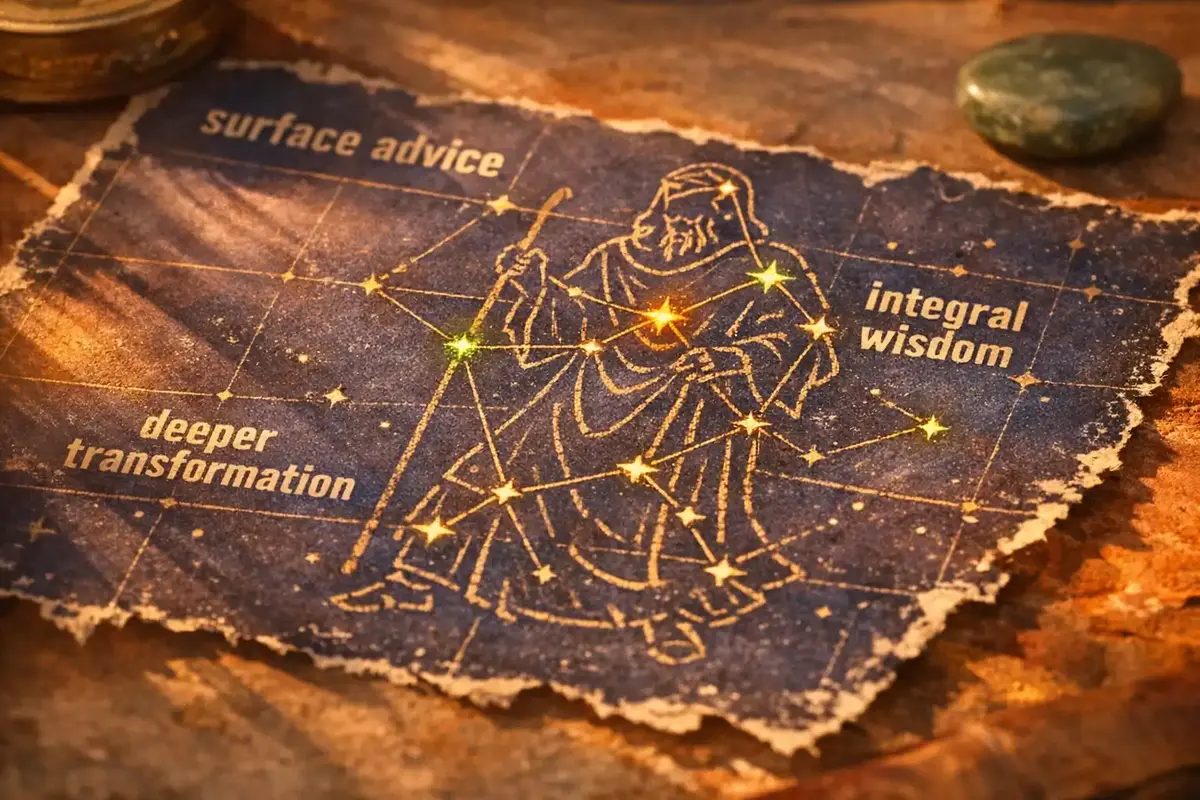
Fast answers are not the same as developmental movement
But speed is not the same as insight. A quick answer can help you draft an email, structure a conversation, or list options. It usually cannot tell you why you keep recreating the same conflict with different people, why a reasonable plan keeps failing in execution, or what part of your own behavior the situation is exposing.
That is where Integral wisdom changes the unit of analysis. Instead of treating the issue as a single problem to solve, it looks at the person, the recurring pattern, the surrounding context, and the current growth edge. The question shifts from “What should I do?” to “What is this situation showing me about how I am making meaning, reacting, and leading?”
This is the difference between advice delivery and coaching and mentoring in any serious sense. One gives an answer. The other helps a person see the structure producing the problem.
The real test of AI coaching
The strongest AI coaching will not win because it sounds smart. It will win because it helps people notice what was previously invisible to them — the assumption, the defensive habit, the identity stake, the context they were flattening into a simple task.
That is a much higher bar.
If AI is going to matter in human development, the real question is not whether it can respond well. It is whether it can help someone see what they could not see alone. And once you ask that, a harder question follows: what exactly makes coaching “Integral” in the first place?
What is Integral coaching, and why does it change the question AI asks?
Integral Coaching matters here because it changes the unit of analysis. What if the real problem is not the decision in front of you, but the way you are interpreting it?
That question unsettles a common assumption. Most people think coaching starts once the issue is clear: a conflict, a stalled team, a hard conversation. But what if the issue you can name is only the surface expression of a deeper pattern?
That is the core move in Integral coaching. In plain language, it is a developmental approach that works with the whole person — not just the immediate problem. AI Coach System describes it as coaching that attends to how people think, feel, act, and relate, rather than treating performance as a narrow skills gap (AI Coach System). The Integral Institute makes a similar distinction: strong coaching does not stop at producing an answer; it helps reveal the structure behind behavior itself (The Integral Institute).
From issue-solving to pattern-seeing
Consider a VP at a regional healthcare provider during a team restructure. She asks an AI tool how to handle resistance from department heads. A generic system gives her a script: acknowledge concerns, restate priorities, set deadlines. Useful, maybe.
An Integral AI coach asks a different question first: What kind of resistance are you seeing, and what in you gets activated when authority is challenged?
That is not a stylistic difference. It is a different model of change.
Advice-centric AI treats the problem as external and discrete. Integral AI coaching treats the moment as a live intersection of behavior, mindset, relationships, and context. The stated issue still matters, but it is no longer the only thing that matters. A leader’s tone, assumptions, identity, stress response, and the system around them all shape what happens next. That broader frame is exactly why developmental coaching can produce movement where advice alone stalls.
The framework behind better questions
The practical shift is simple to describe and hard to do well. Instead of asking only, “What should I do next?” the coach asks, “What pattern is shaping this moment, and what is the growth edge inside it?”
A growth edge is the next capacity a person needs but does not yet fully embody. Maybe a founder needs to move from control to delegation. Maybe a team lead needs to notice that every disagreement feels like disrespect. Once that pattern becomes visible, the coaching target changes. You are not just fixing a meeting. You are building a new way of seeing and responding.
The difference is not better advice. It is a better diagnosis of how change actually happens.
And that raises the harder question. If coaching can shape how a person makes meaning — not just what they do next — when does guidance become transformation, and why does that distinction matter so much?
Why does the difference between advice and coaching matter so much?
Most organizations still treat a good answer as evidence of good coaching. That mistake matters because useful language can hide zero developmental movement.
If the answer is good but the behavior never changes, did the coaching actually work?
Advice fixes the question; coaching examines the person asking it
In practice, most teams ask AI for help the same way they ask a search engine or a smart colleague: What should I say? What should I do? How should I handle this? The assumption is simple. If the response is thoughtful, the problem is being addressed.
Often, it is not.
Advice is built for the stated problem. Coaching works on the interpretation behind the problem. That is the real divide. A polished response can help a leader prepare for a difficult conversation, but it usually does not test the assumptions driving that conversation in the first place. What am I taking for granted here? What am I not seeing? What choice am I avoiding by framing the issue this way?
AI Coach System makes this distinction clearly in its explanation of Integral Coaching: the work is not just to improve action, but to develop the person’s capacity to see and respond differently (AI Coach System). That sounds abstract until you watch the alternative fail.
A director at a regional manufacturing company heads into a budget-cycle meeting after weeks of friction with operations. She asks an AI tool how to push back without damaging the relationship. The answer is excellent: acknowledge constraints, align on priorities, propose tradeoffs. She uses it almost word for word. The meeting stays civil. Nothing improves. A month later, the same conflict returns because her underlying habit — reading every challenge as a threat to her authority — never came into view.
That is not a bad answer problem. It is a bad level-of-intervention problem.
The real risk is superficiality that sounds intelligent
This is where weak AI coaching becomes dangerous. Not because it is obviously wrong, but because it is convincingly shallow.
The Integral Institute draws a sharp line between guidance that helps in the moment and coaching that supports deeper shifts in awareness, behavior, and meaning-making (The Integral Institute). That distinction matters more with AI than with human coaches because fluent systems can create the impression of depth without doing the harder work of inquiry. They can mirror your language, organize your thoughts, and still leave your core pattern untouched.
The most misleading coaching experience is not a bad one. It is one that feels insightful while changing nothing important.
Developmental coaching asks more. It slows down the rush to solution long enough to examine the frame, the blind spot, and the recurring choice inside the situation. Without that, AI becomes a very elegant delivery system for self-confirmation.
And once a system can sound wise without being trustworthy, the question changes fast: what protects the user from bias, false confidence, or advice that reinforces the very pattern they need to outgrow?
How do ethics, trust, and bias shape the quality of AI coaching?
The ICF Code of Ethics matters here because it exposes a hard question most buyers skip: what happens when an AI coach is helpful on the surface but untrustworthy underneath? If the response sounds thoughtful, is that enough? If the system feels reflective, does that mean it is safe to disclose what actually drives your behavior?
Not necessarily.
In coaching, ethics is not a legal wrapper added after the product works. It is part of what makes the work possible in the first place. The International Coaching Federation’s coaching ethics make that plain: confidentiality, transparency, informed consent, and clear boundaries are not administrative details; they protect the conditions required for honest reflection (International Coaching Federation, 2021). Without those conditions, people self-edit. And once they self-edit, the coaching loses access to the real material.
A founder at a retail startup feels that in minutes. During a client escalation, she asks an AI coach why she keeps overreacting when delivery dates slip. If she is unsure where that conversation is stored, who can review it, or whether the system will use her disclosures to shape future outputs in opaque ways, she will stay on the surface. She will ask for a script. She will not name the fear.
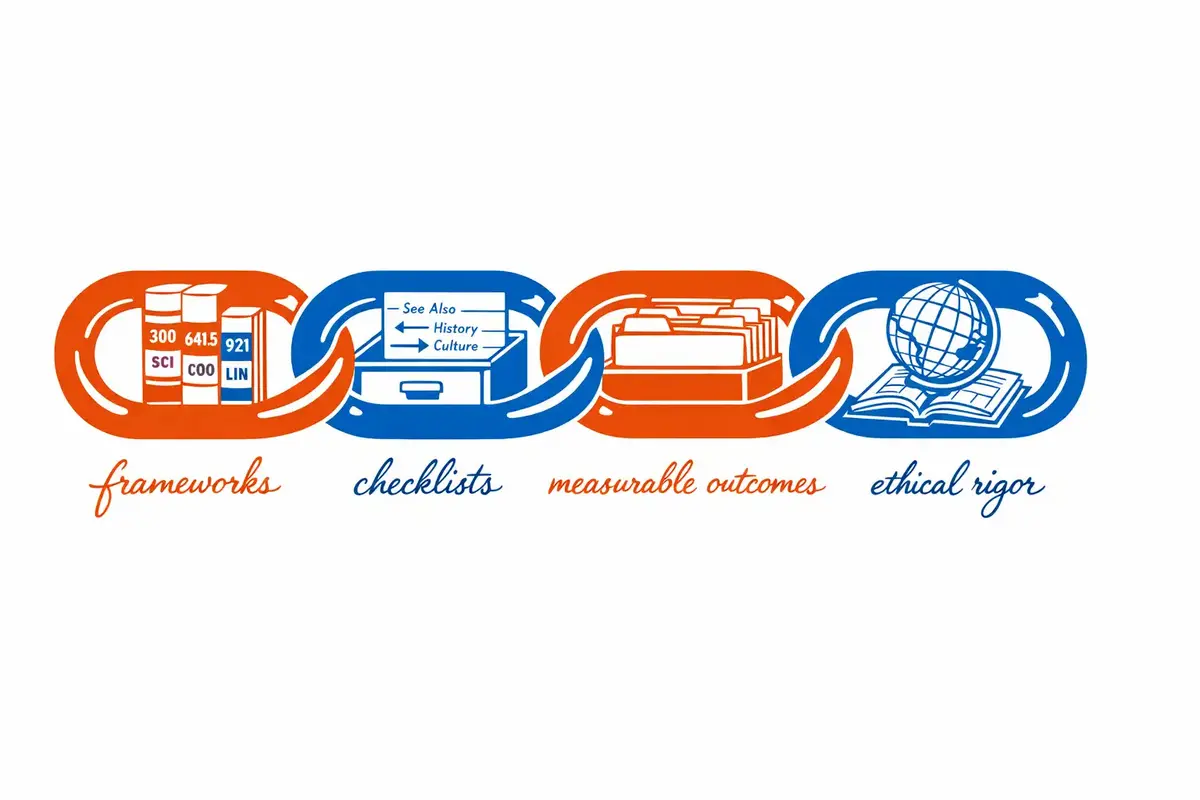
Trust is built through design, not tone
That is why privacy, bias mitigation, and quality assurance are not technical side notes. They shape the conversation itself.
ICF’s practical guidance on AI and coaching stresses transparency about how AI is used, attention to bias in outputs, and human responsibility for oversight and judgment (ICF, 2024). In beginner-friendly terms, that means three simple tests. Can the user understand what the system is doing? Can the system avoid reinforcing narrow assumptions about leadership, emotion, culture, or communication style? Can someone verify that the coaching quality is consistent rather than merely fluent?
A coaching system that protects data poorly or reflects bias carelessly does not just create risk. It distorts the user’s self-understanding.
The relationship is the product
This is the point many teams miss. In developmental coaching, the relationship is not separate from the intervention; it is the intervention. An AI coach must therefore protect the relationship as carefully as it generates responses. That means clear disclosure, limits on sensitive use cases, escalation paths when issues exceed the tool’s scope, and regular review of whether the system is nudging users toward conformity instead of growth (ICF, 2024; International Coaching Federation, 2021).
A system can sound calm and still be unsafe. It can sound balanced and still encode bias.
So the standard is higher: not “Does it answer well?” but “Can it be trusted when the conversation becomes real?” And once trust becomes measurable, a sharper question follows — what do the numbers actually say about coaching, engagement, and development?
What do the numbers say about coaching, engagement, and development?
A services company’s CHRO looks up from the quarterly talent review and sees the same pattern again: managers are asking for better conversations, not more content. In the next meeting, the COO asks the harder question — if engagement is slipping and development spend is rising, what kind of coaching actually changes behavior?
The scale of the issue is no longer anecdotal. Deloitte’s 2024 Global Human Capital Trends drew on 14,000 business and human resources leaders across 95 countries, which tells you this is not a niche L&D debate but a mainstream management concern (Deloitte, 2024). Coaching is already inside the operating model of modern organizations. The strategic question is not whether development matters. It is whether the coaching system in use is strong enough to justify the attention and budget it now receives.
Development is shifting from performance support to human sustainability
That shift becomes clearer in how organizations define success. Deloitte found that 76% of respondents said leaving every human the organization touches better off is very or critically important to organizational success (Deloitte, 2024).
76% said leaving every human the organization comes in contact with better off is very or critically important to success (Deloitte, 2024)
That is a meaningful change in emphasis. Development is no longer framed only as a way to raise output, close skill gaps, or prepare successors. It is increasingly tied to human sustainability — whether work builds people’s capacity, resilience, and long-term effectiveness rather than extracting short-term performance from them.
This matters for AI coaching. A system designed mainly to deliver polished answers may help someone get through today’s conversation. It does far less to help them grow into the next level of judgment, self-awareness, or relational skill. If the organizational standard is now “leave people better off,” then shallow utility is not enough. The bar has moved.
Low engagement makes the cost of weak coaching visible
Gallup’s latest numbers sharpen the business case. Global employee engagement fell to 20% in 2025 (Gallup, 2026). That means four out of five employees are not engaged at work by Gallup’s measure — a staggering ceiling on execution, learning, and change capacity.
The economic cost is worse. Gallup estimates that low engagement cost the world economy approximately $10 trillion in lost productivity, or 9% of global GDP (Gallup, 2026).
Low engagement cost the world economy about $10 trillion in lost productivity — 9% of GDP (Gallup, 2026)
For executives, this is where coaching and mentoring stops being a soft topic. In a regional financial firm during budget season, a team lead who feels unseen does not usually announce disengagement. It shows up as slower decisions, thinner collaboration, and avoidable rework. Multiply that pattern across functions and the productivity loss is not abstract anymore.
The implication is straightforward. If disengagement is this widespread, then coaching has to do more than provide competent advice on demand. It has to help people reconnect to agency, meaning, and better action in context. That is the promise of real coaching and mentoring. But where should a beginner start — with tools that sound smart, or with systems designed to develop the person using them?
Where should a beginner start if they want AI coaching that actually transforms?
41% of employees who recently changed organizations said they left for better professional development opportunities. Get this wrong, and the cost is not abstract: talent walks, trust thins out, and managers keep paying for “support” that never changes how people lead (Center for Creative Leadership, 2025).
That is the beginner’s real problem. If development is too infrequent and too generic, how do you build a coaching habit that actually sticks?
Start by naming the job: advice, reflection, or change
A regional healthcare team lead preparing for a difficult staffing conversation does not always need coaching. Sometimes she needs a clean script for the next 20 minutes. Sometimes she needs space to think. Sometimes the issue is deeper — a recurring pattern in how she handles conflict, authority, or uncertainty.
Those are three different jobs: advice, reflection, and developmental change. Beginners do better when they sort the need before they open the tool. If you want wording, ask for wording. If you want perspective, ask for questions. If you want transformation, use AI to surface patterns, assumptions, and repeated reactions — the territory of developmental coaching.
The distinction matters because most organizations still run development too rarely. 45% of participants said assessments occur once a year, which helps explain why growth often feels episodic instead of continuous (PwC, 2024).
45% said assessments happen once a year (PwC, 2024)
Use AI for structured reflection, not just fast output
The best beginner use case is not “give me the answer.” It is “help me see what I keep missing.”
Ask the system to identify themes across recent conflicts. Ask it to compare your stated intention with your actual behavior. Ask it to reframe a problem from the other person’s point of view. That is where AI can be genuinely useful: pattern recognition, reframing, and structured reflection.
This is also more practical than it sounds. The Center for Creative Leadership found that 98% of executive participants said they applied what they learned to their work (Center for Creative Leadership, 2025). Application rises when learning is tied to real situations, not annual events or generic content dumps.
Know when AI is not enough
Some issues should move to a human coach quickly. High-stakes judgment. Identity-level transitions. Complex relational dynamics where power, history, and emotion are all in the room.
Use AI to prepare. Do not ask it to carry the whole load.
That boundary is not a weakness in AI coaching. It is a sign of maturity. Because once coaching is designed around growth rather than convenience, the standard changes fast: are you building better answers — or a better leader?
What changes when coaching is designed for growth, not just answers?
98% of participants were still fully committed to their goals more than eight weeks after the program (Center for Creative Leadership, 2025). That should make any executive pause, because most organizations still behave as if a good answer in the moment is enough.
It usually is not.
What many teams buy is responsiveness. What they actually need is development. The gap matters more now because leadership and social influence rose by 22 percentage points in the share of employers identifying it as a core skill (World Economic Forum, 2025). If those human capabilities are becoming more valuable, then coaching cannot stay trapped at the level of scripts, tips, and polished phrasing.
The center of gravity shifts
When AI coaching is built around Integral wisdom, the center of gravity moves from isolated problem solving to lasting capacity. The system is no longer trying to win the interaction. It is trying to help the person grow.
That changes the design logic. A fast tool asks, “What should you say in tomorrow’s meeting?” A developmental coach asks, “What pattern are you carrying into that meeting, what is it costing you, and what would a better response require?” The first can reduce friction for a day. The second can change how someone leads under pressure.
A VP at an enterprise technology company feels this difference during a market shift. She opens an AI tool before a strategy review and asks how to handle a peer who keeps challenging her assumptions. Generic advice gives her talking points. A stronger coach helps her see that she has been treating challenge as disloyalty — and that this habit is narrowing debate at exactly the wrong time. That is not just a better answer. It is a better read on reality.
What the best AI coach actually does
The most useful AI coach is not the one that responds fastest. It is the one that helps people notice what matters, why it matters, and what to do next.
That requires a whole-person view. Context. Ethics. Time. It means seeing behavior not as a one-off event, but as part of a pattern shaped by stress, identity, relationships, and environment. It also means respecting limits — because trust and judgment are part of the coaching itself, not extras bolted on later.
The real distinction, then, is simple. Generic AI advice helps you act. Integral AI coaching helps you become someone who can act with more awareness, range, and steadiness.
That is the standard worth using. Not whether the session felt smart, but whether growth lasts after the session ends.
So in your own work, what are you really asking for — a cleaner answer, or a deeper change?
Key Takeaways
- Generic AI advice can be useful quickly, but it often stops short of changing behavior.
- Integral coaching focuses on the person, the pattern, the context, and the growth edge.
- Ethics, privacy, bias mitigation, and trust are essential to effective AI coaching.
- The strongest AI coaching supports reflection, development, and lasting growth, not just fast answers.
Frequently Asked Questions
What is Integral coaching in AI coaching?
Integral coaching is a developmental approach that looks at the whole person, not just the immediate problem. It examines behavior, mindset, relationships, and context to uncover the pattern behind a challenge and support deeper change.
How is AI coaching different from generic AI advice?
Generic AI advice gives quick answers for a stated problem, while AI coaching aims to reveal the assumptions, habits, and patterns shaping that problem. The goal is not only to solve the next task, but to help the person respond with greater awareness and capacity.
Why do fast AI answers often fail to change behavior?
Fast answers can be useful for planning or wording, but they usually do not address the deeper pattern that keeps producing the same outcome. Without examining interpretation, identity, and recurring reactions, the underlying behavior tends to stay the same.
What makes AI coaching trustworthy and ethical?
Trustworthy AI coaching requires transparency, confidentiality, informed consent, bias mitigation, and human oversight. These safeguards help users speak honestly and reduce the risk that the system will reinforce narrow assumptions or expose sensitive information.
How should a beginner start using AI for coaching and development?
Start by deciding whether you need advice, reflection, or developmental change, because each requires a different kind of support. Use AI to surface patterns, reframe situations, and prepare for conversations, but move to human coaching when the issue involves high stakes, identity, or complex relationships.