
Why Most Growth Plans Stay Lopsided Until AI Helps You Balance Them
31%. That is where U.S. employee engagement fell in 2024, which tells you something uncomfortable about growth efforts: people are surrounded by development language, yet many still do not feel more alive, focused, or supported in practice (Gallup, 2024).
You know the scene. A director in a mid-market technology company leaves a quarterly review with a full page of notes on executive presence, clearer thinking, and better prioritization—then goes straight back to skipped workouts, shallow recovery, unresolved frustration, and the same reactive patterns under pressure. The plan looks serious. The person still feels split.
That split is the real problem. Most growth plans become lopsided because they reward what is easiest to name and measure: mindset, goals, productivity, communication. Those matter. But when body, spirit, or shadow are left out, development turns into a partial upgrade mistaken for a whole one.
The hidden cost of one-dimensional growth
The organizational data makes this more than a private self-improvement issue. Only 39% of employees strongly agreed that someone at work cares about them as a person, and only 30% strongly agreed that someone encourages their development (Gallup, 2024). That gap has consequences: people are asked to grow while receiving weak signals that their full humanity—or even their full potential—actually matters.
Only 30% of employees strongly agreed that someone at work encourages their development in 2024 (Gallup, 2024)
When growth is fragmented, consistency breaks first. You journal but do not sleep enough. You meditate but avoid hard feedback. You build skills but ignore the emotional pattern that keeps derailing your relationships. Over time, that costs energy, judgment, and trust. This article addresses that exact problem: how Integral Life Practice creates a more balanced growth system, and how AI coaching can help you stay with it long enough for it to work.
Why AI changes the equation
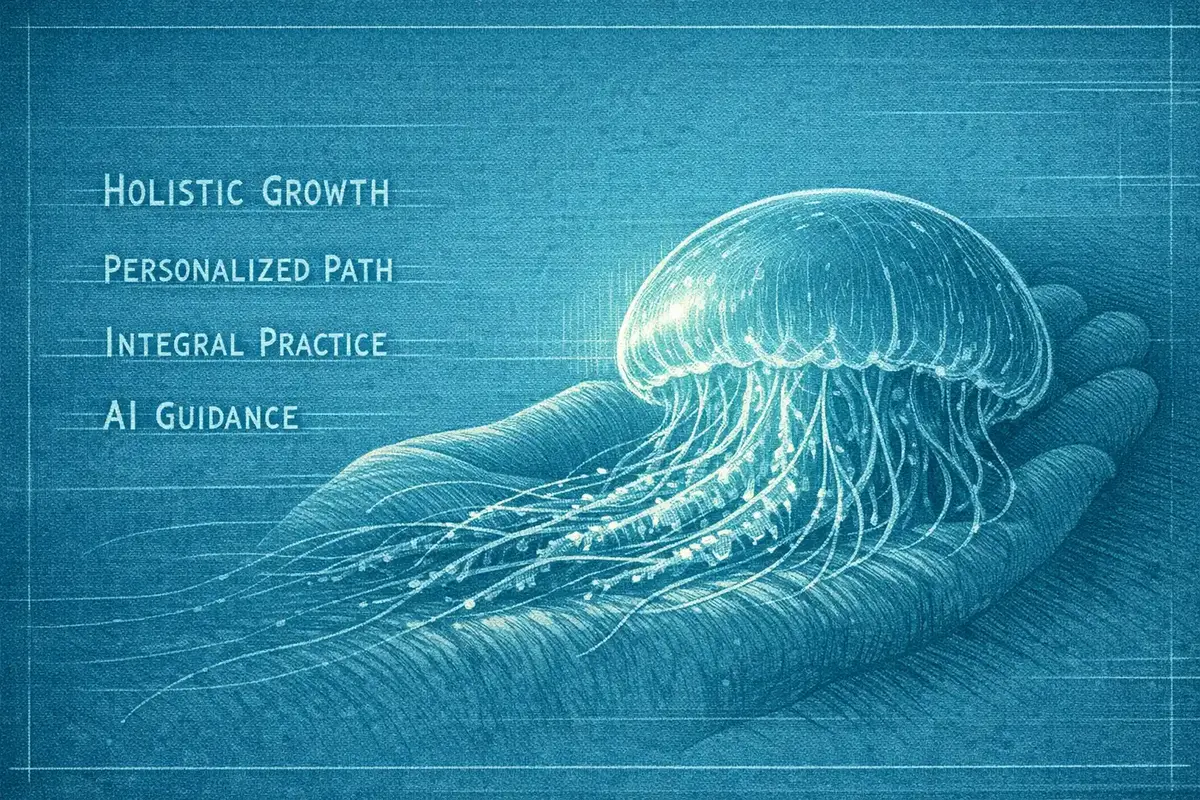
Used well, AI coaching does not replace discernment. It acts as a practice mirror. It can notice that your reflection is all cognitive and no embodied work. It can show that your check-ins keep circling performance while avoiding grief, fear, or resentment. It can help you see patterns before they harden into identity.
That matters because balance rarely fails from bad intentions. It fails from drift.
A good AI layer can prompt reflection, surface neglected dimensions, and support regular review without pretending to be a therapist, mentor, or moral authority. Human judgment still decides what is true, what is wise, and what should happen next. But if your current growth system only strengthens the parts of you that already know how to perform, is it really development—or just refinement of the same imbalance?
What Is Integral Life Practice, and Why Does It Feel Surprisingly Simple?
Integral Life Practice is a whole-person framework for development, and it matters because most people break progress by treating growth as a single lane. Without a structure like this, you get smarter in one domain while the rest of your life keeps pulling in the opposite direction.
That is why ILP feels useful so quickly. In plain English, it says: do not build only the part of you that is already strong. Train the rest as well.
A simple idea hiding inside a broad framework
The surprise for beginners is that comprehensive does not have to mean complicated. Integral Life describes ILP as a practice system that brings together body, mind, spirit, and shadow so development is not reduced to one habit, one insight, or one performance skill (Integral Life). The point is not to master everything at once. The point is to stop pretending one dimension can carry the whole load.
Think of it as cross-training for human development. If you only train cognition, you may become articulate but brittle. If you only train calm, you may feel centered but still avoid conflict. If you only focus on discipline, you may get results while repeating the same emotional pattern under pressure. ILP gives those domains one home, so your version of self-improvement stops fragmenting into disconnected efforts.
A VP at a regional healthcare provider sees this in a budget-cycle crunch. She is sharp in analysis and steady in meetings, but after three weeks of tense tradeoffs, sleep drops, patience shortens, and an old defensiveness shows up with peers. A single-skill plan would tell her to communicate better. ILP asks a better question: what practice mix would keep the whole system more stable?
Why modular design makes ILP approachable
This is where the framework becomes more practical than people expect. Integral Life’s Practice Hub presents ILP as modular—you can start small, choose a few practices, and build a rhythm that fits your actual life instead of adopting an all-or-nothing identity (Integral Life).
ILP is designed as a set of practices you can combine, not a rigid sequence you must complete before it “counts” (Integral Life)
That modularity matters because beginners do not need more theory. They need a clear starting point. One person may begin with walking, journaling, and ten minutes of meditation. Another may start with strength work, reading, and a weekly reflection on triggers. Different entry points. Same logic: balance first.
The real value of ILP is not complexity. It is proportion. It helps you invest across domains so one strength does not become a disguise for one neglect. But once body, mind, spirit, and shadow sit in the same system, another question becomes unavoidable—how do these four dimensions actually interact in daily practice, and where does the friction show up first?
How Do Body, Mind, Spirit, and Shadow Work Together in a Real Practice System?
Integral Life Practice matters here because it asks a harder question than most development systems do: what happens when someone gets mentally sharper but remains emotionally reactive, physically depleted, or blind to their own patterns? Many people assume growth means pushing harder in the dimension that already produces visible results. That assumption works for a quarter. It rarely works for a life.
This is the tension inside ILP. Improvement in one line of practice can mask neglect in another. Integral Life frames the method around body, mind, spirit, and shadow precisely because each develops a different human capacity, not because four categories look comprehensive on paper (Integral Life).
Four modules, four jobs
The easiest mistake is to treat these dimensions as interchangeable. They are not.
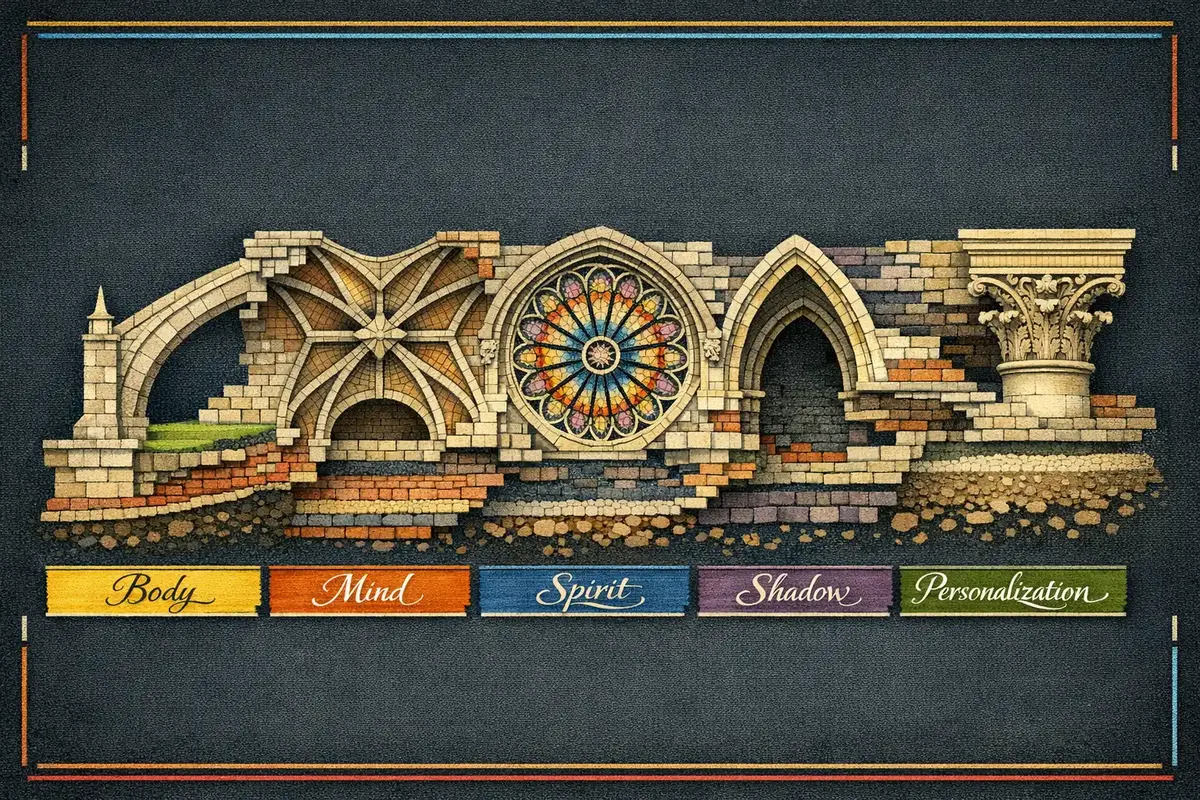
Body practices build the base layer: energy, recovery, stress regulation, and the ability to show up again tomorrow. Sleep, movement, breathwork, and nutrition are not “supporting habits” in the casual sense. They determine whether your best intentions survive contact with pressure. Terry Patten’s ILP materials make this practical point clearly: embodied disciplines are part of the developmental path, not an optional wellness add-on (Terry Patten).
Mind practices do different work. They improve attention, interpretation, learning, and perspective-taking. Reading deeply, structured reflection, deliberate skill-building, and inquiry help you make better sense of complexity. But clarity is not the same as maturity. You can explain your behavior brilliantly and still repeat it.
That is where many high performers stall.
Why spirit and shadow change the quality of practice
At a manufacturing enterprise during a team restructure, a plant director may stay disciplined, informed, and outwardly calm—yet still create drag by reading every challenge as disrespect. The issue is no longer knowledge. It is interpretation, identity, and unexamined threat.
Spirit practices address meaning, not just performance. They help people reconnect action to purpose, values, service, or a wider field of awareness. In ILP, that might mean meditation, contemplation, gratitude, or silence—practices that reduce the odds that achievement becomes your only source of orientation (Integral Life).
Shadow practices do the least glamorous work and often produce the most leverage. They surface disowned motives, recurring triggers, and the stories you keep assigning to other people. Patten’s preview materials describe shadow as the part of development that helps integrate what the conscious self would rather not own (Terry Patten). If you want a practical entry point, this is where structured shadow work becomes useful.
Progress in one domain can conceal weakness in another; ILP treats development as cross-training, not specialization (Integral Life)
That is the real system. Body gives stability. Mind gives clarity. Spirit gives depth. Shadow gives honesty. Miss one, and another starts compensating for work it cannot do. Which raises the harder question: if balanced practice is this important, why do so many capable people still fail to sustain it?
Why the Research on Coaching, Capability Gaps, and Well-Being Makes ILP Timely Now
69% of respondents say they face a significant human-capital or capability gap. If you get that wrong, the cost is not abstract: missed execution, slower decisions, weaker trust in managers, and good people leaving because the system keeps asking for more than it helps them build (McKinsey, 2024).
This is why ILP matters now. Not as a niche philosophy. As a practical answer to a very current problem: if capability gaps and well-being strain are already widespread, what kind of development system can help people grow without burning out?
Capability gaps are now a leadership problem, not just an L&D problem
A regional financial services firm feels this during a market shift. A division VP needs sharper judgment from managers, steadier communication with clients, and better resilience under pressure—all in the same quarter. The old answer is a skills workshop. The real need is broader: people must think better, regulate themselves better, and recover fast enough to do it again next week.
That is the opening for Integral Life Practice. When capability gaps are this common, development cannot stay narrow. McKinsey’s finding tells you the issue is systemic, not anecdotal (McKinsey, 2024). Organizations do not just need more training hours; they need development systems that build durable capacity across the person, not just visible competence in meetings.
Coaching is spreading, but support is still uneven
The market has already started moving in this direction. 69% of participants in PwC’s HR Pulse Survey said coaching and mentoring was the most popular L&D trend they were actively integrating in their organization (PwC, 2024).
69% said coaching and mentoring was the most popular L&D trend they were actively integrating (PwC, 2024)
That is a meaningful shift. It shows organizations increasingly understand that development needs dialogue, reflection, and reinforcement—not just content delivery. But mainstream adoption does not automatically create consistent support. Many people still get occasional advice instead of an actual practice rhythm. They are told to grow, but not helped to sustain personal growth in a way that holds under stress.
ILP fills that gap because it gives coaching somewhere to land. Without a structure, coaching can become insightful but episodic.
Well-being pressure changes the standard for what “works”
The third pressure is harder to ignore. The World Health Organization reports that over 1 billion people are living with mental health conditions worldwide (World Health Organization, 2025). That should end the fantasy that performance can be separated cleanly from recovery, meaning, and emotional integration.
A narrow productivity system may lift output for a month. A whole-person practice is what gives that output a chance to last.
That is the real test for AI-supported development as well. Can it help people stay honest, balanced, and consistent—or does it just make self-optimization more efficient?
How Can AI Coaching Help You Track ILP Without Turning Growth Into a Checklist?
A retail team lead closes a brutal client escalation, opens her notes app, and realizes every entry from the past month says some version of the same thing: “Need to be calmer.” She is not lacking insight. She is lacking a way to see what keeps repeating across sleep, stress, meetings, and the practices she keeps skipping.
That gap is wider than many leaders admit. 46% of workers said their employer provides adequate opportunities to learn new skills, which means more than half still operate with uneven support for development in the flow of work (PwC, 2024). And 53% of respondents say their organization is only in the early phases of identifying better ways to measure worker performance and value (Deloitte, 2024). The implication is practical: most people are still expected to improve without a reliable system for noticing how improvement actually happens.
What AI should track — and what it should not decide
This is where AI coaching can help, if it is used with discipline. Not as a judge. Not as a substitute for self-knowledge. As a reflective layer that can scan your check-ins over time and say, in effect: you report low patience on days after poor sleep; your shadow reflections disappear during high-pressure weeks; your body practices drop first, then your mood follows.
That kind of pattern recognition matters because humans are bad at longitudinal honesty. We remember the dramatic day. We miss the drift.
An AI-supported coaching journey can summarize what happened across weeks, not just what feels true this morning. It can show whether your body practice is steady but your spirit work has vanished, or whether your reflections have become intellectually sharp and emotionally evasive. The value is not automation. The value is contrast.
Structure helps; authority stays with the learner
The best systems do three things well: prompt review, summarize progress, and surface gaps. They do not tell you what your life means. They help you notice where your stated priorities and lived patterns no longer match.
53% say their organization is still in the early phases of finding better ways to measure worker performance and value (Deloitte, 2024)
That is why AI should hold structure, while the human keeps judgment. You decide whether a missed meditation streak means fatigue, resistance, or a practice that no longer fits. You decide whether a recurring trigger needs coaching, therapy, a hard conversation, or rest. AI can organize the evidence. It should not claim the final interpretation.
Used this way, tracking stops feeling like surveillance and starts working like a mirror. But a mirror only helps if the routine around it is realistic — small enough to survive a hard week, strong enough to keep the whole practice intact. So where should a beginner actually start: with ambition, or with a rhythm they can keep?
Where Do Beginners Start When Building a Sustainable ILP Routine?
The assess-choose-practice-review framework matters here because most beginners make the same mistake: they treat ILP like a full rebuild. But if the goal is balance, why do so many people start by designing a perfect week they have never once lived? And why does that plan usually collapse by Thursday?
The answer is not lack of motivation. It is bad sequencing.
Integral Life Practice was built as a modular system, not a demand to optimize every dimension at once (Integral Life). And Integral Life is explicit about the point: ILP brings together body, mind, spirit, and shadow so practice becomes whole-person development rather than a stack of disconnected habits (Integral Life). For a beginner, that means the first move is not adding more. It is seeing clearly.
Assess before you commit
Start with a blunt inventory. Which of the four dimensions already has some rhythm, and which one only exists as intention?
A founder at a services startup often discovers this fast during a hiring sprint. Exercise is sporadic, reading is constant, reflection happens only after conflict, and anything resembling spiritual practice disappears the moment the calendar fills. That is not failure. It is a map.
This is why beginners should assess balance, not ambition. A simple weekly scan is enough: where do you already show consistency, where do you avoid effort, and where do you keep making promises to yourself that your schedule never honors? ILP’s Practice Hub supports exactly this kind of modular entry — choose practices that fit your life now, not the life you imagine you should have (Integral Life).
Choose less than you want
The first week should feel almost too small. One or two practices is usually enough.
Pick one anchor practice from your weakest dimension and one from a dimension that stabilizes you quickly. That might mean ten minutes of walking after lunch and five minutes of evening reflection. Or breathwork three mornings a week and one short shadow prompt on Fridays. The point is repeatability.
A sustainable ILP routine starts with a few practices you can keep, not a full system you can admire (Integral Life)
Intensity flatters the ego. Repetition changes the person.
Use the first seven days to observe friction. What gets skipped first? What feels forced? What actually helps you return to yourself under pressure? This is where progress tracking becomes useful — not to score yourself, but to notice what your real life keeps saying.
Review, then adapt
At the end of the week, review the evidence. Keep what was realistic. Cut what was performative. Adjust before guilt hardens into avoidance.
That is how beginners build a routine that lasts: assess, choose, practice, review. Small wins first. Then range.
Because once a balanced practice starts holding under ordinary pressure, something bigger comes into view — are you still “working on yourself,” or has growth started changing how you actually live?
What Changes When Growth Becomes a Balanced Practice Instead of a Personal Project?
Integral Life Practice matters most at the point where the cost of imbalance becomes visible: trust erodes, strong people leave, and leaders start making expensive decisions from a depleted state rather than a clear one. A growth plan can look disciplined on paper and still fail where it counts — in judgment, steadiness, and the quality of presence other people actually experience.
What if the real measure of progress is not how much you do, but whether your growth is becoming more integrated, sustainable, and human?
From self-improvement effort to lived operating system
A C-suite leader at an enterprise technology company usually notices this during a market shock. The calendar fills, the stakes rise, and the old “work on myself when things calm down” model collapses immediately. That is the limit of treating development as a personal project: it survives only when life is cooperative.
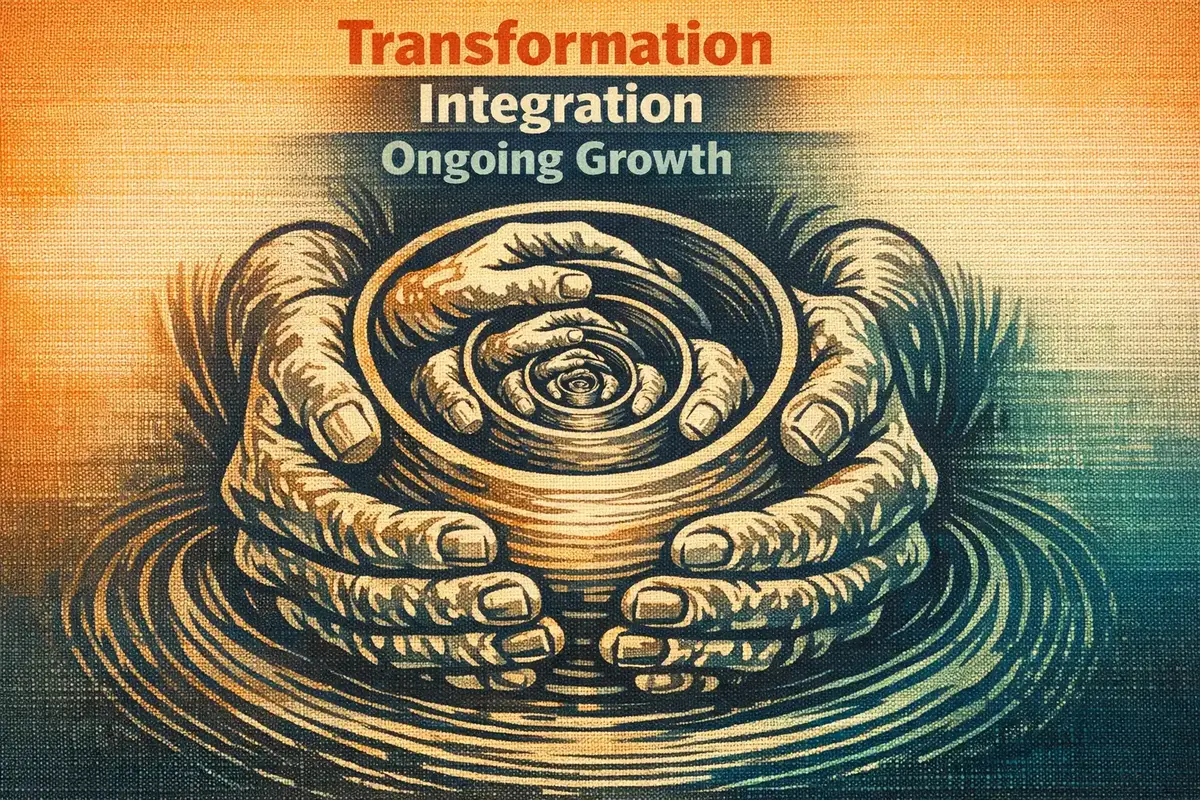
ILP reframes the work. Not as a sprint toward a better version of yourself, but as an ongoing practice of balance — one that keeps body, mind, spirit, and shadow in relationship over time. Integral Life makes this point clearly in its framing of practice: the value is not in isolated effort, but in an art of living that can be returned to repeatedly, adjusted, and deepened as conditions change (Integral Life).
That is a different standard. Less heroic. More durable.
Where AI actually helps
In that model, AI coaching is useful for one reason: it helps you stay honest when your self-story gets selective. It can show that your thinking stayed sharp while your patience thinned, or that your discipline remained intact while your reflection disappeared. Not to shame you. To keep the picture whole.
The deeper payoff is not optimization alone. It is becoming the kind of person who leads with more range, recovers with less drama, and does not need a crisis to remember what matters.
That is the closing test. Is your growth still a side project — or is it becoming a way of living you can trust under pressure?
Key Takeaways
- Most growth plans become lopsided when they overemphasize what is easiest to measure and leave out body, spirit, or shadow.
- Integral Life Practice offers a whole-person, modular framework built around body, mind, spirit, and shadow.
- AI coaching can help track patterns over time, but human judgment should keep the final interpretation.
- Sustainable growth starts small, gets reviewed regularly, and becomes more durable when it is balanced.
Frequently Asked Questions
What is Integral Life Practice in the context of personal growth?
Integral Life Practice is a whole-person development framework that balances body, mind, spirit, and shadow. It helps people avoid one-dimensional growth by training multiple capacities instead of relying on a single habit or skill.
How does AI coaching support an Integral Life Practice routine?
AI coaching can act as a reflective mirror that tracks patterns over time, highlights neglected areas, and summarizes progress across weeks. It supports consistency and awareness, but it should not replace human judgment or decide what a pattern means.
Why do many growth plans become lopsided?
Growth plans often become lopsided because they focus on what is easiest to measure, such as goals, productivity, or communication. When body, spirit, or shadow practices are ignored, development becomes partial and can leave people feeling split or inconsistent.
What are the four dimensions of Integral Life Practice and what do they do?
Body practices support energy, recovery, and stress regulation; mind practices improve attention, learning, and perspective; spirit practices connect action to meaning and values; shadow practices reveal triggers, blind spots, and disowned patterns. Together, they create a more stable and honest growth system.
How should a beginner start building a sustainable ILP routine?
A beginner should start by assessing which dimensions are already strong and which are neglected, then choose just one or two small practices that are realistic to repeat. The key is to review regularly, keep what works, and adjust before the routine becomes performative or overwhelming.