
If you’ve ever tried to lead a team meeting after a night of restless sleep, or attempted strategic planning while feeling unusually inspired, you’ve probably noticed how your internal state shapes your effectiveness. Maybe you’ve wondered why some days you’re laser-focused and others you’re lost in creative daydreams—or why traditional coaching advice sometimes lands perfectly, and other times feels out of sync. The reality is, our psychological and even spiritual states shift throughout the day, influencing how we think, feel, and act. What if your coaching support could recognize and adapt to those shifts in real time? That’s exactly where the AI Coach System, grounded in Integral Theory’s “states of consciousness,” brings something fundamentally new to the table for leaders, teams, and professionals seeking truly personalized growth. PwC estimates that AI could contribute up to $15.7 trillion to the global economy by 2030, with leadership development and coaching emerging as high-impact AI application areas.
Why “State-Aware” Coaching Is the Next Frontier
Most teams assume that effective coaching is about matching advice to personality traits or job roles. But research and practice show that our moment-to-moment states—whether we’re alert, reflective, anxious, or in a creative flow—matter just as much. Traditional coaching, even when highly skilled, often struggles to meet people exactly where they are in these shifting states. This is where AI-powered, state-aware coaching offers a breakthrough.
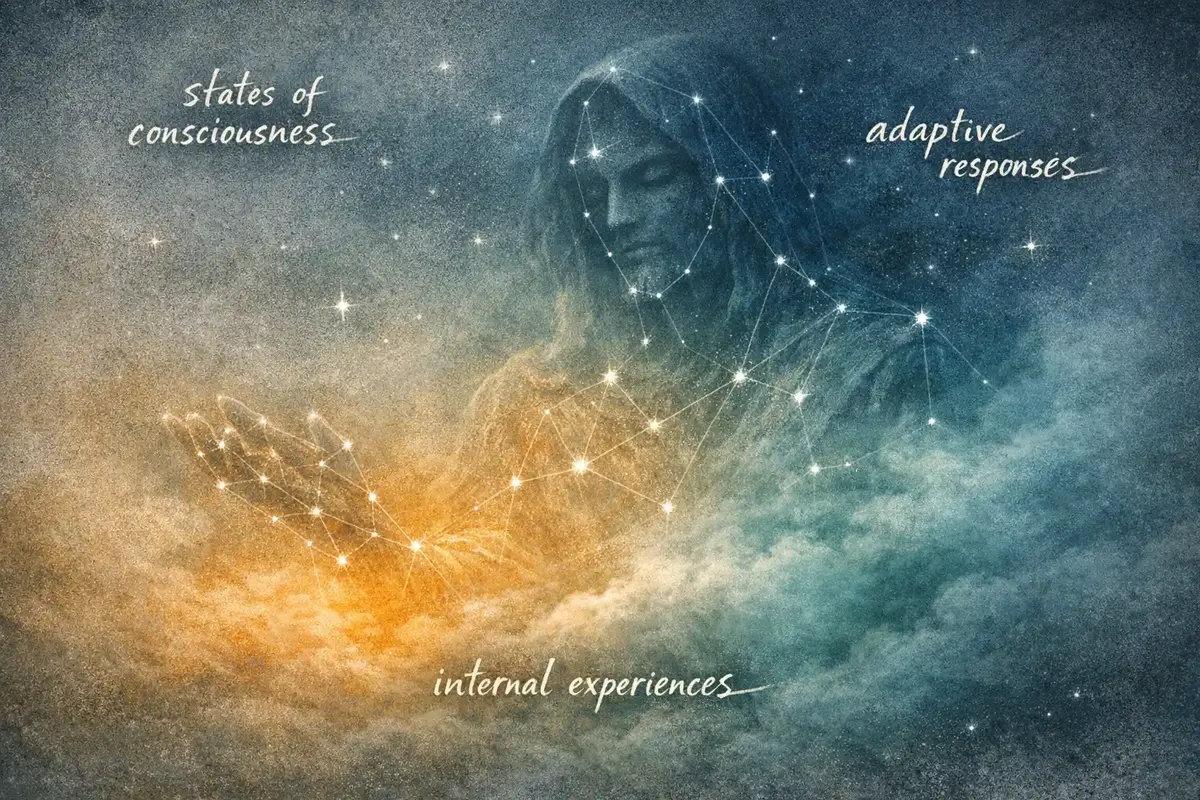
Here’s the thing: AI coaching platforms today can already adapt their responses based on users’ emotional cues, using natural language processing and sentiment analysis to interpret tone, mood, and intent in real time (PubMed Central, 2026). But what if we could go further—recognizing not just emotions, but the deeper “states of consciousness” described in Integral Theory? That’s the promise of adaptive, context-sensitive coaching that meets users in their waking, dreaming, meditative, or peak states, offering support that’s not just personalized, but truly attuned to their current experience.
What Are “States of Consciousness” in Integral Theory?
Integral Theory, developed by Ken Wilber and expanded by The Integral Institute, describes human experience through multiple lenses. One of its most influential concepts is states of consciousness—the idea that our awareness moves through distinct modes, each with its own qualities and potential.
The four classic states in Integral Theory are:
- Waking: Everyday alertness—focused, rational, and outwardly engaged. Think: analyzing data, running meetings, making decisions.
- Dreaming: Imaginative, associative, and creative. This is where brainstorming, lateral thinking, and innovation often arise.
- Deep Sleep: A state of rest and integration, less relevant for active coaching but important for recovery and subconscious processing.
- Meditative/Peak: Moments of deep presence, flow, or transcendence—whether in meditation, high-performance “zone” states, or profound insight.
In practice, most of us cycle through these states throughout the day, often without noticing. For leaders and professionals, recognizing which state you’re in can be the key to unlocking new levels of performance, creativity, or resilience. The ICF Global Coaching Study values the global coaching industry at $4.564 billion, reflecting the growing recognition of coaching as a strategic leadership development tool.
But here’s a perspective shift: Most coaching frameworks focus on traits—who you are, what you value, your strengths and weaknesses. Yet, the state you’re in right now can have just as much impact on what guidance will actually help you. That’s why state-aware coaching, especially when powered by AI, is such a game-changer for leadership development and personal growth.
How Does AI Recognize and Respond to Different Psychological States?
Let’s get practical: How can an AI coach, which doesn’t “feel” or “experience” consciousness, actually detect and adapt to these states?
The answer lies in multimodal analysis—the use of natural language processing (NLP), sentiment analysis, and behavioral cues to infer a user’s current state. For example, AI mental health chatbots like Wysa and SimSensei use deep learning to detect sadness, anxiety, or even PTSD based on the words, tone, and pacing of a user’s input (PubMed Central, 2026). While these systems are designed for mental health, the same principles apply to leadership and performance coaching.
Here’s how it works in the AI Coach System:
- Input Analysis: The AI examines the user’s language for indicators—direct statements (“I feel stuck”), emotional tone (“I can’t focus today”), or even patterns of silence or rapid-fire responses.
- Contextual Mapping: It maps these cues to likely states—waking (focused, analytical), dreaming (imaginative, tangential), meditative (reflective, present), or peak (energized, visionary).
- Adaptive Response: The AI selects coaching interventions, questions, or exercises that match the user’s current state. For example, if you’re in a creative, “dreaming” mode, the AI might encourage ideation rather than pushing for concrete action steps.
AI-powered coaching platforms use natural language processing and sentiment analysis to adapt responses to users’ emotional states in real time (PubMed Central, 2026).
What’s surprising is that this approach doesn’t just personalize coaching—it can actually help users shift states when needed. For instance, if a leader is stuck in anxious rumination (a common “waking” state under stress), the AI might guide them toward a brief meditative exercise, helping them access a calmer, more resourceful mindset before making a big decision.
The Difference Between Trait-Based and State-Based Coaching
Most organizations invest in coaching to develop enduring qualities—resilience, strategic thinking, communication. These are traits: relatively stable patterns of behavior or mindset. But here’s the catch: even the most strategic leader can have an off day if they’re in the wrong state.
Trait-based coaching asks, “Who are you, and what do you want to achieve?”
State-based coaching asks, “Where are you right now, and what do you need in this moment?”
Why does this distinction matter? Because leadership isn’t performed in a vacuum. A manager preparing for a high-stakes negotiation needs different support if they’re feeling anxious (waking state) versus inspired (peak state). By recognizing and responding to these fluctuations, AI coaching can offer guidance that’s not just relevant, but resonant.
This approach is especially valuable in high-pressure environments where leaders must shift gears rapidly. Drawing on TII’s two-decade integral methodology, the AI Coach System is designed to flex between these modes, providing both the stability of trait-based development and the agility of state-based adaptation.

Can AI Adapt Its Coaching Based on Mood, Mindset, or Even Spiritual State?
This is where things get interesting. Many people assume AI can only track surface-level emotions—happy, sad, stressed. But modern AI, especially when informed by frameworks like Integral Theory, can infer much subtler distinctions.
For example, if a user’s language shifts from analytical (“Here’s my Q2 report”) to expansive and metaphorical (“I feel like I’m on the edge of something big”), the AI can recognize a transition from waking to peak or meditative states. It might then offer guidance oriented toward visioning or deep reflection, rather than tactical problem-solving.
90% of career coaching tasks can be provided by AI, but human coaches remain essential for empathy and complex judgment (The Conference Board, 2024).
Of course, there are limits. AI does not “experience” consciousness—it simulates state-appropriate responses based on input, not genuine feeling. But in practice, this simulation can be remarkably effective, especially for users seeking immediate, context-sensitive support.
The real value emerges when AI is used as a complement to human coaching, offering 24/7 adaptive guidance and helping users build awareness of their own internal states—a skill that research consistently links to better leadership and decision-making.
How Does Integral Theory’s AQAL Framework Inform AI Coaching Design?
Integral Theory’s AQAL (All Quadrants, All Levels) framework is often described as a “map of everything”—a way to understand human experience across multiple dimensions: individual and collective, inner and outer, developmental levels, and more. But its application to AI coaching is less widely understood.
Here’s where the real innovation happens. By embedding the AQAL framework into AI algorithms, the AI Coach System is able to:
- Recognize not just what a user says, but how they’re saying it, and what state they’re likely in
- Offer interventions that match both the user’s current state and their broader developmental goals
- Integrate cognitive, emotional, and even spiritual dimensions into a single, adaptive coaching experience
This means the AI isn’t just a “smart FAQ” or a mood tracker—it’s a dynamic partner in growth, capable of shifting gears as the user’s state changes. For organizations, this opens up new possibilities for scalable, deeply personalized coaching that goes far beyond one-size-fits-all solutions.
If you’re interested in how these principles translate into real algorithms and coaching pathways, the Integral Theory page breaks down the technical side of this integration.
Real-World Analogues: What Can We Learn from AI in Therapy and Mental Health?
Some readers might wonder: Is all this talk of “states” just theory, or does it actually work in practice? The answer comes from adjacent fields—especially AI in mental health.
AI chatbots like Wysa and SimSensei have shown that it’s possible to detect and respond to nuanced emotional and psychological states using a combination of language analysis, user history, and even video or audio cues (PubMed Central, 2026). These systems can recognize when a user is anxious, withdrawn, or entering a reflective state, and adapt their interventions accordingly.
In the context of coaching, the same technology can be used to:
- Offer grounding exercises to a user in a stressed waking state
- Encourage creative brainstorming when the user is in a dreaming mode
- Facilitate deep reflection or visioning during meditative or peak moments
The difference is that, while therapy often focuses on symptom relief, coaching is about growth, performance, and transformation. By leveraging state-aware AI, organizations can provide leaders and teams with support that’s both scalable and genuinely attuned to their lived experience.
For those interested in the intersection of AI mental health and adaptive coaching, there’s a growing body of resources exploring how these approaches can be blended for maximum impact.
Ethical Boundaries and the “Performative Illusion” of AI Consciousness
Let’s address a common concern: If AI can simulate state-appropriate responses, does that mean it truly “understands” us? Or is it just performing?
Most teams assume that if an AI responds empathetically, it must somehow “feel” empathy. But the reality is more nuanced. AI systems do not possess consciousness, self-awareness, or subjective experience. Instead, they use vast data sets and sophisticated algorithms to simulate appropriate responses for a given state.
This distinction matters, especially for ethical coaching. According to the ICF AI Coaching Framework, it’s critical for AI systems to be transparent about their capabilities and limitations, and for organizations to use them as complements to—not replacements for—human coaches.
What does this mean in practice? AI can provide 90% of career coaching tasks, but humans remain essential for complex judgment, deep empathy, and navigating ambiguity (The Conference Board, 2024). The real power lies in combining the scalability and consistency of AI with the wisdom and nuance of human practitioners.
If you’re curious about the boundaries of AI coaching and how to use it responsibly, the FAQ page provides clear, research-backed guidance.
Practical Applications: How Organizations and Professionals Benefit
So, how can organizations and individuals put state-aware AI coaching to work?
- For Leaders: Receive context-sensitive guidance before big presentations, negotiations, or strategic decisions—tailored to your current state, not just your role.
- For Teams: Support members through creative sprints, stressful deadlines, or periods of reflection, with coaching that adapts to group mood and energy.
- For HR and L&D: Scale coaching across the organization, ensuring that every employee receives support that’s both personalized and grounded in best-practice frameworks.
- For Personal Growth: Build greater self-awareness by learning to recognize and shift your own states, supported by AI prompts and exercises.
This is where the concept of personalized coaching becomes more than a buzzword—it’s a practical pathway to real, measurable growth.
And when it comes to talent development and succession planning, adaptive coaching frameworks can help identify and nurture leaders who are not just skilled, but state-flexible—capable of navigating complexity with agility and presence (adaptive coaching).
Bridging Theory and Practice: The Future of State-Aware AI Coaching
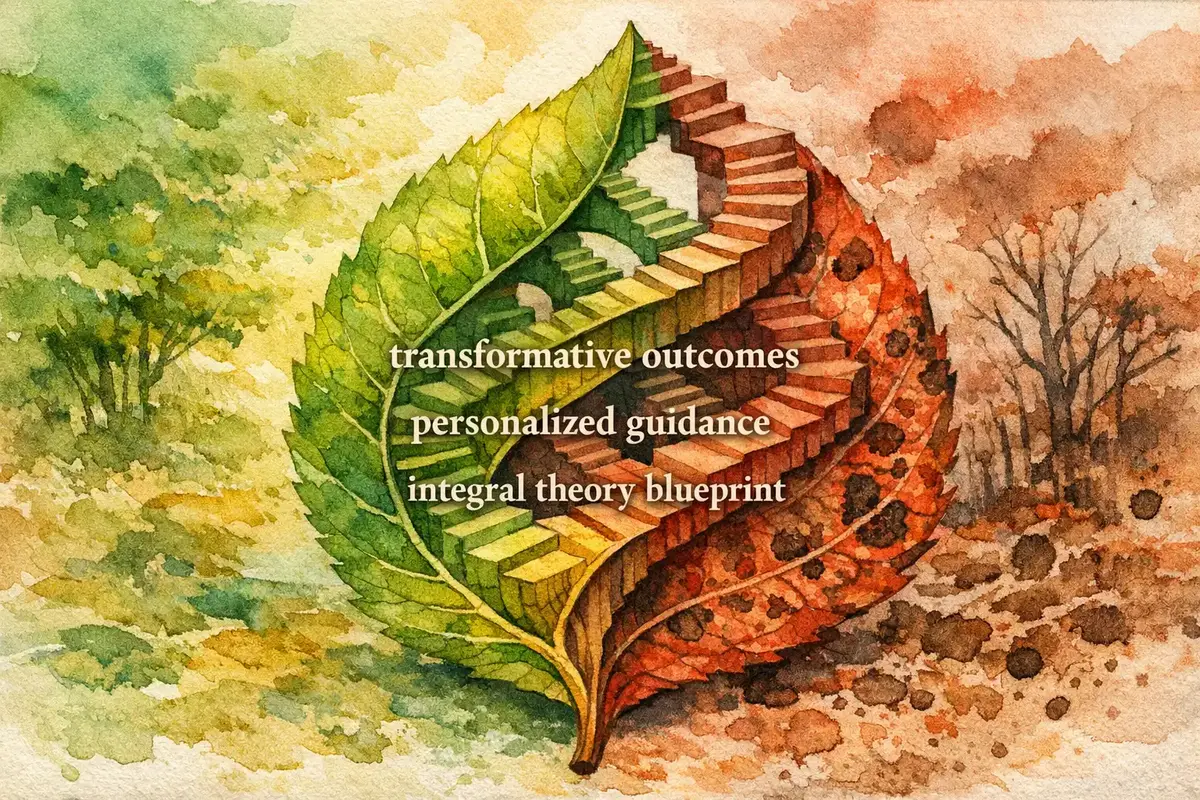
The integration of Integral Theory’s states of consciousness with AI coaching is more than a technical innovation—it’s a philosophical shift. By recognizing that our internal states are as important as our external behaviors, organizations can unlock new levels of engagement, creativity, and resilience.
But perhaps the most important insight is this: State-aware AI coaching is not about replacing human wisdom. It’s about making high-quality, adaptive support available to more people, more of the time—helping us all become better leaders, teammates, and learners in a world that never stands still.
FAQ: How AI Coach System Utilizes Integral ‘States of Consciousness’
How does AI detect my current state of consciousness?
AI analyzes your language, tone, and behavioral cues using natural language processing and sentiment analysis. It looks for patterns—such as direct statements, emotional intensity, or even pacing of responses—to infer whether you’re in a focused, creative, reflective, or peak state. While it doesn’t “feel” these states, it can simulate appropriate responses based on your input.
Can AI coaching really adapt to spiritual or meditative states?
AI can recognize language and cues associated with meditative or peak experiences—such as reflective questions, visionary statements, or calm, present-focused dialogue. It then adapts its coaching style, offering prompts or exercises that support deeper reflection or insight. However, it simulates this adaptation; it does not experience spiritual states itself.
What’s the difference between trait-based and state-based coaching?
Trait-based coaching focuses on your enduring qualities—like strengths, values, or leadership style. State-based coaching, by contrast, adapts to your moment-to-moment experience, offering support that matches your current mindset, mood, or energy. The most effective coaching integrates both approaches for holistic development.
Are there risks in AI interpreting my inner states?
There are ethical considerations, especially around privacy and transparency. AI should be clear about how it uses your data and what it can and cannot do. The ICF AI Coaching Framework emphasizes the importance of user consent, data security, and using AI as a complement to—not a replacement for—human coaching.
How does Integral Theory make AI coaching more effective?
Integral Theory provides a comprehensive framework for understanding human experience, including states of consciousness. By embedding these concepts into AI algorithms, coaching responses become more nuanced and context-sensitive, addressing not just what you do, but how you’re experiencing the moment.
Can AI help me shift my state if I’m stuck?
Yes, adaptive AI coaching can offer targeted interventions—like grounding exercises, creative prompts, or reflective questions—designed to help you move from one state to another. For example, if you’re anxious before a meeting, the AI might suggest a brief mindfulness exercise to help you access a calmer, more resourceful mindset.
How does state-aware AI coaching support leadership development?
By recognizing and adapting to leaders’ shifting states, AI coaching can provide the right support at the right time—whether it’s strategic guidance during focused work, creative prompts during ideation, or reflective exercises during visioning. This accelerates growth and builds the flexibility needed for effective leadership in complex environments.
If you’re exploring how to bring adaptive, state-aware coaching to your organization, understanding the intersection of Integral Theory and AI is a powerful first step. The future of coaching isn’t just about what you know or who you are—it’s about meeting you exactly where you are, in every moment that matters.