
Why generic AI coaching misses the real developmental gap
50% of U.S. employees now use AI in their role at least a few times a year. In practice, that means a team lead can open an AI coach before a difficult review and still walk into the meeting with the wrong diagnosis of the problem (Gallup, 2025).
You have likely seen the pattern. A director in a mid-market healthcare company uses an AI coaching tool during quarterly performance reviews. One manager gets prompts on “executive presence,” another on “better communication,” a third on “strategic thinking.” The advice sounds plausible. It is also often too broad to matter.
The cost is not abstract. When coaching misses the real constraint, people spend weeks practicing the wrong behavior while the actual bottleneck stays untouched. That matters at scale because 57% of leaders and 58% of workers say they will need to learn new skills for their current jobs in the next three years (Deloitte, 2024). If AI coaching is going to sit inside that learning stack, it cannot just produce polished guidance; it has to identify which capacity is underdeveloped before recommending what to do. This article addresses that gap.
The real failure is diagnostic, not informational
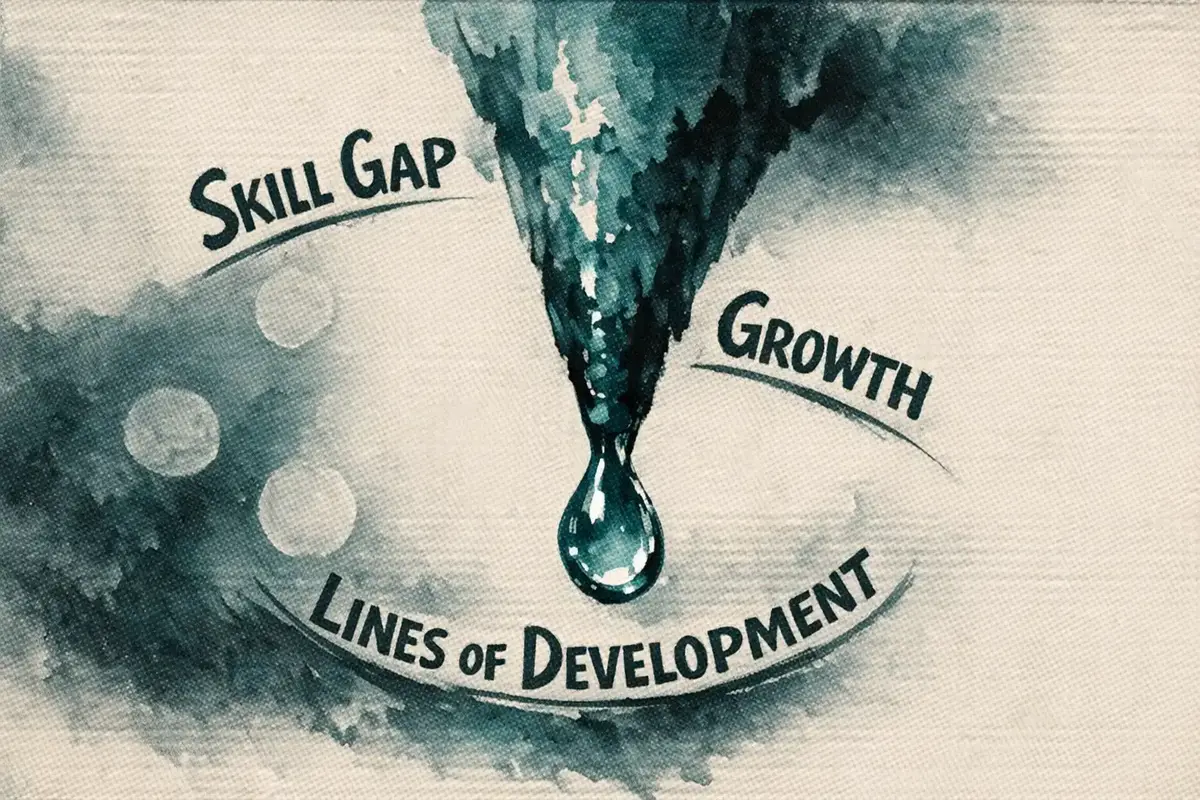
Most professionals do not suffer from a shortage of advice. They are surrounded by it — managers, books, courses, prompts, dashboards, and now AI. The failure point is usually earlier. The advice is aimed at the wrong layer of development.
That distinction changes everything. A leader may look like they need better communication when the deeper issue is emotional regulation under pressure. A high performer may ask for help with influence when the real gap is moral courage in conflict. Another may appear resistant to feedback when the issue is not attitude at all, but a cognitive limit in handling competing perspectives at once.
Generic personalized coaching often personalizes around surface signals: role, goals, personality language, recent behavior. Useful, up to a point. But if one score or one profile is treated as a summary of the whole person, the coaching system starts making category errors. It assumes strength in one area predicts strength everywhere else. Human development does not work that way.
Why precision matters more than polish
This is where a more developmental view becomes practical, not theoretical. AI coaching gets more useful when it can distinguish uneven growth across capacities instead of flattening someone into a single readiness label. That is the promise behind integral coaching and more rigorous forms of personalized coaching: not more content, but better targeting.
The core problem is not weak advice. It is advice delivered to the wrong developmental capacity.
If that is true, the obvious question follows. What exactly are these capacities — and how do you coach to them without turning every gap into a diagnosis?
What are lines of development, and why do they matter in coaching?
Integral theory asks a harder question than most coaching systems do: if development is not one ladder, what exactly is the coach measuring? That matters because many leaders still assume one strong capability signals broad maturity. It does not. The tension sits right there — a person can look advanced in one domain and still be early-stage in another.
In plain English, lines of development are different human capacities that grow on partly separate tracks. Integral frameworks commonly point to lines such as cognitive, emotional, moral, and interpersonal development, rather than treating “development” as one global score (The Integral Institute). Integral Life makes the same point directly: people do not mature evenly across all capacities, which is why a single label often hides more than it reveals (Integral Life).
That is the practical shift. A coach is not asking, “How developed is this person?” but “Developed in what, exactly?”
One person, multiple growth curves
Picture a VP in a regional manufacturing company during a team restructure. She can map dependencies, model tradeoffs, and make fast decisions under ambiguity. Her cognitive line is strong. But in tense meetings, she becomes dismissive, reads challenge as disloyalty, and shuts down dissent. The issue is not a lack of intelligence. It is uneven development across lines.
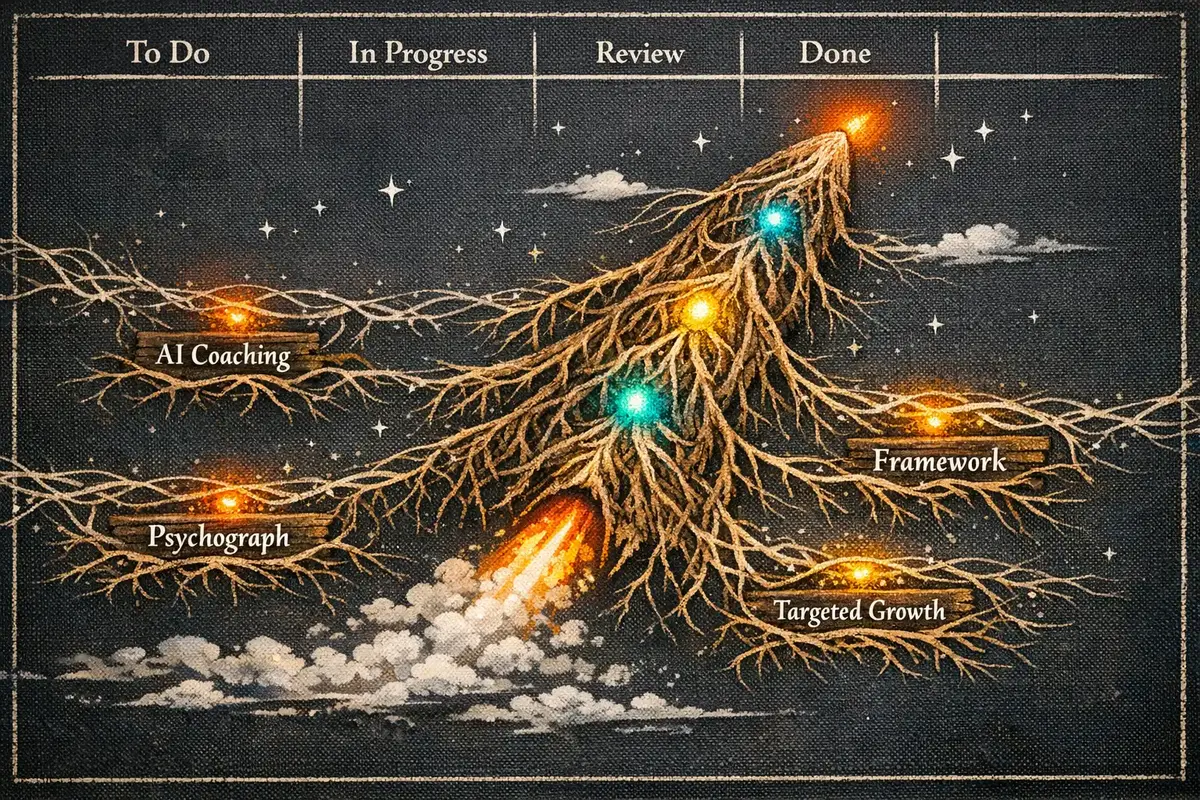
A single overall label would blur that distinction. It might call her “high potential,” “strategic,” or even “low empathy,” none of which tells a coach where to intervene. The value of the lines of development lens is that it separates capacities that are often collapsed into one impression. That makes diagnosis sharper and coaching less wasteful.
The same person can need advanced challenge in one line and basic practice in another.
Why this changes coaching design
This is where integral theory stops being abstract. If the constraint sits in the emotional line, the intervention may focus on naming triggers, slowing reactions, and building tolerance for discomfort. If the constraint sits in the moral line, the work changes — clearer principles, harder tradeoff reflection, more courage under pressure. If it sits in the interpersonal line, the coach may work on perspective-taking, repair, and how trust is built in conflict.
That is also why developmental stages and lines should not be confused. Stages describe how complexly someone tends to make sense of experience; lines describe which capacity is being expressed. Mix them up, and coaching gets vague fast.
And that raises the uncomfortable question: when someone looks impressive, which line are you actually seeing — and which ones are you missing?
Why cognitive strength does not guarantee emotional or moral maturity
Most organizations still over-trust articulate people. That matters because an AI coach trained on polished language can easily confuse cognitive strength with broader maturity.
The assumption is familiar: if someone reasons well, speaks fluently, and can explain complexity, they must also exercise sound judgment under pressure. Integral coaching starts from the opposite premise. Human beings often develop unevenly, so a person may be advanced in analysis while still limited in emotional, moral, or interpersonal capacity.
What organizations assume — and what actually shows up
Take a director at a regional financial services firm during a client escalation. In the meeting, he maps the risk clearly, anticipates objections, and offers a sharp recovery plan. Everyone leaves impressed by his thinking.
Then the harder moment arrives. A peer questions his role in the failure, and he becomes defensive, shifts blame to execution, and avoids the repair conversation with the client team. The issue is not intelligence. It is uneven development.
This is the pattern many teams miss. Clear analysis can coexist with poor self-regulation. Strategic language can coexist with weak accountability. Strong abstraction can coexist with relational fragility. Research notes consistently warn against treating cognitive sophistication as proof of emotional or moral maturity, because the capacities are related but not interchangeable.
The content/structure fallacy is where AI can get fooled
The practical risk for AI coaching is a version of the content/structure fallacy: mistaking the quality of what someone says for the maturity of the structure producing it. A leader may use nuanced language about values, empathy, or collaboration and still lack the developmental capacity to act on those ideas when status, fear, or conflict enters the room.
That distinction matters more in AI than in human coaching. Language models are built to read patterns in expression. If the system is not designed with developmental care, it may reward verbal sophistication and miss the underlying limit — the defensive reflex, the avoidance pattern, the inability to hold responsibility without collapse or counterattack. This is exactly why stronger integral coaching AI algorithms matter: they aim to separate surface fluency from deeper developmental signals.
The educational challenge, as the research notes suggest, is to make personalization developmental without turning it into pseudo-diagnosis. The system should not label a person. It should test a hypothesis about which capacity breaks down under which conditions.
That sounds subtle because it is. But if an AI coach cannot tell the difference between eloquence and maturity, what exactly is it personalizing — real development, or just the user’s vocabulary?
How can AI coaching detect uneven development without over-diagnosing?
Observe–Infer–Intervene is the right framework here. But if an AI coach can spot patterns in language, does that mean it can diagnose development from text alone?
That is the tempting assumption. It is also where weak systems drift into pseudo-authority. A user writes three reflective paragraphs after a hard meeting, the model detects defensiveness or abstraction, and suddenly the output sounds like a verdict on maturity. That is not precision. It is overreach.
The better use of AI is narrower and more useful: observe behavior in language, infer cautiously, intervene by line.
What the system should actually notice
In a regional retail company during budget season, a division VP uses an AI coach after repeated conflict with store operations. Across six sessions, the same pattern shows up. He can explain tradeoffs clearly, but when the conversation turns to local constraints, his language shifts: more certainty, less curiosity, more blame words, fewer questions.
That is a meaningful signal. Not because it proves a developmental stage, but because it shows a recurring breakdown under a specific condition.
A responsible system can track three things well. First, repeated language patterns: where the user becomes rigid, evasive, overly abstract, or emotionally flooded. Second, recurring friction points: conflict, feedback, authority challenges, ethical tradeoffs, cross-functional tension. Third, reflective range: what kind of self-examination the user can already sustain without collapsing into self-justification or vague insight. That is the practical promise behind stronger integral coaching AI algorithms—not certainty, but better hypothesis formation (AI Coach System).
Precision comes from modesty
This is where many systems get sloppy. They over-read text as evidence of stage, when text is often situational, performative, or simply incomplete. A polished answer may reflect vocabulary, not capacity. A flat answer may reflect fatigue, not limitation.
The International Coaching Federation is explicit that AI in coaching should operate with clear boundaries, transparency, and role clarity rather than implying expertise it does not have (ICF, 2025). In practice, that means the system should say, in effect: here is the pattern I see, here is the line that may need support, and here is a useful next exercise. Not: here is what you are.
Good AI coaching does not label the person; it tests the next best developmental hypothesis.
That distinction protects both accuracy and trust. The intervention might be emotional-line work around triggers, interpersonal practice around perspective-taking, or moral reflection using sharper coaching prompts. The system stays in the lane of reflection, prompting, and practice—where AI can genuinely help.
And once you can infer the likely line, a harder design question appears: what kind of prompt actually fits that line—cognitive, emotional, moral, or interpersonal?
Which coaching prompts fit cognitive, emotional, moral, and interpersonal lines?
Line-specific prompting is the practical test of whether developmental precision is real or just branding. Most organizations still prompt by topic—feedback, delegation, conflict, strategy—when the evidence behind Integral Coaching suggests the better question is different: which line is actually under strain here? (New Ventures West)
What changes when the prompt matches the line instead of the topic? Usually, the quality of the next move.
Same situation, different line
Take a founder at a technology startup during a board update after a missed product milestone. She asks the AI coach for help with “communication.” That sounds reasonable. It is also incomplete.
If the issue sits in the cognitive line, the prompt should sharpen thinking: What are the three causes, which one matters most, what evidence supports each claim, and what decision follows? Good cognitive prompts clarify, structure, prioritize, and test reasoning. They reduce noise. They help the user distinguish facts from interpretation and urgency from importance—exactly the kind of targeted coaching prompts that move from reflection to judgment.
If the issue sits in the emotional line, the prompt must do different work. What feeling is present right now? What triggered it? Where does the reaction intensify—criticism, uncertainty, loss of control? Research notes consistently show that emotional-line prompts are most useful when they help users name feelings, regulate reactions, and notice triggers before behavior hardens into habit.
The same meeting can require clearer thinking, steadier regulation, stronger values, or better repair.
Prompts that surface judgment and relationship
The moral line is where many AI systems stay too shallow. A useful prompt here is not “What is the right answer?” but “What value are you protecting, what tradeoff are you accepting, who carries the cost, and what responsibility is yours?” That kind of questioning surfaces principles, consequences, and accountability rather than letting the user hide inside efficiency language. It is a more serious form of personalized coaching.
The interpersonal line needs prompts built for dialogue, not introspection alone. What do you think the other person is protecting? What did they likely hear in your words? What repair is needed now—not after the quarter closes? New Ventures West’s process emphasizes practice in how people observe, interpret, and act in relationship, which is why interpersonal prompts should support empathy, perspective-taking, and repair rather than just “better communication” (New Ventures West).
This is where prompt design becomes implementation risk. If the prompt misses the line, the user may leave with insight but no shift—or worse, with confidence in the wrong pattern. So who decides which prompts are safe, useful, and bounded by role rather than pseudo-clinical authority?
What does responsible implementation look like for leaders and coaches?
74% of CEOs say generative AI will significantly change how their company creates, delivers, and captures value in the next three years (PwC, 2024). If implementation is sloppy, the cost is immediate: misdirected coaching wastes manager time, erodes trust in the tool, and pushes strong people out when they feel misunderstood.
That pressure is only rising. Employers expect 44% of workers’ skills to be disrupted in the next five years (World Economic Forum, 2023). If AI is changing work this quickly, how do you keep coaching precise instead of reactive?
Start with the line, not the tool
The practical answer is disciplined sequencing. First map the likely line of difficulty. Then choose the intervention. Then verify it against context.
In an enterprise services firm during annual planning, a CHRO notices two senior managers asking the AI coach for help with “influence.” One is struggling to organize competing priorities across functions. The other can think clearly but loses credibility in tense conversations because he becomes abrupt and dismissive. Same request. Different line. One needs cognitive scaffolding; the other needs interpersonal and emotional practice.
This is where many implementations fail. They let the system jump from user language to advice without pausing to ask a harder question: what kind of capacity is actually breaking down here? Better integral coaching AI algorithms help structure that hypothesis, but they do not remove the need for human judgment.
Compare language, behavior, and context
Responsible use means treating AI as a support for reflection and rehearsal—not as a final authority on developmental maturity.
A leader’s words matter, but words alone are thin evidence. Compare language with observed behavior and situational context before deciding what help to offer. Does the person sound defensive only after public challenge? Do they become rigid only in budget tradeoffs? Does the pattern show up across settings, or only with one stakeholder group? That comparison is what keeps coaching grounded.
It also protects against false confidence. 58% of CEOs say generative AI will increase competition in the next three years (PwC, 2024). Under that kind of pressure, organizations will be tempted to automate judgment itself. They should not.
Responsible implementation is not faster advice. It is slower interpretation before action.
That discipline sounds modest. It is actually strategic. Because once AI coaching is embedded in leadership routines, one question decides its value: does it sharpen developmental judgment—or merely scale plausible-sounding mistakes?
Why developmental precision is the real promise of AI coaching
You have seen this moment. A team lead leaves a difficult quarterly review with pages of AI-generated advice, yet still cannot tell whether the real issue was weak judgment, poor regulation, or a relationship pattern that keeps repeating.
That is why the demand matters. 94% of business leaders and 88% of workers believe GenAI will drive individual growth (Deloitte, 2024). At the same time, six in 10 workers will need training before 2027 (World Economic Forum, 2023). The opportunity is not small. But the standard should be higher than “useful suggestions.”
Precision starts with an uneven view of growth
The practical value of lines of development is simple: they stop people from treating growth as one smooth curve. In a mid-market services company during promotion discussions, a director may be excellent at making sense of complexity and still struggle to repair trust after conflict. Another may be steady in relationships but weak at holding competing priorities in view. Same level. Different profile.
That is not a flaw in the model. It is the point.
When AI coaching reflects that unevenness, it becomes more credible. It helps the user ask better questions about which capacity is under strain instead of collapsing everything into “leadership presence” or “communication.”
The real promise is disciplined humility
What if the most advanced AI coaching is the kind that knows exactly what it cannot claim?
The strongest systems will not pretend to know the whole person from a transcript. They will help users reflect more accurately, test a narrower hypothesis, and choose a better next intervention. That is a better bargain: less false certainty, less generic advice, and more useful self-understanding.
The future value of AI coaching is not broader personalization. It is sharper developmental judgment.
Over time, that changes more than the prompt. It improves how leaders interpret behavior, how coaches design interventions, and how people understand their own uneven growth.
That is the real promise. Not a machine that “knows you,” but one that helps you see yourself more clearly — and act on that view with more precision. So in your own context, what would improve first: the advice, or the diagnosis behind it?
Key Takeaways
- Generic AI coaching often misses the real developmental gap because it focuses on surface advice rather than the underlying capacity.
- Lines of development help separate cognitive, emotional, moral, and interpersonal growth so coaching can target the right issue.
- Responsible AI coaching should observe patterns cautiously, compare language with behavior and context, and avoid over-diagnosing.
- The real promise of AI coaching is sharper developmental judgment, not broader personalization.
Frequently Asked Questions
What are lines of development in AI coaching?
Lines of development are separate human capacities that grow on partly independent tracks, such as cognitive, emotional, moral, and interpersonal development. In AI coaching, they help identify which capacity is underdeveloped instead of treating a person as having one overall level of maturity.
Why does generic AI coaching often miss the real problem?
Generic AI coaching often focuses on surface signals like role, goals, or recent behavior, which can lead to advice aimed at the wrong developmental layer. A person may seem to need better communication when the deeper issue is emotional regulation, moral courage, or interpersonal repair.
How can cognitive strength coexist with emotional or moral weakness?
A person can reason well, speak fluently, and handle complexity while still struggling with self-regulation, accountability, or conflict. Cognitive sophistication does not guarantee emotional maturity, moral judgment, or the ability to stay open under pressure.
How should AI coaching detect a developmental gap without over-diagnosing?
AI coaching should observe repeated language patterns, recurring friction points, and the user’s reflective range, then form a cautious hypothesis about which line may be strained. It should compare language with behavior and context, and offer a next exercise rather than a fixed label.
What makes a coaching prompt fit a specific developmental line?
A good prompt matches the capacity that is actually under strain. Cognitive prompts clarify reasoning, emotional prompts name triggers and regulate reactions, moral prompts surface values and tradeoffs, and interpersonal prompts support perspective-taking and repair.