


Why constructive challenge is now a boardroom capability, not a personality trait
58% of directors say underperformance is addressed constructively, but only 36% of C-suite leaders agree. That gap should worry any board that believes tough oversight automatically builds trust (Protiviti, 2024).
You know the moment. The CFO has just walked the board through a difficult budget reset, a director asks a sharp follow-up on assumptions, and the room changes temperature. Nothing overt happens, yet everyone can feel the risk: a necessary question can land as governance discipline or as a public challenge to management authority.
That is not a personality issue. It is a board capability issue.
When boards get this wrong, the cost is not abstract. Executives start editing what they bring forward. Directors hold back until concerns become convictions. Time is lost in side conversations, rework, and avoidable tension between meetings. PwC found that only 41% of executives rate their boards as excellent or good (PwC, 2025). If management does not experience the board as effective, challenge is not improving decisions at the rate directors assume it is. This article is about how boards can ask harder questions without weakening the authority they are meant to oversee.

A governance behavior, not a style preference
Constructive challenge is best understood as a disciplined governance behavior: test the proposal, respect the role, and preserve trust. Those three moves matter together. Test the proposal, because oversight without scrutiny is ceremonial. Respect the role, because directors govern through management rather than around it. Preserve trust, because once executives start reading every question as a threat, the board gets less truth, not more.
This is why strong board governance depends less on whether a director is naturally diplomatic or naturally blunt. Temperament shapes delivery, but discipline shapes outcomes. The most effective directors do not confuse intensity with rigor. They know how to separate the quality of an idea from the status of the person presenting it.
The real tension in the room
Boards are expected to ask hard questions. That is the job. But poorly delivered challenge can feel like interference, second-guessing, or an attempt to manage from the board table.
In practice, the line is thin. A director in a regional healthcare system may press management during a quarterly review on staffing assumptions and capital timing. The substance may be exactly right. Yet if the question implies, you have not thought this through, the executive team hears a status threat before it hears the governance value.
That is why the strongest boards treat challenge as a repeatable operating discipline, not a heroic trait. The real test is not whether a question is tough. It is whether the question sharpens judgment while keeping authority clear.
And that raises the next issue: what, exactly, does constructive challenge look like when it is done well—and how do directors know when they have crossed the line?
What does constructive challenge actually mean in the boardroom?
95% of directors believe the board is constructively engaged and asks probing questions. If that is true, why do some executives still leave the meeting feeling pressed, exposed, or second-guessed rather than helped (Protiviti, 2024)?
Constructive challenge means testing assumptions and decisions without questioning management’s legitimacy to lead. That tension matters because most boards do not fail at challenge by being silent. They fail by mislabeling the kind of challenge they are actually delivering. Protiviti found that 80% of board members rated meeting engagement and probing questions as effective, compared with 95% of C-suite executives—a result that sounds positive on the surface, but also shows how easily “good engagement” can hide very different experiences inside the same room (Protiviti, 2024).
Challenge is about the issue, not the person
Constructive challenge means testing assumptions, decisions, and risk exposure without questioning management’s legitimacy to lead. The target is the proposal. The budget logic. The downside case. The execution risk. Not the executive’s competence, motives, or standing.
That distinction sounds obvious. In practice, it is where boards drift.
In a mid-market technology company during a quarterly review, a director asks the CEO why customer churn assumptions remain unchanged despite a weaker pipeline. That is challenge. If the same director adds, “I’m surprised your team missed this,” the exchange shifts. The board is no longer examining a forecast; it is signaling doubt about management capability in front of peers. The content may still be valid. The governance value drops fast.
The line between challenge, confrontation, and micromanagement
Confrontation is not defined by a hard question. It is defined by how the question lands—intent, tone, and whether the board stays in its lane. Directors confront when they use the meeting to win a point, expose weakness, or force a public retreat. Executives can feel that immediately.
Micromanagement is different again. It happens when directors move from testing judgment to substituting their own. Asking whether a market-entry plan has clear trigger points is oversight. Rewriting the go-to-market sequence from the board table is management.
This is why strong board meeting engagement is not measured by the number of tough questions alone. It is measured by whether those questions improve the quality of executive thinking while keeping decision rights clear.
The board improves judgment; management makes the call
A board’s job is not to produce the answer in real time. It is to make the answer better before management acts on it. That is a narrower role than many directors admit—and a more powerful one.
When boards understand that boundary, challenge sharpens decisions without draining authority. When they do not, even well-meant scrutiny starts to feel like control. And once a question is heard as a threat rather than help, how does a director ask the next hard one without raising the temperature again?
How do board members ask tough questions without sounding adversarial?
99% of executives believe boards should be using AI for oversight, yet only 35% of directors say their boards are doing so (PwC, 2025). Most boards assume the hard part is asking sharper questions in the meeting; the evidence suggests the harder problem is arriving prepared to question the right things.
That changes the whole posture of challenge. Directors who read board papers for information tend to react. Directors who read for assumptions tend to diagnose. One sounds skeptical in the room. The other sounds useful.
Prepare to test, not to perform
Good challenge starts before the meeting. A director should be marking where the proposal depends on a forecast holding, a customer behavior staying stable, a hiring plan landing on time, or a regulatory risk remaining contained. Those are the pressure points. If you wait to discover them live, your question often comes out as surprise — and surprise is easily heard as accusation.
In a mid-market manufacturing company during budget season, a board member asks the COO why margin improvement is expected to continue while supplier volatility remains high. That is a fair question. But if the director has not done the prep, the follow-up often sprawls into improvised doubt: Have you stress-tested this at all? The issue is no longer margin logic. It is whether management looks careless in public.
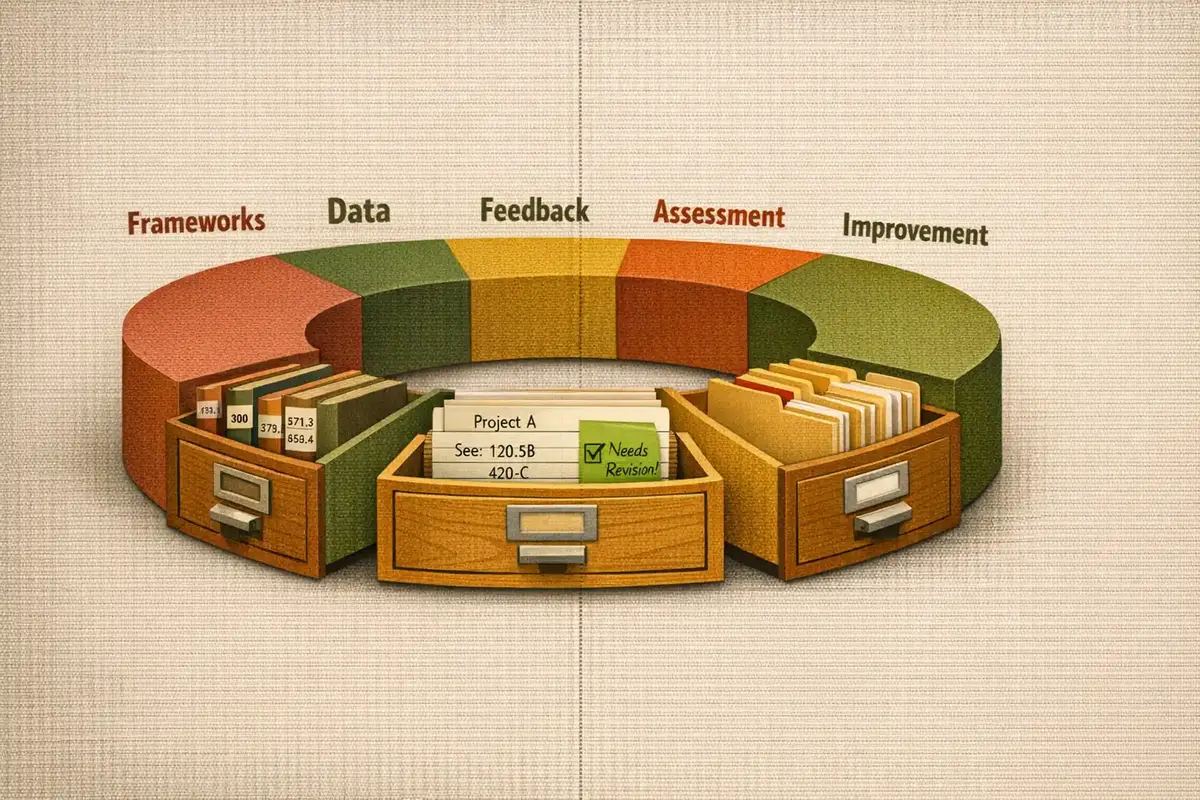
A better discipline is simple: challenge the proposal, test the assumptions, offer alternatives, preserve trust. That sequence keeps the board in governance mode. It also improves the quality of live discussion because the director is not trying to win the room. The director is trying to improve the decision.
Ask questions that open analysis
The strongest questions are narrow enough to answer and serious enough to matter. What would have to be true for this plan to work? Which assumption is doing the most work here? What option did management reject, and why? Those questions test logic, risk, and alternatives without implying incompetence.
That is especially important when boards are trying to improve their own effectiveness. PwC found that 90% say there is room to improve the board assessment process (PwC, 2025). A serious board assessment should not only ask whether directors spoke up. It should ask whether their questions clarified trade-offs or merely raised the temperature.
Tone is not cosmetic. It is governance mechanics. The sentence Help me understand what changed in the downside case invites explanation. I don’t see how this holds together invites defense.
And once a room turns defensive, substance gets harder to recover. Which is why the next variable matters so much: when executives tense up, who resets the temperature without blunting the challenge?
Why the chair or lead director is the real lever for constructive challenge
60% of S&P 500 boards separated the CEO and chair roles in 2024. That matters because when challenge is handled badly, the cost is not just an awkward meeting; it can show up as delayed decisions, weakened executive trust, and good leaders deciding the board is no longer a place to be candid (Spencer Stuart, 2025).
When a difficult question lands badly, who actually protects the relationship: the director who asked it, or the chair who managed the room?
The chair sets the conditions for challenge
A strong chair or lead director does more than keep time. The role sets tone, controls turn-taking, and prevents one director’s concern from turning into a board faction. That is the difference between scrutiny and pile-on.
In a regional retail company during a budget reset, the CFO presents a margin recovery plan after a weak quarter. One director asks about inventory assumptions. Another jumps in on pricing. A third starts offering operating fixes. Within three minutes, management is no longer hearing oversight; it is hearing a public loss of confidence. The chair’s intervention is what determines whether the exchange becomes useful or corrosive.
The best chairs do three things fast. They slow the tempo, name the issue, and sequence the discussion: Let’s stay with the demand assumption first; operating responses come after we understand the exposure. That sounds procedural. It is actually relational. Process absorbs heat.
Visible process makes challenge safer
This is why the board chair role matters so much. Directors can challenge hard when the room knows how challenge will be handled — who speaks when, what kind of follow-up is in bounds, and when the board is testing judgment rather than rewriting management’s plan.
Role clarity is the protection. The chair can remind directors that the board’s task is to examine assumptions, trade-offs, and risk thresholds, not to run the business from the table. That boundary helps executives stay open because the challenge is visibly about governance, not status.
99% of S&P 500 boards reported some form of annual board evaluation (Spencer Stuart, 2025)
That figure is more revealing than it first appears. If nearly every major board evaluates itself, then boards already accept that effectiveness is not only about what gets decided, but how the board works together. Chairs should treat meeting discipline the same way: as infrastructure, not etiquette.
Reframing disagreement before it turns personal
The chair’s most underrated move is reframing. Not softening the question. Reframing the meaning of the disagreement.
A good chair can say, in effect: This is the board doing its job. We are testing the downside case, not questioning management’s authority. That single move keeps a hard exchange from becoming a personal contest — director versus executive, board versus team.
And when that reframing does not work, the problem changes. It is no longer about how to ask the question. It is about what happens when management hears oversight as threat anyway.
What should directors do when executives become defensive?
The CEO pauses, answers the first question tightly, and starts defending decisions that no one has actually challenged yet. You can feel the room narrow: the issue is no longer the plan on the page, but whether management feels cornered in front of the board.
That reaction is more common than many directors admit. 58% of directors say underperformance is addressed constructively, while only 36% of C-suite leaders agree (Protiviti, 2024). And only 41% of executives rate their boards as excellent or good (PwC, 2025). The contrast matters because defensiveness is rarely just an executive temperament problem. It often means the board’s scrutiny has been heard as judgment.
Reset the exchange before the room hardens
When an executive becomes defensive, the first task is not to soften the challenge. It is to reset tone without abandoning rigor.
In an enterprise financial services board during a quarterly review, a CRO is pressed on credit-loss assumptions after a market shift. The question is valid. The problem is the phrasing: Why did your team miss this? From that moment, the executive is no longer explaining risk logic. They are protecting credibility.
A better move is immediate and explicit: restate the shared objective. Try the board version of, We are trying to understand the exposure, not second-guess management’s role. Then narrow the question. One assumption. One decision point. One trade-off. Broad challenge invites broad defense.
That is not diplomacy for its own sake. It is how you get back to substance.

Invite reasoning, not self-protection
The most useful phrase in a tense moment is often some version of: Walk us through your reasoning. That wording does two things at once. It signals respect for management’s judgment, and it keeps the board focused on how the decision was made.
58% of directors and 36% of C-suite leaders see constructive handling of shortfalls differently (Protiviti, 2024)
That gap is why directors should listen for the shift from explanation to self-justification. Once an executive starts repeating credentials, prior wins, or effort, the board should assume the conversation has slipped off the issue. Pull it back. Ask what changed, what alternatives were rejected, and what evidence would cause management to revise course.
Close the loop after the disagreement
Good challenge is not finished when the meeting moves on. Directors should close the loop — often through the chair, committee lead, or a brief follow-up conversation — to make clear what the board needed, what management clarified, and what remains open.
This is where working trust is either repaired or quietly weakened. If executives leave a hard exchange unsure whether the board doubts the plan or doubts them, the next meeting will be more managed, more political, and less candid. So the real question is not whether a board can recover one tense moment. It is whether the board can build a culture where hard moments make future candor easier — or rarer.
How can boards build a culture where challenge improves decisions over time?
99% of S&P 500 boards report using some form of annual board evaluation. If your board still treats constructive challenge as something that depends on who happens to be in the room, that number should give you pause (Spencer Stuart, 2025).
So what if the most effective challenge is not the sharpest question in the meeting, but the habits the board builds between meetings? Many directors assume culture is too soft to manage directly. It is not. Culture is what tells executives whether challenge will be welcomed, merely tolerated, or quietly avoided.
Culture is a system, not a mood
In a regional healthcare provider during a strategy reset, the CEO brings a plan to consolidate two service lines. The board asks sensible questions. Nothing is overtly hostile. Yet management leaves the room unsure whether the board wants clearer assumptions or a different strategy altogether. That ambiguity is cultural, not interpersonal.
Boards create that culture through meeting norms, chair intervention, and what gets discussed after the meeting ends. If directors only examine whether management was responsive, but never whether the board’s own challenge improved the decision, the same patterns repeat. The room may feel rigorous. The outcomes stay uneven.
A useful test is simple: does the board make challenge predictable? Predictability lowers threat. Executives can handle hard scrutiny when they know the rules — assumptions will be tested, alternatives will be surfaced, and decision rights will remain with management.
Make feedback visible and repeatable
This is where annual evaluations matter more than most boards admit. 90% say there is room to improve the board assessment process (PwC, 2025). That is not an administrative footnote. It is evidence that many boards still lack a disciplined way to review how challenge actually lands.
A serious board assessment should ask questions like these: Which discussions changed management’s thinking? Where did directors pile on? When did the chair help the room separate scrutiny from status? Those are behavioral data points. Over time, they become operating standards.
90% say there is room to improve the board assessment process (PwC, 2025)
The best boards turn those findings into a learning loop. Review the meeting. Name what worked. Adjust the norm. Repeat. Challenge then stops being a series of isolated confrontations and becomes part of how the board improves decision quality over time.
Build for better decisions, not louder debate
That is the real shift. Strong boards do not celebrate friction for its own sake. They build a repeatable environment where management expects scrutiny and still leaves with authority intact.
And that creates the final test: when the board challenges hard, does trust compound — or does candor slowly disappear?
The strongest boards challenge hard, but leave the room with more trust than they entered with
Boards do real damage when challenge is sloppy. Revenue slips because weak assumptions survive too long, trust erodes because executives start managing the board instead of informing it, and strong leaders leave because every difficult meeting feels like a public trial.
What does a board look like when it gets challenge right often enough that executives start to welcome it? It looks disciplined. Not gentle. Not passive. Disciplined.
Trust grows when the board is hard on the issue and steady with the people
In an enterprise technology company during a market-shift review, the CEO brings a revised product investment plan after a major customer delay. The board pushes hard on timing, capital allocation, and downside exposure. No one rescues management from scrutiny. But no one questions the CEO’s competence either. By the end of the discussion, the plan is tighter, the risks are clearer, and the CEO still owns the call.
That is constructive challenge at its best: a governance discipline that protects oversight quality and executive authority. The strongest boards know that the issue is debatable, while the relationship must remain workable. They separate the proposal from the person, and the disagreement from the standing of the executive presenting it.
That separation is rarer than many boards think. Protiviti reports that most directors believe their boards are constructively engaged and ask probing questions (Protiviti, 2024). The practical question is whether management experiences those questions as help or as status threat.
Precision in the room matters; closure after the room matters just as much
Trust is not preserved by good intentions. It is preserved by preparation, precision, and closure.
Prepared challenge sounds informed rather than performative. Precise challenge stays with the assumption, trade-off, or risk threshold at hand. Clear closure tells management what the board needed answered, what changed in the board’s understanding, and what remains open.
That final step is where many boards still leave value on the table. A hard discussion without closure lingers as doubt. A hard discussion with closure becomes shared judgment.
So the test for your board is simple: after the toughest conversation in the room, does management leave clearer and stronger — or merely more careful next time?
Key Takeaways
- Constructive challenge is a board capability: test the proposal, respect the role, and preserve trust.
- The strongest questions focus on assumptions, risk, and alternatives rather than on the person presenting them.
- Chairs and lead directors help keep challenge useful by setting tone, sequence, and role clarity.
- Culture, preparation, and closure determine whether hard questions improve decisions over time.
Frequently Asked Questions
What does constructive challenge mean for board members?
Constructive challenge is the practice of testing assumptions, risks, and trade-offs without questioning management’s legitimacy to lead. It focuses on the proposal and the decision, not on the executive’s competence or status.
How can board members ask tough questions without sounding adversarial?
The most effective approach is to prepare in advance, focus on assumptions, and ask questions that open analysis rather than force defense. Phrasing such as asking what would need to be true for a plan to work keeps the discussion rigorous while preserving respect.
What is the difference between constructive challenge and micromanagement?
Constructive challenge tests management’s judgment, while micromanagement substitutes the board’s own judgment for management’s role. A board can ask whether a plan has clear trigger points or downside cases, but it should not rewrite operating decisions from the board table.
What should a chair or lead director do when a discussion becomes tense?
The chair or lead director should slow the pace, clarify the issue, and sequence the discussion so one concern is addressed at a time. This helps prevent pile-ons and keeps the exchange focused on governance rather than personal status.
How can boards build a culture where challenge improves decisions over time?
Boards build that culture through clear meeting norms, consistent chair intervention, and regular evaluation of how challenge is landing. When directors review whether their questions clarified trade-offs or simply raised the temperature, they create a repeatable learning loop that improves decision quality.