
Why the first 30 days decide whether AI feels helpful or threatening
Only 12% of employees strongly agree their organization does a great job onboarding new employees. If that is the baseline, introducing AI coaching during onboarding is not a technology decision first; it is a trust decision first (Gallup, 2017).
You have seen the moment. A new hire in a mid-market technology company joins their second week check-in, hesitates before asking a basic question, and decides to stay quiet because they do not want to look unprepared in front of their manager. That silence is not a minor onboarding miss. It is often the first signal of what learning will feel like here.
When onboarding is weak, people do not just miss information. They start forming conclusions about how safe it is to ask, practice, and admit uncertainty. That is why the first month matters so much: it turns abstract culture statements into lived evidence. If the first learning experience feels exposing, employees learn caution. If it feels useful, they learn momentum.
Only 12% of employees strongly agree their organization does a great job onboarding new employees (Gallup, 2017).
That number should concern any leader considering AI in the onboarding flow. In a weak onboarding environment, a new tool can easily be read the wrong way: not as help, but as surveillance, substitution, or one more system the employee has to decode alone. The cost is practical and cultural at the same time—slower ramp-up, more manager rework, and an early signal that “learning” is something people perform rather than use. This article addresses that exact problem by showing how onboarding design shapes whether AI becomes a confidence builder or a threat.
What new hires think AI means
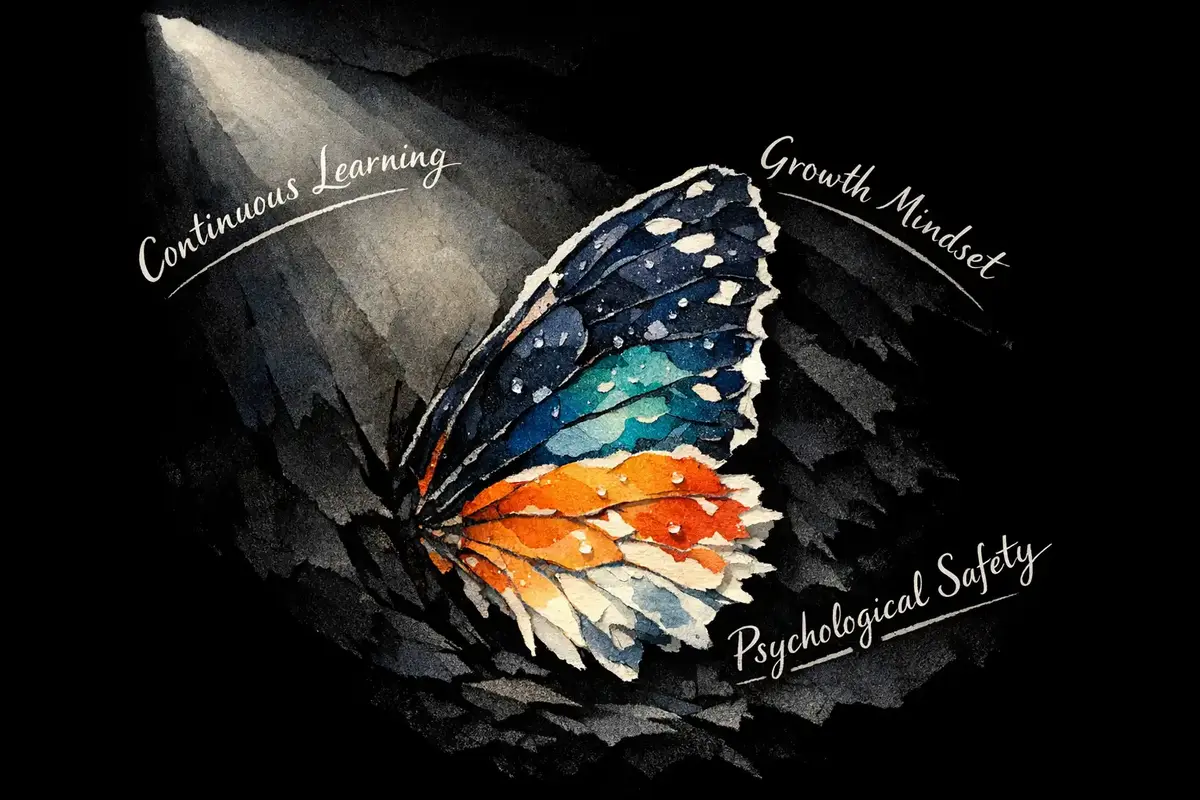
The framing matters more than the feature set.
Used well, AI coaching is a support layer. It gives new hires a place to ask the question they are not ready to ask in public, rehearse a customer conversation before the real one, and get immediate guidance in the flow of work. Used poorly, it feels like the company is outsourcing support at the exact moment a person is trying to understand whether humans here will invest in them.
That distinction is where many onboarding strategies fail. Leaders talk about efficiency; new hires are deciding whether they belong. Leaders see a scalable assistant; employees see the company’s first answer to a simple question: When I do not know something, what happens here?
The first learning experience becomes the culture
This is why onboarding is not just an HR process. It is the first operating model for your continuous learning culture.
People rarely separate “how I was onboarded” from “how learning works here.” They generalize fast. If early learning is clear, low-friction, and supported by both managers and tools, self-directed learning starts to feel normal. If early learning is fragmented, performative, or isolating, even strong later programs have to undo that first impression.
The real question is not whether AI belongs in onboarding. It is what, exactly, the new hire experiences when it shows up—support, or distance? That answer depends on what AI coaching actually does in practice.
What does AI coaching actually do in onboarding?
The guided learning layer is the right model here. If AI is not replacing managers, what role does it really play in helping new hires learn faster and with more confidence?
Most leaders answer that question too loosely. They picture a smarter chatbot, a faster search bar, or a cheaper way to deliver training at scale. That is exactly where confusion starts.
AI coaching is none of those things by itself. It is a structured support layer inside new hire onboarding that helps people make sense of what they are learning while they are learning it.
A clean definition: guidance, not just information
At its best, AI coaching does three jobs at once.
First, it answers routine questions in the moment: where to find a process, how a workflow works, what “good” looks like in a task. Second, it prompts reflection: What part of this feels unclear? What would you do first? What assumption are you making? Third, it personalizes support based on role, timing, and progress, so a new sales hire does not get the same prompts as a new analyst or team supervisor.
That combination matters because onboarding failure is rarely caused by missing content alone. People usually have documents, slide decks, and systems. What they lack is interpretation. AI coaching fills that gap by turning static information into an active learning exchange.
In a regional healthcare provider, for example, a newly promoted team lead may need to learn compliance steps, staffing routines, and escalation norms in the same week. The manager cannot sit beside that person all day. An AI coach can handle the repeatable layer — clarifying terms, surfacing the next best action, prompting the lead to think through a staffing decision — while the manager steps in where judgment and context matter most.
What it is not
This is where the distinction gets useful.
A chatbot responds when asked. AI coaching also nudges, sequences, and reinforces. An LMS stores content and tracks completion. AI coaching helps the learner apply that content to real situations. Manager coaching deals with nuance: priorities, confidence, politics, performance, and emotional tone. AI coaching should not try to do that work.
The division of labor is practical. Let the system absorb repetitive explanation. Let managers spend their time on observation, empathy, and standards.
That is not a small efficiency gain. It changes the quality of human attention available during onboarding. Instead of repeating the same process answer ten times, a manager can discuss why a new hire hesitated in a client handoff or what tradeoff they missed in a decision.
The risk, of course, is obvious: once a tool can answer quickly, people may assume it is also safe to learn through it. That assumption breaks fast if the environment does not feel psychologically secure — and that is where the real test begins.
Why psychological safety is the hidden requirement for self-directed learning
Only 43% of respondents in a McKinsey Global Survey reported a positive team climate. That should change how leaders think about onboarding, because most organizations assume new hires will ask for help if they need it when the evidence says many teams do not feel safe enough for that by default (McKinsey, 2021).
That gap is where psychological safety stops being a culture slogan and becomes an operating requirement. It is the felt belief that you can ask a basic question, admit a mistake, test an idea, or say “I do not understand” without being embarrassed or punished. In onboarding, that feeling matters more than most companies admit. Self-directed learning sounds efficient on paper; in practice, it collapses when people are afraid to reveal what they do not know.
The problem is not evenly distributed, either. The Center for Creative Leadership found that 62% of senior leadership teams in its sample showed significant variability in psychological safety (Center for Creative Leadership, 2026). If safety varies that much at the top, it almost certainly varies across managers, functions, and onboarding experiences below it. New hires do not join “the culture” in the abstract. They join a manager, a team, and a set of daily signals.
Lowering the social cost of learning
This is where AI coaching can help — but only if it lowers fear.
A new team lead at a regional manufacturing company, three days before a quarterly operations review, may understand the production metrics but still be unsure how to explain a variance to senior leaders. Asking a manager five “obvious” questions in a row can feel risky. Asking an AI coach to rehearse the explanation, test assumptions, and clarify terms feels different. Private first. Public later.
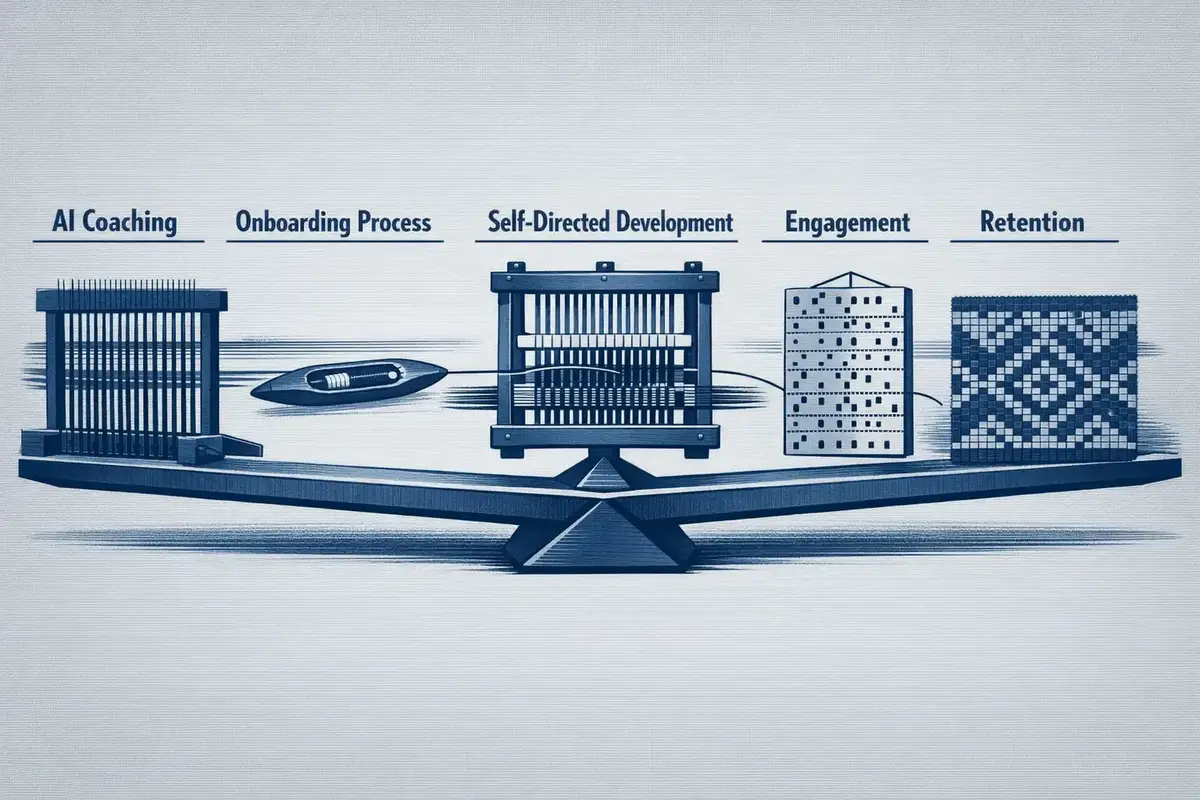
That is not a small distinction. It changes the social cost of learning. When the first draft of a question can happen in private, people are more willing to surface uncertainty early, before it becomes a visible error. Done well, AI coaching becomes a bridge to stronger human conversations, not a substitute for them.
Research consistently shows that people learn faster when practice is separated from judgment. That is why a well-designed psychological safety environment matters so much in onboarding: it gives new hires room to think out loud before performance is attached to every interaction.
Trust by design, not surveillance by default
The design choice is blunt. Does the tool feel like a practice space, or a monitoring system?
If every prompt is tied to evaluation, if usage patterns are read as performance signals, or if employees suspect their uncertainty is being scored, the learning value drops fast. People start managing impressions instead of building capability. They ask narrower questions. They avoid experimentation. They perform confidence.
That is why trust has to be designed into the onboarding experience from the start — through clear boundaries, manager language, and visible permission to learn. AI can reduce friction. It cannot remove fear on its own.
And once that trust exists, a harder question appears: where, exactly, should AI coaching sit in the first 30, 60, and 90 days — close enough to help, but not so close that it crowds out human judgment?
How should AI coaching fit into the first 30/60/90 days?
Only 29% of new hires felt prepared and supported to excel in their role. That gap is expensive: slow ramp, preventable mistakes, early doubt, and in some cases a quiet exit before the first quarter is over (SHRM).
If most new hires do not feel prepared, the answer is not a better orientation deck. It is a better sequence. AI coaching should fit into onboarding as a staged support system — heavy on clarity early, lighter over time, always in service of stronger manager conversations rather than replacing them.
Preboarding and week one: reduce friction fast
Before day one, AI should handle the low-stakes, high-volume confusion that drains confidence before real work even starts. Think preboarding prompts: what happens in the first week, where to find systems, how benefits enrollment works, what acronyms mean, what the team actually does. This is not glamorous work. It is trust work.
In a mid-market services firm, a new director joining two weeks before a client renewal cycle does not need “inspiration” first. They need clean answers, fast. Which meetings matter? What policies are non-negotiable? Who approves what? AI can absorb that repeatable layer without forcing the new hire to spend social capital on every basic question.
During the first week, keep the tool narrow and useful. Orientation prompts. Policy explanations. Workflow checklists. Reflection questions at the end of the day: What was unclear? What still feels risky? What do you need to ask your manager tomorrow? That last part matters. Good onboarding systems do not trap learning inside the tool; they route it back into human dialogue. That is where disciplined onboarding best practices start to show their value.
Days 30 to 60: shift from answers to application
By the first 30 days, the role of AI should change.
Less explanation. More guided practice.
This is the point where new hires should start using AI to prepare for real situations: drafting a customer response, rehearsing a handoff, checking understanding of a process exception, or reflecting after a difficult meeting. The system can ask better questions than many onboarding programs do: What outcome were you aiming for? Where did the process break down? What would you do differently next time?
Managers, meanwhile, should move up the value chain. Not policy reminders. Not system navigation. They should focus on judgment, standards, and context — why this client is sensitive, why this metric matters, why this tradeoff is acceptable here but not elsewhere. AI can support repetition. Managers have to shape interpretation.
Days 60 to 90: taper support, increase ownership
By day 90, onboarding should feel less like instruction and more like independent problem-solving with a safety net.
That means AI coaching becomes more selective. It should help the employee test assumptions, spot gaps, and structure thinking before higher-stakes conversations. It should not become a permanent crutch for decisions a capable employee now needs to own. The progression is simple: first guided support, then applied learning, then self-directed judgment.
Get that progression wrong and AI becomes either noise or dependency. Get it right and the employee learns something deeper than task completion: around here, support shows up early, then trust expands. The harder question is what leaders should watch to know whether that confidence is actually forming — or whether completion data is hiding hesitation.
Why continuous learning culture starts before day one, not after training season
A new VP in a regional retail company joins three weeks before the holiday staffing plan is locked. By the end of day two, they already know whether this company treats learning as part of work — or as something people are expected to finish quietly on their own.
That judgment forms fast because onboarding is never just transfer of information. It is the first visible pattern of how people here ask, reflect, adapt, and improve.
Employees who strongly agree they feel connected to their organization’s culture are 4.3 times more likely to be engaged (Gallup, 2022).
That finding matters more than it first appears. Connection to culture is not built by slogans in orientation or a values slide in the LMS. It is built when early experiences show a new hire what gets rewarded in practice: asking for clarification, testing an idea, revising a first attempt, and learning in public without being diminished. If those behaviors are absent in the first days, people infer the opposite. Keep your head down. Get it right the first time. Do not slow others down with questions.
A continuous learning culture is not a program calendar. It is an everyday operating pattern.
In strong environments, that pattern starts before day one. The preboarding note explains not only logistics but how support works. The manager frames week one as a period of observation and questions, not instant certainty. The systems people encounter — including AI coaching — reinforce that learning is expected because the role is new, not because the person is behind.
This is where AI can do more than answer questions. Used well, it teaches the rhythm of improvement. A prompt after a customer call — What surprised you? What would you try differently next time? — does cultural work. So does a rehearsal tool that lets a new leader test language before a difficult meeting. The message is subtle but powerful: performance is not fixed; capability grows through review, adjustment, and repetition. That is the practical foundation of a growth mindset.
The leadership signal matters just as much. Employees who said their organizations invest substantially in leadership development were 64% more likely to rate senior leaders as more inclusive (McKinsey, 2021). Inclusion, in this context, is not separate from learning. It is what makes learning usable. When leaders model curiosity, invite revision, and treat early uncertainty as normal, they make improvement feel legitimate rather than risky.
That is why onboarding is the first proof point. Not of training quality, but of cultural truth.
If learning is supposed to be continuous, where is the evidence that people feel confident enough to use it — in behavior, not just in completions? And how would a leader know the difference?
What should leaders measure if they want confidence, not just completion?
Six in 10 workers will require training before 2027 (World Economic Forum, 2023). If learning demand is rising that fast, why do so many onboarding dashboards still treat course completion as proof that the system works?
That assumption is comfortable. It is also weak. Completion tells you that a task was finished; it tells you almost nothing about whether a new hire now asks better questions, solves problems earlier, or knows when to escalate.
Measure the behaviors that show confidence is forming
Start with confidence signals, not attendance signals.
In a mid-market finance company during quarter-end close, a newly hired director may finish every required module and still hesitate before making a judgment call on an exception. The useful metric is not whether the training is “done.” It is whether the person can explain their reasoning, identify what they do not know, and use support without freezing the workflow.
Track four things in the first 90 days:
- Self-reported confidence by task, not by overall satisfaction
- Question quality — are questions becoming more specific, contextual, and decision-oriented?
- Manager escalation patterns — are issues being raised earlier, with better framing?
- Early learning behaviors — rehearsal, reflection, follow-up, and voluntary use of support tools
Those measures show whether AI coaching is reducing friction or simply adding another layer of activity. If the tool works, new hires should need less time to find answers, arrive at manager check-ins with sharper questions, and show more initiative in directing their own development. That is the real test of AI coaching implementation.
Watch for trust drag, not just adoption lift
Usage matters. But usage without trust is misleading.
52% of workers say they are worried about the future impact of AI in the workplace (Pew Research Center, 2025).
That number should change what leaders monitor. Look for trust drag: sudden drop-offs in use after week two, overly cautious prompts, repeated avoidance of sensitive topics, or managers reporting that employees seem more polished in the system than in live conversations. Those are signs the tool is being managed politically, not used developmentally.
Governance belongs on the measurement dashboard too. Review privacy boundaries, who can see interaction data, what gets aggregated, and whether employees understand those rules. If people suspect uncertainty is being scored, learning behavior narrows fast.
Deloitte found that organizations balancing business and worker outcomes are 1.6 times as likely to report AI initiatives exceeding expectations (Deloitte, 2024). In onboarding, that balance is practical: clear value for the business, clear protection for the learner.
The strongest systems do not just produce activity. They make learning feel ordinary — and safe. If your metrics cannot show that, are you building capability, or just documenting compliance?
The strongest onboarding systems make learning feel normal from the start
Bad onboarding does not just slow ramp-up. It quietly burns revenue through avoidable errors, erodes trust in managers, and sends capable people looking elsewhere before they have done their best work.
What changes when onboarding stops being a handoff and becomes the first habit of continuous learning? Usually, everything that matters later.
Make the tool build habits, not dependency
In a regional healthcare system, a newly hired VP walking into a service-line restructure does not need an AI coaching tool that gives polished answers on demand. They need a system that helps them ask better questions, reflect before reacting, and bring sharper thinking into conversations with their team.
That is the difference between a shortcut and a learning habit builder. Shortcuts create temporary relief. Habit builders create durable capability.
If AI is framed as the place where confused people go, strong employees will avoid it. If it is framed as part of how good people prepare — before a difficult meeting, after a messy handoff, during a new process — it becomes normal. That framing matters because people copy what the system appears to reward. They will either learn that asking for help is a sign of weakness, or that disciplined reflection is simply how work gets done here.
Research on coaching points in the same direction. The Center for Creative Leadership found that executive coaching increased overall leadership capability, not just immediate performance on a narrow task (Center for Creative Leadership, 2025). That is the right lens for onboarding. The goal is not faster answers alone. It is stronger judgment over time.
Normalize curiosity in the daily flow of work
The strongest onboarding systems make curiosity, reflection, and asking for help feel ordinary.
Not ceremonial. Not remedial. Ordinary.
That happens through design. A manager asks, “What are you still making sense of?” instead of “Any questions?” An AI prompt after a client escalation asks, “What signal did you miss?” rather than “Did you complete the process?” A team lead shares what they would do differently next time, which gives the new hire permission to do the same.
These are small moments. They compound fast.
When learning is treated as an everyday behavior, onboarding stops being a temporary program and starts acting like cultural infrastructure. New hires do not just absorb information; they absorb a norm: around here, people think out loud, revise, and improve.
The real outcome comes after onboarding ends
That is the standard worth using.
A strong onboarding system should leave people expecting to keep learning — from managers, from peers, from experience, and yes, from well-placed AI support. If that expectation is missing, the company may have delivered training without actually building a learning culture.
Onboarding is still the first proof of culture. So in your context, what does a new hire learn in the first weeks — that growth is part of the job, or that certainty is?
Key Takeaways
- The first 30 days shape whether AI feels like support, surveillance, or something in between.
- AI coaching works best as a guided learning layer that supports, but does not replace, managers.
- Psychological safety is essential if new hires are going to ask questions, practice, and learn openly.
- Leaders should measure confidence, trust, and learning behaviors, not just course completion.
Frequently Asked Questions
What is AI coaching in new hire onboarding?
AI coaching is a structured support layer that helps new hires understand information, practice decisions, and get guidance in the flow of work. It is designed to support learning, not replace managers or act as a simple chatbot.
Why do the first 30 days of onboarding matter so much for AI adoption?
The first 30 days shape whether AI feels helpful, neutral, or threatening because new hires quickly learn what asking for help means in the organization. If early support feels safe and useful, people are more likely to use AI as a learning tool rather than avoid it.
How does psychological safety affect AI coaching during onboarding?
Psychological safety determines whether new hires feel comfortable asking basic questions, admitting uncertainty, and practicing before performance is judged. Without it, people may use AI cautiously, hide confusion, or treat the tool as surveillance instead of support.
How should AI coaching be used across the first 30, 60, and 90 days?
In the first 30 days, AI should reduce friction by answering routine questions and clarifying processes. By days 60 to 90, it should shift toward guided practice and reflection so the employee builds independent judgment with less reliance on the tool.
What should leaders measure to know if onboarding is building confidence?
Leaders should track confidence signals such as task-specific self-confidence, the quality of questions, earlier escalation of issues, and real learning behaviors like reflection and rehearsal. Completion rates alone are not enough because they do not show whether a new hire can apply learning in real situations.