

Why AI fluency is now a board selection issue, not just a learning issue
66% of directors say their boards have limited to no knowledge or experience with AI—which means many boards are being asked to oversee a capability they still cannot reliably interrogate (Deloitte, 2025).
You have seen the scene. A management team presents an AI roadmap during the strategy offsite, the slides are polished, the use cases sound plausible, and the board discussion drifts quickly from oversight to reassurance. No one in the room needs to build a model. But someone does need to ask whether the data is fit for purpose, whether the controls match the risk, and whether the projected value survives contact with operations.
That is no longer a learning issue. It is a selection issue.
31% still say their organizations are not ready to deploy AI (Deloitte, 2025).
That number matters because unreadiness at the enterprise level often shows up first as weak governance at the board level: unclear accountability, shallow challenge, and too much dependence on management’s framing of both upside and risk. In practice, the cost is not abstract. It shows up in delayed decisions, poorly scoped investments, compliance exposure, and strategy resets that arrive a year late. This article answers the question nominating committees now have to face directly: if most boards still lack AI knowledge, what exactly should they be selecting for in the next director search?
The board does not need coders. It needs judgment.
Boards often make the same mistake management teams make early in AI adoption: they confuse technical expertise with governance capability. A director does not need to understand model architecture in the way a chief data scientist does. They do need enough AI fluency to challenge assumptions, interpret trade-offs, and recognize when a proposal is strategically attractive but operationally immature.
That distinction is where many searches go wrong. Nominating committees either overcorrect—looking for a rare former AI executive—or undercorrect, assuming a generally smart director can “pick it up” later. Some can. Some cannot. The issue is not intelligence; it is whether the person can govern under uncertainty in a domain where speed, opacity, and enterprise risk now move together.
Selection criteria must get sharper
This is why AI fluency for directors should be treated as a board composition question, not a board education program alone. Education helps. Composition decides whether the board can actually use that education under pressure.
The rest of this article will separate AI literacy, AI fluency, and technical expertise so the screening standard becomes practical. Because the real question is not whether a director can talk about AI. It is whether they can govern it—or whether the board is still mistaking confidence for competence.
What does AI fluency for directors actually mean?
The AI Fluency Ladder is the most useful way to define “enough” AI knowledge for a director. Without it, boards swing between two bad standards—mistaking basic familiarity for readiness, or assuming only technical specialists can oversee AI well.
The ladder has three rungs: literacy, fluency, and expertise.
Literacy, fluency, expertise: the practical distinction
AI literacy is baseline awareness. A literate director understands common terms, knows where AI is showing up in the business, and can follow a management presentation without getting lost. That matters, but it is not enough for oversight.
Technical expertise sits at the other end. That is the ability to design models, evaluate architecture choices, or manage model development in detail. Boards benefit from access to that depth, but NACD’s guidance is clear: the goal is not to turn every director into a technologist; it is to build practical competency for oversight across the boardroom agenda (NACD, 2024).
AI fluency sits in the middle, and that is the standard that matters most. It means a director can understand how AI is expected to create value, where it can fail in operations or decision-making, and what questions must be asked before the board approves scale, spend, or speed.
That middle rung is where judgment lives.
What fluent directors can actually do
In a quarterly review at a mid-market manufacturing company, the CFO asks the board to back an AI forecasting program after a promising pilot. A literate director may ask whether the pilot worked. A fluent director asks harder questions: what changed in the underlying data, where human override still matters, what failure threshold triggers escalation, and whether management is measuring value in margin, working capital, or service levels.
That is board work. Not model building.
Harvard Law School Forum on Corporate Governance has been explicit that AI is changing board oversight expectations and, with it, the logic of the board skill matrix (Harvard Law School Forum on Corporate Governance, 2024). The implication is practical: directors do not need to code, but they do need to interrogate material use cases, limits, dependencies, and control points with enough confidence that management cannot hide behind abstraction.
Boards need directors who can oversee AI without becoming passive consumers of expert language (NACD, 2024).
This is why board AI competency should be defined as oversight without passivity. If a director cannot tell the difference between a compelling use case and an ungoverned one, the board has a skills problem—even if the room sounds sophisticated.
And that leads to the harder issue: if many boards already talk confidently about AI, where exactly does execution still break—at enthusiasm, or at governance?
Why the real gap is governance execution, not enthusiasm for AI
61% of respondents say their organizations are at the strategic or embedded stage of Responsible AI maturity—so why do so many boards still struggle when an AI initiative moves from slideware to operating reality (PwC, 2025)? If maturity language is becoming common, the obvious assumption is that governance is catching up. It often is not.
The harder truth is that many organizations can now describe their AI principles far better than they can run them.
50% of executives cite translating Responsible AI principles into operational processes as their biggest barrier to progress (PwC, 2025)
That gap matters more than boardroom enthusiasm. A director who is excited about AI but cannot connect strategy to controls is not adding much oversight value. The board does not need another voice saying the company should “move faster.” It needs someone who can ask what operating process changes when the company does.
Principles do not govern anything by themselves
Consider a regional healthcare provider in the middle of its annual budget cycle. Management asks for more funding to expand AI-assisted patient scheduling and documentation support after a promising pilot. The proposal includes the right language—fairness, transparency, human review—but the board packet is vague on ownership, exception handling, and what gets escalated if outputs begin affecting care quality or reimbursement workflows.
This is where weak governance shows itself. Not in bad intent. In missing decision rights.
A fluent director will ask who owns model performance after deployment, which executive is accountable when a control fails, how incidents move from management to committee level, and whether the board has defined thresholds for intervention. That is the practical core of an AI governance framework. Without it, “Responsible AI” stays a statement of values rather than a system of oversight.
The board skill that matters most is translation
The most useful directors in this environment are translators. They can take an abstract principle like accountability and turn it into board questions: Who signs off? Who monitors drift? Who can stop deployment? When does this come back to us?
That sounds simple. It is not.
Most governance failures begin in the space between a principle and a process. Boards approve an AI direction without clarifying management ownership. Committees discuss risk without defining escalation paths. Everyone agrees human oversight matters, but no one specifies where human judgment is mandatory and where automation is allowed. Strong AI governance skills close that gap.
The selection issue, then, is sharper than it first appears. Does a director know how to talk about AI—or can they force clarity on risk, ownership, and authority when the room gets vague? That distinction will decide who belongs on the next board slate.
Which AI governance skills should nominating committees actually screen for?
The AI Governance Screening Rubric is the right model here because nominating committees need observable criteria, not vague enthusiasm. Without it, boards keep selecting directors who can discuss AI in general terms but cannot govern a live decision when evidence is thin and consequences are real.
NACD’s guidance points in this direction: board-level AI competency is built through practical fluency categories, not through technical prestige alone (NACD, 2024). KPMG reaches the same conclusion from a different angle: the boardroom problem is not just knowledge gaps, but whether directors can apply judgment under pressure (KPMG, 2024).
The four skills worth screening for
Start with risk sensing. A strong candidate can hear a management proposal and quickly locate where value creation and exposure sit in the same workflow. They do not treat data risk, legal risk, model risk, and reputational risk as separate boxes. They understand how they stack.
In a quarterly review at a regional financial services firm, the CIO asks the board to support a generative AI rollout for client service. The pilot reduced response time, but the board packet is light on data provenance, exception handling, and customer disclosure. The candidate you want does not ask whether the tool is “promising.” They ask which use cases are material, what customer outcomes could be affected, and what failure would trigger board visibility.
That is oversight discipline. It shows up in the habit of asking management for evidence.
Boards need directors who can move from claims to proof—what was tested, what controls exist, what thresholds require escalation (KPMG, 2024)
A useful director asks for audit trails, incident reporting logic, human review points, and post-deployment monitoring. Not because they want to run the system. Because they know governance fails when boards accept confidence in place of evidence.
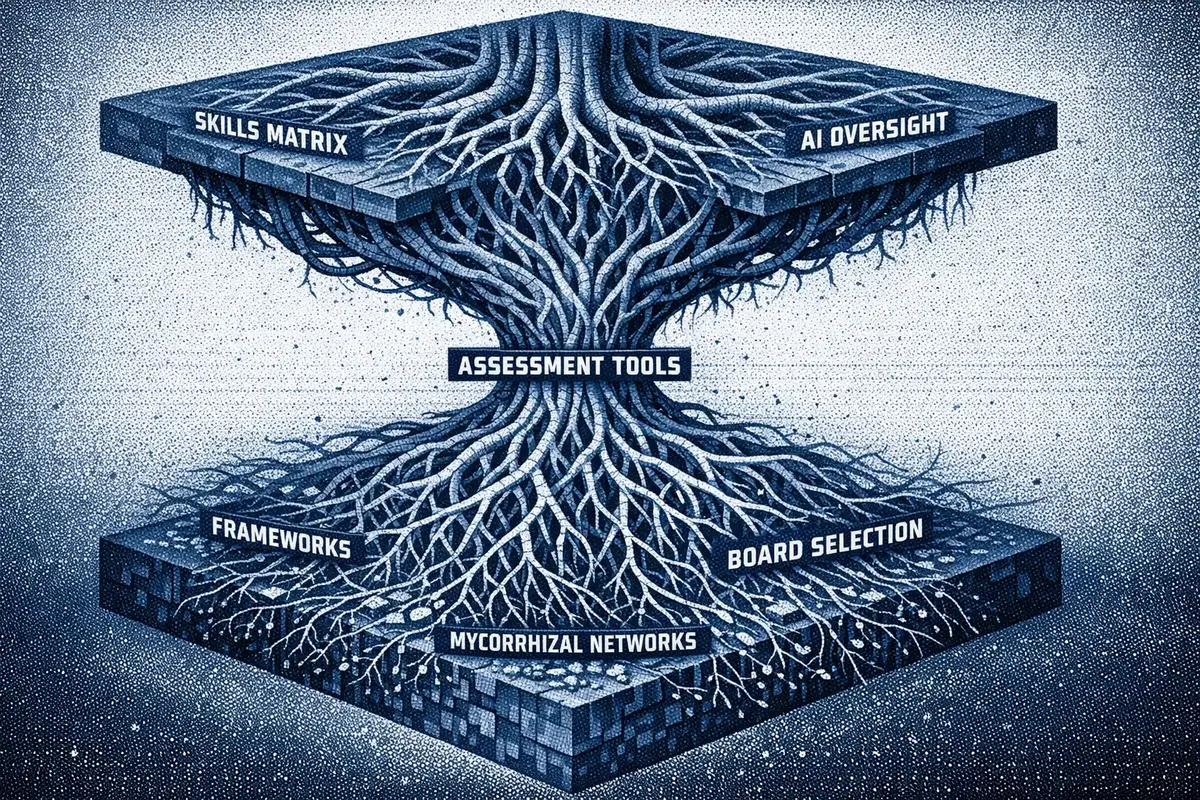
What good evidence looks like in a candidate
The third skill is escalation judgment. Candidates should know when management can handle an issue operationally and when the matter belongs at committee or full-board level. That usually becomes clear when you ask about human review. If a candidate cannot explain where human judgment must remain in the loop—for pricing, hiring, safety, credit, or customer remediation—they are not ready for AI oversight.
The fourth is board-relevant pattern recognition. Look for prior committee work, oversight of complex risk, or leadership in regulated settings. A former executive who has managed model governance, compliance trade-offs, or cross-functional controls will usually give sharper answers than someone whose AI exposure is mostly strategic theater. This is the practical core of board director AI skills.
NACD emphasizes progressive fluency because boards do not need every director to bring the same depth (NACD, 2024). They do need at least some directors who can convert ambiguity into a governance question the room can act on.
That raises the harder issue. How do you tell, in an interview, whether a candidate truly has those instincts—or just knows the language?
How do you test AI fluency in a director interview?
87% of leaders expect AI agents to reshape governance within the next year—and boards that misread a candidate now may pay for it in stalled decisions, damaged trust, and executives who leave after one too many unchallenged bets (PwC, 2025).
Picture the interview room. The candidate has the right résumé, has “worked with AI,” and speaks confidently about transformation. None of that answers the real question: when management brings an ambiguous AI proposal to the board, can this person turn concept into judgment?
Ask for decisions, not definitions
The best interview prompts are not academic. They force the candidate into a board decision under uncertainty.
Try this: Management wants to scale an AI use case after a successful pilot. What would you need to see before supporting expansion? A fluent candidate will not stay at the level of promise. They will ask about the material use case, the business metric that matters, the control environment, and what would trigger board re-review. They will talk about risk appetite in operational terms—where error is tolerable, where it is not, and who owns that line.
That is what boards need now. Deloitte’s 2025 research drew on 700 board directors and executives across 56 countries, which matters because the pattern is broad, not anecdotal (Deloitte, 2025).
A good follow-up is sharper: If management says the model is performing well, how would you challenge that statement? Strong candidates ask what “well” means, over what period, against which baseline, and with what exceptions. They want evidence of monitoring, human override, incident reporting, and escalation logic. That is practical AI governance skills in action.
Listen for the red flags in the answer
In a retail enterprise’s year-end strategy review, a board interviews a former technology executive for an open seat. Asked how she would oversee an AI pricing engine, she says the board should “trust the specialists” unless there is a major failure. That answer sounds disciplined. It is not. It outsources board responsibility.
The warning signs are usually verbal before they are structural: vague enthusiasm, inflated certainty, and a habit of treating AI as someone else’s problem.
The strongest candidates are comfortable saying, I would not approve this yet. They know where governance belongs and where management should operate. They do not overclaim technical depth. They show how they would test narrative against proof.
That distinction becomes decisive fast. If AI-ready directors are selected one by one, but committee mandates, onboarding, and board design stay unchanged—does the board actually get stronger, or just better at sounding current?
Why board composition, committee design, and onboarding must change together
The board governance loop is the right framework here because it exposes a question many nominating committees still avoid: what happens if you add one AI-capable director but leave the rest of the system untouched?
At first glance, the answer seems reassuring. One strong appointment should raise the board’s level. In practice, it often does something else: it concentrates AI judgment in one seat, lets everyone else defer, and leaves the board no better prepared for refreshment, succession, or committee turnover.
That is why AI fluency is a composition issue before it is a training issue. Harvard Law School Forum on Corporate Governance has argued that as AI becomes more material, boards need to revisit both their skill matrices and their oversight structures—not just offer more education (Harvard Law School Forum on Corporate Governance, 2024). If AI risk and value creation now affect capital allocation, operating resilience, and reputation, then the gap belongs in director selection, committee succession, and chair planning.
In a mid-market services company during annual board refreshment, the lead independent director recruits a former technology executive with credible AI experience. Six months later, every AI question still routes to that one director. Audit assumes risk has it. Risk assumes management has it. The new director becomes a translator, then a bottleneck.

Committee design decides whether that bottleneck forms. For some companies, AI oversight belongs largely in audit because model controls, assurance, and reporting discipline are the immediate issue. For others, risk should carry it because customer harm, regulatory exposure, or operational resilience dominate. In more digitally exposed businesses, a technology committee may be the right home. And in companies where AI is reshaping strategy itself, the full board cannot delegate the core judgment.
The structure should follow the company’s exposure and maturity—not the board’s legacy committee map.
Then comes onboarding. If the board selects for board AI competency but introduces new directors with generic materials and no clear escalation logic, it breaks the loop. The World Economic Forum has shown that digital skills are changing in how they are applied, which is exactly why continuing director development must stay tied to live governance decisions, not abstract awareness (World Economic Forum, 2025).
Selection, committee design, and onboarding either reinforce one another—or cancel one another out. And when they do align, a harder question appears: what does a board actually look like when AI capability is distributed, durable, and visible in how it governs?
What good looks like when a board is truly AI-capable
77% of surveyed organizations are currently working on AI governance. That means the cost of weak board oversight is no longer theoretical: money gets committed before controls are clear, trust erodes after preventable failures, and strong executives leave when the board cannot separate disciplined ambition from noise (IAPP, 2025).
If AI governance skills keep evolving, what should boards treat as the real benchmark for readiness? Not whether every director is an AI specialist. Whether the board has enough AI fluency to govern strategy, risk, and accountability without hesitation when the stakes are real.
What capability looks like in the room
In a quarterly review at an enterprise retail company, the C-suite asks for accelerated funding after an AI merchandising pilot lifts conversion. The board is not truly AI-capable because one director knows the topic well. It is capable when several directors can test the same proposal from different angles—commercial upside, operational dependency, customer impact, control strength—and still converge on a sound decision.
That is the standard.
A strong board does not confuse fluency with technical prestige. It knows which questions belong at board level and which belong with management. It can challenge assumptions, identify material exposure, and insist on clear accountability before scale. If you want a practical screen for future appointments, this is it: will this director help the board make better decisions under uncertainty?
68% of digital skills are expected to change in how they’re applied, compared to 35% across more human-centric skills (World Economic Forum, 2025)
That number should reset how boards think about selection. AI fluency for directors is not a fixed credential; it is a moving baseline. A director who was current two years ago may still be valuable, but only if they can keep updating how they interpret risk, evidence, and governance expectations. Static expertise ages fast.
The durable standard for the next reset
The best boards treat AI capability as distributed judgment. They do not rely on one “AI person.” They build a board where enough directors can interrogate management’s claims, spot weak ownership, and ask the uncomfortable follow-up before capital is committed. That is what durable oversight looks like.
You can see the implication for your own board. The next director search should not ask, Who understands AI? It should ask, Who improves our judgment when AI changes the decision? If that baseline keeps moving—as the World Economic Forum data suggests it will (World Economic Forum, 2025)—is your board selecting for yesterday’s confidence, or tomorrow’s governing capacity?
Key Takeaways
- AI fluency is a board selection issue because boards need judgment, not coding.
- The practical middle ground between literacy and expertise is what enables real oversight.
- Nominating committees should screen for risk sensing, oversight discipline, escalation judgment, and pattern recognition.
- Board composition, committee design, and onboarding must reinforce one another for AI oversight to hold.
Frequently Asked Questions
What is AI fluency for board directors?
AI fluency is the ability to understand how AI creates value, where it can fail, and what governance questions must be asked before approving scale or spend. It sits between basic AI literacy and technical expertise, enabling directors to oversee AI without needing to build models themselves.
Why should AI fluency be part of board director selection?
AI fluency is a selection issue because boards must govern AI under uncertainty, not just learn about it after appointment. Directors who can challenge assumptions, interpret trade-offs, and spot weak controls improve oversight quality and reduce the risk of shallow challenge or overreliance on management.
Which AI governance skills should nominating committees screen for?
The most important skills are risk sensing, oversight discipline, escalation judgment, and pattern recognition. A strong candidate can identify where value and exposure overlap, ask for evidence rather than claims, know when an issue belongs at board level, and recognize when human review must remain in the loop.
How can a board interview test whether a director is truly AI fluent?
Ask the candidate to explain what they would need before supporting an AI rollout, how they would challenge performance claims, and when they would require re-review or escalation. Fluent candidates focus on business metrics, controls, monitoring, human override, and accountability rather than vague enthusiasm or technical jargon.
Why must board composition, committee design, and onboarding change together for AI oversight?
Adding one AI-capable director is not enough if the rest of the board still defers all AI questions to that person. Effective oversight requires distributed judgment, committee structures that match the company’s AI exposure, and onboarding that teaches directors how to apply AI governance to live decisions.