
Why leadership training fails when every modality tries to do the same job
Most blended leadership training fails for a simple reason: it mixes formats without giving each one a different job. When workshops, coaching, mentoring, and peer learning all try to create the same shift, the program looks comprehensive on paper but changes very little on Monday morning.
You see it in budget reviews and quarterly talent discussions. A regional healthcare director sends managers to a workshop, adds a few coaching sessions, launches mentoring, and still hears the same complaints a month later: weak delegation, slow decisions, avoidable escalations. The issue is rarely effort. It is modality mismatch—too many inputs, no clear logic for what each format is supposed to move.
That costs more than wasted training spend. It burns manager time, teaches people to treat development as an event, and quietly trains the organization to expect insight without follow-through. This article addresses that problem directly: blended learning works when each modality is designed for a distinct stage of behavior change, not when every modality repeats the same message.
Leadership development breaks down when delivery is mistaken for transfer.
A strong blended program moves leaders through three different kinds of work: awareness, application, and habit. A workshop can surface a leadership pattern. Coaching can help a manager apply it under pressure. Mentoring can add judgment. Action learning can force practice in real work, where old habits usually return.
That is the real design question. Not whether to add more formats, but whether each one earns its place. If blended learning is not just a mix of channels, what exactly does it mean in leadership training?
What does blended learning actually mean in leadership development?
28% of organizations say online asynchronous on-demand training is their most common mode for leadership development (Harvard Business Publishing, 2024). That tells you digital learning is already mainstream—and also why so many programs confuse access with development.
Blended learning in leadership development means designing multiple modalities as one connected journey, with each format doing a different job. It is not a menu of online modules and live sessions sitting side by side. It is a sequence that moves a leader from understanding, to practice, to judgment, to sustained use.
Workshops matter because they create shared language. They let a cohort test ideas in real time, compare interpretations, and rehearse difficult moments before the stakes are real.
The rest of the blend should then specialize:
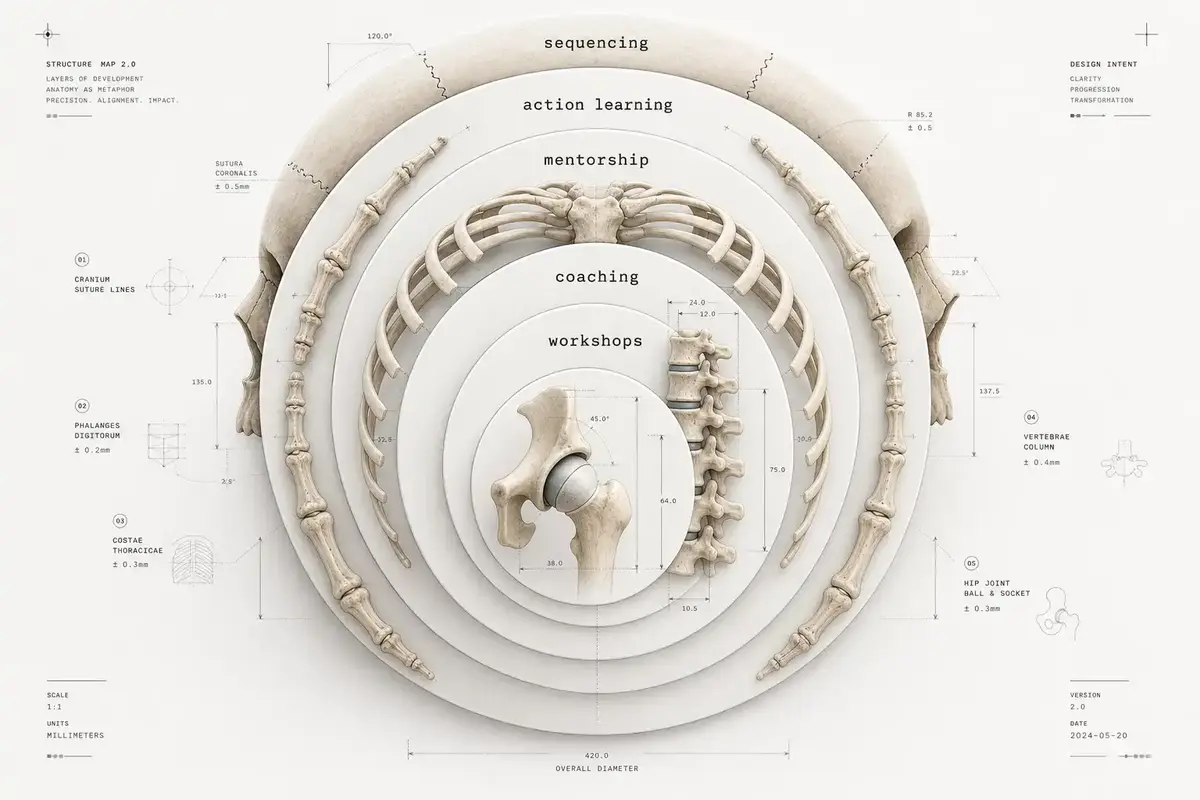
- Workshops build common language and safe practice
- Coaching turns insight into individual behavior change under real pressure
- Mentorship adds perspective, context, and career navigation
- Action learning forces application on live business problems, where habits are tested
Blended learning works when every modality carries a different part of the load.
In a mid-market technology company during a team restructure, a VP does not need another module on feedback models. She needs a workshop to align her leaders on what good feedback sounds like, coaching to handle her own avoidance pattern, mentoring to read the politics of the change, and action learning to apply all of it while decisions are still contested.
Digital learning still has a strong role. Best use: before the live experience, between touchpoints, and after the formal program ends. Preparation, reinforcement, refreshment. Not the whole journey.
That raises the practical design question most programs skip: which modality should do what—and what should it never be asked to do?
Which modality should do what in a leadership program?
The quarterly review ends, and the same question comes back: why did a program with workshops, coaching, and mentoring still leave managers shaky in real decisions? You have seen the pattern—plenty of activity, but when a client escalation or restructuring call hits, leaders still revert to habit.
Blended learning is no longer the exception. 53% of organizations use it, and 71% of respondents say at least half of learning in their organization is blended. ATD also reports that 87% of talent development professionals see increased employee flexibility as a major benefit. That matters, but adoption is not the design win. Modality fit is.
The best programs match each format to a distinct learning objective. They do not repeat the same feedback model in four places and call it reinforcement. They decide, in advance, where shared understanding should happen, where personal behavior should shift, where judgment should mature, and where performance should be tested in live work.
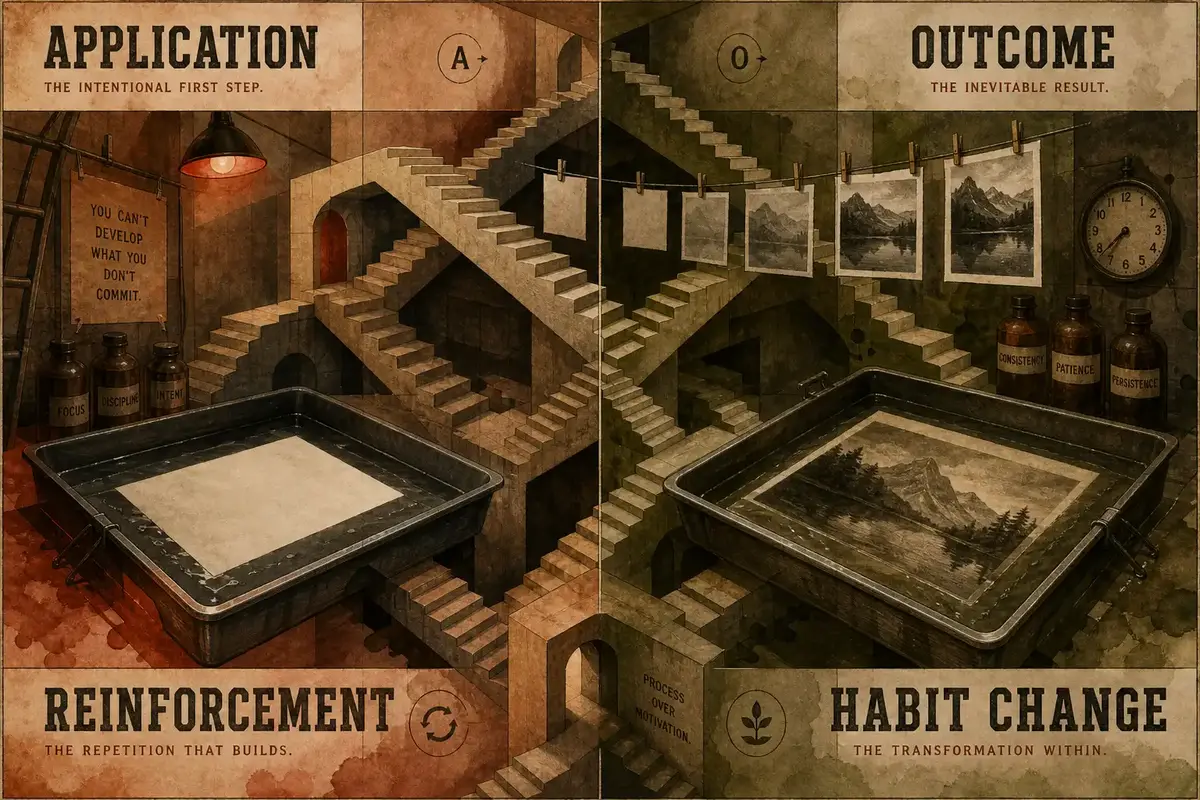
Busy programs feel comprehensive. Effective programs assign each modality one clear job.
A regional services director preparing new managers for tougher client conversations needs different tools for different problems. A workshop can create urgency and let the cohort practice language. Coaching can surface the individual avoidance pattern. Mentoring can help that manager interpret politics, identity, and career risk. Action learning can then force all of it into a real business challenge.
The design logic is easier to see side by side:
| Modality | Purpose | Best use | Common misuse |
|---|---|---|---|
| Workshops | Shared language and practice | Build alignment, urgency, rehearsal | Expecting lasting behavior change by themselves |
| Coaching | Individual behavior change | Work on live pressure points and habits | Using it to reteach generic content |
| Mentoring | Perspective and identity | Career judgment, context, organizational reading | Treating it as performance coaching |
| Action learning | Real-world application | Solve business problems while practicing leadership | Running projects without reflection or feedback |
The hard part is not choosing the mix. It is choosing the order—what should come first, what should reinforce, and what should happen only when the work gets real?
Practical implications and deeper analysis
Matching modality to learning objective is not just about efficiency—it’s about depth of impact. For example, if a program relies too heavily on workshops, participants may leave with theoretical knowledge but lack the confidence or muscle memory to act under pressure. Without coaching, those ingrained habits and blind spots remain unchallenged. Conversely, if coaching is used to rehash workshop content, it wastes the opportunity for personalized growth.
Mentoring, often underutilized, is most powerful when used to help leaders navigate ambiguity and organizational complexity—something neither workshops nor coaching can fully address. For instance, a mentor can help a new leader interpret the unspoken rules of influence in a matrixed organization, or weigh the risks of a high-visibility project. Action learning, meanwhile, is where all the theory and reflection are stress-tested. It is only through real projects—where stakes, consequences, and feedback are immediate—that leaders internalize new skills.
Designers must also consider sequencing. Starting with a workshop builds a foundation of shared language. Coaching then personalizes and embeds new behaviors. Mentoring supports ongoing sense-making and career navigation. Action learning cements the learning through application. When each modality is assigned a unique, non-overlapping role, the program avoids redundancy, maximizes transfer, and produces leaders who can perform—not just recite—when it matters.
How do you sequence workshops, coaching, mentoring, and action learning so they reinforce each other?
About 75% of talent development professionals said their use of blended learning had increased over the prior two years. That growth is not automatically good news: when the sequence is wrong, leaders leave energized, then miss deadlines, mishandle conflict, and erode trust in the weeks that matter most.
The answer is simple. Sequence the experience around how behavior actually changes—through repetition, reflection, and application over time, not through a single event. That is also the logic behind research from DDI, which suggests blended learning works best when it is built as a leadership journey rather than a set of disconnected tools.
Before, during, and after
Start before the workshop. Pre-work should build baseline knowledge so live time is not wasted on definitions that can be learned alone. In strong leadership development programs, that usually means short digital inputs, a self-assessment, and one or two prompts tied to an upcoming business challenge.
Then use the workshop for shared practice. Not content dumping. A workshop earns its place when leaders compare judgment, rehearse difficult conversations, and see where their instincts diverge under pressure.
The workshop should start the work, not pretend to finish it.
After that, coaching should come quickly—while the experience is still vivid. Coaching personalizes the shift: what this leader avoids, overuses, or misreads when stakes rise. Mentoring then widens the lens. It helps a leader interpret context, power, timing, and tradeoffs that are hard to see from inside the role.
Action learning should come last, when there is something real to test. Picture a mid-market manufacturing director in a budget cycle, leading a cross-functional cost decision. That is where new behavior either holds or collapses.
Reinforcement is where transfer lives
The strongest blends do not end with the live session. 75% of organizations expect their use of blended learning to increase over the next two years, which makes reinforcement design more important, not less.
Use follow-up prompts, manager check-ins, and brief peer reflection to keep momentum alive. Otherwise the program feels complete while the behavior is still fragile. And if attendance is easy to count but transfer is not, what should leadership teams measure instead?
What should you measure if the goal is behavior change, not attendance?
Kirkpatrick’s evaluation model matters here because it forces an uncomfortable question: if a program looks successful in the LMS but leaders still behave the same way, what exactly was measured? Completion is easy to report. So is attendance. Neither tells you whether a leader now runs a tougher one-on-one better, makes cleaner tradeoffs, or handles conflict with more judgment.
That is the measurement trap. Research from Training Industry argues blended learning works when implementation includes clear benefits, known challenges, and reinforcement—not when organizations simply mix formats and count participation.
The better unit of analysis is on-the-job application. Research from eLearning Industry points in the same direction: model-based blended learning is most useful when delivery choices are tied to capability outcomes, not treated as a format decision. In practice, that means looking for evidence in the work itself.
A regional retail VP in a market shift is a good test case. If the program targeted delegation and decision quality, measure what changed in the next month:
- Manager observations from real meetings and one-on-ones
- Peer feedback on clarity, follow-through, and escalation handling
- Quality and speed of decisions under live pressure
- Progress on action learning projects tied to business goals
Not every audience should be judged the same way. A frontline manager may need observable shifts in coaching cadence; a senior executive may need better cross-functional decisions and fewer avoidable reversals.
If the behavior did not move at work, the program did not work.
And that creates the harder design question: what has to be built into the blend so transfer happens by default—not by luck?
The strongest blended programs are built for transfer, not just delivery
Fragmented leadership training is expensive. It shows up as stalled decisions, avoidable turnover, and trust lost in the moments when leaders are supposed to steady the business.
If blended learning is already familiar, why do so many programs still feel fragmented instead of developmental? Because transfer fails when modalities compete for attention instead of supporting the next move in the leader’s work. Research from DDI suggests leaders respond best when blended learning respects their time and attention while still creating meaningful practice (DDI).
A regional finance VP in the middle of a budget cycle does not need five disconnected touchpoints on the same topic. She needs a system: a concise introduction, a live conversation that sharpens judgment, structured reflection after a difficult decision, and support that helps the new behavior hold in the next meeting.
That is the real shift. Blended learning works best as a development system — a connected design that builds capability through practice, reflection, and support in the flow of work. American Management Association makes a useful distinction here: simple explanations help people enter the model, but implementation requires more depth and design discipline (American Management Association).
Strong programs feel lighter than weak ones because they remove noise and protect practice.
So the closing test is practical: is your program a collection of formats, or a journey that changes how leaders lead on Tuesday morning?
Key Takeaways
- Leadership development breaks down when delivery is mistaken for transfer.
- Blended learning works when every modality carries a different part of the load.
- Busy programs feel comprehensive. Effective programs assign each modality one clear job.
- The workshop should start the work, not pretend to finish it.
Frequently Asked Questions
What are the best practices for integrating blended learning in leadership training programs?
The best practice is to assign each learning modality a distinct role instead of repeating the same content in multiple formats. A strong blend usually combines workshops for shared language and practice, coaching for individual behavior change, mentoring for judgment and context, and action learning for real-world application.
How can workshops, coaching, mentorship, and action learning projects be combined effectively in blended leadership development?
They work best as a connected sequence: workshops build awareness and common language, coaching personalizes behavior change, mentorship broadens perspective, and action learning tests new skills on live business problems. This design reduces overlap and helps leaders transfer learning into day-to-day performance.
Why is blended learning important for enhancing leadership skills compared to traditional training methods?
Blended learning is more effective because leadership skills change through practice, reflection, and application, not through information alone. Compared with traditional one-time training, it creates more opportunities to reinforce behavior in real work settings.
Which learning modalities should be prioritized when designing a blended leadership training curriculum?
Prioritize the modalities based on the outcome you want: workshops for awareness and shared practice, coaching for habit change, mentoring for judgment and career navigation, and action learning for performance in real situations. The goal is not to use every format equally, but to use each one where it adds the most value.
Is there a recommended sequence for integrating workshops, coaching, mentorship, and projects in blended leadership training?
Yes. A common sequence is pre-work and digital preparation first, then workshops, followed by coaching and mentoring, and finally action learning projects with reinforcement after the program. This order supports the way behavior change actually happens: understanding, practice, reflection, and application.