

{‘rendered’: ‘
Quantifying the ROI of a coaching culture means systematically measuring the tangible and intangible benefits that enterprise AI coaching programs deliver—using a blend of financial, behavioral, and organizational metrics. For HR and OD leaders, this involves tracking specific KPIs, applying multi-level analytics frameworks, and reporting outcomes that demonstrate both immediate impact and long-term value. By the end of this guide, you’ll understand which metrics matter, how to build a robust measurement plan, and how to communicate the true return on investment of AI-powered coaching at scale. According to DDI World research, only 14% of CEOs believe they have the leadership talent needed to drive growth, making structured leadership development a strategic imperative.
\n
\n
If you’ve ever been asked to justify the budget for your organization’s coaching initiatives, you’ve probably noticed how quickly the conversation turns from leadership stories to hard numbers. Maybe your executive team is excited about rolling out AI-powered coaching, but when it comes time to renew contracts or expand access, you’re left scrambling for data that proves its value. Sound familiar? You’re not alone. Many HR and OD leaders find themselves caught between the promise of a coaching culture and the pressure to deliver measurable ROI—especially as AI transforms how coaching is delivered and tracked. The ICF/PwC Global Coaching Study confirms that executive coaching delivers an average ROI of 529%, with organizations reporting measurable improvements in leadership effectiveness and business outcomes.
\n
\n
Why Does Quantifying Coaching ROI Matter More Than Ever?
\n
Most teams assume that the value of coaching is self-evident: better leaders, stronger teams, and a more resilient organization. But research consistently shows that when coaching is combined with training, productivity doesn’t just improve—it leaps. For example, organizations that offer training alone see a 22% increase in productivity, but when coaching is added, that figure rises to 88% (American University). That’s a fourfold difference, and it’s hard to ignore.
\n
Yet, here’s the thing: traditional methods for measuring coaching ROI often fall short in the era of AI and enterprise-scale programs. We’re not just talking about a handful of executives in a workshop—we’re talking about hundreds or thousands of employees accessing coaching 24/7, generating a flood of behavioral and engagement data. The question isn’t just “Does coaching work?” but “How do we prove it, optimize it, and scale it—using real analytics?”
\n
\n
What Is a Coaching Culture—and How Does AI Change the Measurement Game?
\n
A coaching culture is more than just offering coaching as a perk. It’s a systemic approach where coaching mindsets, skills, and conversations are embedded into daily work—shaping how leaders lead, teams collaborate, and organizations adapt.
\n
But most organizations still measure coaching effectiveness in isolated snapshots: post-program surveys, anecdotal feedback, or annual performance reviews. AI-powered coaching changes this dynamic in three crucial ways:
\n
- \n
- Continuous Engagement: AI coaches are available anytime, anywhere, capturing data on every interaction—not just scheduled sessions.
- Real-Time Analytics: Instead of waiting for quarterly reports, HR and OD leaders can monitor progress as it happens, spotting trends and bottlenecks early.
- Scalable Personalization: With AI, every employee can access tailored coaching, generating a much richer dataset for analysis.
\n
\n
\n
\n
So, what does this mean for ROI measurement? It means we need new AI coaching metrics and frameworks that capture both the breadth and depth of coaching impact—across individuals, teams, and the entire organization.
\n
\n
The Multi-Level Framework: How Do You Measure Coaching ROI Step by Step?
\n
Let’s break down the Kirkpatrick-Phillips-inspired framework—adapted for modern, AI-driven coaching cultures. This five-level model helps organizations move from surface-level satisfaction to deep, financial impact:
\n
- \n
- Reaction: Are participants satisfied with the coaching experience? AI can track real-time feedback, session ratings, and engagement levels.
- Learning: What new skills, mindsets, or knowledge are being acquired? Digital assessments and quizzes can quantify learning gains.
- Behavior: Are coachees applying what they learn on the job? AI can analyze communication patterns, goal progress, and peer feedback.
- Business Impact: What changes are visible in key business metrics—such as productivity, retention, or project delivery? Here’s where integration with HRIS and business intelligence systems pays off.
- Financial ROI: What’s the bottom-line return? The standard formula is:
\n
\n
\n
\n
\n
\n
\n
ROI (%) = [(Benefits – Costs) / Costs] × 100
(Service Quality Centre, 2025)\n
\n
This framework isn’t just theory—it’s the backbone of credible ROI measurement in leading organizations. But how do you actually apply it to AI coaching at scale?
\n
\n
\n
\n
What KPIs and Analytics Should HR and OD Leaders Track?
\n
It’s tempting to focus only on financial ROI, but the smartest organizations track a blend of coaching KPIs that cover both hard and soft outcomes. Here are the essential categories:
\n
- \n
- Engagement Metrics: Session completion rates, active user ratios, and time spent in coaching conversations.
- Skill and Mindset Shifts: Pre- and post-coaching self-assessments, manager feedback, and AI-driven sentiment analysis.
- Behavioral Change: Goal achievement rates, peer collaboration scores, and changes in communication or decision-making patterns.
- Business Outcomes: Productivity increases, employee retention, and project delivery speed.
- Financial Impact: Cost savings, revenue growth, and calculated ROI using the formula above.
\n
\n
\n
\n
\n
\n
For example, one organization saw a 27% decrease in product launch timelines and a 35% increase in employee engagement scores after implementing coaching (International Coaching Federation, 2025). These are the kinds of metrics that resonate with executive teams.
\n
But here’s a common assumption: “If we can’t measure it in dollars, it doesn’t count.” In reality, some of the most valuable coaching outcomes—like psychological safety or innovation culture—require both qualitative and quantitative tracking. That’s where AI-enabled analytics shine, capturing patterns and ripple effects that traditional surveys miss.
\n
\n
How Do You Set a Baseline and Isolate Coaching Impact?
\n
Measuring ROI isn’t just about tracking improvement—it’s about proving that coaching caused the improvement. Most teams assume that comparing “before and after” scores is enough. But research shows this approach often confuses correlation with causation.
\n
To set a credible baseline and isolate impact:
\n
- \n
- Define Clear Objectives: What specific behaviors or outcomes should improve? Tie these to business priorities.
- Segment Your Population: Compare coached vs. non-coached groups, or use staggered rollouts to create natural control groups.
- Track Over Time: Use longitudinal data to distinguish short-term spikes from sustained change.
- Integrate Multiple Data Sources: Combine coaching analytics with HR, performance, and business data for a holistic view.
\n
\n
\n
\n
\n
Industry evidence suggests that organizations using this approach can more confidently attribute gains—like an 88% productivity increase when coaching is paired with training—to their coaching investments (American University).
\n
\n
What Makes AI Coaching Analytics Different—and More Powerful?
\n
Here’s where AI coaching truly changes the game. Traditional coaching ROI measurement is episodic and retrospective: you look back after six months and try to connect the dots. With AI, measurement becomes:
\n
- \n
- Continuous: Every coaching interaction is logged, analyzed, and benchmarked in real time.
- Granular: You can drill down to individual, team, or organizational patterns—spotting micro-trends that would otherwise go unnoticed.
- Scalable: Whether you have 50 or 5,000 users, AI coaching platforms can aggregate and anonymize data for robust analytics.
\n
\n
\n
\n
This means you’re not just reporting on what happened—you’re actively managing and optimizing coaching effectiveness as it unfolds. For HR and OD leaders, this opens up new possibilities for coaching analytics integration, connecting coaching data with broader talent and business systems for a unified view of impact.
\n
\n
\n
\n
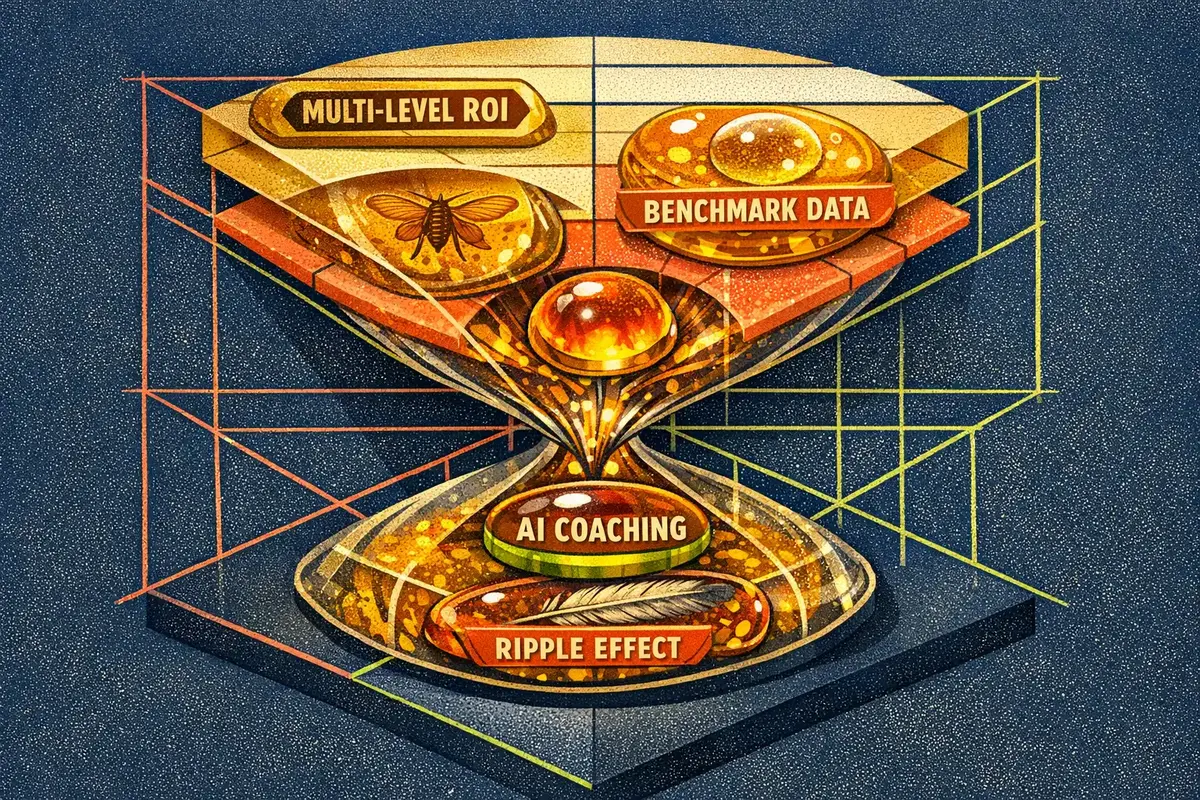
How Do You Measure the Ripple Effect of Coaching Across the Enterprise?
\n
Most organizations focus on direct outcomes: the coachee’s performance, engagement, or promotion rate. But the coaching ripple effect—the spread of coaching mindsets and behaviors beyond the initial participants—is where the real, systemic value emerges.
\n
According to the International Coaching Federation, coaching doesn’t just impact individuals; it cascades through teams and departments, influencing collaboration, innovation, and even organizational culture (ICF). So, how can you measure this?
\n
- \n
- Network Analysis: Track how coached leaders influence their teams’ engagement, retention, or performance.
- Longitudinal Surveys: Assess shifts in psychological safety, trust, or collaboration at the team or department level.
- Ripple Mapping: Visualize the spread of coaching conversations, feedback practices, or leadership behaviors across the organization.
\n
\n
\n
\n
This approach helps HR and OD leaders capture the often-overlooked, long-term benefits of a coaching culture—benefits that can be just as valuable as immediate financial returns.
\n
\n
What Are the Most Common Pitfalls and Myths in Coaching ROI Measurement?
\n
Let’s address a few persistent myths that can derail even the best-intentioned measurement efforts:
\n
\n
“ROI is only about money.”
In reality, the most successful organizations measure both financial and non-financial outcomes—like engagement, innovation, and culture change.\n
“AI coaching is unproven.”
In fact, AI coaching platforms enable more rigorous, data-driven measurement than traditional models, offering continuous feedback and analytics that were previously impossible.\n
“You can measure ROI instantly.”
True ROI, especially at the cultural or systemic level, often takes months or even years to fully materialize. Longitudinal tracking is essential.\n
“If we can’t isolate every variable, measurement is pointless.”
While perfect isolation is rare, using control groups, staggered rollouts, and multi-source data can significantly strengthen your case.\n
\n
Avoiding these pitfalls means embracing a more nuanced, evidence-based approach—one that blends hard numbers with a deep understanding of organizational dynamics.
\n
\n
\n
\n
How Do You Report Coaching ROI to Executives and Stakeholders?
\n
Reporting coaching ROI isn’t just about sharing numbers—it’s about telling a compelling story that connects coaching investments to business strategy. Executives want to see both the “what” (metrics) and the “so what” (business relevance).
\n
Here’s a practical approach:
\n
- \n
- Start with Benchmarks: Anchor your results with industry standards, such as a 788% ROI for executive coaching (American University) or a 7x average ROI (ICF).
- Highlight Multi-Level Impact: Show outcomes at the individual, team, and organizational levels—using both quantitative and qualitative data.
- Visualize the Ripple Effect: Use dashboards, network maps, or before-and-after comparisons to illustrate cascading benefits.
- Connect to Business Priorities: Frame results in terms of talent retention, leadership readiness, innovation, or other strategic goals.
\n
\n
\n
\n
\n
By drawing on TII’s two-decade integral methodology, some organizations have developed reporting templates that blend hard data with narrative insights—making it easier for stakeholders to see the full value of coaching.
\n
\n
What Tools and Dashboards Support Coaching ROI Measurement?
\n
With AI coaching, the data is there—but you need the right tools to make sense of it. Leading organizations use a mix of:
\n
- \n
- Integrated Analytics Platforms: These connect coaching data with HRIS, performance management, and business intelligence systems.
- Custom Dashboards: Visualize KPIs, track progress over time, and drill down by cohort, department, or business unit.
- Automated Reporting: Schedule regular updates to key stakeholders, highlighting wins and identifying areas for improvement.
\n
\n
\n
\n
For those just starting out, even a simple spreadsheet can be a powerful tool—if it’s structured around the right metrics and frameworks. As your program grows, consider platforms that offer real-time analytics, customizable dashboards, and seamless integration with other business systems.
\n
\n
How Do You Build a Practical ROI Measurement Plan for AI Coaching?
\n
Let’s bring it all together with a step-by-step checklist:
\n
- \n
- Clarify Your Objectives: What business outcomes should coaching drive? Be specific.
- Choose Your Framework: Use the Kirkpatrick-Phillips-inspired five-level model, adapted for AI coaching.
- Select Your KPIs: Blend engagement, learning, behavioral, business, and financial metrics.
- Set Baselines and Control Groups: Establish starting points and comparison populations.
- Integrate Data Sources: Connect coaching analytics with broader HR and business data.
- Track and Report Continuously: Use dashboards and regular updates to monitor progress and share results.
- Map the Ripple Effect: Visualize and measure the spread of coaching impact across the organization.
- Review and Refine: Use insights to optimize coaching strategies and demonstrate ongoing value.
\n
\n
\n
\n
\n
\n
\n
\n
\n
By following this plan, HR and OD leaders can move from anecdotal stories to evidence-based advocacy—making a compelling case for continued investment in coaching.
\n
\n
FAQ: Quantifying the ROI of a Coaching Culture
\n
What is the most credible ROI benchmark for enterprise coaching?
\n
The most widely cited benchmark comes from the MetrixGlobal study, which found a 788% ROI for executive coaching, based on gains in productivity and retention (American University). Other research, such as the International Coaching Federation, reports an average ROI of 7 times the initial investment.
\n
How do AI coaching metrics differ from traditional coaching metrics?
\n
AI coaching metrics go beyond periodic surveys by capturing real-time engagement, behavioral shifts, and digital feedback loops. This enables continuous, granular measurement of progress and allows organizations to spot trends and optimize coaching effectiveness as it happens.
\n
Can you measure the ripple effect of coaching quantitatively?
\n
Yes, by using network analysis, longitudinal surveys, and mapping tools, organizations can track how coaching mindsets and behaviors spread across teams and departments—capturing both direct and indirect benefits over time.
\n
What KPIs should we prioritize for AI-powered coaching programs?
\n
Prioritize a blend of engagement metrics (session completion, active users), skill and mindset shifts, behavioral change indicators, business outcomes (productivity, retention), and financial ROI. The right mix depends on your organization’s goals and maturity.
\n
How do we isolate the impact of coaching from other initiatives?
\n
Use control groups, staggered rollouts, and integration with multiple data sources. By comparing coached vs. non-coached populations and tracking longitudinal data, you can more confidently attribute improvements to coaching.
\n
What are common mistakes in coaching ROI measurement?
\n
Common pitfalls include focusing only on financial metrics, expecting instant ROI, ignoring qualitative outcomes, and failing to set clear baselines or objectives. Avoid these by using a multi-level framework and tracking both quantitative and qualitative data.
\n
How should we report coaching ROI to executives?
\n
Anchor your results with credible benchmarks, highlight multi-level impacts, visualize the ripple effect, and connect outcomes to strategic business priorities. Use dashboards and narrative insights to tell a compelling story.
\n
\n
Continue Your Leadership Journey
\n
Quantifying the ROI of a coaching culture is both an art and a science—requiring the right frameworks, credible benchmarks, and a willingness to look beyond surface-level metrics. As AI coaching becomes more prevalent, HR and OD leaders are uniquely positioned to harness real-time analytics, map the ripple effect of coaching, and demonstrate value at every level of the organization. By adopting a systematic, evidence-based approach, you’ll not only justify your investment—you’ll help shape a learning culture that drives sustainable business growth.
\n’, ‘protected’: False}