
Why Consistency Is the Real Coaching Advantage
Up to 90% of day-to-day coaching functions can now be handled by AI—which means the real executive question is no longer whether AI coaching is possible, but where inconsistency still creates risk (The Conference Board, 2025).
You have seen the pattern. A team lead gets thoughtful coaching after one difficult meeting, waits two weeks for the next session, then handles the next conflict alone with whatever advice they remember.
That gap is expensive. Not because coaching is absent in theory, but because quality arrives unevenly in practice—by manager, by budget, by calendar, by confidence. In the same body of research, 96% of users said AI responses felt tailored to their goals or context, and 91% said they would use it again (The Conference Board, 2025). The signal is hard to ignore: when support is available, relevant, and repeatable, people come back to it. This article examines that advantage where it matters most—risk reduction through more consistent quality, timing, and follow-through.
The usual buying conversation starts with cost. That is too shallow.
Variability Is the Hidden Cost
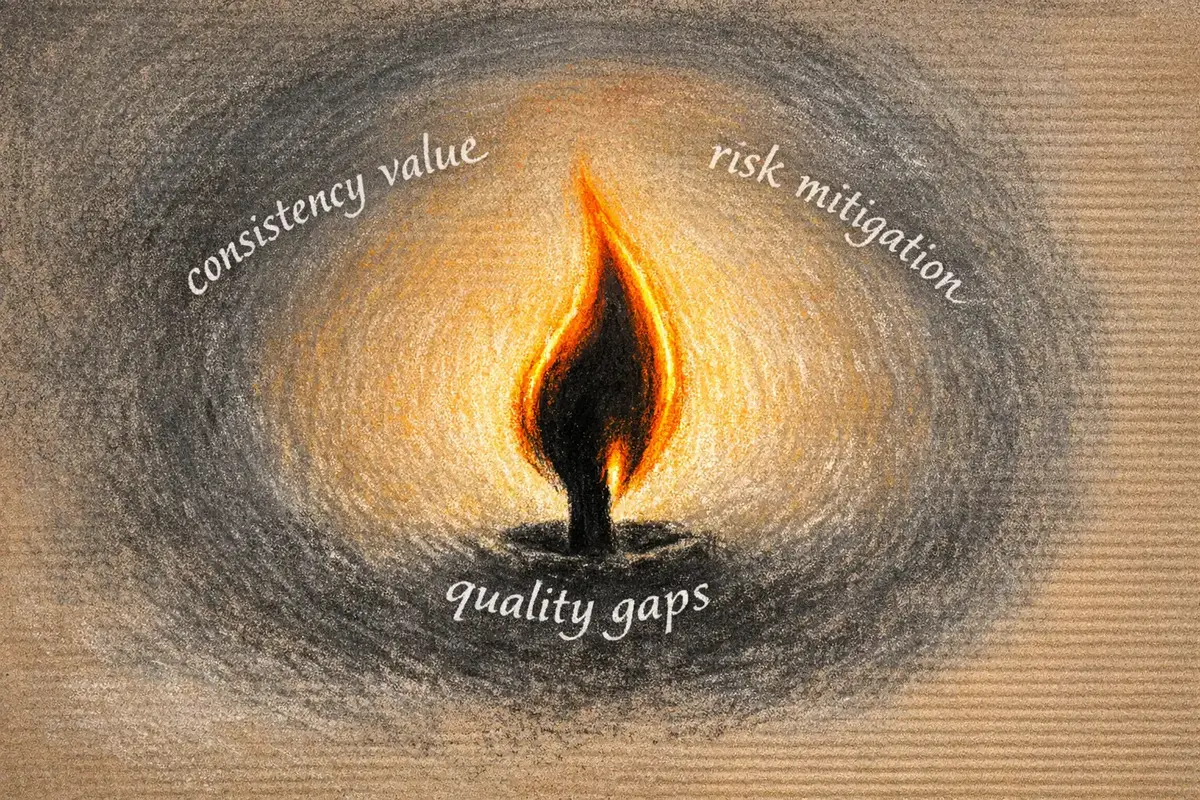
In a mid-market services company during budget season, a director may have access to an excellent external coach while frontline managers get occasional advice from already-stretched HR partners. Both groups are technically “supported.” Only one gets reliable reinforcement. The result is not just uneven development; it is uneven judgment at the exact moments when people decisions compound.
That is why consistency deserves more attention than headline price. Standardized coaching for recurring situations—preparing for a feedback conversation, structuring a one-on-one, thinking through delegation, reflecting after a difficult client call—reduces variance in how support is delivered. It does not guarantee brilliance. It does something more operationally useful: it makes baseline quality more dependable. For organizations trying to scale manager capability, that is often the bigger win than occasional excellence.
You can think of AI coaching as a control mechanism for routine developmental moments. Not all coaching, and not every decision. But the large middle of coaching work is repetitive enough to benefit from standardization, and that is where availability and follow-through start to matter more than prestige.
Standardize the Routine, Escalate the Stakes
This is the distinction beginners need early: routine coaching can often be structured, repeated, and improved through AI; high-stakes coaching still calls for human judgment. Career transitions with political complexity, ethical dilemmas, identity-level leadership struggles, or emotionally charged conflict are not just pattern-matching problems. They require discernment, context reading, and sometimes challenge that should not be automated.
The practical question is not AI or human. It is where each reduces risk best.
If AI can reliably cover the repeatable 90% of day-to-day coaching functions (The Conference Board, 2025), what exactly belongs in the remaining 10%—and how should organizations decide?
What Is AI Coaching, and Where Does It Actually Fit?
The task-fit framework matters here because it asks a harder question than most buyers ask first: if AI coaching is not replacing the coach, what exactly is it replacing in the workflow?
Not the relationship. Not judgment. Not the difficult human work of helping someone face ambiguity they would rather avoid. The real substitution happens earlier and more quietly—in the repetitive coaching moments that do not need a calendar invite, a procurement process, or a senior expert on standby.
A Simple Definition That Clarifies the Debate
AI coaching is best understood as structured, software-mediated guidance. It delivers prompts, reflection, practice support, and routine developmental help at scale. Think of it as a system for helping someone prepare, think, and follow through—before a one-on-one, after a tense meeting, or during a recurring management challenge.
That definition matters because it keeps the category narrow enough to be useful. AI coaching is not therapy. It is not executive advising. It is not a magical substitute for trust. It is a delivery model for consistent developmental support, and its value depends on whether the task itself can be structured.
That is also where governance enters the picture. The NIST AI Risk Management Framework was built to improve how organizations incorporate trustworthiness into the design, use, and evaluation of AI systems (NIST, 2023). For coaching applications, that pushes leaders to ask practical questions: what kind of guidance is the system giving, where are the boundaries, and when should a human take over?
Three Operating Choices, Not One Ideological Fight
A regional healthcare provider offers a useful example. During a team restructure, a department director does not need a human coach every time she wants to rehearse a feedback conversation or sort her thoughts before a staffing discussion. She does need one when the issue turns ethical, politically sensitive, or emotionally loaded.
That is the cleanest way to separate the options.
Human coaching is still the right choice when the work depends on interpretation: conflicting incentives, identity-level leadership questions, fragile trust, or decisions where tone matters as much as content. Hybrid coaching sits in the middle. AI handles preparation, reflection, and repetition; a human steps in for nuance, challenge, and accountability. If you want a broader comparison, this is where the debate around AI vs. human coaching becomes more useful when framed as operating design, not ideology.
The beginner mistake is to ask whether AI coaching is “good enough.” The better question is simpler: which tasks benefit from standardization, and which ones become risky when stripped of human interpretation?
That distinction changes the economics. If support can show up exactly when people need it—not two weeks later—what does that do to usage, habit formation, and the real availability of development?
Why 24/7 Access Changes the Economics of Development
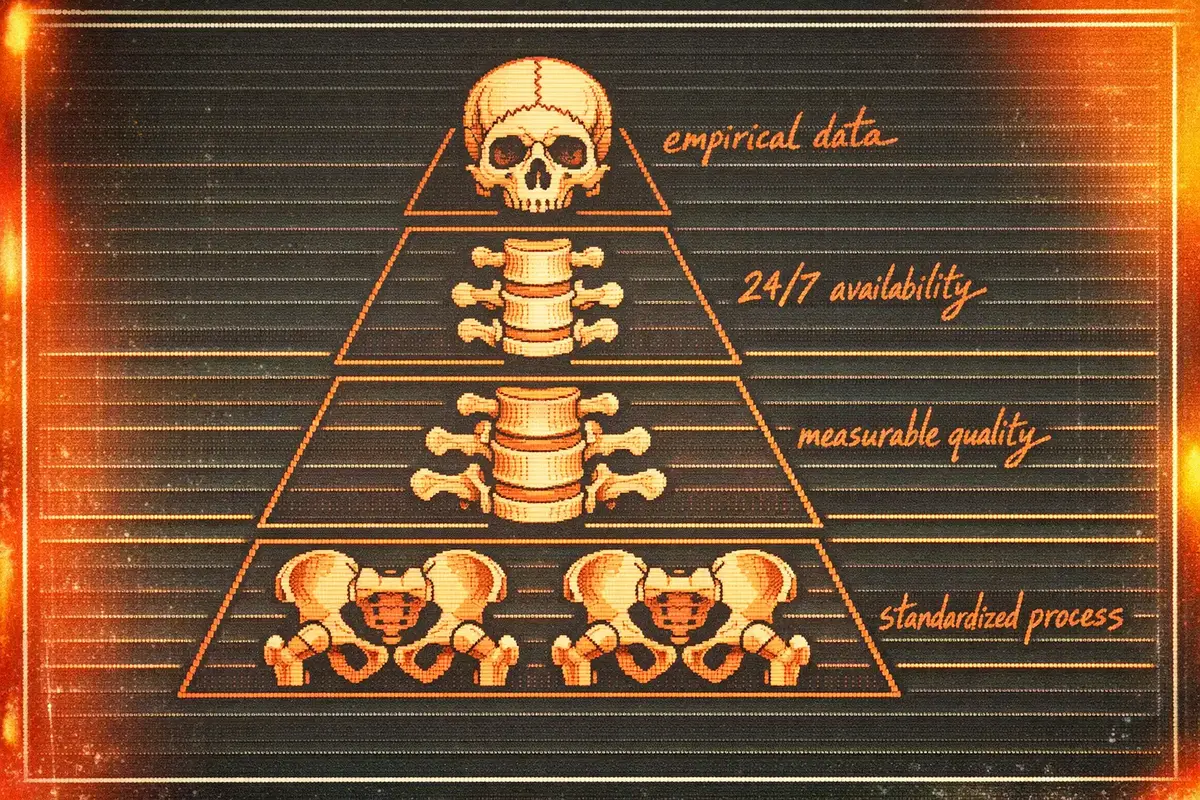
54% of workers have used AI in the last 12 months—which means the behavior has already moved ahead of many companies’ development models (PwC, 2024). Most organizations still act as if coaching is valuable because it is expert-led and scheduled. The evidence points somewhere more practical: coaching creates more value when it is available at the moment of need, not after the moment has passed.
What happens when coaching is needed at 9 p.m., not during a booked session next Tuesday?
A team lead in a mid-market manufacturing company is preparing for a 7 a.m. conversation after a quality failure triggered a client escalation. He does not need a six-session engagement. He needs help now: how to open the discussion, what questions to ask, what not to say when the room turns defensive. If support arrives three days later, the developmental opportunity is gone. So is part of the operational value.
That is why availability is not a convenience feature. It is a cycle-time issue. Reducing the delay between a coaching need and a coaching response changes whether people use support at all, and whether that support shapes behavior while decisions are still live.
Learning in the Flow of Work
The old model assumes development happens in protected time. Real work does not cooperate.
Managers learn in fragments: before a performance review, after a tense customer call, between back-to-back meetings, during a commute home when they finally replay what they should have said. 94% of employees and 99% of C-suite leaders say they are familiar with gen AI tools (McKinsey, 2025). That matters because it lowers the behavioral barrier to using AI-based support in those in-between moments. The tool no longer feels foreign; it feels close to how people already solve problems.
This is where coaching availability becomes an economic variable, not a user-experience detail. If development can happen inside the workflow, organizations recover time that would otherwise be lost to waiting, rescheduling, or simply proceeding unprepared.
Access Expands, Inequality Shrinks
The deeper shift is distribution.
In most companies, regular coaching access is still concentrated at the top: senior leaders, high-potentials, and a small set of sponsored managers. Everyone else gets episodic support, if any. Always-on AI does not erase differences in role complexity, but it can flatten one stubborn inequality: who gets developmental help consistently.
That changes the shape of the program. Coaching stops being a scarce benefit for the few and becomes a usable layer of support for the many. The open question is harder—and more important: when access expands this quickly, does quality hold up, or does scale simply spread weaker guidance faster?
What the Research Shows About Quality, Alliance, and Repeat Use
91% said they would use it again. If you misread that signal, the cost is not abstract: managers default to improvisation, trust erodes in hard conversations, and preventable talent exits start looking like a culture problem (The Conference Board, 2025).
If AI coaching is supposed to feel inferior, why do some studies show no meaningful gap in working alliance?
What “Working Alliance” Actually Means
In plain terms, working alliance is the quality of the coaching relationship as experienced by the user: do I feel understood, are we working toward a clear goal, and does the interaction help me move? It is not chemistry in the vague sense. It is a measurable proxy for whether coaching feels credible enough to influence behavior.
That distinction matters in practice. A VP in a regional finance firm, heading into quarterly review season, may not care whether a coaching tool feels warm in the abstract. She cares whether it helps her prepare for a difficult performance conversation without making the situation worse. If the guidance feels generic, she will stop using it. If it feels relevant and structured, it earns a place in the workflow.
A 2025 study in Frontiers in Psychology found no statistically significant difference in working alliance scores between human coaches and AI coaches in a single-session setting: human coaches scored 74.50 and AI coaches 72.73 (Frontiers in Psychology, 2025).
There was no statistically significant difference between human coaches and AI coaches on working alliance in the study setting (Frontiers in Psychology, 2025).
That does not mean AI and human coaching are interchangeable. It means one common assumption — that users will automatically experience AI coaching as relationally weak — is less secure than many buyers think. For a fuller operating comparison, this is where the debate on AI vs. human coaching gets more useful when grounded in task type, not ideology.
Why Measurement Quality Changes the Conversation
Consistency only matters if you can observe it.
The same Frontiers in Psychology study reported a Cronbach’s alpha of 0.934 for the working alliance inventory, which indicates very high internal consistency (Frontiers in Psychology, 2025). In beginner-friendly terms, that means the measurement tool itself was stable: the items were cohering well enough to support comparison rather than noise.
This is more important than it sounds. Many coaching claims collapse under weak measurement — vague satisfaction scores, selective anecdotes, post-session enthusiasm mistaken for durable value. A reliable instrument gives leaders something firmer: a way to compare session quality across delivery models and ask whether standardization is improving the floor, not just producing more interactions.
Then the adoption signal comes back into view. If The Conference Board finds that 91% would use AI coaching again (The Conference Board, 2025), that is not proof of deep transformation. It is proof of something more operationally useful: repeat use is plausible because the experience is credible enough to revisit.
And that raises the harder executive question. If quality can be measured, and repeat use is strong, how do you turn those signals into a risk model — one that shows where variability is falling, and where it still needs human judgment?
How Do You Quantify Risk Mitigation in a Coaching Program?
The Variability Risk Framework matters here because coaching risk rarely shows up as a dramatic failure; it shows up as uneven judgment across similar situations. In a regional retail company during quarterly reviews, one district manager gets sharp, structured guidance before a difficult performance conversation, while another gets vague encouragement a week later because the coach was booked.
That is the risk model. Not “Did coaching happen?” but “How much did outcomes depend on who was available, when, and in what frame of mind?”
The Conference Board puts the operational boundary in plain view: AI can handle up to 90% of day-to-day coaching functions while humans still matter for the rest (The Conference Board, 2025). The executive implication is straightforward. If most recurring coaching moments are routine enough to standardize, then the main risk question becomes whether your program still relies too heavily on a single coach’s style, schedule, or personal method.
Measure the Spread, Not Just the Average
Most coaching programs are evaluated on satisfaction, utilization, or anecdotal success. Those are useful, but they miss the core control issue: variance.
If ten managers face the same challenge — missed targets, a tense one-on-one, resistance to change — do they receive roughly comparable guidance, or ten different versions shaped by coach preference? Standardized methodology lowers the odds of that drift. It creates a more dependable floor for consistency, which is what risk mitigation usually means in operating terms.

A practical scorecard is simple: measure response time, escalation rate, repeat issue frequency, and guidance adherence across comparable cases. If similar situations produce fewer avoidable escalations and less rework, variability is falling. That is not abstract culture language. It is operating reliability.
Governance Is Just Risk Control in Plain English
This is where NIST becomes useful. The AI Risk Management Framework is designed to improve how organizations build trustworthiness into the design, use, and evaluation of AI systems (NIST, 2023). In coaching, that translates into four management questions: What guidance is standardized? What requires escalation? Who is accountable for edge cases? How do you know the system is staying inside its lane?
That is the real point of AI coaching governance. Not paperwork. Boundaries.
The business question, then, is not whether AI coaching is perfect. It is whether it reduces avoidable variation enough to make manager support more reliable at scale. And once you can answer that, a harder decision appears: where should organizations begin — AI first, human first, or a hybrid by design?
Where Should Organizations Start: AI, Human, or Hybrid?
The Hybrid Triage Model is the right place to start because 7 in 10 business leaders say their primary competitive strategy for the next three years is to reimagine work with AI (Deloitte, 2026). Without that model, coaching programs break in a predictable way: a few people get thoughtful support, most get delayed support, and consistency disappears exactly where scale is supposed to help.
If leaders want scale, why do so many coaching programs still rely on a model that cannot reach everyone consistently?
Start Where the Work Repeats
The best entry point for AI is not “coaching” in the abstract. It is the set of routine, repeatable moments that show up every week: preparing for a one-on-one, structuring feedback, thinking through delegation, reflecting after a missed deadline, or rehearsing how to handle resistance in a team meeting.
In an enterprise technology company during a product reset, a VP does not need a human coach every time a manager asks how to reset priorities after roadmap changes. She needs a system that can give the same solid structure to hundreds of managers without waiting for calendars to align. That is where AI earns its place: high-frequency situations, clear patterns, fast response.
This is not a compromise. It is operating discipline.
Escalate What Carries Human Risk
The handoff point matters more than the starting point.
When the issue turns emotionally sensitive, politically charged, or genuinely ambiguous, AI should stop being the primary layer. A termination discussion after a discrimination complaint, a founder conflict that threatens trust, or a leadership identity crisis after a failed promotion cycle should move to a human coach. The risk in those moments is not lack of information. It is misreading context.
That distinction becomes more urgent when engagement is already weak. Only 20% of employees worldwide were engaged in 2025 (Gallup, 2025). In that environment, poorly handled coaching is not neutral; it can deepen withdrawal.
Hybrid Is the Practical Operating Model
This is why hybrid coaching is the most credible design. AI handles coverage, repetition, and structure. Humans handle interpretation, challenge, and edge cases. If you want the model in operating terms, this is where hybrid coaching stops being a theory and becomes a staffing decision.
The mistake is to choose by ideology — AI first or human first. The better choice is to design for flow: standardize the common cases, escalate the consequential ones, and make the boundary explicit.
Because once reliability improves, the strategic question changes. If coaching no longer depends on scarcity, what exactly is the human coach now for — and what value remains uniquely human?
The Real Value Is Reliability, Not Replacement
54% of workers have used AI in the last 12 months. If your coaching model still depends on scarce calendars and uneven manager access, the cost is already showing up in slower decisions, weaker conversations, and people leaving after one too many avoidable missteps (PwC, 2024).
When the novelty fades, what remains valuable is not the tool. It is the reliability the tool creates.
Reliability Is What Scales
In an enterprise services firm during annual planning, a C-suite leader does not lose trust in development because coaching is absent on paper. Trust erodes because one business unit gets fast, structured support while another gets delayed, inconsistent advice — and the quality of management starts to vary with access rather than need.
That is the strongest case for AI coaching. It makes routine development more available, more repeatable, and less dependent on which coach happened to be free. This matters even more because familiarity is no longer the barrier many leaders assume: 94% of employees and 99% of C-suite leaders say they are familiar with gen AI tools (McKinsey, 2025).
The strategic gain is not automation for its own sake. It is a more dependable floor for everyday managerial judgment.
Human Value Becomes Clearer, Not Smaller
This does not reduce the need for human coaches. It sharpens it.
The human role is most valuable where context, trust, and judgment carry the outcome: politically sensitive decisions, identity-level leadership questions, fractured team dynamics, or moments when the right answer depends on what is not being said. In those cases, interpretation matters more than speed.
So the future is best understood as orchestration. AI handles the common patterns — preparation, reflection, rehearsal, follow-through. Humans handle ambiguity, challenge, and consequence.
That is a better mental model than replacement. More operational. More honest.
If you are deciding what to do next, start there: where does your current coaching model break because support is inconsistent, and where would a human still need to step in — not as backup, but as the point of greatest value?
Key Takeaways
- Consistency is the main coaching advantage because uneven support creates uneven judgment and risk.
- AI coaching fits best in routine, repeatable moments where standardized guidance can improve reliability.
- Human coaching remains essential for emotionally sensitive, politically charged, and ambiguous situations.
- The strongest operating model is hybrid: AI for coverage and repetition, humans for interpretation and edge cases.
Frequently Asked Questions
What is the main advantage of AI coaching over human coaching?
The main advantage of AI coaching is consistency: it can deliver repeatable, structured support whenever it is needed, without depending on a coach’s schedule or style. That reduces variability in quality and timing, which lowers risk in routine coaching situations.
When should AI coaching be used instead of human coaching?
AI coaching is best for routine, repeatable tasks such as preparing for feedback conversations, structuring one-on-ones, practicing delegation, or reflecting after a difficult meeting. Human coaching is better for emotionally sensitive, politically complex, or ambiguous situations that require judgment and context reading.
Why does coaching availability matter as a risk issue?
Availability matters because coaching has the most impact when it arrives at the moment of need, not days later. If support is delayed, people often make important decisions without guidance, which increases the chance of avoidable mistakes and inconsistent outcomes.
How can organizations measure whether coaching quality is consistent?
Organizations can measure consistency by tracking response time, escalation rate, repeat issue frequency, and whether guidance is applied similarly across comparable cases. The goal is to see whether similar situations receive similar support and whether avoidable variation is decreasing.
What is the best operating model for combining AI and human coaching?
The strongest model is hybrid: use AI for coverage, repetition, and standard guidance, then escalate high-stakes or nuanced cases to humans. This approach improves reliability at scale while preserving human judgment where context, trust, and consequence matter most.