
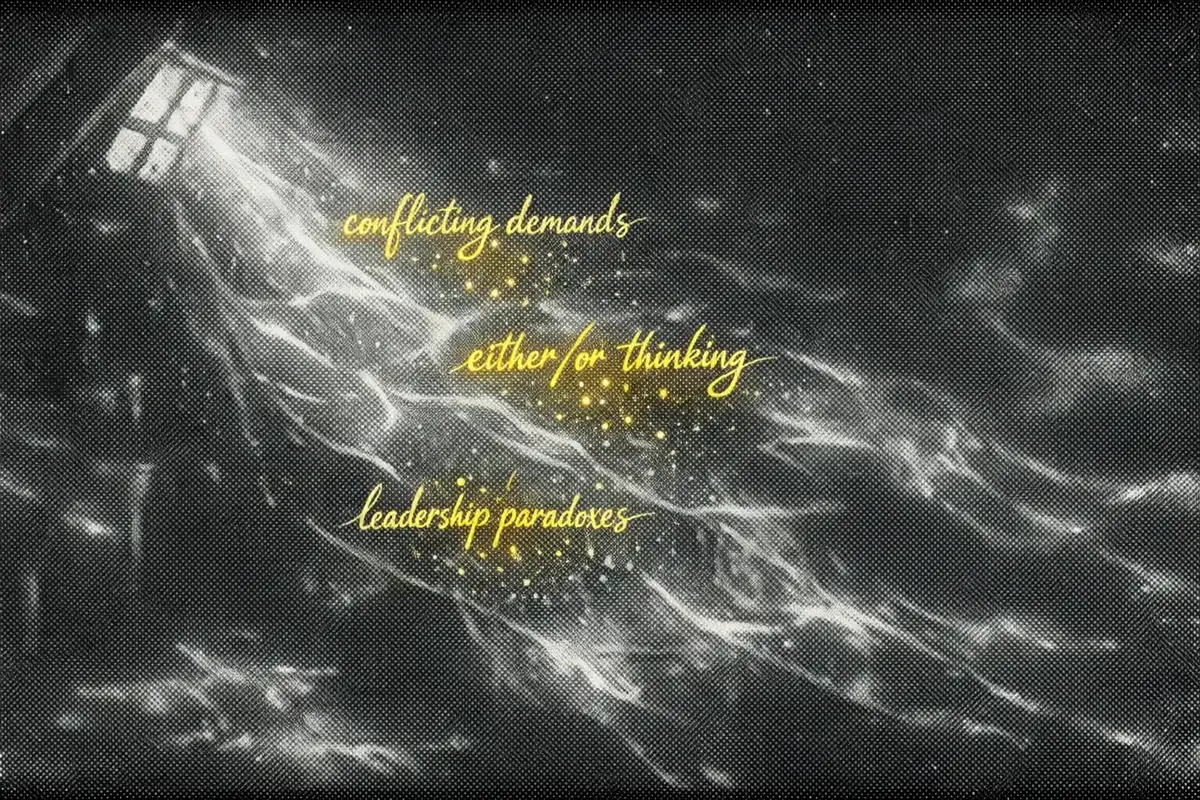
If you’ve ever led a team through a period of rapid change, you’ve probably noticed how often you’re pulled in opposite directions—like needing to deliver this quarter’s numbers while also laying the groundwork for next year’s strategy. Leadership paradoxes are persistent, high-stakes tensions that can’t be solved by picking one side or the other. By understanding what these paradoxes are and how to navigate them, leaders can unlock higher performance, creativity, and resilience for themselves and their organizations. Deloitte research shows that organizations with strong coaching cultures report 21% higher profitability, demonstrating the direct business impact of investing in people development.
Why Are Paradoxes the Defining Challenge for Modern Leaders?
Let’s start with a reality check: nearly every leader today faces situations where the “right” answer isn’t obvious because both sides of the equation matter. Do you focus on empowering individuals or building team cohesion? Should you double down on proven methods or push for disruptive innovation? These aren’t simple trade-offs—they’re ongoing tensions that define the complexity of modern leadership. Brandon Hall Group research reveals that companies with strong coaching cultures are 130% more likely to achieve strong business results and significantly higher employee engagement.
To be able to navigate paradoxes is ‘far and away the most important personal competence in explaining business performance’. (PwC, 2020)
Most teams assume that if they just analyze the problem enough, they’ll find a clear solution. But research shows that paradoxes aren’t problems to be solved—they’re tensions to be managed. This means leaders need to develop the capacity to hold competing demands, rather than defaulting to either/or choices.
What Is a Leadership Paradox? (And Why Should You Care?)
A leadership paradox is a situation where two seemingly contradictory demands are both valid and necessary for success. Unlike a typical problem, a paradox persists over time—solving for one side only intensifies the tension on the other. Think of it as a dynamic “both/and” challenge, not a “choose one” dilemma.
Common examples include:
- Short-term results vs. long-term vision: Delivering immediate value while investing in future growth.
- Individual needs vs. team goals: Supporting personal development without sacrificing collective achievement.
- Stability vs. change: Maintaining reliable operations while driving innovation.
- Global consistency vs. local adaptation: Standardizing processes but allowing flexibility for different markets.
These paradoxes show up at every level—from frontline managers to CEOs. And they’re not just theoretical: research consistently demonstrates that organizations, leaders, teams, and individuals who manage paradox outperform those who don’t (Center for Creative Leadership, 2025).
The Six Paradoxes of Leadership: A Practical Framework
To make paradoxes more tangible, let’s borrow from PwC’s widely cited framework, which identifies six core leadership paradoxes:
- Strategic Executor: Balancing big-picture vision with operational discipline.
- Humble Hero: Combining confidence with humility.
- Tech-Savvy Humanist: Embracing technology without losing the human touch.
- Traditioned Innovator: Honoring legacy while driving change.
- High-Integrity Politician: Navigating organizational politics ethically.
- Globally Minded Localist: Thinking globally, acting locally.
Each paradox isn’t a fork in the road—it’s an ongoing balancing act. Most leaders naturally lean toward one side, but the real skill is learning to flex between both as situations demand.
How Do You Recognize and Map Paradoxes in Your Own Leadership?
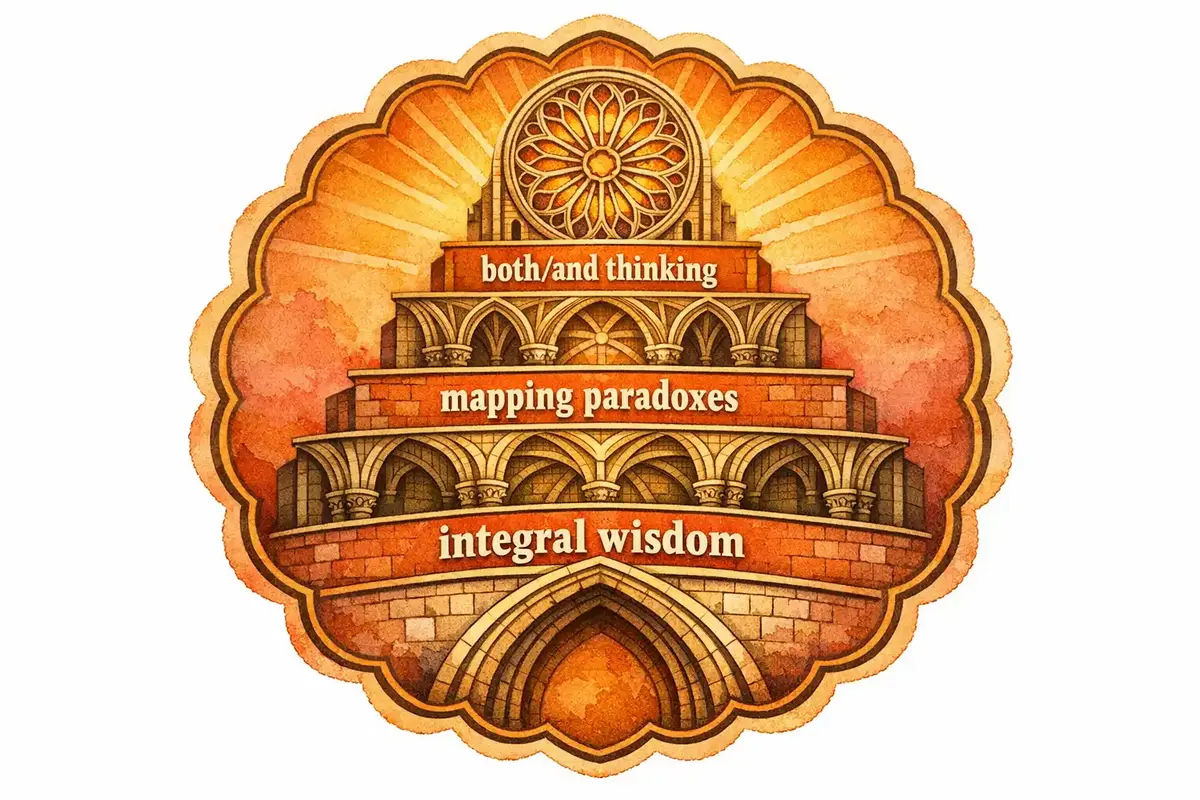
Most leaders can sense when they’re caught in a paradox, but few have a process for mapping these tensions clearly. Here’s a step-by-step approach, inspired by tools like Polarity Mapping and integral frameworks:
- Identify the Tension: Write down the two poles (e.g., “short-term wins” vs. “long-term growth”).
- Clarify the Upsides and Downsides: For each pole, list the benefits and potential risks of over-focusing on it.
- Spot Warning Signs: What signals tell you when you’re drifting too far toward one side?
- Design Both/And Strategies: Brainstorm actions that honor both sides—like setting quarterly targets that ladder up to a multi-year vision.
- Reflect and Adjust: Use regular check-ins (with yourself, your team, or an AI coach) to notice shifts and recalibrate.
Here’s the thing: most teams assume that once a paradox is mapped, the work is done. But research shows that paradoxes are dynamic—they evolve as context changes. This means leaders need ongoing reflection and feedback loops, not one-time solutions.
How Can AI Coaching Support Paradox Navigation?
Let’s address a common assumption: AI is often seen as a tool for efficiency or automation, not deep reflection. But when it comes to paradox navigation, AI coaching can act as a mirror—prompting leaders to surface hidden tensions, question their assumptions, and practice holding discomfort.
For example, AI coaching systems can:
- Prompt leaders with scenario-based questions (“How might pursuing this short-term win impact your long-term goals?”)
- Simulate outcomes of different choices, helping leaders see unintended consequences
- Encourage regular self-assessment, tracking how well both sides of a paradox are being honored
- Offer reflection routines drawn from integral wisdom, supporting leaders to integrate multiple perspectives
By making these practices accessible 24/7, AI coaching helps leaders build the muscle for both/and thinking—something that’s especially valuable for first-time leaders or those in fast-changing environments. For more on practical applications, see how AI coaching supports continuous leadership growth.
What Does “Integral Wisdom” Look Like in Action?
Integral wisdom, rooted in frameworks like Ken Wilber’s AQAL model, invites us to consider every challenge from multiple perspectives: individual and collective, internal and external, short-term and long-term. In practice, this means:
- Noticing your default lens (Do you focus on systems, or on people?)
- Practicing perspective-taking (“How would my team experience this decision?”)
- Integrating emotional, cognitive, and systemic factors in your choices
Most leaders assume that wisdom comes from experience alone. But drawing on TII’s two-decade integral methodology, we see that structured reflection—supported by tools and technology—accelerates the development of holistic judgment.
AI coaching systems that integrate integral wisdom can adapt their guidance to your personality, context, and communication style, prompting you to see beyond your habitual patterns.
Developing a Paradox Mindset: Practical Habits for Leaders
The research is clear: leaders who embrace paradox—rather than resist it—are more creative, resilient, and trusted by their teams. But how do you actually build this “paradox mindset”?
Start with these micro-habits:
- Pause Before Deciding: When faced with a tough choice, ask, “What’s the opposite truth here?”
- Name the Tension: Say out loud (or write down) both sides of the paradox. This reduces the urge to “solve” it prematurely.
- Seek Diverse Input: Invite team members to share how they experience the tension—different roles often see different risks and opportunities.
- Practice Scenario Thinking: Use AI coaching tools to explore “what if” scenarios, testing the impact of different approaches.
- Reflect on Emotions: Notice when discomfort arises. Is it because you’re holding a tension, or trying to escape it?
It’s easy to assume that intellectual understanding is enough. But research and practice show that emotional intelligence—the ability to stay present with discomfort and ambiguity—is just as critical. AI coaching can accelerate emotional intelligence development by nudging leaders to notice, name, and work with their feelings in real time.
The Emotional Side of Paradox: Why Discomfort Is a Sign of Growth
Let’s be honest: navigating paradoxes isn’t just a cognitive exercise. It’s emotionally taxing. Leaders often feel pulled apart, judged for indecision, or anxious about making the “wrong” call. Yet, this discomfort is actually a sign that you’re engaging with the real work of leadership.
The most effective leaders are both visionary and empowering; this combination enhances team creativity, R&D investment, market share, and corporate reputation. (INSEAD, 2019)
Most organizations assume that showing vulnerability or naming tensions is a weakness. But the evidence suggests that teams are more innovative and resilient when leaders model comfort with ambiguity. AI coaching can provide a private, judgment-free space to process these emotions, rehearse difficult conversations, and build the confidence to lead through uncertainty.
How Can Leaders Use AI Coaching Tools to Practice Both/And Thinking?
AI coaching tools are uniquely positioned to help leaders operationalize both/and thinking in daily decisions. Here’s how:
- Paradox Mapping Templates: Digital worksheets guide leaders to identify, map, and revisit their key tensions.
- Scenario Simulations: AI can generate “if/then” scenarios, helping leaders anticipate ripple effects of different choices.
- Reflection Prompts: Regular nudges encourage leaders to pause, reflect, and recalibrate—turning insight into habit.
- Progress Tracking: AI coaching tools can help leaders track how their approach to paradoxes evolves over time, linking these shifts to business outcomes like innovation or agility.
By integrating these tools into leadership routines, organizations create a culture where paradox navigation is not just an individual skill, but a shared practice. For more on this, explore how AI coaching tools support talent development and succession planning.

What Are the Pitfalls and Common Mistakes in Paradox Navigation?
Even experienced leaders fall into predictable traps when facing paradoxes. Here are a few to watch for:
- Either/Or Thinking: Defaulting to one side of the tension, often out of habit or pressure.
- Analysis Paralysis: Overthinking the paradox, hoping for a perfect solution rather than experimenting with both/and strategies.
- Ignoring Emotions: Treating paradoxes as purely rational problems, neglecting the stress and anxiety they generate.
- One-Time Mapping: Believing that mapping a paradox once is enough, rather than revisiting as context shifts.
The implication? Sustainable leadership development requires ongoing reflection, feedback, and support—something that AI coaching can provide at scale, especially for organizations operating in fast-changing or resource-limited environments. For more on scalable solutions, see AI coaching for leadership development in emerging economies.
How Does Paradox Navigation Drive Measurable Leadership Outcomes?
It’s not just theory—there’s a direct link between effective paradox navigation and business results. Research shows that organizations, leaders, and teams who manage paradox are better performers than those who don’t (Center for Creative Leadership, 2025).
What does this look like in practice?
- Greater Innovation: Teams are more willing to experiment and learn from failure.
- Higher Engagement: People feel seen and valued, even when priorities compete.
- Faster Agility: Organizations adapt more quickly to change, balancing stability with flexibility.
- Stronger Reputation: Companies known for both visionary leadership and operational excellence earn greater trust from stakeholders.
Most leaders assume that performance comes from clear direction and decisive action. But the research suggests that the ability to hold and navigate paradox is a more powerful driver of long-term success.
Integrating Paradox Navigation into Leadership Development
So, how do you make paradox navigation a core part of your leadership development strategy? Here are a few steps:
- Embed Paradox Mapping into onboarding, training, and performance reviews.
- Leverage AI Coaching to provide personalized, on-demand support for leaders at every level.
- Foster a Culture of Reflection by normalizing both/and conversations in meetings and decision-making.
- Track Progress using AI-powered self-assessment tools, linking individual growth to team and organizational outcomes.
By weaving paradox navigation into the fabric of your leadership development programs, you build a pipeline of leaders equipped for the complexity of today’s world.
FAQ: Addressing Leadership Paradoxes
What makes a leadership challenge a paradox, not just a problem?
A paradox involves two valid but opposing demands that persist over time. Unlike a problem, which can be solved and put to rest, a paradox requires ongoing management—favoring one side too much only intensifies the need for the other. Recognizing this distinction helps leaders avoid the trap of seeking a “final answer” where none exists.
How can I tell if I’m falling into either/or thinking?
If you notice yourself framing a decision as “we must choose X or Y,” you’re likely in either/or territory. Paradox navigation asks, “How can we honor both X and Y?” Pausing to map the upsides and downsides of each side, and seeking input from others, can help you break out of this binary mindset.
Can AI coaching really help with complex, human dilemmas like paradoxes?
Yes—AI coaching is designed to prompt reflection, simulate scenarios, and surface hidden assumptions. While it doesn’t replace human judgment, it acts as a mirror, helping leaders practice both/and thinking and build habits of ongoing self-assessment, especially when integrated with proven frameworks.
What is “integral wisdom” and how does it relate to paradoxes?
Integral wisdom draws on frameworks that consider multiple perspectives—individual and collective, internal and external. In paradox navigation, this means seeing the full landscape of a challenge, not just one side. It encourages leaders to integrate emotional, cognitive, and systemic factors in their decisions.
How do I build comfort with the discomfort of paradox?
Start by naming the tension and acknowledging the discomfort—it’s a natural part of leadership growth. Practices like journaling, scenario thinking, and using AI coaching tools for regular reflection can help you stay present with ambiguity rather than rushing to resolve it.
Are there risks to overusing both/and thinking?
Yes—sometimes, a clear decision is needed. The key is to distinguish between true paradoxes (ongoing tensions) and problems (solvable issues). Overusing both/and thinking can lead to indecision or diluted focus, so it’s important to regularly revisit and clarify which tensions require balancing and which need resolution.
How can organizations support leaders in navigating paradoxes?
Organizations can embed paradox mapping into training, provide access to AI coaching tools, and foster a culture where both/and conversations are normalized. Regular check-ins, peer reflection, and linking paradox navigation to measurable outcomes all contribute to building this critical competence.
Continue Your Leadership Journey
Leadership paradoxes aren’t going away—they’re becoming more central as organizations face greater complexity, speed, and ambiguity. By integrating practical frameworks, AI coaching, and integral wisdom, leaders at every level can move beyond either/or thinking and unlock higher performance for themselves and their teams. The journey starts with awareness, but it’s sustained by ongoing reflection, practice, and support.