
If you’ve ever led a team through a major transformation—launching a new product, integrating after a merger, or upskilling for digital change—you’ve probably noticed something odd. Despite investing in training and hiring for the right competencies, progress stalls in unpredictable ways. Some team members soar in strategic thinking but struggle with empathy. Others have emotional intelligence but falter under complex decision-making. The usual skills gap analysis just doesn’t capture these nuances. That’s where the concept of Integral “lines of development” comes in, offering a framework to pinpoint and address these hidden developmental gaps with AI-powered precision. McKinsey research indicates that companies using AI in talent development see a 25% improvement in employee performance, particularly when AI augments human coaching capabilities.
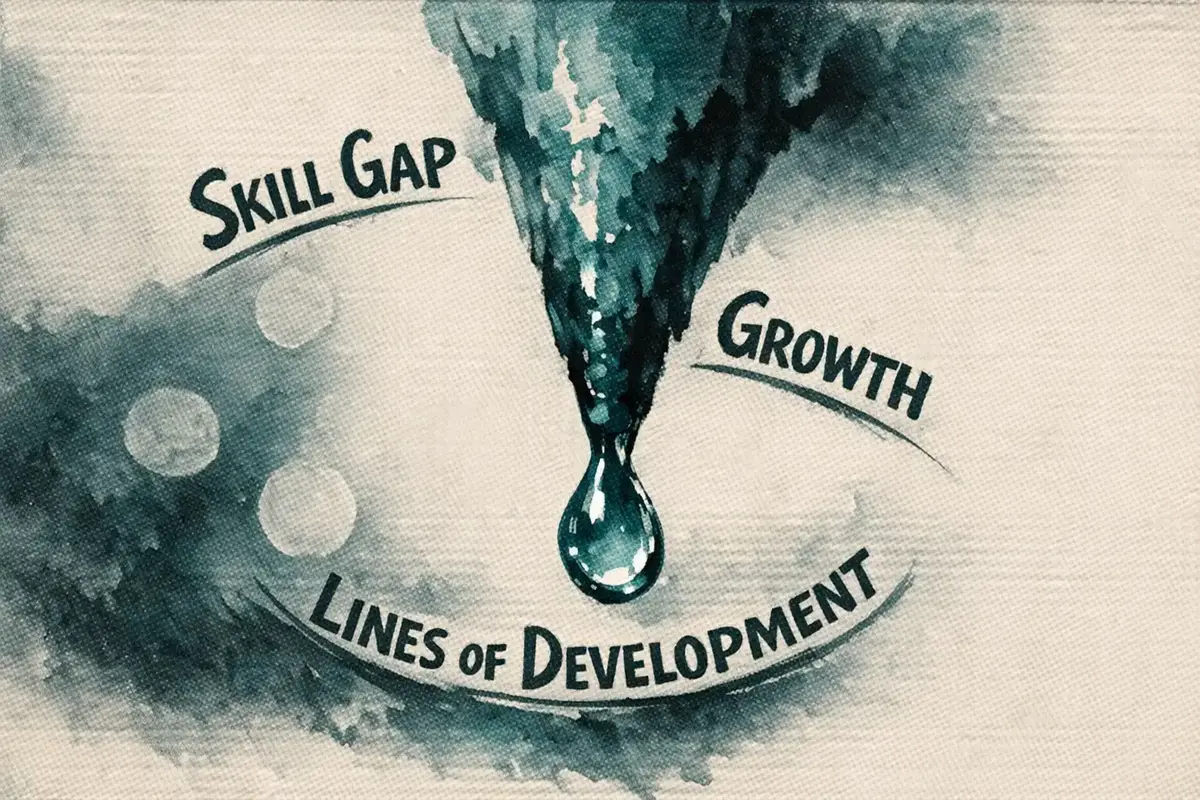
Integral “lines of development” are distinct pathways—such as cognitive, emotional, moral, and spiritual—along which individuals grow, each progressing through unique stages. By mapping these lines, AI coaching systems can diagnose not just general skill deficits but the specific developmental capacities that underlie performance, enabling targeted interventions for truly personalized growth. This approach is especially valuable for leaders and organizations seeking to move beyond generic upskilling and achieve deeper, more sustainable transformation. Bersin by Deloitte found that organizations investing in coaching are 5.7x more likely to be high-performing, demonstrating the direct link between coaching culture and business outcomes.
What Are “Lines of Development” in Integral Theory?
Let’s start with the basics. Integral Theory, developed by Ken Wilber and expanded by practitioners worldwide, proposes that human development is not a single ladder but a set of parallel tracks—each representing a different kind of intelligence or capacity. These tracks are called lines of development.
According to Integral Theory, there are up to 24 distinct lines, including:
- Cognitive (how we think and process information)
- Emotional (how we recognize and manage feelings)
- Moral (how we discern right from wrong)
- Spiritual (how we find meaning and purpose)
- Self-identity (how we see ourselves in the world)
Each line moves through its own stages of maturity, and people rarely develop evenly across all lines. Someone might be highly advanced cognitively but less mature emotionally, or vice versa. This unevenness is not a flaw—it’s a natural part of being human. But it does mean that traditional skills assessments, which often assume uniformity, can miss critical growth opportunities.
Integral Theory identifies up to 24 “lines of development,” such as cognitive, emotional, moral, spiritual, and self-identity, each progressing through distinct stages. (Integral Life, 2023)
Most organizations still operate on the assumption that upskilling is about adding new tools to the toolbox. But what if the actual bottleneck is not a missing skill, but a developmental line that’s lagging behind others? This is where the real leverage lies.
Why Traditional Skills Gap Analysis Falls Short
Most teams assume that if you can measure a skill, you can fix a gap. But research consistently demonstrates that skills are often surface-level expressions of deeper developmental capacities. For example, two managers might both lack “feedback skills,” but for one, the real issue is cognitive (struggling to structure feedback), while for the other, it’s emotional (anxiety about conflict).
Traditional skills gap frameworks—think competency matrices or 360 reviews—tend to flatten these distinctions. They treat all skill deficits as equal, prescribing the same interventions regardless of underlying cause. This leads to generic training, wasted resources, and frustration when real change doesn’t happen.
But what if we could map not just what’s missing, but why it’s missing—down to the specific developmental line involved? That’s the promise of integrating lines of development into AI coaching.
How Do Developmental Lines Differ from General Skills or Competencies?
Here’s the thing: skills are observable behaviors or abilities (like “active listening” or “strategic planning”), while developmental lines are the underlying capacities that make those skills possible. Think of lines as the “operating systems” that run the “apps” of specific skills.
- Cognitive line: Powers analytical thinking, systems mapping, and conceptual clarity.
- Emotional line: Enables empathy, self-regulation, and resilience under stress.
- Moral line: Drives ethical decision-making and values alignment.
- Spiritual line: Fuels purpose, vision, and meaning-making.
A gap in a skill might point to a deeper gap in one of these lines. For example, if a leader struggles with delegation, is it a lack of technical know-how (cognitive), discomfort with trust (emotional), or a belief about authority (moral)? Diagnosing at the level of lines allows for much more precise, effective interventions.
For a deeper dive into how these lines interact with personality and communication, see our resource on integral typologies and AI coach personality.
How Can Lines of Development Be Measured or Assessed?
Most teams assume that developmental lines are too abstract to measure. But Integral practitioners have long used a tool called the psychograph—a visual map of an individual’s development across multiple lines. Each line is rated according to its current stage, revealing both strengths and “lagging lines.”
In practice, psychographs can be built from:
- Self-assessment questionnaires
- 360-degree feedback mapped to developmental lines
- Behavioral interviews or scenario-based assessments
AI coaching platforms now take this a step further. By analyzing language patterns, decision-making data, and engagement with coaching prompts, AI systems can infer likely strengths and growth areas across different lines—often with more objectivity and consistency than human coaches alone.
“AI literacy frameworks, such as the AI Literacy Development Canvas, help diagnose AI skill gaps and align training to organizational needs.” (ScienceDirect, 2025)
The key is not to treat psychographs as static “scores,” but as living maps that evolve with ongoing feedback and reflection. This dynamic approach enables continuous, targeted development.
How Does AI Personalize Coaching Using Lines of Development?
Here’s where things get interesting. AI coaching systems, especially those grounded in the Integral Model’s multi-level framework, can:
- Analyze input: AI reviews user responses, language, and behavioral data to detect patterns tied to specific developmental lines.
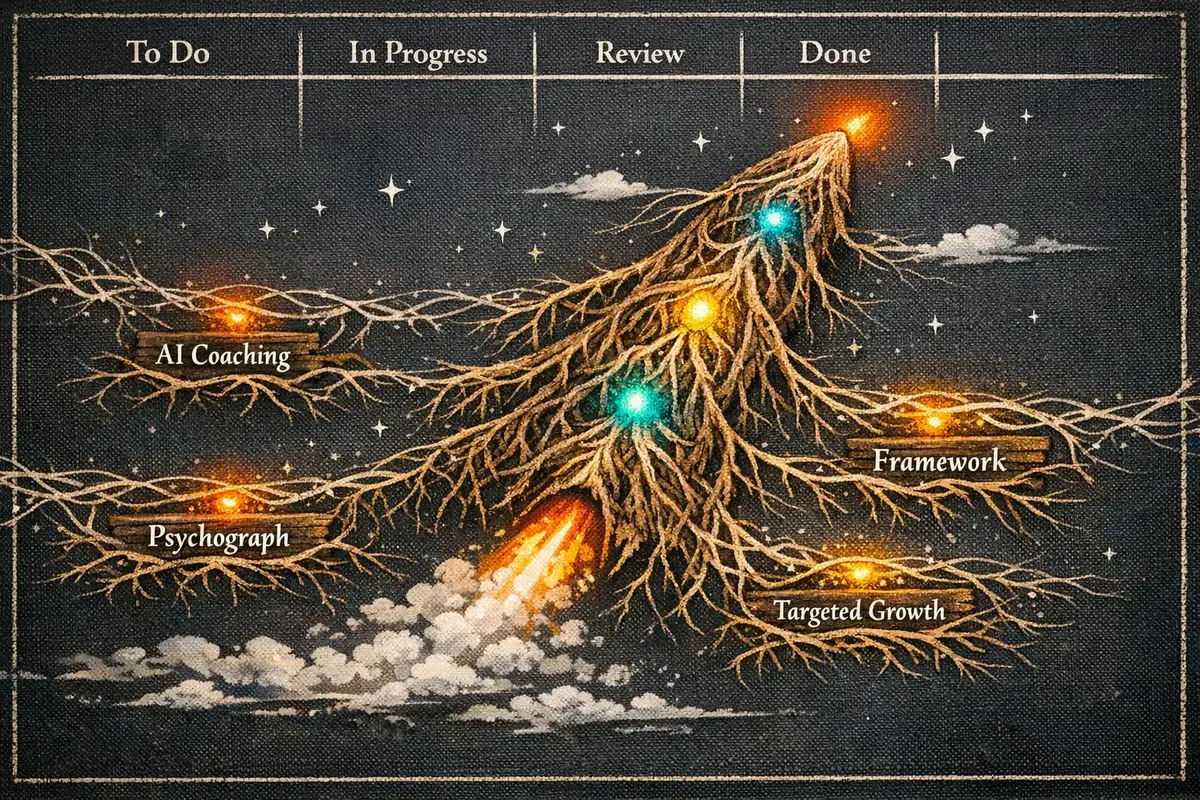
- Map the psychograph: The system creates a profile showing relative strengths and lagging lines, visualized for both the user and coach.
- Tailor interventions: Instead of generic advice, the AI recommends exercises, reflections, or learning modules targeted to the user’s unique developmental profile.
- Track progress: As users engage, the AI updates the psychograph, highlighting real growth and new leverage points.
For example, if the AI detects strong cognitive but underdeveloped emotional capacity, it might prompt the user with empathy-building exercises rather than more analytical tasks. This is personalization at a level most traditional coaching can’t match.
For more on how AI coaching can be customized to specific departmental or team needs, see our guide on customizing AI coaching for department needs.
What Is AI Coaching and How Does It Work in Practice?
AI coaching refers to the use of artificial intelligence to deliver personalized coaching experiences, often available 24/7 and at scale. These systems are trained on thousands of real coaching interactions, learning to recognize patterns, ask insightful questions, and recommend developmental activities.
Drawing on TII’s two-decade integral methodology, AI Coach System leverages these insights to deliver interventions that are both evidence-based and tailored to the individual’s unique developmental profile. The platform’s AI coaches specialize in areas like leadership vision, communication mastery, and performance optimization, each mapped to relevant developmental lines.
Unlike static e-learning or chatbot “advice,” AI coaching adapts in real time. As users engage, the system refines its understanding of their psychograph, offering new challenges or support as needed. This creates a feedback loop for continuous growth—something traditional coaching, limited by time and human bandwidth, struggles to provide.
For practical examples of how AI coaching supports leadership development, especially for first-time leaders, explore our article on AI coaching for leadership development.
How Does AI Move Beyond Generic Upskilling to Developmental Precision?
Most organizations focus on upskilling as a numbers game: more training hours, more certifications, more checkboxes. But this approach often produces surface-level change. The real opportunity is to use AI to identify which developmental line is holding someone back—and then target that specifically.
For example, if a team consistently underperforms in cross-functional collaboration, the knee-jerk reaction might be to run a teamwork workshop. But a psychograph might reveal that the real issue is uneven moral development (difficulty reconciling competing values) or a lagging emotional line (struggles with trust and vulnerability). AI can surface these insights by analyzing communication patterns, feedback loops, and decision-making data.
“The ICF AI Coaching Standards framework is organized into six domains, largely based on the ICF Core Competencies, adding specific guidelines tailored to AI and software.” (International Coaching Federation, 2024)
This means organizations can move from one-size-fits-all training to precision development—allocating resources where they’ll have the greatest impact and tracking progress in real time.
For insights on measuring the impact of AI coaching on talent retention and leadership readiness, see our resource on ROI of AI coaching for talent and leadership.
How Can Organizations Map Team or Individual “Psychographs” for Targeted Development?
Mapping a psychograph isn’t just for individuals. Teams and even entire organizations can be profiled across developmental lines, revealing collective strengths and blind spots. This process typically involves:
- Gathering self-assessments and peer feedback across key lines (cognitive, emotional, moral, etc.)
- Aggregating data to visualize group-level psychographs
- Identifying “overdeveloped” and “underdeveloped” lines—areas of potential leverage or risk
AI systems can automate much of this analysis, surfacing patterns that human coaches might miss. For example, an organization might discover a strong cognitive line (analytical prowess) but a lagging emotional line (difficulty with change or feedback). This insight can inform not just individual coaching, but team interventions, culture initiatives, and even hiring strategies.
For organizations operating in emerging economies or diverse cultural contexts, AI-powered psychograph mapping can also reveal systemic biases—such as an overemphasis on certain lines due to local norms or industry pressures. This allows for more inclusive, context-sensitive development strategies. For more, see our exploration of AI coaching in developing economies.
What Are Best Practices for Diagnosing Skill Gaps with AI?
Effective AI-driven skill gap diagnosis is about more than just data crunching. It requires:
- Ethical standards: Following guidelines like the ICF AI Coaching Standards to ensure transparency, privacy, and bias mitigation (International Coaching Federation, 2024)
- Continuous feedback: Updating psychographs as users grow, rather than relying on one-time assessments
- Human-AI partnership: Combining AI insights with human coaching for richer interpretation and support
- Cultural sensitivity: Recognizing how organizational or regional norms shape developmental lines and adjusting interventions accordingly
Most teams assume that AI is a “black box” that can’t be trusted with sensitive development work. But when grounded in clear standards and transparent methodologies, AI can actually reduce bias by surfacing patterns that might otherwise go unnoticed.
What Are Some Real-World Scenarios of AI-Integral Coaching Integration?
While fully AI-driven, line-specific coaching is still emerging, several scenarios illustrate the potential:
- Leadership transitions: AI identifies that a new manager’s challenge isn’t technical skill, but a lagging emotional line (difficulty with vulnerability), prompting targeted empathy-building exercises.
- Team conflict: Psychograph mapping reveals a group’s strong cognitive but weak moral line, leading to a focus on values clarification and ethical decision-making.
- Succession planning: AI surfaces high-potential employees whose cognitive and emotional lines are developed, but who need support in self-identity or spiritual lines to step into visionary roles.
These examples show how moving from generic skills gap analysis to developmental precision can unlock new levels of performance and engagement.
FAQ: Applying Integral ‘Lines of Development’ to AI Coaching
How is a psychograph different from a traditional skills matrix?
A psychograph maps an individual’s development across multiple lines (cognitive, emotional, moral, etc.), showing strengths and lagging areas, while a skills matrix lists specific abilities or competencies. The psychograph reveals why a skill gap exists, not just what is missing, enabling more targeted development.
Can AI really assess something as subjective as emotional or moral development?
AI systems can infer likely strengths and growth areas in emotional or moral lines by analyzing language patterns, behavioral data, and responses to coaching prompts. While not perfect, these assessments are grounded in large datasets and refined through continuous feedback, making them increasingly reliable over time.
What happens if my developmental lines are very uneven?
Uneven development is normal. AI coaching doesn’t aim to “fix” you but to leverage your strengths while supporting growth where needed. Recognizing which lines are lagging allows for interventions that are both more compassionate and more effective.
How does AI coaching ensure ethical and unbiased recommendations?
AI coaching platforms that follow standards like the ICF AI Coaching Standards prioritize transparency, privacy, and bias mitigation. This includes clear explanations of how recommendations are generated and regular audits to check for unintended bias in the data or algorithms.
Is this approach only for executives, or can anyone benefit?
Anyone can benefit from mapping their lines of development, whether they’re a first-time manager, a team member, or a senior leader. The approach scales from individuals to teams and organizations, offering value at every level of professional development.
How often should developmental lines be reassessed?
Developmental lines should be reassessed regularly—ideally every few months—since growth is a dynamic process. Continuous feedback from AI coaching sessions helps keep the psychograph current and relevant.
Can organizations use psychograph data for talent decisions?
Organizations can use aggregated psychograph data to inform talent development, succession planning, and team interventions. However, ethical guidelines recommend using this data to support growth, not as the sole basis for promotions or hiring decisions.
Continue Your Leadership Journey
Bridging Integral Theory’s “lines of development” with AI-powered coaching opens up a new frontier in diagnosing and targeting skill gaps. By moving beyond generic upskilling and focusing on the deeper capacities that drive real performance, leaders and organizations can unlock more sustainable, meaningful growth. As AI coaching platforms continue to evolve, those who embrace developmental precision—grounded in ethical standards and holistic frameworks—will be best positioned to thrive in the complexity of modern work.