
If you’ve ever tried to implement a new leadership framework or personal growth routine—whether for yourself or across your team—you’ve probably noticed how quickly initial enthusiasm fades. The first week, everyone’s on board. By week three, tracking slips, feedback loops stall, and “structured practice” becomes another item on a crowded to-do list. It’s not a lack of motivation or intelligence; it’s the challenge of sustaining meaningful, holistic development in the real world, where complexity and competing priorities rule. PwC estimates that AI could contribute up to $15.7 trillion to the global economy by 2030, with leadership development and coaching emerging as high-impact AI application areas.
Here’s the thing: most professionals know that growth requires more than insight. It needs a system—one that not only prescribes what to do, but also guides, tracks, and adapts as you progress. That’s where the intersection of Integral Life Practice (ILP) and AI-powered coaching platforms like AI Coach System is quietly reshaping the landscape of structured development.
Integral Life Practice (ILP) is a comprehensive, cross-disciplinary approach to personal and professional development. Unlike one-dimensional self-improvement routines, ILP is designed to address growth across four core domains: Body, Mind, Spirit, and Shadow. Each domain represents a critical dimension of human potential—physical vitality, cognitive skill, deeper purpose, and unconscious patterns, respectively. The World Economic Forum estimates that 50% of all employees will need reskilling by 2025, with adaptive leadership and coaching competence emerging as critical capabilities.
Most teams assume that focusing on one or two areas (say, leadership skills or mindfulness) is enough for real change. But research consistently demonstrates that sustainable transformation comes from integrating multiple domains, not just optimizing one. This means that a leader who develops only strategic thinking but neglects emotional awareness or physical well-being may plateau, despite their best intentions.
What makes a practice “integral” is its commitment to cross-training: blending physical, mental, emotional, and even existential exercises into a unified, adaptable routine. The result? Growth that’s not just broad, but deep—impacting how we think, act, relate, and lead.
How Do You Design a Structured Developmental Practice?
Designing an effective structured developmental practice starts with assessment and honest gap analysis. It’s easy to jump into the latest productivity hack or mindfulness app, but without understanding where you stand—and what’s missing—effort often dissipates.
- Assessment: Begin by mapping your current strengths and areas for growth across the four ILP domains. This can be as simple as a self-reflection exercise or as formal as a digital assessment tool.
- Gap Analysis: Identify which domains are underdeveloped relative to your goals. For example, are you excelling in strategic thinking but struggling with stress management or authentic communication?
- Practice Selection: Choose exercises that specifically target these gaps. ILP offers a modular approach: you might pair daily physical activity (Body) with weekly values clarification (Spirit) and regular feedback-seeking (Shadow).
- Commitment Strategy: Set clear intentions, timeframes, and accountability mechanisms. This could mean scheduling 15 minutes each morning for reflection or enlisting a peer for weekly check-ins.
Most professionals assume that motivation alone will sustain their practice. But behavioral science tells us otherwise: sustainable change is engineered through structure, feedback, and adaptation—not willpower alone.
What Makes a Practice “Integral” or Holistic?
The defining feature of an integral practice is its intentional inclusion of multiple, interdependent growth areas. Instead of treating physical health, mindset, emotional intelligence, and deeper purpose as separate projects, ILP weaves them into a single developmental tapestry.
Let’s break it down:
- Body: Physical vitality, resilience, and energy management.
- Mind: Cognitive skills, strategic thinking, and learning agility.
- Spirit: Sense of purpose, values alignment, and meaning-making.
- Shadow: Awareness and integration of unconscious patterns, biases, and blind spots.
Most organizations focus on “hard skills” or technical competencies, assuming these are the primary levers of performance. But evidence suggests that neglecting the softer, less visible domains—like emotional self-awareness or values alignment—creates bottlenecks to both individual and collective growth.
By cross-training these domains, ILP helps professionals not only “wake up” to new insights, but also “grow up” into more adaptive, resilient, and effective leaders.
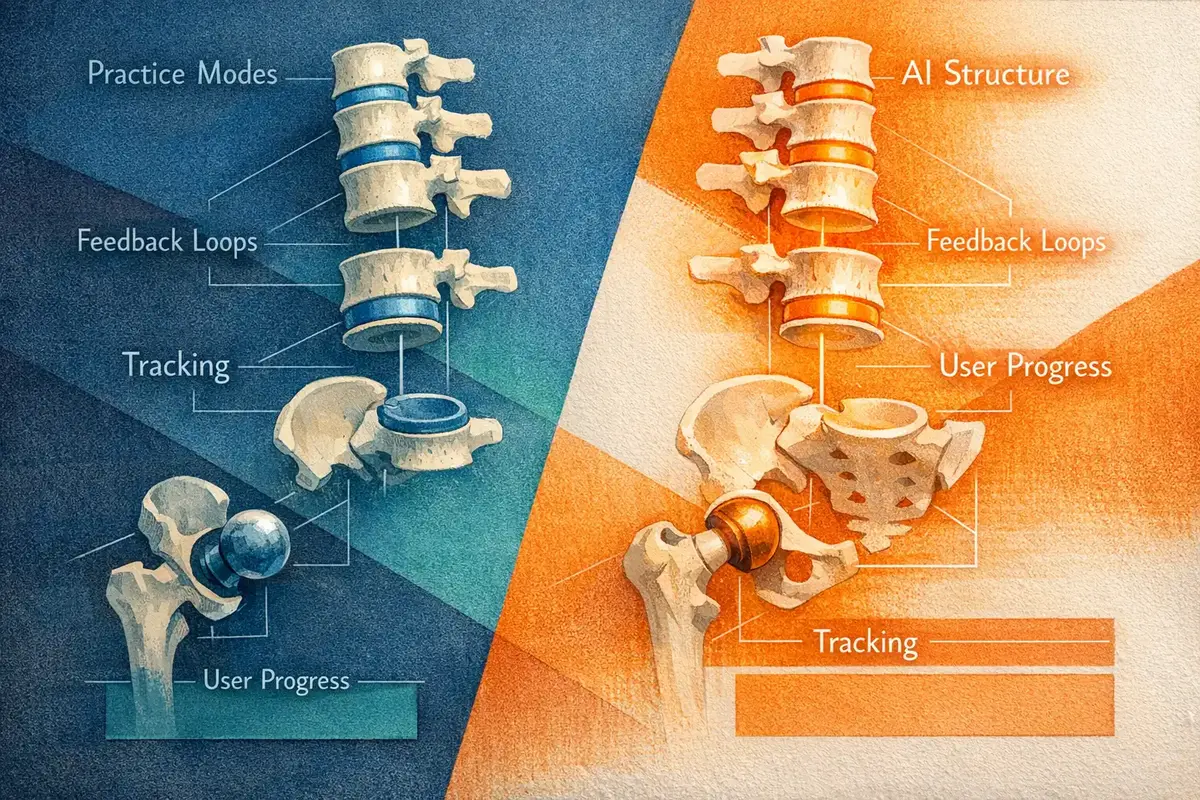
Most people imagine AI coaching as a smarter chatbot—answering questions, maybe offering a few tips. But genuine developmental change requires more than conversation; it needs an architecture that structures, delivers, and tracks practice over time.
The AI Coach System is built on this principle. Drawing on TII’s two-decade integral methodology, the platform translates ILP theory into practical, daily action. Here’s how:
1. Personalized Practice Prescription
After an initial assessment, the AI Coach System recommends a tailored set of practices across the ILP domains. For example, a user might receive a daily mindfulness prompt (Mind), a weekly physical challenge (Body), and a monthly values reflection (Spirit). The system adapts these prescriptions based on ongoing user input, ensuring relevance and challenge.
2. Distinct Modes for Practice, Reflection, and Feedback
Unlike generic productivity tools, the platform separates the experience into clear modes:
- Practice Mode: Step-by-step guidance for each exercise, with reminders and progress indicators.
- Reflection Mode: Structured prompts for journaling, self-assessment, and meaning-making.
- Feedback Mode: Real-time, AI-generated feedback based on user responses and behavioral patterns.
This architectural clarity—mirroring best practices from leading platforms—ensures that users don’t just “check the box,” but engage deeply with each developmental dimension.
3. Progress Tracking and Adaptive Nudges
Practice tracking is more than a streak counter. The AI Coach System visualizes progress across all domains, highlights patterns (such as consistent neglect of one area), and delivers just-in-time nudges to re-engage users. This approach, grounded in behavioral science in coaching, helps overcome the common pitfall of overcommitting and then abandoning practice routines.
4. Social Feedback and Group Accountability
Here’s a surprising insight: most assume that personal development is a solo endeavor. But research and real-world experience show that integrating social feedback in coaching—such as peer recognition, group challenges, or team-based reflection—dramatically increases accountability and sustained engagement.
The AI Coach System incorporates options for group practice, shared progress dashboards, and even anonymized peer feedback, making developmental exercises not just personal, but communal.
How Does the System Track Progress and Maintain Motivation?
Tracking progress in ILP isn’t just about ticking boxes—it’s about making growth visible, actionable, and meaningful. The AI Coach System employs several mechanisms to do this:
- Visual Dashboards: Users see their engagement across all ILP domains, with color-coded indicators for areas of strength and neglect.
- Milestone Checkpoints: The system highlights key achievements (e.g., 30 days of consistent practice) and suggests celebratory or reflective exercises at each milestone.
- Adaptive Reminders: Rather than generic notifications, the platform delivers context-sensitive nudges—reminding users to revisit neglected domains or deepen their reflection after a breakthrough.
Most teams assume that motivation wanes because people “just don’t care enough.” But the reality is that when progress is visible and feedback is timely, motivation becomes much easier to sustain.
How Does AI Provide Feedback and Adapt to User Input?
Feedback is the engine of growth. In traditional coaching, it’s often limited by session frequency, memory, and subjective recall. AI changes the game by enabling feedback loops that are immediate, data-driven, and personalized.
- Real-Time Analysis: As users log their practices and reflections, the system analyzes patterns—flagging both progress and stagnation.
- Personalized Guidance: Feedback isn’t generic. For example, if a user consistently avoids “Shadow” practices (like exploring blind spots), the system might prompt a gentle inquiry or suggest an alternative entry point.
- Dynamic Adjustment: The AI adapts future practice prescriptions based on engagement and outcomes, ensuring that the developmental journey remains challenging but achievable.
96% of workers report that AI coaching delivers customized responses tailored to their goals, and 89% receive specific next steps, according to The Conference Board, 2024.
This kind of responsive, just-in-time feedback is nearly impossible to sustain at scale with human-only coaching models.
How Does AI Facilitate Group Practice and Social Accountability?
Scaling individualized development across teams or organizations is notoriously difficult. Most approaches focus on individual growth, assuming group dynamics will sort themselves out. But when developmental practice becomes a shared experience, accountability and results multiply.
The AI Coach System enables:
- Team-Based Practice Challenges: Groups can opt into shared exercises, fostering camaraderie and positive peer pressure.
- Anonymized Peer Feedback: Users can receive constructive input from colleagues, filtered and synthesized by the AI to maintain psychological safety.
- Shared Progress Dashboards: Teams can track collective engagement, celebrate milestones, and identify systemic gaps.
This social dimension transforms practice from a private obligation into a collective opportunity—one that’s both scalable and deeply human.

What Are the Measurable Impacts of AI-Facilitated Developmental Practice?
The business case for integrating AI into developmental practice is rapidly gaining traction. According to VirtualSpeech, 34% of companies have already implemented AI in training programs, with 32% planning to do so within two years. What’s more, 92% plan to increase AI investments in the next three years.
But beyond adoption rates, what’s the actual impact?
AI coaching delivers high user satisfaction: 96% of workers report customized responses, 90% find it easy to use, and 91% would use it again (The Conference Board, 2024).
And when it comes to ROI, executive coaching—of which ILP is a leading example—yields $5–$7 for every dollar spent, with 70% of users reporting improved work performance (ICF, 2023).
The implication is clear: when structured developmental exercises are facilitated, tracked, and adapted by AI, the result is not just higher engagement, but measurable business outcomes.
What Are the Common Pitfalls in Structured Practice, and How Does AI Help Avoid Them?
Even the best-designed practice routines can falter. Here are three common pitfalls—and how AI addresses them:
- Overcommitting: Ambitious plans often lead to burnout. The AI Coach System recommends a sustainable cadence, adjusting as needed to prevent overwhelm.
- Ignoring Feedback: Without timely, specific feedback, users repeat mistakes or stagnate. AI delivers immediate, actionable insights, ensuring growth remains on track.
- Lack of Accountability: Solo practice can drift without social reinforcement. Group features and peer feedback mechanisms keep users engaged and responsible.
Most people assume that more structure means less flexibility. But in reality, the right architecture—especially when powered by AI—creates a framework that’s both robust and adaptable.
How Can Organizations Scale Individualized Development with AI?
Scaling individualized development across a large organization has always been a challenge. Traditional coaching models, while powerful, are limited by cost, scheduling, and scalability. AI-powered systems like AI Coach System offer a different path.
- 24/7 Accessibility: Users can engage with their development plan whenever and wherever suits them.
- Personalization at Scale: The system adapts to each user’s needs, learning style, and progress, even across thousands of employees.
- Integrated Analytics: Leaders gain visibility into organizational growth trends, engagement levels, and systemic gaps.
This approach, backed by over 40,000 hours of certified coaching practice, moves development from “one-size-fits-all” to “everyone grows, together.”
How to Get Started: Practical Templates and Checkpoints
Ready to move from theory to action? Here’s a simple, stepwise template to design and sustain your own ILP, whether individually or as a team:
- Assess: Map your current strengths and gaps across Body, Mind, Spirit, and Shadow.
- Select Practices: Choose 1–2 exercises per domain, tailored to your goals and context.
- Schedule: Set a realistic cadence—daily, weekly, or monthly—for each practice.
- Track: Use a digital tool or journal to log engagement and insights.
- Reflect: Schedule regular checkpoints (e.g., every 2 weeks) to review progress and adjust.
- Seek Feedback: Invite peer or AI-generated feedback to surface blind spots and celebrate wins.
For those looking to deepen their understanding, resources on Integral Life Practice provide further guidance on designing personalized growth paths using ILP, while structured developmental exercises offer practical frameworks for assessment and gap analysis. To understand how AI coaching systems structure, deliver, and track these exercises, explore the AI coaching system. For a deeper dive into the science behind these approaches, see behavioral science in coaching.
FAQ: Facilitating Integral Practices with AI Coach System
What is the difference between Integral Life Practice and traditional self-improvement routines?
Integral Life Practice (ILP) is holistic, addressing growth in body, mind, spirit, and shadow simultaneously. Traditional routines often focus on a single area, like productivity or mindfulness, which can limit long-term impact. ILP’s cross-training approach creates deeper, more sustainable change.
How does the AI Coach System personalize developmental exercises?
The system assesses your current strengths and goals, then prescribes a tailored set of practices across all ILP domains. As you engage, it adapts recommendations based on your progress, feedback, and engagement patterns, ensuring ongoing relevance and challenge.
Can AI coaching replace human coaches entirely?
AI coaching excels at structuring, tracking, and providing immediate feedback for developmental exercises. However, many users find that combining AI with occasional human coaching sessions offers the best of both worlds—scalability and deep personal connection.
What if I miss a practice session or fall behind?
The AI Coach System is designed to support real life, not punish lapses. It delivers adaptive reminders and gently encourages re-engagement, helping you get back on track without guilt or overwhelm.
How is progress tracked and measured in the system?
Progress is visualized through dashboards, milestone checkpoints, and domain-specific indicators. The system highlights both achievements and areas needing attention, making growth tangible and actionable.
Does the system support team or group development?
Yes, the platform includes features for group practice, shared dashboards, and anonymized peer feedback. This enables teams to grow together, increasing accountability and collective engagement.
What are the privacy and data security considerations?
AI Coach System prioritizes user privacy. Data is anonymized for group features, and users control what information is shared. The platform adheres to industry-standard security protocols to protect personal and organizational data.
By bridging the rigor of behavioral science with the depth of integral frameworks, AI-powered coaching platforms like AI Coach System are making structured, holistic development accessible, trackable, and scalable—for individuals, teams, and entire organizations. Whether you’re just starting out or looking to take your practice to the next level, the tools for real, sustained growth are now within reach.