If you’ve ever welcomed a new team member only to watch their enthusiasm fade into confusion or disengagement within weeks, you’re not alone. Most organizations invest heavily in recruiting talent, but the onboarding experience often feels like a checklist—overwhelming, impersonal, and disconnected from real growth. What if onboarding could instead be the launchpad for a culture where learning is continuous, feedback is welcomed, and every employee feels empowered to direct their own development from day one? Integrating AI coaching into new hire onboarding is emerging as a practical, research-backed way to create precisely this environment—helping new hires ramp up faster, feel psychologically safe, and adopt a growth mindset that benefits the entire organization. McKinsey research indicates that companies using AI in talent development see a 25% improvement in employee performance, particularly when AI augments human coaching capabilities.
What is AI Coaching in Onboarding, and How Does It Differ from Traditional Approaches?
AI coaching in onboarding refers to the use of artificial intelligence-driven platforms that provide personalized, on-demand coaching support to new hires throughout their integration journey. Unlike traditional onboarding—often centered on static presentations, manuals, and scheduled meetings—AI coaching adapts in real time to each new hire’s needs, learning pace, and questions.
Most teams assume that onboarding is about delivering information efficiently. But research shows that how new hires learn and feel during onboarding is just as important as what they learn. AI coaching goes beyond automating paperwork or compliance modules; it creates a living, responsive support system that guides new hires through challenges, encourages reflection, and connects their daily experiences to broader organizational values. Brandon Hall Group research reveals that companies with strong coaching cultures are 130% more likely to achieve strong business results and significantly higher employee engagement.
Here’s the thing: while learning management systems (LMS) and onboarding portals can deliver content, they rarely foster the kind of self-directed development or psychological safety that leads to long-term engagement. AI coaching, by contrast, offers continuous, conversational support—answering questions, providing feedback, and nudging new hires toward growth-oriented behaviors, all without waiting for the next scheduled check-in.
Why Does Integrating AI Coaching Matter for Building a Continuous Learning Culture?
The urgency for a new approach is clear: “62% of HR professionals say their teams are operating beyond normal capacity, and 57% don’t have enough staff to handle their workload” (SHRM, 2025). When HR is stretched thin, the risk is that onboarding becomes transactional—focused on compliance, not culture.
But here’s a perspective shift: most leaders believe onboarding is a one-time event. In reality, it’s the first chapter in a much longer story of learning and adaptation. Embedding AI coaching into onboarding signals to new hires that learning is not just encouraged—it’s expected, supported, and woven into the fabric of daily work.
“In a three-month pilot with 200 new hires, Ecolab achieved a 77% increase in on-time completion of onboarding learning plans and 58% of learners finished ahead of schedule.” (AIHR, 2026)
This kind of outcome isn’t just about efficiency; it’s about creating an environment where new hires feel safe to ask questions, seek feedback, and take ownership of their growth. That’s the foundation of a true continuous learning culture.
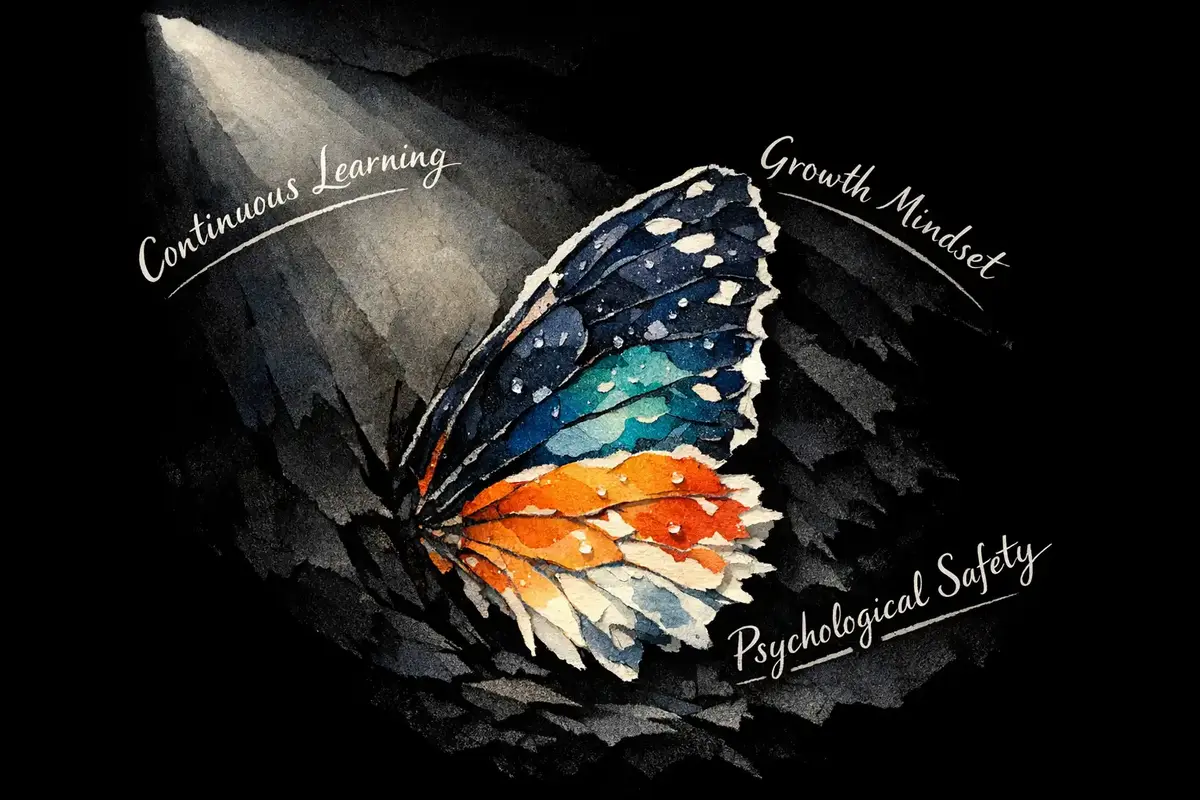
How Does AI Coaching Foster Psychological Safety and a Growth Mindset from Day One?
Let’s surface a common assumption: most organizations believe that psychological safety and a growth mindset will develop naturally over time. But research and real-world experience suggest otherwise—these qualities need to be intentionally cultivated, especially during the vulnerable first weeks of a new hire’s journey.
AI coaching plays a unique role here. Because AI coaches are available 24/7, new hires can ask questions—no matter how basic or complex—without fear of judgment or “bothering” a busy manager. This always-on support means that uncertainty doesn’t fester into anxiety or disengagement. Instead, it’s met with timely, personalized guidance.
“AI onboarding assistants can resolve 80%+ of new hire questions without HR involvement when well-configured.” (Paychex, 2026)
This isn’t about replacing the human touch. In fact, the most effective onboarding journeys blend AI-driven coaching with live manager or mentor check-ins. AI handles the scale and routine—answering policy questions, prompting reflection, suggesting learning resources—while humans provide empathy, context, and cultural nuance. The result? New hires experience a psychologically safe environment where curiosity is rewarded, mistakes are reframed as learning opportunities, and feedback is normalized from day one. For organizations committed to psychological safety, this hybrid model is a game changer.
What Are the Practical Steps for Embedding AI Coaching into the Onboarding Journey?
Integrating AI coaching isn’t about launching a chatbot and calling it a day. It’s about designing a phased, intentional experience that maps AI touchpoints to the real needs of new hires as they progress from preboarding to full productivity. Let’s break down a practical framework, drawing on proven methodologies and industry best practices:
1. Preboarding: Setting Expectations and Building Confidence
- AI coach sends a welcome message, introduces the company’s mission, and outlines what to expect in the first weeks
- Personalized checklists and FAQs address common logistical questions (IT setup, benefits, team norms)
- Interactive prompts encourage new hires to reflect on their learning goals and preferred working styles
2. First Week: Accelerating Connection and Clarity
- AI-driven daily check-ins surface early questions and offer just-in-time resources
- Scenario-based learning modules adapt to the new hire’s role and experience
- Nudges prompt new hires to reach out to their manager or buddy, reinforcing the human connection
3. First 90 Days: Deepening Engagement and Ownership
- AI coach tracks progress on learning plans, celebrating milestones and surfacing areas for further development
- Feedback loops invite new hires to share what’s working and where they need support—data that can inform manager follow-ups
- Self-assessment tools help new hires identify strengths, growth areas, and next steps for continuous development
Most teams assume that onboarding “ends” after the first week or month. But organizations that extend AI coaching through the first 90 days see higher engagement, faster ramp-up, and stronger retention. “AI-driven onboarding can provide a 30–50% faster ramp-up time and higher 90-day retention rates” (AIHR, 2026). This means HR and managers can focus less on chasing paperwork and more on building relationships and supporting real learning.
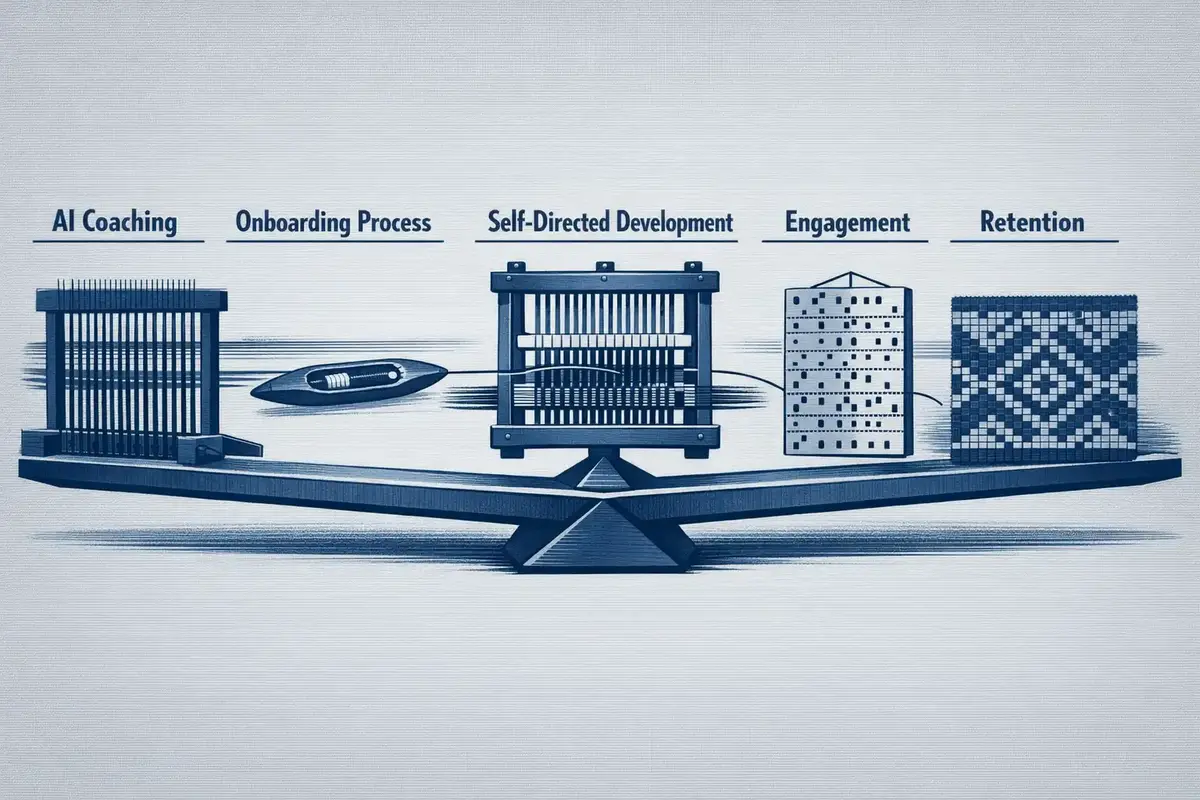
How Does AI Coaching Personalize the Onboarding Experience?
One of the most powerful advantages of AI coaching is its ability to personalize learning and support at scale. Traditional onboarding often treats every new hire the same, regardless of their background, role, or learning preferences. But AI-powered tools can “personalize training modules based on previous work experience, job role, and learning preferences” (Sage, 2025).
Imagine two new hires: one is a recent graduate, the other a seasoned professional switching industries. Their questions, anxieties, and development needs are worlds apart. AI coaching platforms can detect these differences—through self-assessments, behavioral data, and ongoing interactions—and adjust the onboarding journey accordingly. This means new hires spend less time on irrelevant content and more time building the skills and relationships that matter most for their success.
Here’s a question worth considering: if onboarding is the first real taste of your organization’s culture, what message does a one-size-fits-all approach send? Personalization isn’t just a “nice to have”—it’s a signal that learning is valued, individual strengths are recognized, and growth is a shared priority.
What Metrics Matter Most When Measuring the Impact of AI Coaching in Onboarding?
Most organizations track onboarding success through basic metrics: time to productivity, completion rates, and early turnover. But as AI coaching transforms the onboarding experience, it’s time to expand our lens.
“Automated onboarding processes can increase new hire productivity by over 70%.” (AIHR, 2026)
“Companies like IBM have reported cutting ramp-up time by 50% through AI-powered onboarding platforms.” (AIHR, 2026)
Beyond these impressive gains, forward-thinking organizations are tracking:
- Growth mindset activation: Are new hires demonstrating curiosity, resilience, and a willingness to seek feedback?
- Feedback-seeking behavior: How often do new hires use AI coaching to ask questions or request input?
- Engagement with learning resources: Are new hires proactively exploring development content, or just checking boxes?
- Psychological safety indicators: Do new hires report feeling comfortable raising concerns or sharing mistakes?
These onboarding metrics provide a fuller picture of how well onboarding is laying the groundwork for a culture of continuous learning—not just short-term productivity.
How Can Organizations Blend AI and Human Coaching for Maximum Impact?
It’s tempting to view AI and human coaching as competing forces. In reality, the most successful onboarding strategies combine the strengths of both. AI handles scale, consistency, and immediate support—answering questions, tracking progress, and nudging new hires toward key behaviors. Human coaches, managers, and mentors bring empathy, context, and cultural wisdom that AI can’t replicate.
Drawing on TII’s two-decade integral methodology, the “human-in-the-loop” model ensures that AI coaching never replaces the human touch—it amplifies it. For example:
- AI flags when a new hire is struggling or disengaged, prompting a manager to reach out
- AI summarizes learning progress, enabling more focused and meaningful conversations in live check-ins
- AI provides anonymous feedback channels, surfacing issues that new hires might hesitate to raise directly
This partnership not only drives efficiency but also deepens trust, belonging, and commitment—outcomes that are notoriously hard to achieve through automation alone.
What Are the Risks and Ethical Considerations of AI Coaching in Onboarding?
No discussion of AI in onboarding is complete without addressing ethics, privacy, and bias. As organizations adopt AI coaching, it’s essential to:
- Ensure transparency about how data is collected, stored, and used
- Regularly audit AI algorithms for bias, especially in feedback and learning recommendations
- Maintain clear boundaries between automated support and sensitive, human-led conversations
Industry evidence suggests that employees are more likely to embrace AI coaching when they understand its purpose and see it as a tool for empowerment, not surveillance. HR and L&D leaders should provide clear guidelines, offer opt-out options where appropriate, and involve employees in the design and evaluation of AI-driven onboarding experiences.
How Can AI Coaching Support Remote and Hybrid Onboarding?
Remote and hybrid work have made onboarding more complex—and more critical—than ever. Without the benefit of hallway conversations or informal shadowing, new hires can feel isolated and unsure of how to navigate their roles.
AI coaching bridges this gap by providing 24/7 support, instant answers to policy and IT questions, and continuous nudges to connect with teammates and resources. For distributed teams, this means onboarding is no longer bound by time zones or office hours. Every new hire, regardless of location, receives consistent, personalized support that adapts to their unique context.
This approach not only accelerates integration but also reinforces the message that learning and connection are priorities, no matter where or how people work.
FAQ: Integrating AI Coaching into New Hire Onboarding
How does AI coaching differ from a traditional onboarding chatbot?
AI coaching goes beyond scripted responses, offering adaptive, conversational guidance tailored to each new hire’s needs and learning journey. While chatbots answer FAQs, AI coaching provides real-time feedback, learning nudges, and reflective prompts that support deeper growth and engagement.
Will AI coaching replace human mentors or managers during onboarding?
No. The most effective onboarding combines AI coaching for scalable, instant support with human mentors or managers who provide empathy, context, and cultural integration. AI amplifies human impact by handling routine questions and surfacing insights for more meaningful conversations.
What are the main benefits of integrating AI coaching into onboarding?
Key benefits include faster ramp-up times, higher retention, improved psychological safety, and more personalized learning experiences. For example, companies have reported up to 77% increases in on-time completion of onboarding plans and a 50% reduction in ramp-up time when using AI-powered platforms.
How can we ensure AI coaching is used ethically in onboarding?
Organizations should be transparent about data usage, regularly audit for bias, and clearly distinguish between automated and human-led support. Involving employees in the design and evaluation process also builds trust and accountability.
What onboarding metrics should we track to measure AI coaching’s impact?
Beyond time to productivity, track metrics like growth mindset activation, feedback-seeking behavior, engagement with learning resources, and psychological safety indicators. These provide a fuller picture of how onboarding supports long-term development and culture.
How does AI coaching support onboarding for remote or hybrid teams?
AI coaching offers 24/7 support, instant access to resources, and personalized nudges, ensuring that remote and hybrid new hires receive consistent guidance and connection regardless of location or time zone.
What are the risks of over-automating onboarding with AI?
Over-automation can lead to a lack of human connection, reduced trust, and missed opportunities for empathy. The best results come from blending AI efficiency with authentic human relationships and cultural touchpoints.
Continue Your Leadership Journey
Integrating AI coaching into new hire onboarding isn’t just about streamlining processes—it’s about laying the foundation for a culture where learning never stops, feedback is welcomed, and every employee feels empowered to grow. By blending the scalability and personalization of AI with the empathy and wisdom of human leaders, organizations can transform onboarding from a hurdle into a launchpad for continuous development, psychological safety, and lasting engagement. The future of onboarding is not just digital—it’s deeply human, adaptive, and built for growth.