
If you’ve recently been tapped for a high-potential development program, you know the excitement—and anxiety—that comes with being seen as “leadership material.” Suddenly, you’re expected to navigate team dynamics, give feedback, and make decisions that impact more than just your own work. Yet, like most first-time leaders, you may find yourself asking: “Where do I actually learn how to lead?” Here’s the thing: 60% of new managers never receive any formal management training, leaving them to figure it out on their own (Center for Creative Leadership, 2024). AI coaching is transforming this experience by providing on-demand, personalized support that accelerates the transition from high-potential employee to effective leader. The ICF/PwC Global Coaching Study confirms that executive coaching delivers an average ROI of 529%, with organizations reporting measurable improvements in leadership effectiveness and business outcomes.
Why Do So Many First-Time Leaders Struggle—And What’s Different Now?
Most organizations assume that promoting high-performing employees into leadership roles is enough. But research consistently shows that technical excellence rarely translates directly into leadership effectiveness. In fact, managers are responsible for about 70% of the variance in team engagement levels (Gallup, 2015). That’s a staggering influence—and it means that the stakes for getting leadership development right are high.
So why do so many new leaders falter? The answer isn’t just about skills. It’s about the emotional and identity shift required to move from “doer” to “leader.” You’re no longer just accountable for your own results; you’re shaping the environment for others. Without structured support, this transition can feel like a “sink or swim” moment—one that leaves many talented individuals treading water. Bersin by Deloitte found that organizations investing in coaching are 5.7x more likely to be high-performing, demonstrating the direct link between coaching culture and business outcomes.
This is where AI-powered coaching enters the picture, offering a lifeline that’s accessible, scalable, and tailored to the unique challenges of first-time leaders.
What Is AI Coaching and How Does It Work for New Leaders?
AI coaching is a digital solution that delivers personalized leadership guidance, feedback, and learning pathways using artificial intelligence. Unlike traditional coaching, which relies on scheduled sessions with a human expert, AI coaching is available 24/7, adapts to your real-time needs, and draws on a vast library of leadership scenarios and best practices. The most advanced platforms—such as those grounded in internationally accredited coaching methodologies—train their AI on thousands of real coaching sessions, ensuring the advice is both credible and contextually relevant.
For first-time leaders in high-potential development programs, this means you can:
- Practice critical conversations (like giving feedback or delegating) in a safe, judgment-free environment
- Receive instant, actionable suggestions tailored to your industry, role, and team dynamics
- Build foundational leadership skills at your own pace, without waiting for the next scheduled workshop or mentor meeting
“AI coaches could soon deliver 90% of workplace coaching, with human coaches focusing on the remaining 10% (complex, high-stakes scenarios)” (The Conference Board, 2025).
This doesn’t mean AI replaces human wisdom. Instead, it handles the routine, day-to-day development needs—freeing up human coaches and mentors to focus on the most nuanced, emotionally charged, or strategic challenges.
If you’re wondering how AI coaching compares to traditional models, consider this: most first-time leaders need frequent, just-in-time support as they encounter new situations. AI coaching meets this need in a way that’s both scalable and deeply personalized, drawing on the expertise of accredited coaches amplified by AI for leadership development.
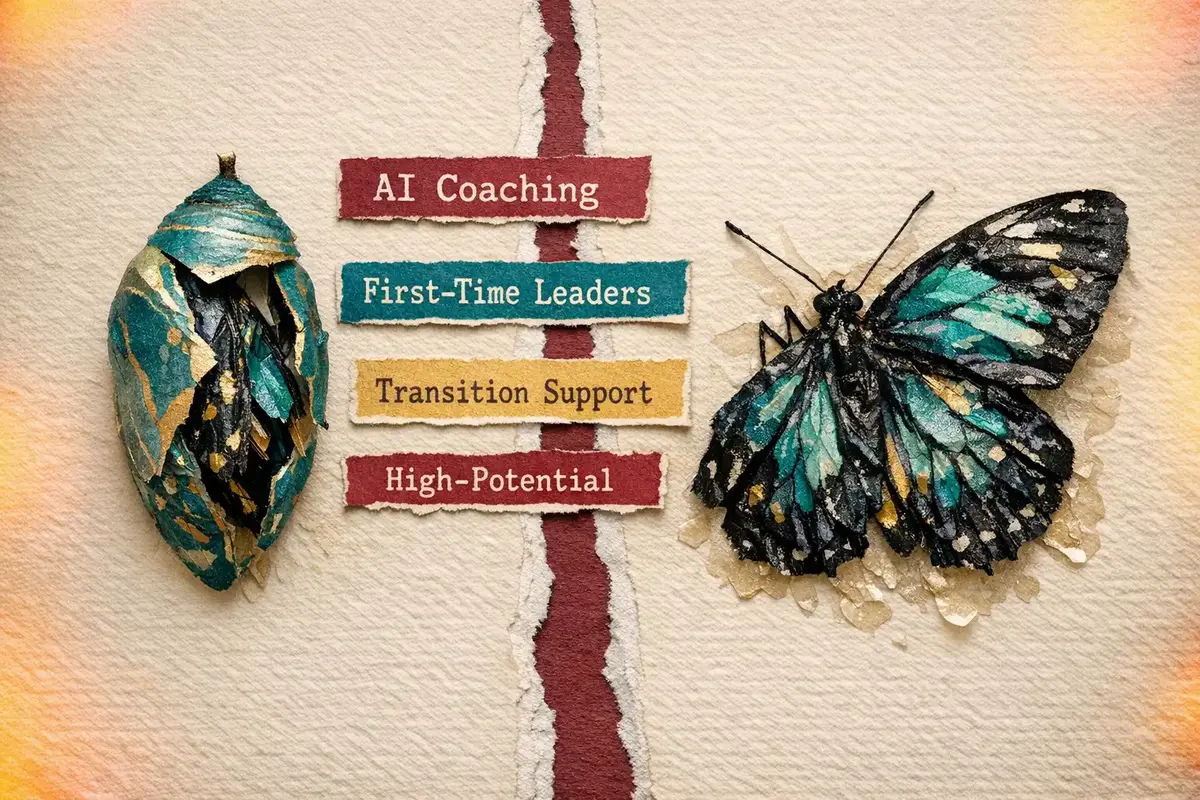
How Can AI Coaching Accelerate the Transition from High-Potential to Leader?
Let’s break down the typical journey for first-time leaders into three stages, and see how AI coaching supports each step:
1. Self-Leadership: Building Confidence and Clarity
Most new leaders assume that leadership starts with managing others. But research shows the foundation is self-leadership—understanding your own strengths, triggers, and blind spots. AI coaching helps you:
- Identify your leadership style through self-assessment tools and reflective prompts
- Set clear, actionable goals for your first 90 days
- Practice self-regulation techniques for managing stress and uncertainty
This early focus pays off. Employees with great managers score 27 percentage points higher on motivation (Culture Amp, 2023), and much of that impact comes from leaders who are self-aware and intentional.
2. Leading Others: Mastering Core Management Skills
The next hurdle is learning to lead a team—giving feedback, delegating, and resolving conflicts. Here’s where most first-time leaders feel the pressure. AI coaching offers:
- Scenario-based simulations to rehearse tough conversations before they happen
- Real-time feedback on your communication and decision-making approaches
- Microlearning modules tailored to your immediate challenges
If you’ve ever wished for a “practice field” before stepping into a high-stakes meeting, this is it.
3. Leading for Impact: Strategic Thinking and Influence
As you grow, the focus shifts from managing tasks to driving team performance and shaping organizational culture. AI coaching supports this by:
- Offering frameworks for strategic planning and prioritization
- Helping you navigate cross-functional collaboration and influence without authority
- Providing ongoing feedback as you experiment with new leadership behaviors
“76% of global workers say that excellent L&D opportunities make them want to stay at an organization” (Korn Ferry, 2025).
This means that investing in your own development isn’t just good for you—it’s a retention strategy for your organization.
What Are the Benefits and Limitations of AI Coaching for First-Time Leaders?
Let’s address the elephant in the room: Can an AI really help you become a better leader? The answer is nuanced.
Benefits
- Accessibility: AI coaching is available anytime, anywhere—no scheduling required. This is a game-changer for busy professionals or those in global teams.
- Personalization: The best platforms adapt to your unique context, learning style, and goals, providing tailored guidance.
- Consistency: Unlike human coaches who may vary in approach, AI delivers uniform quality and evidence-based frameworks.
- Cost Efficiency: AI coaching democratizes access, making high-quality leadership support available to more employees, not just the executive tier.
Limitations
- Emotional Nuance: While AI can simulate empathy and offer reflective questions, it may not fully grasp the emotional complexity of certain situations—especially those involving deep conflict or personal crisis.
- Ethical and Privacy Concerns: Trust is essential. Organizations and individuals must understand how their data is used, stored, and protected. The best platforms are transparent about privacy in AI coaching, offering opt-in models and clear data retention policies.
- Hybrid Needs: Some scenarios—like navigating layoffs or organizational politics—still require human wisdom and emotional intelligence. The future is hybrid coaching, blending AI’s efficiency with the depth of human expertise.
Most teams assume that more technology means less human connection. But research shows that when AI is used to handle routine coaching needs, it actually frees up human coaches to focus on the most meaningful, high-stakes development moments (The Conference Board, 2025). This means organizations can scale support without sacrificing depth.
How Does AI Coaching Blend with Human Mentoring and Organizational Development?
Here’s a common assumption: AI and human coaching are competing solutions. But the reality is more collaborative.
The “90% Rule” of AI Coaching
According to recent research, AI coaches could soon deliver 90% of workplace coaching, with human coaches focusing on the remaining 10%—the most complex, sensitive, or high-stakes scenarios (The Conference Board, 2025).
- AI excels at: Routine skill-building, scenario practice, self-assessment, and just-in-time learning
- Human coaches excel at: Navigating ambiguity, deep emotional processing, organizational politics, and transformational change
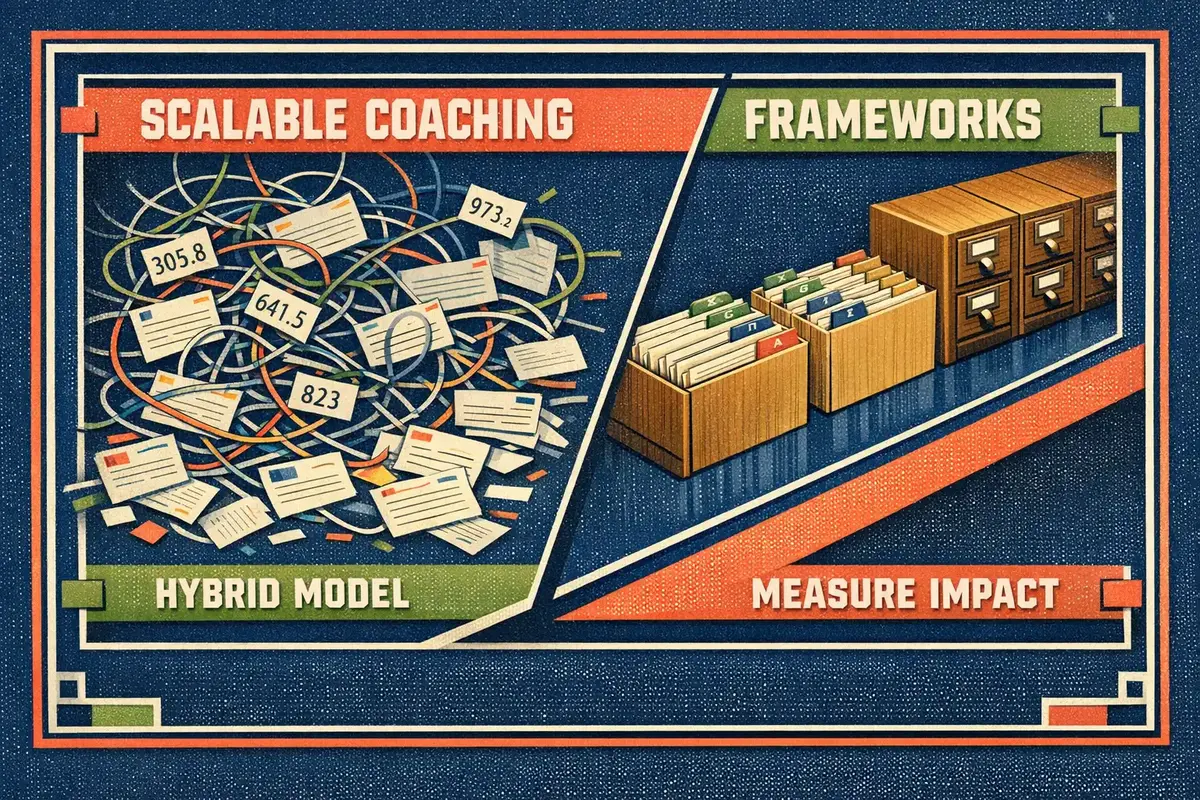
The most effective organizations use a hybrid coaching model, where AI provides daily support and human mentors step in for pivotal moments. This approach is particularly powerful in high-potential development programs, where the volume of first-time leaders outpaces the availability of experienced mentors.
Organizational Integration
AI coaching isn’t just about individual growth. When integrated with broader coaching frameworks, it enables organizations to:
- Track leadership development progress across cohorts
- Identify common skill gaps and tailor interventions
- Support succession planning with real-time data on readiness and engagement
Pilot programs that combine AI coaching tools with periodic human mentorship have seen about 30% higher retention among participating managers’ teams over two years (TechClass, 2026). That’s a measurable impact on both people and performance.
What Practical Tools and Scenarios Can First-Time Leaders Use with AI Coaching?
Theory is helpful, but first-time leaders need actionable support. Here are some practical ways AI coaching can be embedded into your daily workflow:
Scenario Simulations
- Giving Feedback: Practice delivering both positive and constructive feedback to a virtual team member, receive instant suggestions on phrasing, and reflect on the likely impact.
- Delegation: Role-play assigning a new project, balancing clarity with empowerment, and get tips on follow-up strategies.
- Difficult Conversations: Rehearse handling conflict or addressing underperformance, with AI-generated prompts to help you stay focused and empathetic.
Self-Assessment and Reflection
- Use guided checklists to evaluate your progress on key leadership behaviors each week
- Set micro-goals and track your development in real time
Privacy and Trust Playbook
- Review clear privacy guidelines before each session
- Choose what data is stored or deleted, and receive transparency reports on usage
- Opt into or out of data sharing with your organization, maintaining control over your learning journey
If you’re part of a high-potential program, you’ll likely find these tools integrated into your onboarding and ongoing development. This structured, scenario-driven approach helps first-time leaders build confidence faster and avoid common pitfalls.
How Do You Measure the Impact and ROI of AI Coaching for New Leaders?
Organizations invest in high-potential development programs with the expectation of measurable results. But how do you know if AI coaching is actually moving the needle?
Key Metrics
- Retention: Teams led by managers who receive structured coaching—especially in hybrid AI-human models—show about 30% higher retention over two years (TechClass, 2026).
- Engagement: Managers account for about 70% of the variance in team engagement (Gallup, 2015), so upskilling leaders has a direct impact on morale and productivity.
- Motivation and Performance: Employees with great managers are 27 percentage points more motivated (Culture Amp, 2023).
- Leadership Readiness: Self-assessment data and scenario completion rates provide real-time feedback on progress.
Organizations can use AI coaching ROI frameworks to track these outcomes, linking individual growth to business performance.
Individual Progress
For first-time leaders, the most meaningful ROI is often personal: greater confidence, reduced anxiety, and faster mastery of new skills. The ability to access coaching in the flow of work—rather than waiting for the next workshop—accelerates this journey.
What Are the Ethical and Privacy Considerations in AI Coaching?
Trust is the foundation of any coaching relationship—digital or human. When using AI coaching, both individuals and organizations must be clear about:
- Data Privacy: Who owns the coaching data? How long is it stored? Can you delete your history?
- Confidentiality: Is your session content shared with your manager or HR? The best platforms offer opt-in models and transparent policies.
- Bias and Fairness: How is the AI trained, and what safeguards exist to prevent biased advice?
Most first-time leaders assume their coaching conversations are private, but not all platforms guarantee this by default. It’s essential to review privacy in AI coaching policies, ask questions, and choose solutions that prioritize user control and transparency.
How Can Organizations and Individuals Maximize the Value of AI Coaching?
To get the most out of AI coaching, consider these best practices:
- Blend AI with Human Support: Use AI for daily development and human mentors for pivotal moments
- Integrate with Talent Strategies: Align coaching data with broader leadership pipelines and succession planning
- Foster a Growth Mindset: Encourage experimentation, reflection, and feedback as part of the leadership journey
- Prioritize Trust: Choose platforms with robust privacy and ethical standards
Organizations that embrace democratizing coaching—making leadership support accessible to all, not just the executive tier—see higher engagement, retention, and readiness for the future of work.
FAQ: AI Coaching for First-Time Leaders in High-Potential Development Programs
How does AI coaching differ from traditional leadership training?
AI coaching provides personalized, on-demand guidance tailored to your real-time challenges, whereas traditional training often relies on scheduled workshops or generic content. This means you get support exactly when you need it, accelerating skill development and confidence.
Can AI coaching really help with emotional aspects of leadership?
AI coaching excels at scenario practice and reflective questioning, helping you prepare for emotionally charged situations. However, for deeply personal or complex issues, blending AI with human mentoring is most effective.
What should I look for in an AI coaching platform?
Prioritize platforms grounded in accredited coaching methodologies, with transparent privacy policies, scenario-based learning, and the ability to blend with human support. Look for evidence of real-world impact and user control over data.
Is my coaching data private and secure?
The best AI coaching platforms offer clear privacy guidelines, user control over data retention, and opt-in models for data sharing. Always review privacy policies and ask how your information is used and protected.
How do organizations measure the ROI of AI coaching?
Organizations track metrics like retention, engagement, motivation, and leadership readiness. AI coaching ROI frameworks link individual progress to business outcomes, providing a clear picture of impact.
Can AI coaching be customized for my industry or team?
Yes, advanced AI coaching solutions adapt to your role, industry, and team context, offering tailored scenarios and feedback. This ensures relevance and practical value for your unique challenges.
What’s the best way to blend AI and human coaching?
Use AI for daily learning and skill practice, and turn to human coaches or mentors for high-stakes, complex, or emotionally nuanced situations. This hybrid approach maximizes both efficiency and depth.
Continue Your Leadership Journey
The transition from high-potential employee to first-time leader is one of the most pivotal—and challenging—moments in any career. While 60% of new managers never receive formal training, AI coaching is changing the landscape by providing accessible, personalized, and scalable support. By leveraging both AI and human expertise, organizations and individuals can accelerate growth, build confidence, and drive lasting impact. The future of leadership development is not about choosing between AI and humans—it’s about harnessing the best of both to unlock potential at every level.