
{‘rendered’: ‘
Measuring the ROI of AI coaching in talent retention and leadership readiness means tracking how well AI-powered coaching tools improve employee retention rates, leadership pipeline strength, and the effectiveness of high-potential programs. For HR and business leaders, this involves identifying the right KPIs—such as turnover reduction, promotion rates, and real-time engagement metrics—and applying practical frameworks to connect coaching investments to measurable business outcomes. By the end of this guide, you’ll understand which metrics matter, how to quantify impact, and how to build a data-driven case for AI coaching in your organization. Deloitte research shows that organizations with strong coaching cultures report 21% higher profitability, demonstrating the direct business impact of investing in people development.
\n
\n
If you’ve ever rolled out a new leadership development initiative—especially one involving AI coaching—you’ve probably noticed a familiar challenge: everyone wants to know, “Is it working?” Maybe you’ve seen promising anecdotes from managers or a few enthusiastic Slack messages, but when it comes time to justify budget or expand the program, the question becomes much sharper: “How do we actually measure the return on this investment?” Most teams assume that tracking usage or collecting post-session feedback is enough. But when the CFO or CHRO asks about hard numbers—talent retention rates, leadership readiness scores, and the impact on your high-potential pipeline—those surface-level metrics suddenly feel inadequate. McKinsey research indicates that companies using AI in talent development see a 25% improvement in employee performance, particularly when AI augments human coaching capabilities.
\n
\n
Why Measuring AI Coaching ROI Matters for Talent and Leadership
\n
Let’s start with the big picture. The global market for leadership development programs is almost $90 billion as of 2025, projected to grow to more than $564 billion by 2035 (SHRM, 2025). That’s a staggering investment—yet, year after year, organizations struggle to prove which programs actually move the needle on retention and leadership pipeline strength.
\n
Here’s the thing: most companies still default to tracking “soft” outcomes—like satisfaction scores or anecdotal feedback—when evaluating coaching ROI. But research consistently shows that organizations capturing both tangible and intangible benefits (think: reduced turnover, increased promotion rates, and improved engagement) are better positioned to defend and expand their talent investments. In fact, every $1 spent on leadership development programs results in an average of $7 back to the company (SHRM, 2025).
\n
So, why does this matter for AI coaching specifically? Because AI-powered tools offer something traditional coaching rarely can: real-time, scalable data on behavior change, engagement, and outcomes—at both the individual and organizational level. This opens the door to a new era of ROI measurement, where we can move beyond guesswork and directly link coaching interventions to business results.
\n
\n
What Are the Key KPIs for AI Coaching in Talent Retention and Leadership Readiness?
\n
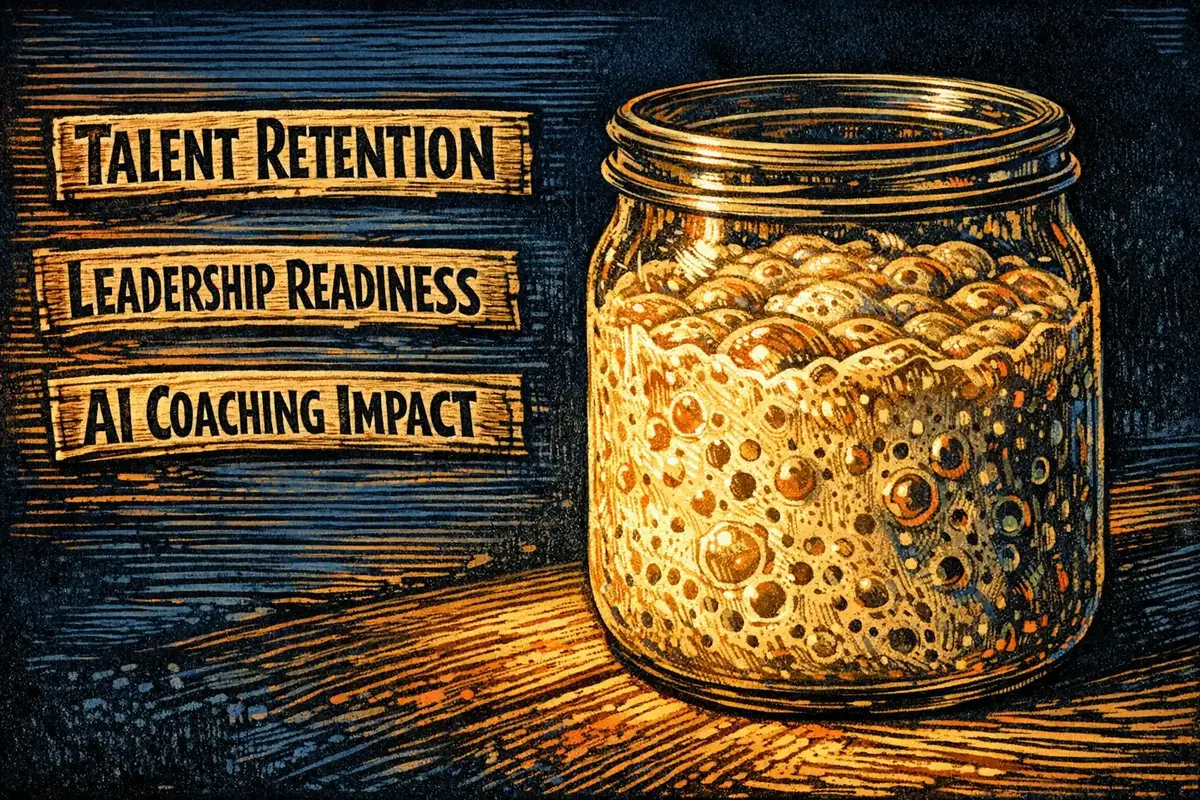
To get beyond surface-level reporting, we need to focus on the right metrics. The most actionable KPIs for AI coaching in this context fall into three categories:
\n
- \n
- Talent Retention Metrics: Voluntary turnover rates, regrettable loss rates, and average tenure of high-potentials before and after coaching.
- Leadership Readiness Scores: Percentage of internal candidates ready for promotion, bench strength for critical roles, and readiness scores from leadership assessments.
- Engagement and Performance Indicators: Usage frequency, completion rates for coaching modules, and productivity gains.
\n
\n
\n
\n
Let’s break these down further.
\n
Talent Retention
\n
Most teams assume that coaching’s impact on retention is too indirect to measure. But research shows otherwise. For example, users of AI coaching tools report 2x higher engagement with development resources (Cloverleaf, 2026), which is strongly correlated with lower turnover. By tracking voluntary turnover rates among coached vs. non-coached cohorts, organizations can quantify the direct effect of AI coaching on retention.
\n
Leadership Readiness
\n
Leadership readiness is often treated as a “soft” outcome—difficult to measure and even harder to attribute. But here’s a perspective shift: by using structured leadership assessments before and after coaching, and tracking internal promotion rates, companies can establish a clear link between coaching interventions and pipeline strength. This is especially powerful for high-potential programs, where readiness scores and time-to-promotion are critical metrics.
\n
Engagement and Productivity
\n
AI-assisted learning can lead to a 44% increase in productivity (Articulate, 2025). That’s not just a nice-to-have—it’s a measurable business outcome. Tracking engagement with AI coaching tools (logins, session completions, feedback loops) provides leading indicators of program effectiveness. When combined with performance metrics, these data points help build a robust case for ROI.
\n
\n
How Do You Quantify the Impact of AI Coaching on Retention and Readiness?
\n
Let’s get practical. Measuring the ROI of AI coaching isn’t just about collecting more data—it’s about connecting the dots between coaching activities and business outcomes. Here’s a step-by-step framework you can use:
\n
- \n
- Establish Baselines: Before launching AI coaching, capture baseline data on turnover, promotion rates, leadership readiness scores, and engagement with existing development tools.
- Segment Your Population: Divide employees into coached and non-coached cohorts, ideally matching for role, tenure, and performance level.
- Track Leading Indicators: Monitor usage data, session frequency, and feedback scores in real time. Research shows that 86% of users report measurable performance improvement from AI coaching (Cloverleaf, 2026).
- Measure Lagging Outcomes: After 6–12 months, compare turnover rates, promotion rates, and leadership readiness scores between groups.
- Calculate ROI: Use the classic ROI formula:
ROI = (Net Benefit of Coaching / Cost of Coaching) x 100
For example, if AI coaching reduces regrettable turnover by 5 employees per year (with an average replacement cost of $50,000 per employee), that’s $250,000 saved. If the coaching program costs $50,000, the ROI is 400%.
\n
\n
\n
\n
\n
\n
\n
“Every $1 spent on leadership development programs results in an average of $7 back to the company.”
(SHRM, 2025)\n
\n
Most teams assume that ROI is only about cost savings. But when you factor in increased productivity, faster time-to-promotion, and stronger leadership pipelines, the true value of AI coaching becomes much more substantial.
\n
\n
What Frameworks and Tools Can You Use to Measure AI Coaching ROI?
\n
Several practical frameworks can help you move from theory to action:
\n
- \n
- Behavioral Change Tracking: Monitor micro-interactions (feedback given, goals set and achieved, peer recognition) within the AI coaching platform. These real-time data points are more predictive of long-term retention and readiness than annual survey results.
- Before/After Dashboards: Build executive dashboards that visualize changes in key metrics—turnover, promotion rates, engagement—over time, segmented by coaching participation.
- Attribution Analysis: Use statistical methods (like regression analysis) to isolate the impact of coaching from other factors. While this requires more advanced analytics, even simple cohort comparisons can reveal meaningful trends.
\n
\n
\n
\n
For organizations looking to dive deeper, integrating these frameworks with existing HRIS or performance systems streamlines data collection and reporting. If you’re interested in maximizing the impact of your coaching investments, exploring best practices for measuring coaching effectiveness can provide actionable insights and templates.
\n
\n
\n
\n
How Does AI Coaching Compare to Traditional Coaching in Measurable Outcomes?
\n
It’s tempting to assume that AI coaching is just a “cheaper version” of traditional coaching, but the reality is more nuanced. While both approaches aim to develop talent and build leadership capacity, AI coaching excels in a few key areas:
\n
- \n
- Scalability: AI coaching can reach every employee, not just a select few high-potentials.
- Consistency: Guidance is standardized, reducing variability in coaching quality.
- Data Collection: Every interaction is logged and analyzed, enabling continuous improvement and real-time reporting.
\n
\n
\n
\n
Interestingly, 2x higher engagement with development tools is reported by AI coaching users compared to traditional approaches (Cloverleaf, 2026). This means organizations can track not only who is participating, but also how coaching is influencing day-to-day behaviors.
\n
However, the most overlooked advantage is the ability to link micro-learning and just-in-time coaching to long-term retention and leadership outcomes. Most teams assume that only in-person coaching can drive deep behavioral change. But evidence suggests that AI-powered, in-the-flow-of-work coaching creates more frequent touchpoints and reinforces learning over time—leading to measurable improvements in both retention and leadership readiness.
\n
If you’re exploring how AI coaching can enhance talent retention and leadership readiness, it’s worth considering how these unique attributes translate into business value.
\n
\n
What Are the Common Pitfalls and Misconceptions in Measuring AI Coaching ROI?
\n
Let’s address a few myths that often derail ROI measurement efforts:
\n
- \n
- Myth 1: ROI Is Only About Cost Savings
While reducing turnover and external coaching spend are important, the true ROI of AI coaching lies in building a stronger leadership pipeline and increasing organizational agility. Most teams overlook the long-term value of internal promotions and succession planning. - Myth 2: AI Coaching Outcomes Are Too “Soft” to Measure
In reality, 86% of users report measurable performance improvement from AI coaching (Cloverleaf, 2026). By tracking promotion rates, readiness scores, and engagement metrics, organizations can translate “soft” outcomes into hard data. - Myth 3: Annual Surveys Are Sufficient
Annual or quarterly surveys capture only a snapshot in time. Real-time behavioral data—such as coaching session frequency, feedback loops, and goal achievement—offers a much richer, more actionable view of progress.
\n
\n
\n
\n
The implication? To truly measure the impact of AI coaching, organizations need to combine both leading (engagement, behavior change) and lagging (retention, promotion) indicators. This dual approach not only builds a stronger business case but also supports continuous improvement.
\n
\n
How Can You Attribute Retention or Promotion Outcomes Specifically to AI Coaching?
\n
Attribution is one of the thorniest challenges in HR analytics. After all, many factors influence whether a high-potential employee stays or leaves, or whether someone is ready for promotion. So, how can we isolate the effect of AI coaching?
\n
Here’s a practical approach:
\n
- \n
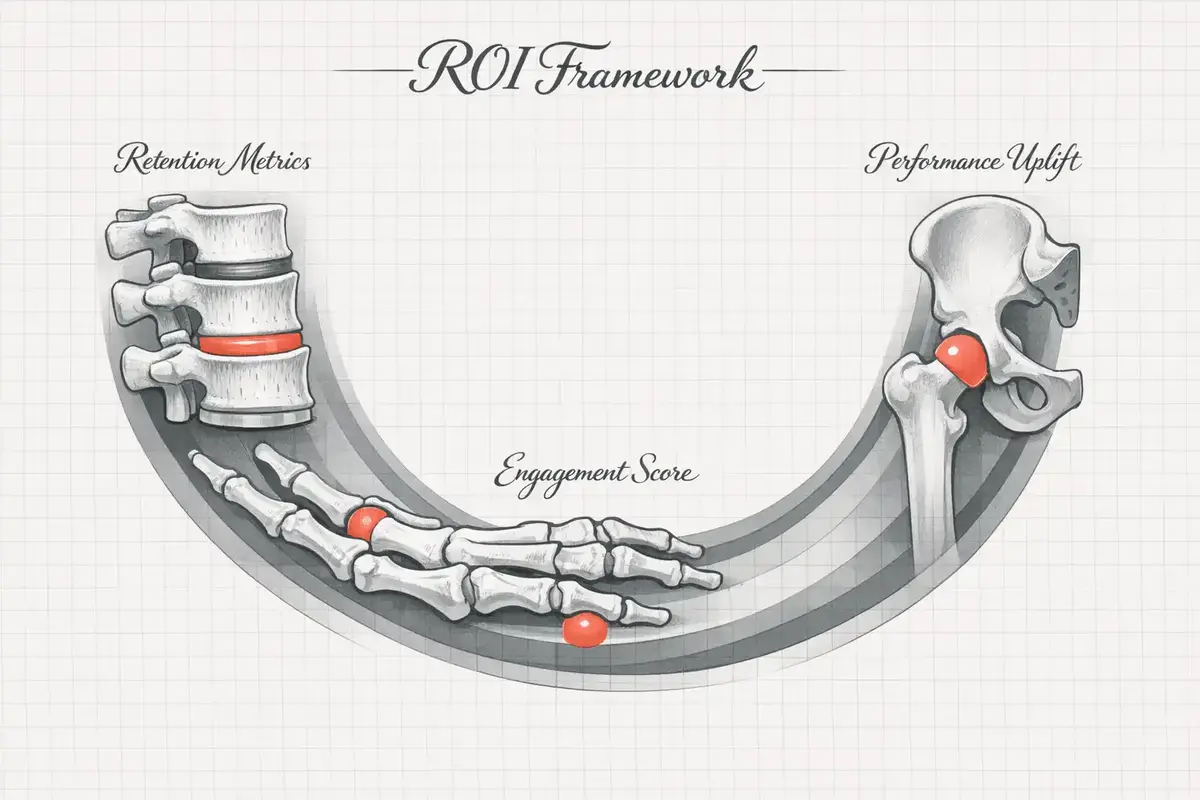
- Cohort Analysis: Compare outcomes for coached vs. non-coached groups, controlling for variables like role, tenure, and performance history.
- Time Series Tracking: Monitor changes in key metrics before and after the introduction of AI coaching, using rolling averages to smooth out anomalies.
- Regression Analysis: For advanced teams, statistical models can help isolate the impact of coaching by accounting for other variables (e.g., compensation changes, manager turnover).
\n
\n
\n
\n
Most organizations find that a combination of these methods—supported by transparent data collection and regular reporting—provides the most credible attribution. Drawing on TII’s two-decade integral methodology, some platforms now embed these analytics directly into their dashboards, making it easier for HR and business leaders to track impact in real time.
\n
\n
\n
\n
How Do You Integrate AI Coaching KPIs with Existing HRIS or Performance Systems?
\n
Integration is where many organizations hit a wall. You might have robust data from your AI coaching platform, but if it lives in a silo—separate from your HRIS or performance management system—it’s difficult to connect coaching activities to broader business outcomes.
\n
The solution? Prioritize platforms and processes that support seamless data integration. This means:
\n
- \n
- Exporting coaching engagement and outcome data in standardized formats (CSV, API, etc.)
- Mapping coaching KPIs to existing HR metrics (e.g., linking coaching session data to turnover or promotion records)
- Building executive dashboards that pull from multiple sources, providing a unified view of talent development impact
\n
\n
\n
\n
If you’re looking for detailed guidance on integrating AI coaching with HRIS or performance systems, there are best practices and frameworks available to help you connect the dots and tell a compelling ROI story.
\n
\n
What Are the Most Effective Ways to Create Continuous Feedback Loops for Sustained Improvement?
\n
Most teams assume that once a coaching program is launched, the hard part is over. But research and experience suggest that the real value comes from continuous measurement and iteration. Here’s how to create feedback loops that drive ongoing improvement:
\n
- \n
- Real-Time Analytics: Use dashboards to monitor engagement, goal progress, and feedback in the flow of work.
- Quarterly Reviews: Schedule regular check-ins to review KPIs, identify trends, and adjust coaching strategies as needed.
- Pulse Surveys: Supplement behavioral data with brief, targeted surveys to capture employee sentiment and perceived value.
- Iterative Goal Setting: Encourage employees to set, review, and update development goals within the AI coaching platform.
\n
\n
\n
\n
\n
By embedding these feedback loops into your talent development processes, you not only maximize ROI but also foster a culture of continuous learning and improvement.
\n
\n
\n
\n
How Do You Build a Business Case for AI Coaching Investments?
\n
Building a compelling business case for AI coaching starts with aligning your measurement strategy to the outcomes that matter most to executives—retention, leadership pipeline strength, and productivity. Here’s a simple checklist:
\n
- \n
- Define Success: What are the specific business problems you want to solve (e.g., reduce regrettable turnover, accelerate promotion of high-potentials)?
- Identify KPIs: Choose metrics that directly link coaching activities to business outcomes (see above).
- Gather Baseline Data: Document current state metrics before launching the program.
- Project Impact: Use industry benchmarks and pilot data to estimate the potential ROI.
- Communicate Results: Build dashboards and executive summaries that translate data into actionable insights.
\n
\n
\n
\n
\n
\n
If you’re customizing your AI coaching business case for different departments or business units, consider tailoring KPIs and reporting formats to reflect their unique goals and challenges.
\n
\n
FAQ: Measuring the ROI of AI Coaching in Talent Retention and Leadership Readiness Metrics
\n
What are the most important KPIs for measuring AI coaching ROI?
\n
The most critical KPIs include voluntary turnover rates, leadership readiness scores, promotion rates, engagement with coaching tools, and productivity gains. Tracking these metrics before and after implementing AI coaching helps quantify its impact on talent retention and leadership pipeline strength.
\n
How can I attribute retention improvements specifically to AI coaching?
\n
Attribution requires comparing coached and non-coached cohorts, controlling for factors like role and tenure. Using time series analysis and, where possible, regression models helps isolate the effect of AI coaching from other variables influencing retention.
\n
How does AI coaching impact leadership readiness compared to traditional coaching?
\n
AI coaching provides scalable, consistent, and data-rich interventions, enabling more frequent measurement and feedback. While traditional coaching offers depth, AI coaching excels at reinforcing behaviors and tracking readiness metrics across larger populations, making it especially effective for high-potential programs.
\n
What’s the best way to integrate AI coaching data with our HRIS?
\n
Choose AI coaching platforms that support data export and integration via APIs or standardized formats. Map coaching KPIs to existing HRIS fields, and build dashboards that combine coaching, retention, and promotion data for a unified view of talent development impact.
\n
How often should we review and report on AI coaching ROI?
\n
Quarterly reviews are a best practice for most organizations. Real-time dashboards and monthly pulse checks can supplement these reviews, ensuring you catch trends early and adjust strategies as needed.
\n
Are there industry benchmarks for AI coaching ROI?
\n
While benchmarks vary by sector, research shows that every $1 spent on leadership development yields an average of $7 in return (SHRM, 2025). AI coaching users also report 2x higher engagement and measurable performance improvements.
\n
What are common mistakes to avoid when measuring AI coaching ROI?
\n
Avoid relying solely on satisfaction surveys or usage data. Instead, combine leading indicators (engagement, behavior change) with lagging outcomes (retention, promotion) and ensure data is integrated with broader HR systems for a complete view of impact.
\n
\n
Continue Your Leadership Journey
\n
Measuring the ROI of AI coaching in talent retention and leadership readiness isn’t just about justifying spend—it’s about building a culture where data-driven insights drive smarter decisions, stronger pipelines, and more resilient organizations. As the market for leadership development continues to grow, those who master the art and science of measurement will lead the way in shaping the future of work.
\n’, ‘protected’: False}