

Managerial resistance to AI coaching stems from perceived threats to authority, concerns about job displacement, and skepticism about technology replacing human judgment—and is best overcome through transparent communication, pilot successes, and positioning AI as a tool that amplifies rather than replaces managerial capability. McKinsey analysis shows that 65% of AI adoption failures in enterprise organizations are due to change management issues, not technical problems. This guide provides change leaders and HR professionals with proven frameworks for diagnosis, stakeholder engagement, and scaled rollout—transforming skeptics into early adopters. A PwC study found that AI could contribute up to $15.7 trillion to the global economy by 2030, making organizational resistance to AI adoption increasingly costly.
Managerial resistance is the most persistent obstacle to successful AI coaching adoption in large organizations. While leaders may approve ambitious digital transformation projects, middle and senior managers often worry about losing influence, relevance, or control. This resistance isn’t just a minor hurdle—it’s the single biggest reason AI coaching programs fail to scale. According to DDI World research, only 14% of CEOs believe they have the leadership talent needed to drive growth—making AI-enhanced coaching not a luxury but a strategic imperative.
52% of workers are concerned about how workplaces will use AI (Pew Research, 2025).
This anxiety isn’t limited to frontline staff. Managers, who are expected to lead by example, often feel the most pressure to “get it right” and the most exposed if things go wrong. When the stakes are high and the path is unclear, resistance becomes a rational—if limiting—response.
Most teams assume that resistance is simply a matter of “not understanding the tech.” But research consistently demonstrates that the real friction comes from fears about job security, loss of authority, and uncertainty about how AI coaching will impact established workflows and relationships. This means that technical training alone won’t solve the problem; what’s needed is a holistic approach that addresses both psychological and structural barriers. The ICF/PwC Global Coaching Study reports that executive coaching delivers an average ROI of 529%, with AI-enhanced coaching platforms showing even greater scalability across organizations.
What Causes Managerial Resistance to AI Coaching?
Let’s break down the roots of resistance into two main categories: psychological and structural.
Psychological Barriers
- Fear of Obsolescence: Managers may worry that AI coaching will replace their judgment, making their roles less valuable.
- Loss of Control: The idea of an algorithm “coaching” their teams can feel like a threat to their authority.
- Overwhelm and Change Fatigue: With 33% of workers already feeling overwhelmed by potential changes from AI (Pew Research, 2025), managers are not immune to this fatigue.
- Skepticism of Effectiveness: Many managers have seen digital initiatives come and go, leaving them wary of “the next big thing.”
Structural Barriers
- Incentive Misalignment: If managers are measured on traditional KPIs, they may see AI coaching as a distraction rather than a driver of success.
- Lack of Stakeholder Engagement: When managers aren’t involved early, they feel “done to” rather than “part of” the change.
- Cultural Norms: In organizations where hierarchy and tradition are prized, any change—especially one as disruptive as AI coaching—can feel like a challenge to the status quo.
Here’s the thing: most organizations try to overcome resistance with more information or by mandating participation. But research shows that companies involving stakeholders early in AI adoption succeed 2.5 times more often (Rotman School of Management, 2024). This means that engagement and co-creation are far more effective than top-down directives.
Is AI Coaching a Threat to Managers’ Roles?
It’s a common fear: “If AI can coach my team, what’s left for me to do?” This anxiety is understandable, but it’s often based on a zero-sum view of technology. In reality, AI coaching is designed to augment, not replace, the human elements of leadership.
Let’s compare two perspectives:
- AI as Threat: Managers see AI as a competitor, undermining their expertise and authority.
- AI as Partner: Managers recognize that AI coaching can handle routine feedback, skills tracking, and personalized learning, freeing them to focus on strategic leadership and relationship-building.
Most managers assume that adopting AI coaching will diminish their influence. But industry evidence suggests that those who embrace AI as a partner actually expand their impact—becoming facilitators of growth rather than bottlenecks for development.
The implication? The conversation needs to shift from “Will AI replace me?” to “How can AI make me a better leader?” This reframing is essential for overcoming resistance and building a supportive coaching culture.
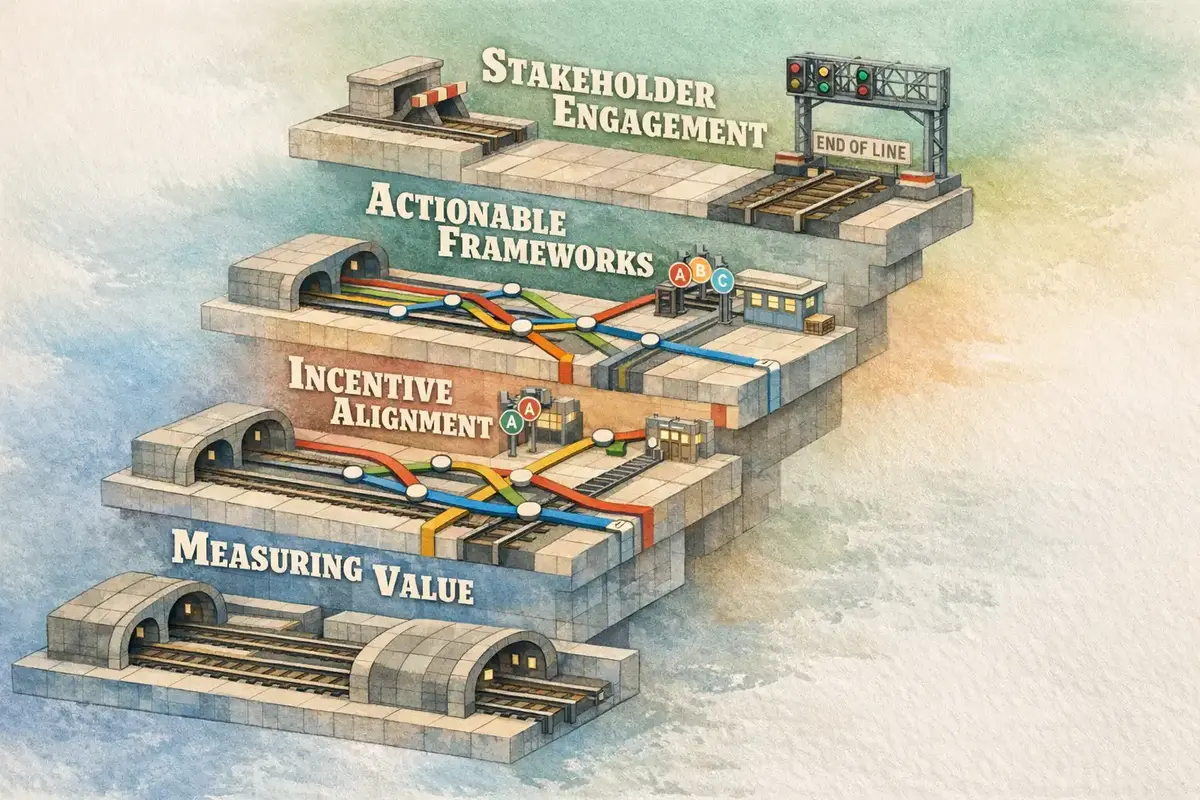
What Are Proven Strategies to Gain Buy-In from Skeptical Leaders?
Winning over skeptical managers requires more than a slick demo or a memo from the C-suite. It calls for a multi-layered approach—one that combines communication, incentives, and visible results.
1. Stakeholder Engagement from Day One
Invite managers to co-design the AI coaching rollout. Ask for their input on goals, metrics, and pilot design. When people help shape the change, they’re far more likely to support it.
- Companies that involve stakeholders early in AI adoption succeed 2.5 times more often (Rotman School of Management, 2024).
- Use workshops, focus groups, and pilot teams to surface concerns and build ownership.
2. Align Incentives with Desired Behaviors
Here’s a surprising insight: most organizations focus on communication and training, but overlook the power of creative incentives. For example, a U.S. insurer overcame broker resistance to AI by temporarily increasing commissions for sales in AI-recommended areas—leading to both increased revenue and productivity (Rotman School of Management, 2024).
- Consider temporary bonuses, public recognition, or pilot project rewards for managers who champion AI coaching.
- Align performance reviews and KPIs to reflect not just short-term results, but engagement with new coaching tools.
3. Transparent Communication and Addressing Concerns
Most teams assume that more data will convince skeptics. But research consistently shows that addressing emotional concerns—fear of loss, anxiety about change, desire for recognition—is just as important as sharing facts.
- Use clear, jargon-free messaging about what AI coaching is (and isn’t).
- Share real examples of how AI coaching augments, rather than replaces, managerial skills.
- Provide scripts and templates for difficult conversations (see more on communication strategies AI coaching).
4. Celebrate Small Wins and Build a Culture of Experimentation
Don’t wait for a full-scale rollout to recognize progress. Celebrate early adopters, share success stories, and encourage experimentation.
- Highlight quick wins from pilot teams.
- Create forums for managers to share lessons learned and best practices.
How Do You Communicate the Value of AI Coaching?
Communicating value is about more than listing features or promising ROI. It’s about connecting AI coaching to the goals and pain points that matter most to managers.
The Manager’s Journey: From Skeptic to Advocate
Imagine mapping out the typical journey a manager takes—from initial skepticism through to active advocacy. At each stage, different messages and interventions are needed:
- Awareness: “What is AI coaching, and why should I care?”
- Understanding: “How will this impact my team and my role?”
- Trial: “Can I see it in action—on my terms?”
- Adoption: “How do I measure success and share results?”
- Advocacy: “How can I help others succeed with AI coaching?”
By tailoring communication to each stage, you can move managers from passive resistance to active support.
Scripts for Difficult Conversations
Here are examples of phrases and scripts that address common objections:
- “AI coaching isn’t here to replace your expertise—it’s here to give you more time for strategic leadership.”
- “Let’s pilot this with your team and measure the results together. If it doesn’t deliver value, we’ll adjust.”
- “We’re recognizing managers who help their teams grow using new tools. Your leadership sets the tone.”
For more on effective communication strategies AI coaching, see our detailed guide.
What Change Management Frameworks Work Best for AI Coaching Adoption?
Adopting AI coaching is as much about change management as it is about technology. Drawing on TII’s two-decade integral methodology, successful organizations use frameworks that address individual mindset, team dynamics, and organizational culture—all at once.
Key Elements of Effective Change Management for AI Coaching
- Leadership Alignment: Secure visible support from senior leaders, but empower middle managers to lead the change locally.
- Stakeholder Mapping: Identify champions, skeptics, and fence-sitters early. Tailor engagement strategies to each group.
- Phased Pilots: Start small, measure impact, and scale up based on real data and feedback.
- Continuous Feedback Loops: Create regular check-ins to surface concerns and adjust tactics in real time.
For expert guidance on change management AI, explore resources that blend proven frameworks with practical tools.
Common Mistakes to Avoid
- Mandating Participation Without Dialogue: This breeds resentment and passive resistance.
- Ignoring Incentives: If managers don’t see “what’s in it for me,” adoption will lag.
- Skipping Measurement: Without clear metrics, it’s impossible to prove value or course-correct.
How Do You Demonstrate the ROI of AI Coaching Initiatives?
One of the fastest ways to overcome skepticism is to show measurable value. But most organizations focus only on productivity gains, missing the broader impact on culture, retention, and engagement.
Over one-half (54%) of organizations use AI for training frequently, while 14% have not yet incorporated AI into L&D tasks and 15% rarely do so (Training Industry, 2025).
Building a Compelling Business Case
- Productivity Metrics: Track improvements in feedback cycles, goal attainment, and team performance.
- Cultural Metrics: Measure increases in coaching conversations, peer learning, and psychological safety.
- Retention Metrics: Monitor changes in turnover rates and internal mobility.
For a deeper dive into AI coaching ROI, use frameworks that connect coaching outcomes to business KPIs.
Beyond the Numbers: The Intangible Benefits
Most leaders assume that ROI is all about dollars and cents. But research consistently shows that organizations with a strong AI coaching culture enjoy higher engagement, faster innovation, and greater adaptability. This means that the true value of AI coaching often extends well beyond what’s captured in a spreadsheet.
How Do You Sustain Momentum After the Initial Pilot?
Launching a successful pilot is only half the battle. The real challenge is sustaining momentum and scaling the initiative across the organization.
Strategies for Sustained Adoption
- Create Internal Champions: Identify managers who have seen success and empower them to mentor others.
- Institutionalize Feedback: Regularly solicit input from managers and teams to refine the coaching approach.
- Refresh Incentives: As the program matures, update recognition and rewards to keep engagement high.
- Integrate with Existing Systems: Embed AI coaching into performance management, L&D, and talent processes.
Avoiding the Pitfalls of Scaling Too Quickly
Most organizations assume that a successful pilot guarantees enterprise-wide success. But scaling too fast—without addressing local context, resources, or readiness—can backfire. Sustainable adoption depends on pacing growth, listening to feedback, and adapting to each team’s unique needs.
FAQ: Overcoming Managerial Resistance to AI Coaching
What are the first signs of managerial resistance to AI coaching?
Early signs include managers questioning the credibility of AI coaching, delaying pilot participation, or expressing concerns about losing control over team development. Subtle resistance can also show up as low engagement in training sessions or passive compliance without genuine buy-in.
How can we measure if AI coaching is actually delivering value?
Start by tracking both quantitative and qualitative metrics: improvements in team performance, frequency of coaching conversations, employee engagement scores, and retention rates. Combine these with manager and employee feedback to capture the full impact of your initiative.
Should we mandate AI coaching participation for all managers?
Mandating participation often increases resistance. Instead, focus on early engagement, clear communication, and pilot programs that allow managers to experience value firsthand. Voluntary participation, supported by incentives and recognition, tends to yield better long-term results.
What’s the best way to address fears about job security?
Acknowledge these concerns openly and reframe AI coaching as a tool for amplifying managerial impact, not replacing it. Highlight examples where managers have used AI coaching to free up time for strategic leadership and relationship-building.
How do we handle technical skeptics on the management team?
Technical skeptics respond best to transparent data, hands-on demos, and opportunities to test the system themselves. Involve them early in pilot design and encourage them to share feedback and suggestions for improvement.
Can incentive alignment really overcome deep-seated resistance?
Yes. Real-world examples show that temporary bonuses, recognition, and pilot project rewards can shift even the most entrenched skeptics. The key is to align incentives with the behaviors you want to see, and to phase out incentives as new habits take hold.
How do we keep momentum going after the initial excitement fades?
Sustaining momentum requires ongoing communication, regular recognition of champions, and continuous feedback loops. Refresh incentives, share new success stories, and integrate AI coaching into core processes to ensure it becomes part of the organizational fabric.
Continue Your Leadership Journey
Overcoming managerial resistance to AI coaching isn’t about forcing change—it’s about building trust, aligning incentives, and making the benefits tangible at every level of the organization. By engaging stakeholders early, communicating transparently, and demonstrating measurable value, you can transform skepticism into advocacy and lay the foundation for a thriving AI coaching culture. The journey from resistance to results is rarely linear, but with the right strategies, it’s well within reach.