
If you’re leading an L&D team and juggling multiple learning platforms, you’ve probably noticed the friction that comes with disconnected systems. Employees get lost between the LMS, the LXP, and now—AI coaching tools—all while leaders struggle to connect the dots for meaningful insights. The result? Fragmented learning journeys, missed opportunities for real-time development, and a sense that your organization’s investment in digital learning isn’t delivering its full potential. Bersin by Deloitte found that organizations investing in coaching are 5.7x more likely to be high-performing, demonstrating the direct link between coaching culture and business outcomes.
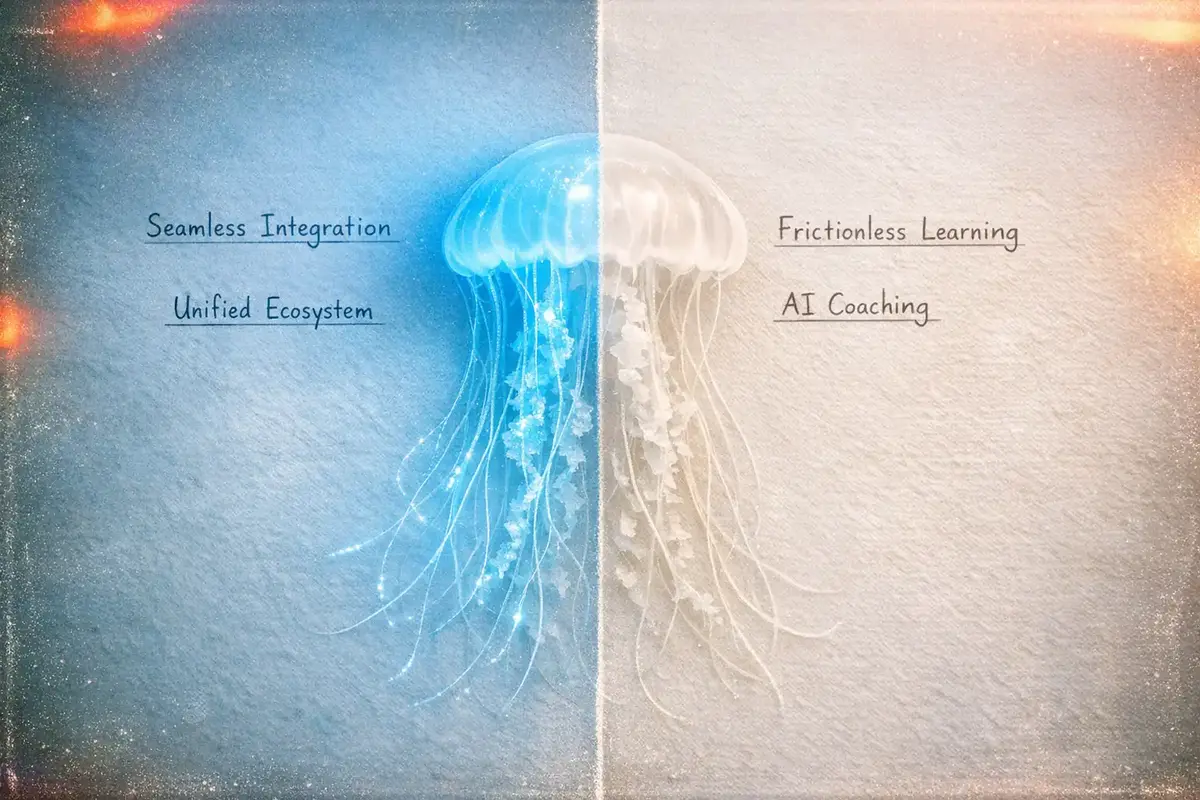
Seamless integration of AI coaching with existing Learning Management Systems (LMS) and Learning Experience Platforms (LXP) is the process of connecting these tools so that coaching, training, and analytics flow together without barriers. For L&D, HR tech, and digital transformation professionals, mastering this integration means transforming scattered learning activities into a unified, data-rich ecosystem. By the end of this guide, you’ll understand the technical standards, strategic frameworks, and practical steps to create a frictionless learning environment that supports both organizational goals and individual growth. The ICF Global Coaching Study values the global coaching industry at $4.564 billion, reflecting the growing recognition of coaching as a strategic leadership development tool.
Why Does Seamless Integration Matter for Modern L&D?
The landscape of learning technology is evolving at a breakneck pace. Most teams assume that simply adding new tools—like AI coaching—on top of their LMS or LXP will automatically drive better results. But research consistently demonstrates that without integration, these investments often lead to more silos, not more synergy.
Let’s look at the stakes:
- Continuous learning is now non-negotiable: 91% of L&D professionals agree that ongoing development is more critical than ever for career success (LinkedIn Learning, 2024).
- Skills are changing faster than ever: Skills for the same occupation shifted by about 25% between 2015 and 2021, and by 2025, the skills needed for the average job will have changed by at least 40% (World Economic Forum, 2025).
- AI is reshaping learning platforms: 62% of LXPs now use AI, with over half offering personalized learning and nearly half supporting microlearning ([Business Research Insights, 2025]).
Here’s the thing: when AI coaching, LMS, and LXP platforms operate in isolation, organizations miss out on the compounding benefits of unified data, personalized development, and strategic insights. Integration isn’t just a technical upgrade—it’s a strategic necessity for organizations that want to keep pace with workforce transformation.
LMS, LXP, and AI Coaching: What’s the Difference, and Why Integrate?
Before we dive into the “how,” let’s clarify the “what.” Most teams have a basic sense of these terms, but the lines are blurring as platforms evolve.
LMS (Learning Management System): Traditionally, the LMS is the backbone of compliance, course delivery, and tracking. It’s structured, admin-driven, and focused on managing mandatory learning.
LXP (Learning Experience Platform): The LXP is designed for learner-driven discovery, social learning, and personalized content curation. It’s more flexible, adaptive, and often integrates AI to recommend learning paths.
AI Coaching: Unlike static courses, AI coaching provides personalized, real-time feedback, nudges, and reflection—drawing on accredited coaching methodologies and large-scale data to support individual growth.
Why integrate? Because each platform brings unique strengths, but only together can they deliver continuous, adaptive, and actionable development. Imagine a scenario where an employee completes a course in the LMS, receives tailored coaching nudges in the flow of work, and sees recommended learning experiences in the LXP—all tracked and analyzed in a single dashboard.
How Does Integration Actually Work? (Technical Standards Demystified)
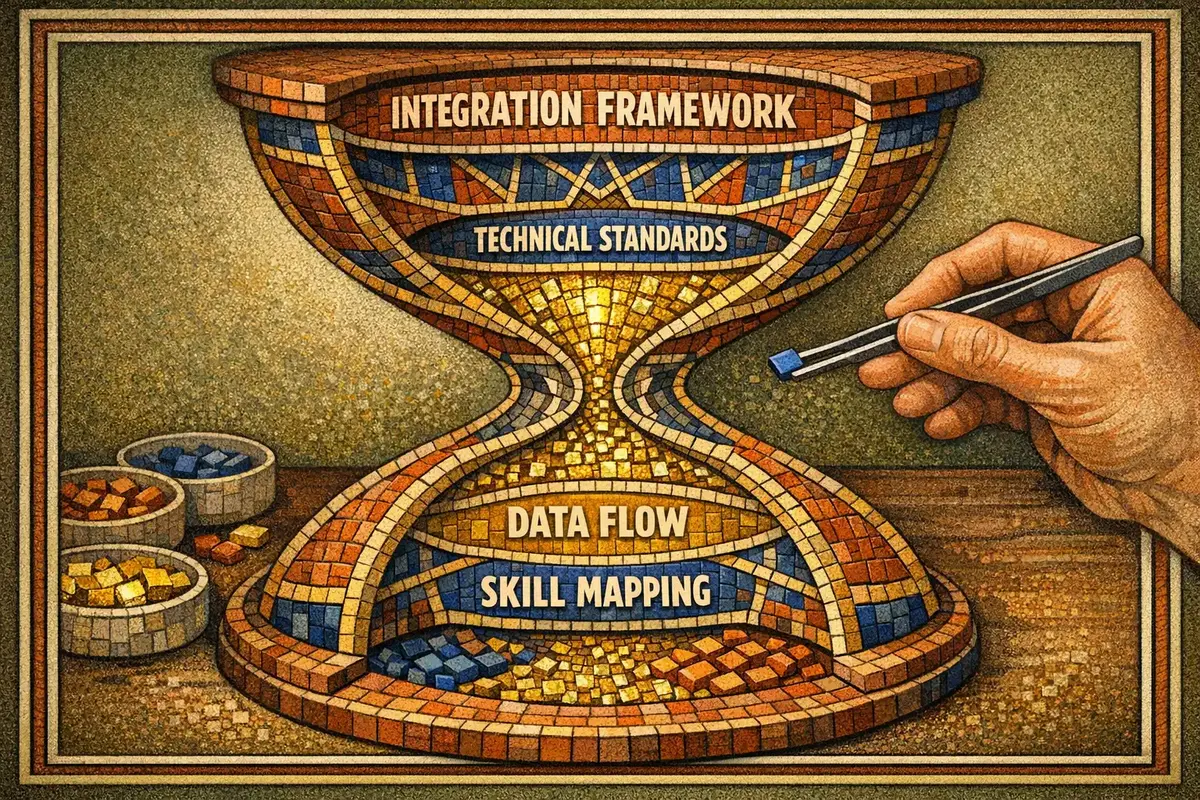
Most organizations assume integration is a “plug-and-play” affair—just connect the API and you’re done. But the reality is more nuanced. Let’s break down the technical backbone in plain English:
1. APIs (Application Programming Interfaces)
APIs are the digital bridges that allow systems to exchange data—think of them as translators between your LMS, LXP, and AI coaching platforms. Modern APIs support real-time data sharing: progress, completion, feedback, and even skill assessments.
2. LTI (Learning Tools Interoperability)
LTI is a standard that lets you embed external tools (like AI coaching apps) directly within your LMS or LXP. This means learners can access coaching without leaving their primary learning environment.
3. xAPI (Experience API, aka Tin Can)
xAPI tracks learning experiences across platforms—not just formal courses but also informal activities, coaching conversations, and on-the-job learning. This is essential for capturing the full scope of development.
4. SSO (Single Sign-On)
SSO ensures users have one identity across all platforms, making the experience seamless and reducing friction for learners and admins alike.
“Digital learning platforms boost retention rates from 8-10% up to 25-60% when integrated into daily workflows.” (Continu, 2025)
What’s often overlooked is the need for skill taxonomy harmonization—mapping competencies and learning objectives across systems so analytics and recommendations are meaningful. Without this, you end up with fragmented reports and learners who can’t see their progress holistically.
The Integration Maturity Model: From Siloed to Fully Harmonized
Let’s challenge a common assumption: most organizations believe that “integration” is a binary state—you’re either connected or you’re not. In reality, integration maturity is a spectrum. Here’s a practical framework to self-assess where you stand:
Stage 1: Siloed
- Each platform (LMS, LXP, AI coaching) operates independently
- Data is not shared; learners must navigate multiple logins and interfaces
Stage 2: Connected
- Basic API or LTI links allow for single sign-on and some data exchange
- Progress and completion data may sync, but skill frameworks remain separate
Stage 3: Aligned
- Skill taxonomies are mapped across platforms
- Coaching nudges, learning recommendations, and analytics are coordinated
Stage 4: Fully Harmonized
- Unified dashboards provide a 360-degree view of learning and development
- AI coaching insights directly inform LXP recommendations and LMS compliance tracking
- Skill gaps are identified early, with targeted development pathways for each employee
“Organizations implementing comprehensive skills assessment and development programs can identify skill gaps early and provide targeted development pathways aligning with both individual career goals and organizational needs.” (SkillPanel, 2026)
Where does your organization fall on this spectrum? Most are somewhere between Connected and Aligned, but reaching Full Harmonization unlocks the true value of your learning investments.
Skill Taxonomy Harmonization: The Hidden Engine of Integration
Most L&D leaders focus on connecting systems, but overlook the critical step of aligning skill frameworks. Here’s why this matters:
- Skills for the same occupation changed by about 25% between 2015 and 2021; by 2025, skills needed for the average job will have changed by at least 40%. (World Economic Forum, 2025)
- AI-assisted skill taxonomy within LXPs led to a 20% increase in user adoption of upskilling programs (Bridge, 2025).
When your LMS, LXP, and AI coaching platforms speak a common skills language, you can:
- Track progress against organizational competencies, not just course completions
- Surface targeted learning and coaching recommendations
- Enable managers to see real-time development at the individual and team level
Aligning taxonomies isn’t just a technical task—it requires collaboration between L&D, HR, and IT to define core skills, map them across platforms, and update them as roles evolve.
What Are the Benefits and Challenges of Integration?
Benefits
- Unified learner experience: Employees access coaching, courses, and curated content in one ecosystem, reducing confusion and increasing engagement.
- Data-driven insights: Integrated analytics reveal not just what people are learning, but how it’s impacting performance and business outcomes.
- Cost savings: Companies implementing LXPs save up to 60% on training costs (Continu, 2025).
- Personalization at scale: AI coaching and LXP recommendations adapt in real time, supporting continuous learning for all roles and levels.
Challenges
- Technical complexity: Mapping APIs, managing data privacy, and ensuring interoperability require careful planning.
- Change management: Integration is as much about people as technology—leaders must communicate the “why” and support adoption.
- Legacy systems: Older platforms may lack modern integration standards, requiring workarounds or phased upgrades.
Most organizations underestimate the ongoing effort required for lifecycle management—maintaining integrations, updating taxonomies, and optimizing workflows as needs evolve.
The “Invisible Coach” Paradigm: Embedding AI Coaching in the Flow of Work
Most people think of AI coaching as a chatbot or an app you visit when you need advice. But as integration matures, AI coaching becomes an invisible layer—embedded into daily workflows, nudging learners at critical moments, and surfacing insights where they’re needed most.
For example, after a leadership module in the LMS, an employee might receive a real-time coaching prompt to reflect on how they’ll apply a new skill in their next team meeting. Or, when a skill gap is detected in the LXP, the system can trigger a personalized coaching journey aligned with both the individual’s goals and organizational priorities.
This embedded approach, grounded in the Integral Model’s multi-level framework, ensures that learning isn’t just an event, but a continuous, adaptive process that’s always “on”—supporting growth in the flow of work.
Measuring ROI: Beyond Engagement Metrics
It’s tempting to focus on engagement—logins, completions, time spent—as the primary measure of success. But let’s challenge that assumption. True ROI comes from connecting learning and coaching data to business outcomes: sales growth, retention, innovation, and leadership pipeline strength.
- Companies implementing LXPs save up to 60% on training costs (Continu, 2025).
- Digital learning platforms can boost retention rates from 8-10% up to 25-60% (Continu, 2025).
To get there, organizations must:
- Define clear business KPIs before integration begins
- Map coaching and learning data to these KPIs
- Use integrated dashboards to track progress and adjust strategies in real time
For a deeper dive into measuring coaching effectiveness and maximizing ROI, it’s essential to move beyond surface-level metrics and focus on outcomes that matter to the business.
The Integration Checklist: Steps for a Frictionless Ecosystem
Ready to move from theory to action? Here’s a step-by-step integration checklist to guide your journey:
- Assess your current state: Map your existing platforms, integrations, and skill frameworks.
- Define your integration goals: What business outcomes are you targeting? What data needs to flow between systems?
- Select the right technical standards: Choose APIs, LTI, xAPI, and SSO based on your platforms’ capabilities.
- Harmonize skill taxonomies: Align competencies, learning objectives, and coaching frameworks across all systems.
- Pilot and iterate: Start with a small group or department, measure outcomes, and refine your approach.
- Plan for change management: Communicate the benefits, train users, and support adoption at every level.
- Monitor and optimize: Use integrated analytics to track progress, identify gaps, and continuously improve.
Remember, integration is not a one-time project—it’s an ongoing process that adapts as your organization and technology evolve.
Future-Proofing: What Should You Look for in Integration Partners and Platforms?
With the rapid pace of change in AI and learning technology, future-proofing your integration strategy is critical. Here’s what to consider:
- Adaptability to new standards: Choose platforms that support emerging protocols and are committed to ongoing updates.
- Data privacy and security: Ensure compliance with regulations and best practices for handling sensitive learning and coaching data.
- Scalability: Can your integration handle growth, new use cases, and additional languages or regions?
- Vendor support: Look for partners with a track record of successful integrations and a clear roadmap for future enhancements.
Drawing on TII’s two-decade integral methodology, successful organizations treat integration as a strategic capability—not just a technical project.
Common Myths About Integration—And the Reality
Let’s address a few misconceptions that often trip up even experienced teams:
-
Myth: “Integration is just about connecting APIs.”
-
Reality: True integration requires harmonizing skills, aligning analytics, and supporting change management—not just technical connections.
-
Myth: “AI coaching will replace L&D professionals.”
-
Reality: AI coaching augments human expertise, freeing up professionals to focus on high-value, strategic work.
-
Myth: “DIY integration is cheaper and faster.”
-
Reality: Hidden costs, technical debt, and maintenance challenges often make vendor-supported integration more sustainable in the long run.
FAQ: Seamless Integration—Connecting Enterprise AI Coaching with Existing L&D Platforms
What is the main difference between an LMS and an LXP?
An LMS is primarily designed for structured, compliance-driven learning—think assigned courses and tracking completions. An LXP, on the other hand, focuses on learner-driven discovery, personalized recommendations, and social learning. Integrating both allows organizations to balance mandatory training with adaptive, engaging experiences.
How does AI coaching fit into the L&D ecosystem?
AI coaching provides real-time, personalized feedback and development nudges that complement formal learning. When integrated with LMS and LXP platforms, it helps bridge the gap between knowledge acquisition and skill application, supporting continuous growth across the employee lifecycle.
What technical standards should we prioritize for integration?
Key standards include APIs for data exchange, LTI for embedding tools, xAPI for tracking diverse learning experiences, and SSO for unified user access. Prioritizing these ensures seamless data flow, user experience, and analytics across platforms.
How do we align skill taxonomies across systems?
Start by defining a core set of competencies relevant to your organization. Then, map these across your LMS, LXP, and AI coaching platforms. Regularly review and update taxonomies to reflect evolving roles and business needs, ensuring unified reporting and targeted development.
What are the biggest challenges in integrating AI coaching with LMS/LXP?
Technical complexity, data privacy concerns, and change management are common hurdles. Legacy systems may require custom solutions, and aligning skill frameworks demands cross-functional collaboration. Ongoing maintenance and optimization are also essential for long-term success.
How can we measure the ROI of integration?
Move beyond engagement metrics by linking learning and coaching data to business KPIs—such as retention, sales performance, or innovation rates. Use integrated dashboards to track progress and adjust strategies, ensuring your investment drives measurable outcomes.
Is integration a one-time project or an ongoing process?
Integration is an ongoing process. As technology, skills, and business needs evolve, regular updates, optimization, and stakeholder engagement are necessary to maintain a frictionless, high-impact learning ecosystem.
Closing Thoughts: Building a Frictionless, Data-Rich Learning Ecosystem
Seamless integration of AI coaching with LMS and LXP platforms is more than a technical challenge—it’s a strategic opportunity. By connecting the dots between learning, coaching, and analytics, organizations can unlock continuous learning, personalized development, and measurable business impact.
The future belongs to those who treat integration as a journey, not a destination—aligning people, processes, and technology to support growth at every level. As skills evolve and the pace of change accelerates, a unified, data-rich ecosystem isn’t just a competitive advantage—it’s essential for thriving in the new world of work.