
If you’ve ever tried to roll out a coaching program across a diverse team, you’ve probably noticed how the same message can land very differently depending on who’s listening. Some team members thrive on direct, structured feedback; others respond best to open-ended, reflective questions. This isn’t just a matter of personal taste—it’s about deep-seated cognitive and personality differences. When AI coaching systems ignore these distinctions, they risk sounding generic or even tone-deaf, undermining trust and engagement. But what if your AI coach could recognize these differences in real time and adapt its style to fit each individual’s unique way of thinking and communicating? That’s exactly where integral typologies come into play, enabling AI Coach System to deliver truly personalized coaching experiences that resonate on a deeper level. Brandon Hall Group research reveals that companies with strong coaching cultures are 130% more likely to achieve strong business results and significantly higher employee engagement.
What Are Integral Typologies and Why Do They Matter in AI Coaching?
Integral typologies refer to frameworks that map the diverse ways people process information, make decisions, and interact with the world. Unlike single-axis models (like introvert vs. extrovert), integral typologies—rooted in Integral Theory—consider multiple dimensions simultaneously: personality, values, cognitive styles, leadership approaches, and even states of consciousness. PwC estimates that AI could contribute up to $15.7 trillion to the global economy by 2030, with leadership development and coaching emerging as high-impact AI application areas.
Most teams assume that personalization in AI coaching means tweaking a few words or offering a choice of “friendly” or “formal” tone. But research shows that true resonance comes from aligning with the user’s underlying typology—how they think, learn, and relate. This means the AI must go beyond surface-level adjustments and actually adapt its approach based on a multidimensional understanding of the user.
The implication? When AI coaches are built on integral typologies, they can dynamically shift their communication style, feedback strategy, and even the structure of their sessions to match the user’s inherent preferences. This leads to higher engagement, deeper learning, and more sustainable behavior change.
How Do AI Coaches Detect and Adapt to Different Personality Types?
At the heart of typology-adaptive AI is the ability to detect or infer a user’s typology—often without explicit questionnaires. AI Coach System, drawing on TII’s two-decade integral methodology, leverages a combination of user inputs, interaction patterns, and language cues to build a working model of the user’s preferences.
For example, an AI coach might notice that a user consistently responds best to step-by-step instructions and values clear metrics. This could indicate a high-conscientiousness or “systematic” typology. In response, the AI shifts toward more structured, goal-oriented dialogue. Conversely, if a user prefers big-picture questions and resists rigid frameworks, the AI adapts by offering exploratory prompts and open-ended reflection.
Personality-adapted AI coaching increased user retention by 40% compared to non-adapted AI (p<0.01; n=250 users, 4 weeks) (ScienceDirect, 2023).
This isn’t just about personality quizzes. AI systems can infer typological patterns from subtle cues: how quickly someone responds, whether they ask for clarification, their choice of words, and even the emotional tone of their messages. Over time, these data points allow the AI to refine its approach, creating a feedback loop that gets smarter with every interaction.
For organizations, this means that typology adaptation AI can scale the kind of nuanced, individualized support that was once only possible with human coaches who had years to get to know their clients.
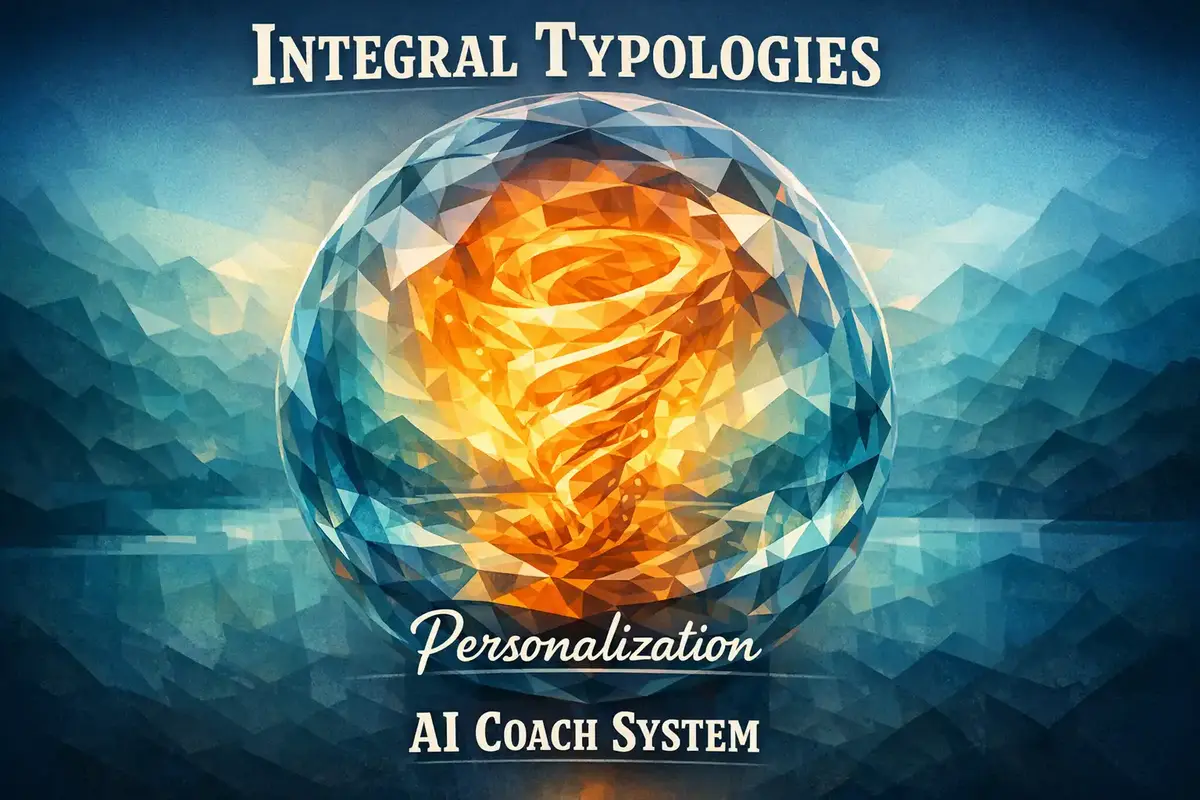
What’s the Difference Between “AI Personality” and True Typology-Based Adaptation?
It’s common to hear that an AI coach “has a personality”—maybe it’s upbeat, empathetic, or authoritative. But here’s the thing: a pre-programmed AI personality is static. It’s like having a coach who always uses the same tone, regardless of who’s in the room. That might make the AI feel more human, but it doesn’t guarantee relevance or impact.
True typology-driven adaptation means the AI’s style isn’t fixed—it’s responsive. The system analyzes each user’s communication patterns and shifts its approach accordingly. For instance, a user who values empathy and encouragement will experience a coach that leans into supportive language, while someone who prefers directness will get concise, actionable feedback.
AI coaches using empathy, humor, and personalization strategies achieved a pooled effect size of Hedges’ g = 0.45 for positive user evaluations and g = 0.49 for psychological outcomes (medium magnitude) (PubMed Central, 2025).
This distinction matters because most people assume that “personalized” AI is just about tone or word choice. But research consistently demonstrates that real personalization requires dynamic, ongoing adaptation rooted in a deep understanding of typological frameworks.
How Do Integral Quadrants, Levels, and Lines Translate Into AI Coach Logic?
Integral Theory’s core contribution is its multidimensional model of human experience—often visualized as quadrants (interior/exterior, individual/collective), levels (developmental stages), and lines (cognitive, emotional, interpersonal skills). In practice, this means that any coaching conversation can be mapped along these axes.
Most AI coaching frameworks rely on surface-level personality models like MBTI or Big Five. But integral typologies allow for richer mapping. For example, the AI can recognize if a user is operating primarily from a “systemic” worldview (focused on structures and processes) or an “individualist” perspective (centered on personal meaning and values). The coach then adapts not just its language, but the very structure of the session—prioritizing, say, systems thinking for one user and self-reflection for another.
In the AI Coach System, this is operationalized through algorithms that:
- Detect preferred communication modes (e.g., visual, verbal, kinesthetic)
- Adjust feedback loops based on developmental stage (e.g., directive for early-stage, facilitative for advanced)
- Shift between individual and team perspectives as needed
By grounding these adaptations in the Integral Model’s multi-level framework, the AI can deliver a coaching experience that feels uniquely tailored—because it is.
For a deeper dive on how these frameworks shape AI coach logic, see our resource on integral typologies in AI coaching frameworks.
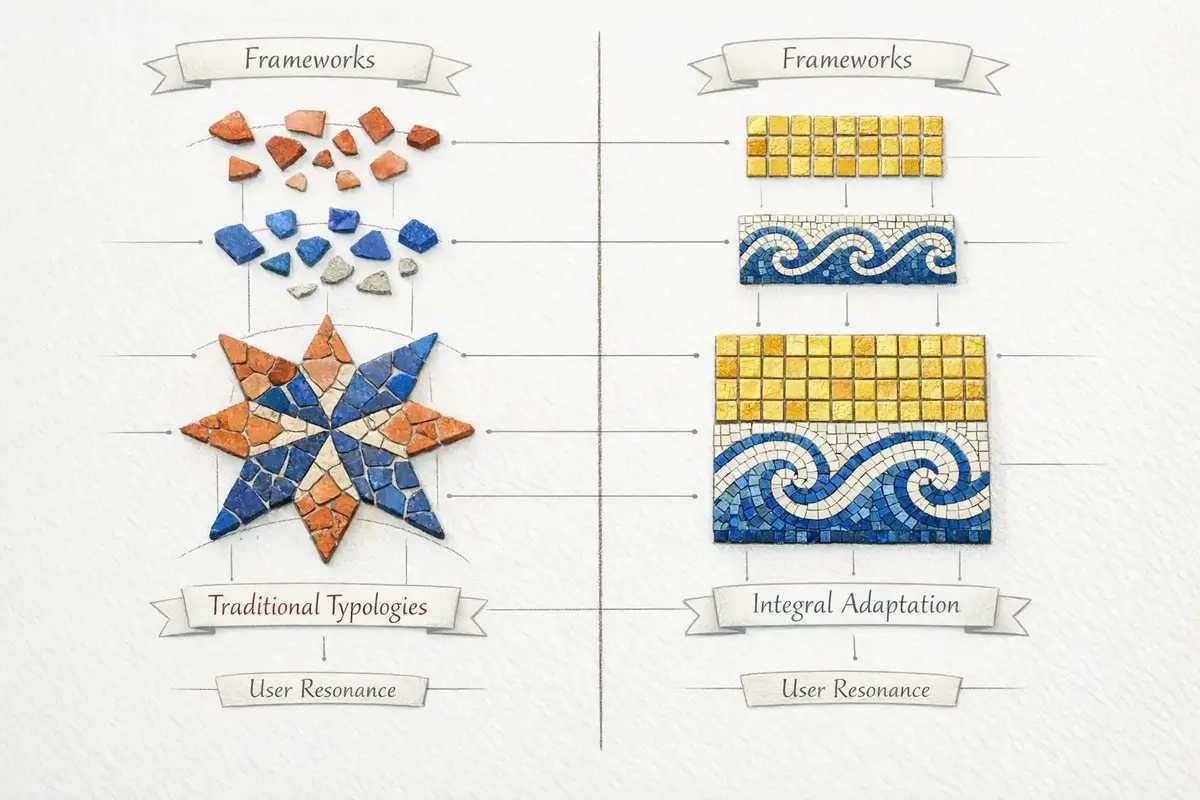
What Are the Measurable Benefits of Typology-Based Adaptation in AI Coaching?
The promise of typology-adaptive AI isn’t just theoretical. Empirical research demonstrates clear, measurable benefits when AI coaches tailor their approach to individual differences.
AI coaching systems that adapted dialogue to user personality traits led to a 22% reduction in depression scores (PHQ-9) and a satisfaction rating of 4.2/5 (vs. 3.1/5 for non-adapted) (ScienceDirect, 2023).
What does this mean for organizations? Higher engagement, better learning outcomes, and more sustainable behavior change. For individuals, it means coaching that feels relevant and motivating—increasing the likelihood that insights will translate into action.
Most teams assume that AI coaching is “good enough” if it delivers the same content to everyone. But the data shows otherwise: typology-adaptive AI not only boosts retention, but also drives real-world outcomes, from improved mental health to higher satisfaction and performance.
If you’re considering AI coaching personalization for your team, it’s worth asking: does the system truly adapt to different ways of thinking, or does it just change its tone? The difference can be transformative.
How Are Ethical Standards Integrated Into Typology-Driven AI Coaching?
Whenever AI systems adapt to individual differences, new ethical questions arise. How do we ensure that typology adaptation doesn’t reinforce stereotypes or invade privacy? What safeguards are in place to prevent misuse of sensitive data?
The International Coaching Federation (ICF) has published practical guidelines for ethical, quality, and trustworthy AI coaching. These include principles for transparency, user consent, and ongoing monitoring of bias (ICF AI Coaching Standards, 2025). AI Coach System operationalizes these standards by:
- Making typology inference transparent to users
- Allowing users to adjust or override their typology profile
- Regularly auditing AI outputs for unintended bias or stereotyping
- Ensuring that all adaptations are grounded in evidence-based frameworks, not pop-psychology
Here’s a perspective shift: Most organizations focus on the benefits of personalization, but overlook the risks of overfitting or misclassification. By integrating ICF’s ethical standards, typology-adaptive AI can deliver both relevance and responsibility.
How Can Organizations Evaluate Typology Sophistication in AI Coaching Platforms?
Not all AI coaching systems are created equal when it comes to typology adaptation. Here’s a practical checklist for evaluating sophistication:
- Typology Breadth: Does the system go beyond MBTI/Big Five to include integral typologies (quadrants, levels, lines)?
- Dynamic Adaptation: Can the AI adjust its style in real time based on ongoing user interactions?
- Transparency: Are users informed about how their typology is inferred and used?
- Ethical Safeguards: Does the platform align with ICF’s standards for privacy, bias mitigation, and user control?
- Outcome Evidence: Are there empirical results showing improved engagement, satisfaction, or learning outcomes?
For a practical walkthrough of how typology adaptation AI can be customized for different departments or teams, see our guide on customizing AI coaching for department needs.
What Are the Limitations and Risks of Typology-Based Adaptation in AI Coaching?
While typology-driven AI offers powerful benefits, it’s not without challenges. The biggest risks include:
- Overfitting: Relying too heavily on initial cues can lock users into inaccurate profiles.
- Stereotyping: Simplistic or outdated typologies can reinforce biases rather than foster growth.
- Privacy Concerns: Inferring typology from user data raises questions about consent and data security.
- False Precision: No typology model is perfect—users are complex, and their preferences may shift over time.
Most teams assume that more data equals better personalization. But research and ethical frameworks remind us that responsible adaptation requires ongoing user feedback, transparency, and the ability to opt out or update one’s typology profile.
By balancing sophistication with humility, AI coaching platforms can deliver both impact and integrity.
How Does Typology-Based AI Coaching Support Learning Culture in Hybrid and Remote Teams?
Hybrid and remote teams face unique challenges: lack of face-to-face cues, asynchronous communication, and diverse cultural backgrounds. Typology-adaptive AI coaching can bridge these gaps by tailoring support to each team member’s preferred learning style and communication mode.
For example, some remote team members may need more structure and clarity, while others thrive with autonomy and open-ended exploration. By recognizing these differences, AI coaching personalization helps foster a more inclusive and effective learning culture—no matter where people are located.
If you’re building a distributed team, consider how AI coaching personalization can help you meet each person where they are, rather than forcing everyone into a one-size-fits-all model.
FAQ: The Role of Integral Typologies in Customizing AI Coach Personality and Communication Styles
What exactly are integral typologies, and how do they differ from MBTI or Big Five?
Integral typologies are multidimensional frameworks that consider not just personality traits, but also values, cognitive styles, developmental stages, and more. Unlike MBTI or Big Five, which focus on fixed personality dimensions, integral typologies allow for richer, more nuanced adaptation—enabling AI coaches to tailor their approach across multiple axes simultaneously.
How does the AI Coach System infer my typology without a formal assessment?
The system analyzes your interaction patterns, language choices, response times, and feedback preferences over time. By recognizing recurring cues, it builds a working model of your typology and adapts its communication style accordingly. You can always review, adjust, or override your inferred profile for greater accuracy and comfort.
Can typology-adaptive AI coaching really improve outcomes compared to generic AI?
Yes. Empirical studies show that personality-adapted AI coaching leads to higher user retention, better psychological outcomes, and increased satisfaction compared to non-adapted systems (ScienceDirect, 2023). This is because the coaching feels more relevant and motivating to each individual.
What safeguards are in place to prevent bias or misuse of typology data?
Responsible AI coaching platforms follow ethical standards such as those set by the International Coaching Federation. This includes transparency about typology inference, user control over their profile, regular audits for bias, and strict data privacy protocols. Users are always informed and can opt out of typology-based adaptation if desired.
How does typology adaptation AI handle changes in my preferences or development over time?
The AI is designed to learn and adapt continuously. As your communication style or developmental needs evolve, the system updates its model, ensuring that coaching remains relevant and effective. You can also provide direct feedback to refine your experience further.
Are there risks in relying too much on typology models in AI coaching?
There are potential risks, such as overfitting (locking users into inaccurate profiles), stereotyping, and privacy concerns. The best systems mitigate these by combining typology inference with user feedback, transparency, and the ability to adjust or override profiles as needed.
How can organizations evaluate if an AI coaching platform offers true typology-based adaptation?
Look for platforms that go beyond surface-level personality models, offer dynamic adaptation, provide transparency and user control, align with ethical standards, and can demonstrate empirical outcome improvements. Ask for evidence of how typology adaptation is operationalized and monitored in practice.
Continue Your Leadership Journey
Integral typologies are transforming how AI coaches personalize their approach, moving beyond static “AI personalities” to deliver real-time, user-specific resonance. By drawing on proven frameworks and empirical research, typology adaptation AI enables organizations and individuals to unlock deeper engagement, better outcomes, and a more inclusive coaching culture. As the field evolves, the most effective AI coaching platforms will be those that combine multidimensional typology insight with ethical rigor and ongoing adaptation—helping every user feel truly seen, heard, and supported in their growth.