
Four Quadrants model This approach is central to developing leaders who can navigate complexity and drive measurable business results. Executive coaching delivers ROI of 529% (ICF/PwC).
The AI Coach System’s ‘Four Quadrants’ approach fundamentally changes this equation. By applying Ken Wilber’s Integral model, the platform enables a holistic, personalized assessment of each individual’s internal experience, external behavior, cultural context, and systemic environment. This means every developmental journey is tailored not just to what you do or how you think, but also to the culture you’re part of and the systems you operate within. By the end of this article, you’ll understand how this model works, why it matters, and how it sets a new standard for truly integrated growth in the age of AI-powered coaching. The ICF Global Coaching Study values the global coaching industry at $4.564 billion, reflecting the growing recognition of coaching as a strategic leadership development tool.
What Is the Four Quadrants Model and Why Does It Matter in Coaching?
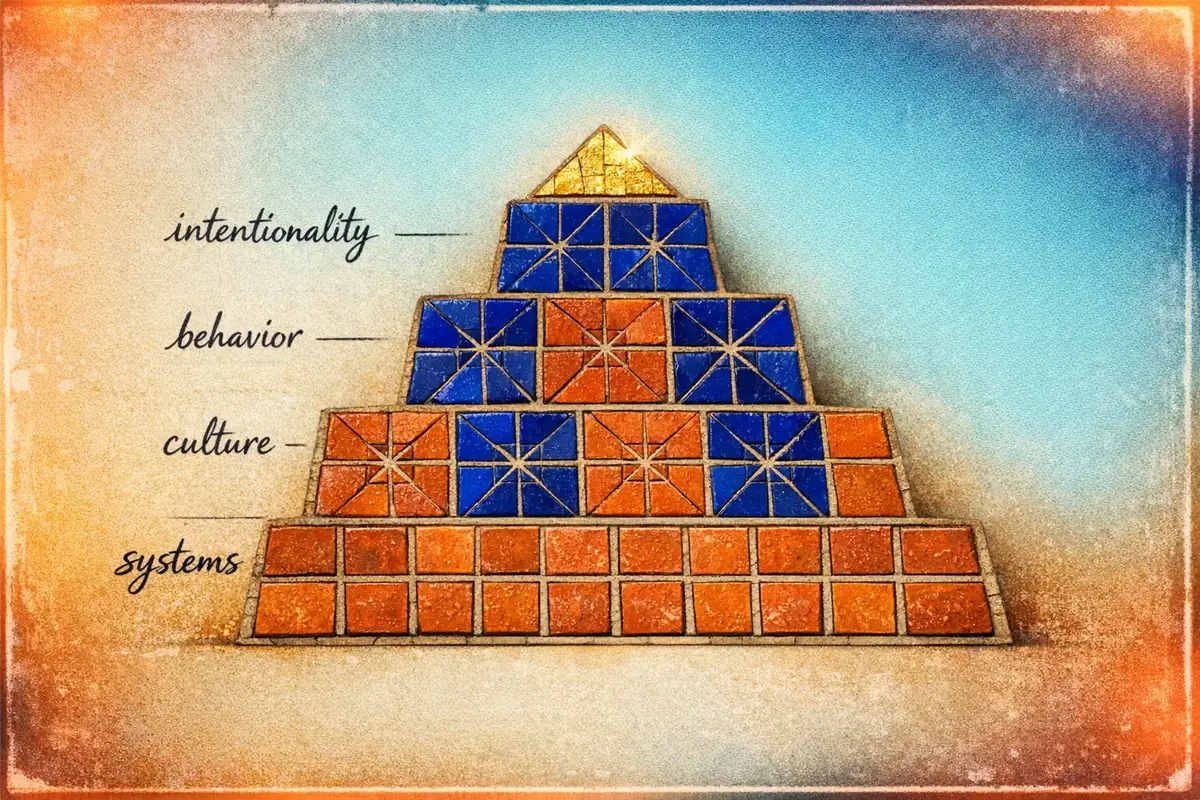
The Four Quadrants model is a foundational framework developed by philosopher Ken Wilber to map the full spectrum of human experience. At its core, the model divides reality into four irreducible dimensions:
- Individual Interior (Intentionality): Your inner world—thoughts, feelings, motivations, and mindset.
- Individual Exterior (Behavior): Your observable actions, skills, and habits.
- Collective Interior (Culture): The shared values, beliefs, and unwritten rules of your team or community.
- Collective Exterior (Systems): The formal structures, processes, and environments that shape group behavior.
“The Integral Four Quadrants model divides experience into four irreducible dimensions: individual interior (intentionality), individual exterior (behavior), collective interior (culture), and collective exterior (systems).”
(Integral Life, 2014) The World Economic Forum estimates that 50% of all employees will need reskilling by 2025, with adaptive leadership and coaching competence emerging as critical capabilities.
Most coaching programs zero in on one or two of these quadrants—often focusing on mindset or behavior. But here’s the thing: real, sustainable growth happens when we address all four dimensions together. If you’ve ever wondered why someone can have a breakthrough in a workshop and then revert to old patterns at work, the answer usually lies in the neglected quadrants—often culture or systems.
The Four Quadrants model matters in coaching because it prevents this kind of reductionism. It ensures that personal development is not just about changing what’s inside your head or what you do with your hands, but also about shifting the collective stories you’re part of and the systems that enable or constrain you.
How Does AI Coach System Apply the Four Quadrants for Personalized Development?
Let’s get specific: how does this philosophical model translate into practical, AI-powered coaching? AI Coach System operationalizes the Four Quadrants by embedding them into every stage of the coaching journey, from assessment to action planning and ongoing feedback.
1. Assessment Across All Four Quadrants
When you engage with the platform, the first step is a holistic assessment. Instead of asking only about your goals or skills, the AI coach explores:
- Internal Experience: What are your core motivations? What beliefs or emotions drive your actions?
- External Behavior: What do you actually do day-to-day? Where are your strengths and gaps?
- Cultural Context: What’s the prevailing team or organizational culture? What norms influence your choices?
- Systemic Environment: What structures, processes, or policies shape your opportunities and constraints?
By mapping your current reality across all four quadrants, the system avoids the trap of “one-size-fits-all” plans. For example, two leaders might both struggle with delegation, but for one it’s a mindset issue (internal), while for the other it’s a lack of organizational support (systemic). The developmental journey is tailored accordingly.
2. Quadrant-Based Goal Setting and Action Planning
Once the assessment is complete, the AI coach helps you set goals and practices that address all relevant quadrants. This might look like:
- Internal: Building self-awareness or emotional regulation.
- External: Practicing new behaviors in real scenarios.
- Cultural: Engaging with your team to shift shared norms.
- Systemic: Advocating for process changes or new resources.
This integrated approach ensures that growth is not only personal, but also social and structural.
3. Ongoing Feedback and Adjustment
The platform doesn’t stop at initial planning. It uses continuous feedback loops to track progress in each quadrant, offering nudges, resources, and reflective prompts that keep your development on track—even as your environment changes.
“Integral coaching proceeds through a four-stage process of change, helping clients move from their current way of being to a new way, integrating insights and practices from all four quadrants.”
(Philosophy of Coaching: JP Jakonen & Matti Kamppinen, 2018)
What Happens When You Neglect a Quadrant? Common Pitfalls and Real-World Consequences
Most teams assume that if you change individual mindsets or teach new skills, the rest will follow. But research and real-world experience show that neglecting even one quadrant can undermine the entire developmental process.
Let’s look at a few scenarios:
- Focusing Only on Mindset: A leader learns to “think positively” but works in a culture that rewards risk aversion. Without addressing the collective interior, new thinking is quickly stifled.
- Prioritizing Behavior Alone: Employees are trained in new processes, but if the systems (collective exterior) don’t support these changes—say, outdated IT or unclear roles—old habits resurface.
- Ignoring Culture: A team tries to implement agile practices, but the underlying values remain hierarchical. Without cultural alignment, agile is just a buzzword.
- Overlooking Systems: Leaders encourage open communication, but reporting structures punish dissent. The best intentions are blocked by systemic barriers.
What’s the implication? If you want change to stick, you need to see the full picture. The Four Quadrants model ensures nothing essential is left out.
How Does AI Personalize Developmental Journeys Using the Four Quadrants?
Personalization is more than just customizing content or pacing. In the AI Coach System, personalization means dynamically adapting the coaching journey based on real-time data from all four quadrants.
Data-Driven Quadrant Mapping
The platform collects and analyzes input from your self-reflections, behavioral data, team feedback, and organizational metrics. Using this information, the AI coach identifies which quadrant(s) are most influential in your current challenge or opportunity.
For example, if you’re struggling with influence, the AI might detect that your personal confidence (internal) is strong, but your organization’s decision-making process (systemic) is a bottleneck. The coaching plan will then focus on navigating or reshaping those systems, not just boosting your self-esteem.
Adaptive Feedback and Practice
As you progress, the AI coach checks in across all quadrants. Are you seeing shifts in your mindset? Are new behaviors sticking? Has the team culture responded? Are systemic obstacles emerging? This multi-dimensional feedback loop allows for rapid course correction and deeper, more sustainable growth.
Sample AI-Generated Feedback
- “You’ve made progress in adopting new feedback techniques (behavior), but your team’s culture still hesitates to speak openly (culture). Let’s explore ways to build psychological safety together.”
- “Your motivation is high (internal), but the current workflow doesn’t allow time for reflection (systemic). Consider negotiating for protected time each week.”
This approach draws on TII’s two-decade integral methodology, ensuring that AI recommendations are grounded in proven, holistic coaching practice.
How Does Quadrant Integration Enable Both Horizontal and Vertical Growth?
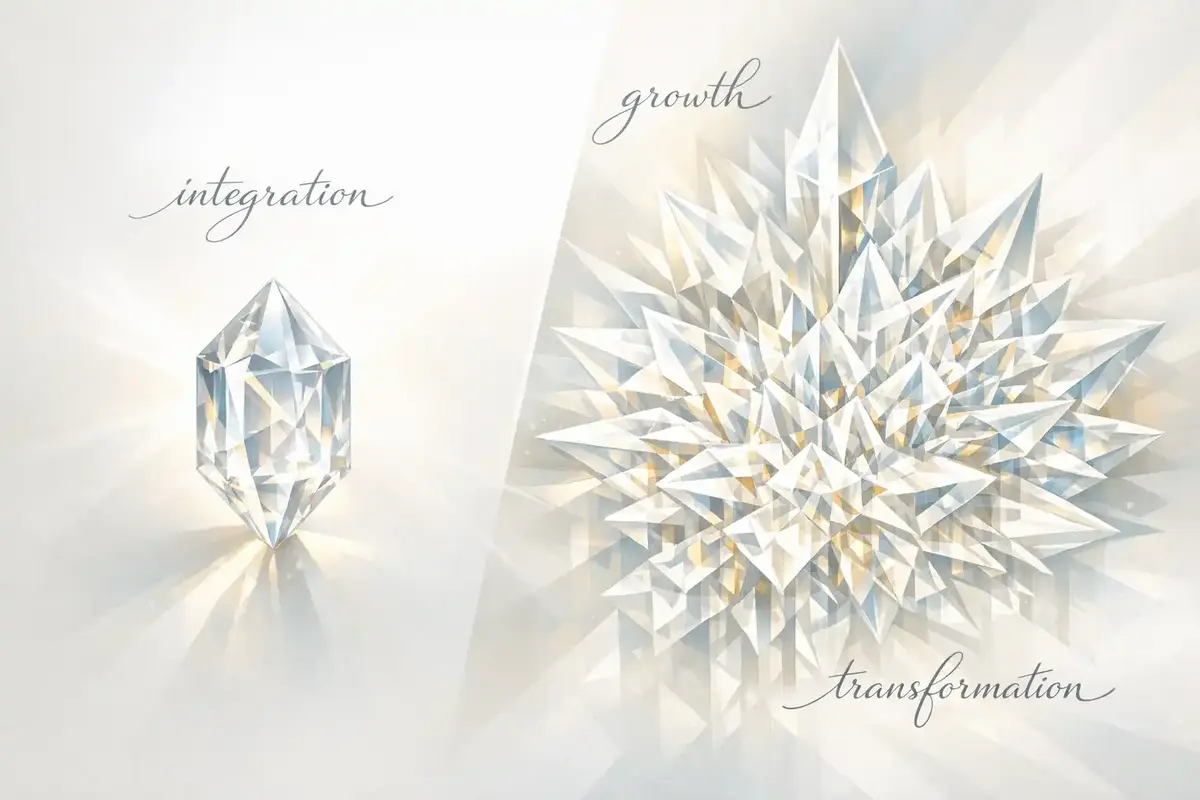
A common assumption is that development is just about “leveling up” skills—what’s often called horizontal growth. But the Four Quadrants model introduces a powerful distinction: true transformation also requires vertical growth—shifts in how we make meaning, relate to others, and see the world.
The AQAL model (which includes the Four Quadrants) is based on the study of multiple developmental theories, including those of Piaget, Kohlberg, Loevinger, Gebser, Fowler, Commons & Richards, and Kegan (Philosophy of Coaching: JP Jakonen & Matti Kamppinen, 2018). This means it’s not just about adding new tools to your toolkit, but about evolving your entire way of being.
- Horizontal Growth: Expanding competencies—learning new skills, adopting fresh practices, improving performance.
- Vertical Growth: Transforming perspectives—developing greater self-awareness, emotional intelligence, and the ability to navigate complexity.
By integrating all four quadrants, the AI Coach System supports both types of growth. For instance, you might start by learning a new feedback technique (horizontal), but through reflection and cultural engagement, you begin to see feedback as a mutual learning process, not just a task (vertical).
Why does this matter? Because organizations that foster both kinds of growth are better equipped to adapt, innovate, and thrive in complex environments.
How Does the Four Quadrants Model Prevent Common Coaching Pitfalls?
It’s tempting to believe that a single intervention—say, a mindset shift or a new process—will unlock lasting change. But quadrant absolutism, or over-focusing on one area, is a recipe for disappointment.
Consider these pitfalls:
- Mindset Absolutism: Assuming all problems are internal. This leads to blaming individuals for systemic failures.
- Behavioral Absolutism: Treating people as machines to be reprogrammed, ignoring their inner world or social context.
- Cultural Absolutism: Trying to change culture without addressing individual beliefs or systemic barriers.
- Systemic Absolutism: Restructuring organizations without engaging hearts and minds.
The Four Quadrants approach, especially as implemented in AI Coach System, avoids these traps by ensuring every intervention is multi-dimensional. This not only increases the chances of success but also makes the developmental journey more humane and sustainable.
How Is AI Coaching Different from Traditional Coaching in Applying the Four Quadrants?
Traditional coaching, even when grounded in holistic models, is limited by time, human bandwidth, and the coach’s ability to track multiple dimensions simultaneously. AI-powered coaching platforms, like AI Coach System, offer several advantages:
- 24/7 Accessibility: Support is available whenever you need it—not just during scheduled sessions.
- Consistent Quadrant Mapping: The AI never forgets to check all four quadrants, ensuring nothing is overlooked.
- Scalable Personalization: Hundreds or thousands of users can receive tailored journeys, each mapped to their unique quadrant profile.
- Data-Driven Insights: The system can analyze patterns across individuals and teams, identifying systemic or cultural trends that might otherwise go unnoticed.
Of course, AI doesn’t replace the human touch. But by operationalizing the Four Quadrants model, it amplifies what’s possible—making holistic development accessible at scale.
How Does the Four Quadrants Approach Integrate with Other Coaching Frameworks and Organizational Systems?
The Four Quadrants model doesn’t exist in a vacuum. It serves as a meta-framework that can integrate with other coaching frameworks—from competency models to agile methodologies and beyond. This flexibility is especially valuable in AI-powered systems, where coaching needs to adapt to diverse roles, industries, and organizational cultures.
For example:
- In talent development, quadrant mapping can reveal why certain high-potentials thrive (supportive culture and systems) while others plateau (misaligned values or unclear expectations).
- In succession planning, it can highlight not just who has the skills, but who fits with the evolving culture and systems of the organization.
By connecting quadrant insights to performance management, learning platforms, and team development tools, organizations can create a seamless, personalized development ecosystem that supports growth at every level.
What Are the Practical Steps to Start Using the Four Quadrants for Your Own Growth?
If you’re curious how to apply this approach yourself, here’s a simple self-assessment exercise:
- Reflect: For a current challenge, ask yourself:
- What’s happening in my inner world (thoughts, feelings)?
- What am I actually doing (behaviors)?
- How does my team or culture influence this?
- What systems or structures are shaping my experience?
- Map: Write down observations for each quadrant.
- Identify Gaps: Where are you over-focusing? What’s missing from your approach?
- Set Multi-Quadrant Goals: Choose at least one action in each quadrant.
- Track Progress: Notice which changes stick and which need more support.
You’ll likely find that even a small shift in one neglected quadrant can unlock progress across the board.
How Can Organizations Measure the Impact of Quadrant-Based, Holistic Coaching?
Measuring coaching effectiveness is a perennial challenge, especially when growth spans multiple dimensions. With quadrant-based, holistic coaching, organizations can track:
- Changes in individual mindset and emotional intelligence (internal)
- Observable shifts in behavior and performance (external)
- Evolution of team norms and engagement (cultural)
- Improvements in processes, structures, and outcomes (systemic)
By integrating these metrics, organizations get a fuller picture of ROI—not just isolated skill gains, but sustainable, systemic transformation. For more on this, see resources on measuring coaching effectiveness and ROI in quadrant integration.
FAQ: How AI Coach System’s ‘Four Quadrants’ Approach Personalizes Developmental Journeys
What makes the Four Quadrants model different from other coaching frameworks?
The Four Quadrants model uniquely integrates both individual and collective, as well as internal and external, dimensions of growth. Most frameworks focus on only one or two areas—such as skills or mindset—while the Four Quadrants ensures a truly holistic approach, preventing common pitfalls of reductionism.
How does the AI Coach System use the Four Quadrants to personalize coaching?
The platform assesses your current reality across all four quadrants, then dynamically adapts goals, practices, and feedback to address your unique combination of mindset, behavior, culture, and systems. This allows for tailored developmental journeys that evolve as you grow and your context changes.
Can the Four Quadrants model be used for team or organizational development, not just individuals?
Absolutely. The model is designed to scale from individuals to teams and entire organizations. By mapping cultural and systemic factors alongside personal ones, it helps identify both strengths and blind spots at every level, supporting collective transformation.
What’s the risk of focusing on only one quadrant in development plans?
Over-focusing on a single quadrant—such as mindset or behavior—often leads to incomplete or unsustainable change. For example, new skills may not stick if the culture or systems don’t support them, and mindset shifts may be undermined by external barriers.
How does quadrant integration support both horizontal and vertical growth?
Horizontal growth involves expanding skills and competencies, while vertical growth is about transforming perspectives and meaning-making. Quadrant integration ensures both happen together, enabling not just better performance but also deeper, more adaptive leadership.
How does AI coaching compare to traditional coaching in applying the Four Quadrants?
AI coaching can consistently track and adapt to all four quadrants, offering 24/7 support and scalable personalization. While human coaches bring empathy and nuance, AI platforms ensure nothing is overlooked and can integrate data-driven insights across large groups.
How can I start applying the Four Quadrants model to my own development?
Begin by reflecting on a current challenge through each quadrant: your inner world, your actions, your team’s culture, and your organizational systems. Identify where you may be neglecting a dimension, set multi-quadrant goals, and track progress over time.
Continue Your Leadership Journey
The Four Quadrants approach, as implemented by AI Coach System, offers a new paradigm for personal and organizational development—one that’s holistic, evidence-based, and scalable. By seeing the full picture, you’re equipped to design growth journeys that don’t just change what people do, but who they become and the systems they shape. For those ready to move beyond piecemeal solutions, this model provides a roadmap to sustainable, integrated transformation.
Explore related resources:
- Discover how Four Quadrants principles translate into AI-powered coaching algorithms
- Learn about measuring coaching effectiveness and ROI in quadrant integration
- See how coaching frameworks drive talent development and succession planning
- Understand how personalized development is enhanced through AI coaching integration with learning platforms
- Deepen your knowledge of AI coaching and adaptive developmental journeys
Each link is a step toward mastering the art and science of holistic, quadrant-informed growth.