The statistics are sobering for any HR leader or L&D professional looking at the current landscape. While 92% of companies plan to increase their generative AI investments over the next three years, a staggering 54% of AI projects fail to scale from pilot to production. Furthermore, 95% of pilots fail to meet ROI benchmarks due to organizational and technical friction.
Yet, the demand for development has never been higher. With 70% of employees stating they would leave their current role for one that offers better growth opportunities, the traditional coaching model—often reserved for the top 1% of executives due to cost—is no longer sufficient.
You aren’t looking for another tool to add to your tech stack; you are looking for a scalable solution to democratize leadership development. The challenge isn’t the technology itself—it’s the strategy behind the implementation. This guide serves as your consultation roadmap, moving you from “AI curiosity” to a deployed, ROI-positive coaching ecosystem.
Phase 1: The Enterprise Readiness Assessment
Before we discuss vendors or rollout schedules, we must evaluate the soil in which you intend to plant this seed. General “AI readiness” is not the same as “AI coaching readiness.” The latter requires a specific alignment of culture, data, and learning methodology.
We often see organizations rush into pilots without assessing their “Change Threshold.” According to research, only 25% of organizations have clear AI governance in place. Launching an AI coach into a vacuum of governance or cultural skepticism is a recipe for low adoption.
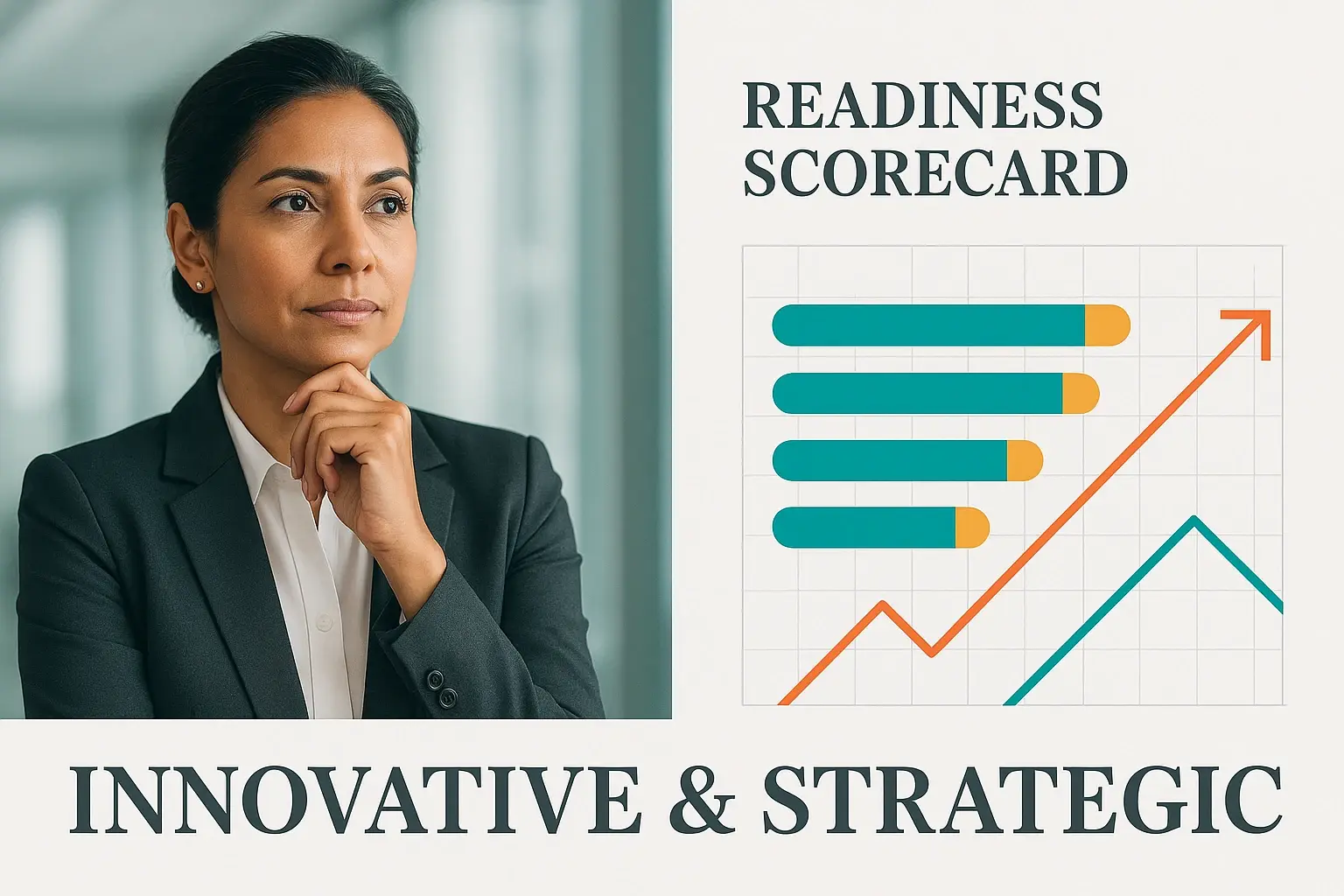
To determine if your organization is prepared to move beyond the experimental phase, you must evaluate six specific pillars. This isn’t just about whether your IT team allows AI; it’s about whether your learning culture can sustain it.
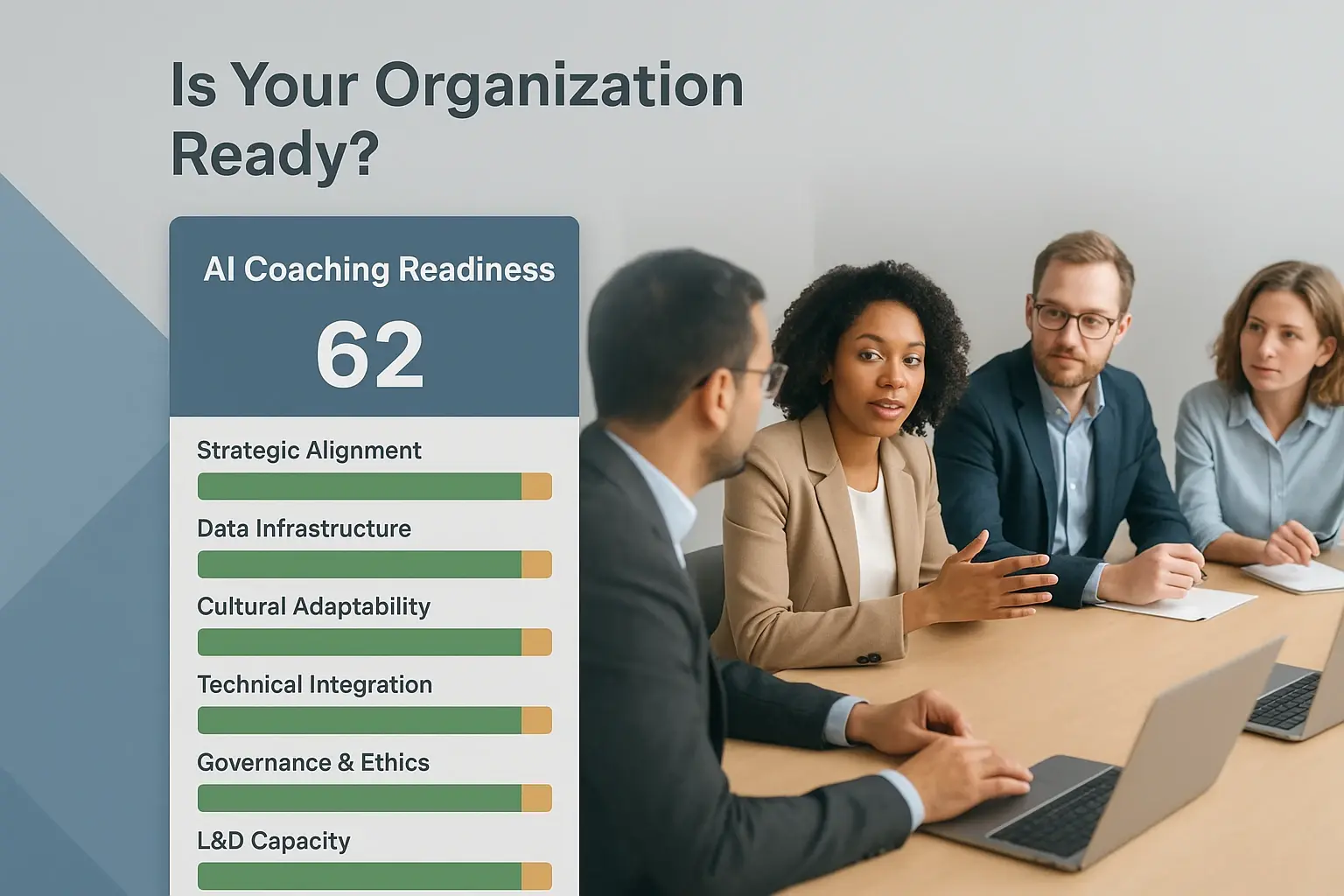
Analyzing Your Scorecard
If your Strategic Alignment is low, you risk “solution looking for a problem” syndrome. AI coaching must solve a specific business pain—such as low middle-manager retention or poor cross-functional communication—not just serve as an innovation badge.
If your Cultural Adaptability is the bottleneck, your rollout must focus heavily on the “Human-AI Partnership” narrative. Employees need to know that AI coaches like ACC Alev (The Influence Architect) or PCC Ozkan (The Path Strategist) are there to prepare them for bigger roles, not to automate their current ones.
Phase 2: Securing Executive Buy-in
Once you’ve assessed readiness, the next hurdle is the C-Suite. While 87% of leaders say they secure buy-in for AI, the gap between “approval” and “enthusiastic championship” is wide. To bridge this, you need to speak the language of the CHRO-CTO-CPO Coalition.
Your CTO cares about security and integration. Your CPO (Chief Product/People Officer) cares about workflow and adoption. Your CFO cares about the bottom line.
Moving Beyond Soft Metrics
Traditional L&D metrics like “course completion rates” won’t justify a strategic AI investment. You must forecast impact based on retention, speed-to-productivity, and leadership bench strength.
Because 36.1% of AI hurdles are related to talent shortages and skills gaps, your proposal should position AI coaching as the most efficient mechanism for closing those gaps at scale. By leveraging systems built on proven methodologies—like those from The Integral Institute™—you reduce the risk of “hallucinated advice” and ensure consistent, accredited guidance.
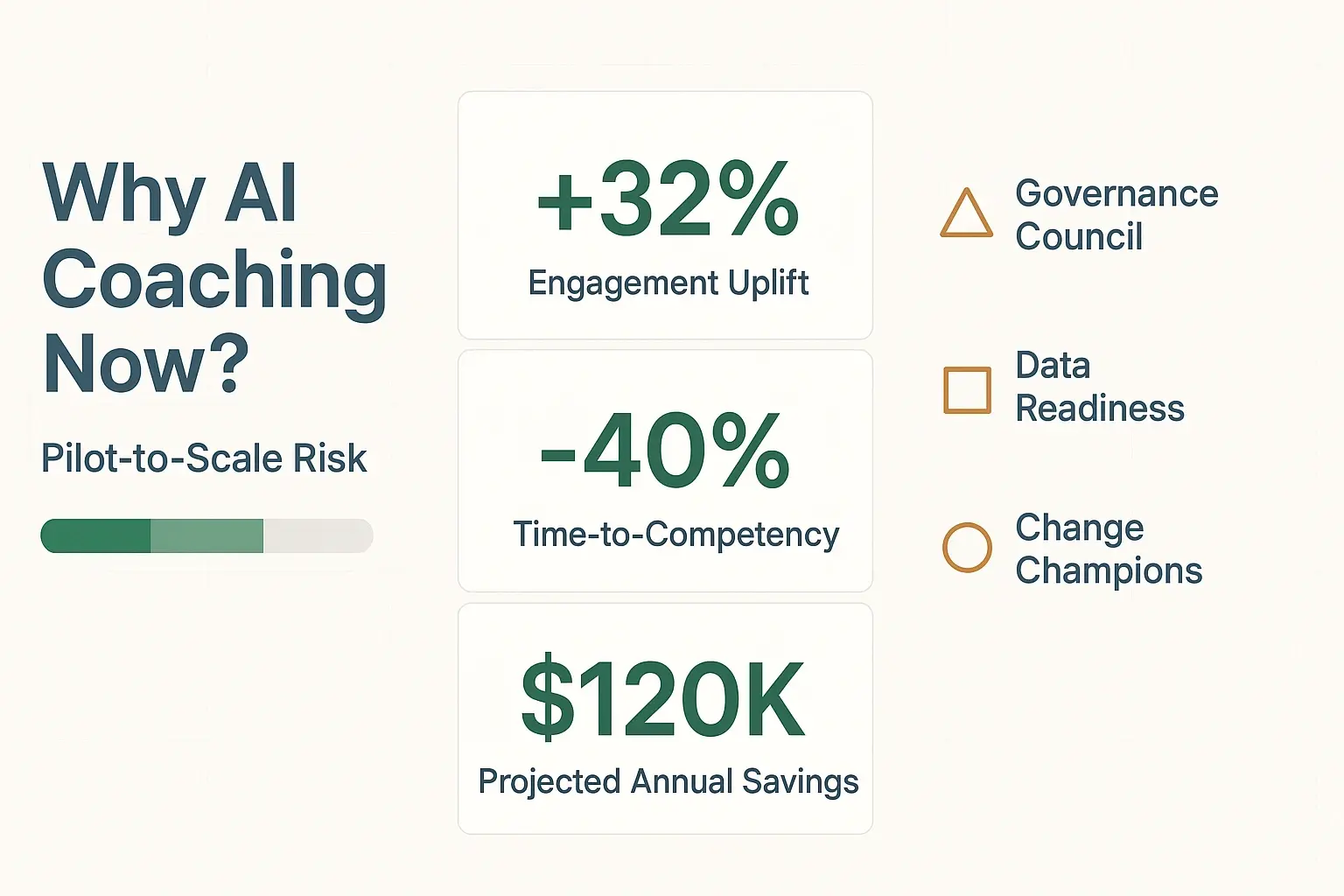
The Risk Mitigation Strategy
Executives are rightfully wary of data privacy. A robust proposal must proactively address how the chosen solution handles sensitive coaching conversations. Highlighting adherence to GDPR standards and ensuring that the AI is trained on real coaching sessions (rather than generic internet text) builds the trust necessary for a “Yes.”
Phase 3: Vendor Selection and Architecture
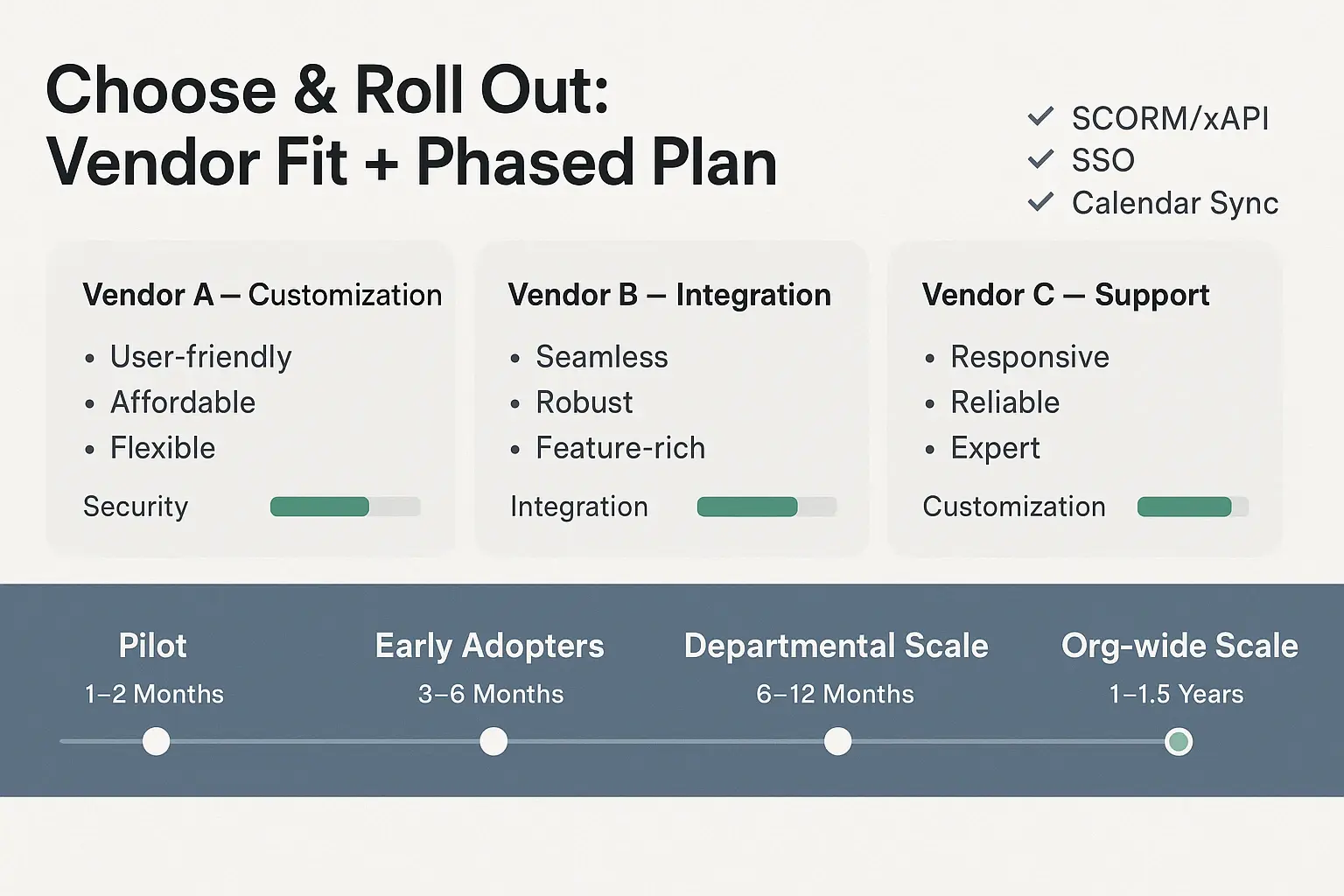
Not all AI coaches are created equal. The market is flooded with generic wrappers around basic LLMs. For enterprise deployment, you need a partner, not just a prompt.
When evaluating solutions, look for Specialization vs. Generalization. A general AI assistant can draft an email, but it cannot effectively coach a VP on “Strategic Thinking” or “Executive Presence.” This is where specialized personas—like MCC Sami (The Future Visionary)—become critical. They offer a depth of inquiry that generic models lack.
The Integration Imperative
Tool fatigue is real. Research indicates that 24.9% of adoption barriers stem from system integration issues. If your employees have to log into a separate, clunky platform to get coached, usage will drop.
Your selected vendor must offer:
- Seamless Access: 24/7 availability without scheduling conflicts.
- Workflow Integration: Does it fit into the daily flow of work?
- Methodological Rigor: Is the AI improvising, or is it grounded in decades of leadership development science?
Phase 4: The Phased Rollout and Change Management
The “Big Bang” launch approach is often fatal for AI initiatives. Successful implementation requires a phased rollout that builds momentum and social proof.
Step 1: The Pilot (Champions Network)
Start with a high-potential group—future leaders who are eager for growth but underserved by traditional executive coaching. These are your “Champions.” Their success stories and testimonials will be the fuel for wider adoption.
Step 2: Departmental Expansion (Functional Fit)
Roll out to specific departments with tailored coaching goals. For example, deploy PCC Fuat (The Achievement Catalyst) to your Sales and Operations teams to focus on Performance Optimization, while HR leaders utilize coaching for organizational design.
Step 3: Organization-Wide Scale
Once the bugs are worked out and the ROI is proven at the departmental level, open access to the wider organization. This is where the cost-efficiency of AI shines—providing executive-level coaching to thousands of employees simultaneously.
Frequently Asked Questions
How do we measure the success of AI coaching compared to human coaching?
Measurement should focus on behavioral change and business outcomes rather than “satisfaction” scores. Because AI systems can track progress on specific competencies (like Communication Mastery) over time, you can correlate coaching usage with performance reviews and promotion rates more accurately than with sporadic human sessions.
Will AI coaching replace our internal mentors and L&D staff?
No. The most successful organizations use a “Hybrid Advantage.” AI handles the high-frequency, immediate developmental needs—the 24/7 support—which frees up your senior leaders and internal coaches to focus on complex, high-stakes mentorship and cultural stewardship.
Is the data secure?
Enterprise-grade solutions prioritize privacy. Unlike open public models, a dedicated AI Coaching System ensures that conversations remain confidential, compliant with enterprise standards, and are never used to train public models without consent.
The Path Forward
The window for early adoption is closing. As 61% of L&D leaders prioritize leadership training this year, the organizations that successfully integrate AI coaching will possess a distinct competitive advantage: a workforce that is continuously developing, self-correcting, and aligning with strategic goals in real-time.
You have the roadmap. The next step is to assess your readiness and choose a partner who values leadership methodology as much as technological innovation.