


Why the Board’s Real Crisis Job Is Decision Quality, Not Control
Boards shape crisis outcomes by improving decision quality, ethical judgment, and trust; they weaken them when they try to run the response themselves. You see the risk in the first emergency call: facts are partial, management is under strain, and directors feel pressure to step in as operators rather than governors.
That instinct is understandable. It is also expensive. Crises are common enough that boards should treat this as a core leadership test, not an edge case, and PwC’s global survey shows how often companies are forced into that test (PwC, 2019). McKinsey’s research points to the deeper problem: many boards do not rate themselves as highly effective in risk management (McKinsey, 2024). This article addresses that gap by showing where board involvement sharpens the response—and where it starts to damage it.
The practical distinction is simple. Oversight means testing assumptions, clarifying risk appetite, protecting stakeholder interests, and making sure management has the authority and support to act. Execution means running the incident room, directing teams, and making operating calls in real time. The first is the board’s job. The second usually is not.
In one manufacturing company, a board joined a fast-moving supply disruption and began approving vendor substitutions line by line. Decision speed fell, management stopped escalating candidly, and the board lost the altitude it needed for real board oversight.
In a crisis, the board adds the most value when it asks better questions than anyone else in the room.
That sounds clean in theory. Why, then, do so many boards look prepared in the board pack yet become hesitant, intrusive, or fragmented when the pressure is real?
Why Crisis Readiness Looks Strong on Paper but Weak in Practice
Only 49% of board members in Deloitte’s survey said their companies had taken the steps needed to be truly crisis-ready, even though 81% believed they would respond effectively if a crisis hit tomorrow (Deloitte, 2023). That is the tension in plain sight: confidence is high, but capability is often assumed rather than built.
PwC found the same pattern from a different angle: 96% of directors said they are confident their board can guide the company through a crisis (PwC, 2023). McKinsey adds the backdrop—97% of US board members expect crises to become at least as frequent, and 98% expect severity to rise or hold at current levels (McKinsey, 2024). Boards know the threat is persistent. Many still overread the existence of policies as proof of preparedness.
Crisis-ready means something more concrete. It means the board and management know who escalates what, by when, through which channel, and with what decision rights. It means scenario thinking has moved beyond a slide deck into live discussion. It means communications have been tested under pressure, not admired in a binder.
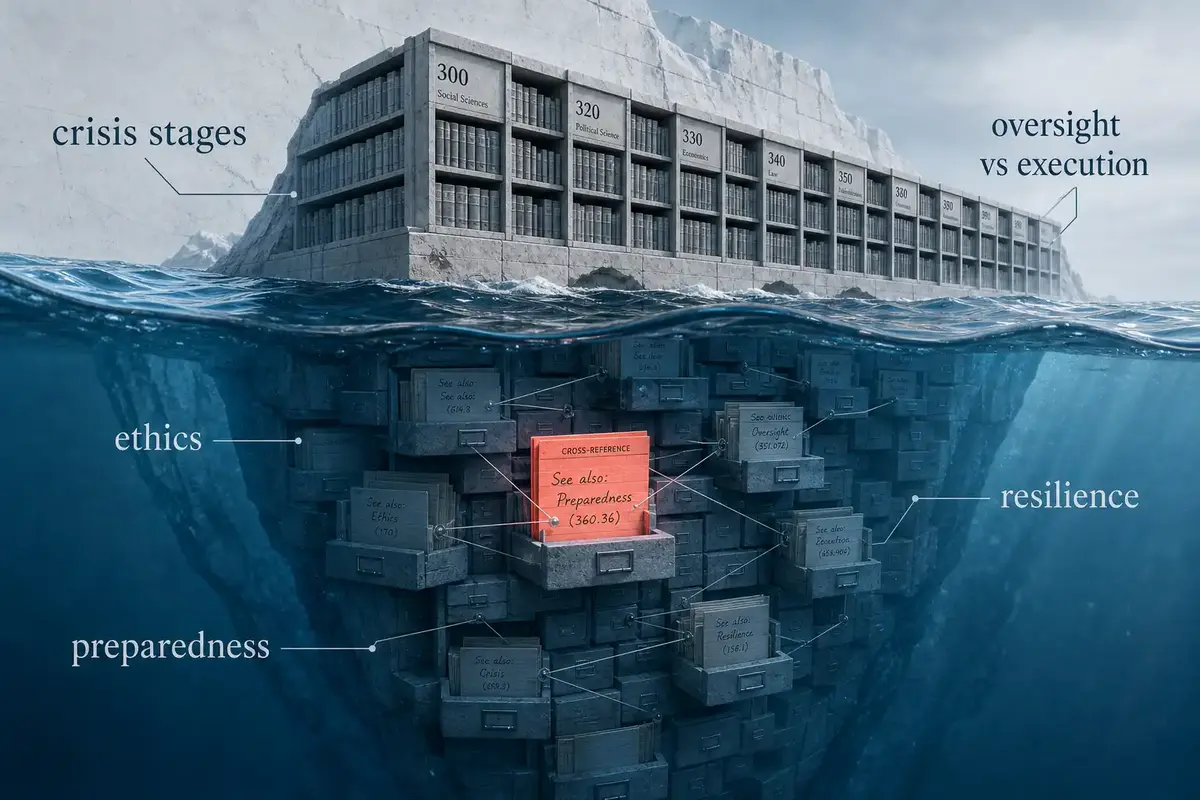
In a regional healthcare provider, the board discovered this during a cyber incident. The escalation memo existed. The call tree existed. But in the first 90 minutes, the CIO, general counsel, and board chair each worked from different assumptions about disclosure timing. No one lacked intelligence. They lacked rehearsal.
Preparedness is not the document you approve. It is the behavior that shows up when the document stops being enough.
This is why organizational resilience—the ability to absorb shock, adapt, and keep functioning—depends on practice, not paperwork alone. Governance documents matter. But resilience grows through simulation, after-action review, and repeated clarification of roles. Under pressure, what matters is not whether the board has a plan on file—it is whether holistic leadership changes the quality of judgment when the facts are incomplete.
How Does Holistic Leadership Change Board Decisions Under Pressure?
The holistic leadership lens matters in crisis because it treats the company as a human system, not just a control system. In the first hour of a serious incident, directors usually recognize the scene: the CEO wants room to act, the general counsel wants precision, and the workforce is already reading silence as a signal.
Holistic leadership in a board context means integrating strategy, people, ethics, and communication when facts are incomplete. That changes decisions because it forces the board to ask not only What is the right move? but also Who will absorb the cost, what trust will this spend, and how clearly can we explain it by tonight?
Gallup’s data makes the human stakes hard to dismiss. Global employee engagement fell to 20% in 2025, and Gallup estimates the productivity cost at $10 trillion worldwide (Gallup, 2026). In a crisis, a disengaged workforce is not a culture issue sitting off to the side; it is an execution risk that shapes response speed, message discipline, and recovery capacity.
What the Board Does Differently
In a regional technology company facing a client-data outage, the board did not debate server decisions. It reframed the choice set: protect contractual exposure, preserve employee clarity, and communicate to customers in language the company could defend six months later. That is whole-person leadership applied to governance.
This approach usually changes behavior in three ways:
- It slows impulsive reactions without slowing necessary action. Holistic boards pause to consider the human and reputational consequences, not just the operational ones. This prevents knee-jerk decisions that can worsen fallout or erode trust.
- It improves stakeholder judgment by making second-order effects visible. For example, a rushed layoff may stabilize short-term finances but devastate morale, leading to talent flight or public backlash. Holistic boards surface these risks early.
- It keeps short-term containment from destroying long-term trust. Decisions are filtered through the lens of future relationships—with employees, customers, regulators, and the public—so the board avoids actions that solve today’s problem but create tomorrow’s scandal.
The fastest board is not the one that reacts first. It is the one that knows what it will not compromise.
Why Ethics Speeds Decisions
Ethics is not a separate workstream. It is a decision filter.
When values are clear, boards spend less time improvising the boundaries of acceptable action. That matters when Gallup reports that 41% of employees are stressed (Gallup); under stress, ambiguity spreads faster than facts. A board grounded in holistic leadership gives management something rare in a crisis: decisions that are both faster to make and easier to explain.
The practical implication is that holistic leadership does not slow boards down—it focuses them. By integrating ethical clarity, stakeholder empathy, and strategic foresight, boards can act decisively while minimizing collateral damage. This is especially critical in high-pressure moments when every decision is scrutinized internally and externally.
The pressure point comes next. If this is how boards should think under strain, what should they actually do before, during, and after the event—stay high-level, or intervene at specific moments?
What Should Boards Do Before, During, and After a Crisis?
Only one in four companies feels prepared across resilience dimensions, which is how revenue gets interrupted, trust gets spent, and strong people decide they have had enough (World Economic Forum, 2025). That is the real cost behind the resilience language so many boards use and so few embed into operating rhythm.
The practical answer is simple: prepare before, govern during, and learn after. Boards do not create organizational resilience—the ability to absorb shock and keep functioning—through declarations. They build it by making resilience part of strategy, escalation, and review.
Before: Prepare the decision system
Preparation starts with boundaries. The board should test assumptions, ask for scenario options, and define escalation triggers; management should own the playbooks, the response teams, and the operating calls.
That distinction matters because most boards are not yet strong at this work. In McKinsey’s global survey, only 7% of respondents said their boards were “most effective” at risk management (McKinsey, 2024). In practice, that gap shows up when a quarterly review reveals rising cyber exposure or supplier concentration, yet no one has clarified what reaches the board in the first hour versus the first day.
A board that wants real organizational resilience should require three repeated disciplines:
- Tabletop exercises that force directors and executives through incomplete facts
- Escalation planning with named triggers, owners, and time thresholds
- Learning loops that convert incidents into changed policy, budget, or oversight
Resilience is not a capability you admire. It is a routine you repeat.
During and After: Govern the response, then upgrade the system
During the crisis, the board’s job is altitude. Challenge management’s assumptions, pressure-test options, monitor risk concentration, and protect decision quality. Do not run the incident room.
Afterward, most companies move on too quickly. That is one reason only 13% integrate resilience KPIs into strategy (World Economic Forum, 2025). The real test comes after the headlines fade: will the board treat the event as an exception—or as evidence that ethics, speed, and resilience are now the same governance problem?
Why Ethics Becomes a Speed Advantage in Financial, Operational, and Reputational Crises
The worst board delays rarely come from missing data. They come from unclear boundaries when the pressure to act is highest.
In a late-night call, the CFO wants immediate cuts to protect liquidity, the COO wants to keep a fragile plant running, and the communications lead warns that customers are already reading silence as evasion. This is the moment directors know well: every option is fast, but not every fast option is sound.
That pressure is no longer exceptional. PwC found that crises had already become a normal feature of corporate life, while McKinsey shows directors expect both frequency and severity to remain high (PwC, 2019) (McKinsey, 2024). Under those conditions, ethical clarity—a shared understanding of what the company will and will not do under strain—becomes a speed tool because it removes avoidable argument.
Different crises punish different weaknesses
A financial crisis tests capital discipline: which obligations get protected, which investments pause, and how much pain can be absorbed without breaking the enterprise. An operational crisis tests continuity: whether the company protects safety, service, and decision rights when systems or supply lines fail. A reputational crisis tests trust repair: whether the organization tells the truth early enough to keep stakeholders from filling the silence with their own story.
The board’s ethical frame narrows each choice set. In a regional retailer facing a product-quality issue, the fastest path was not denial or overcorrection. It was a clear standard: protect customers first, disclose what is known, and avoid claims the company may need to retract.
Ethics speeds decisions because it settles the argument about what is off-limits.
Trust is not a soft residue left after the real work. It determines whether lenders stay patient, employees stay aligned, regulators stay constructive, and customers give the company time to recover. And if trust changes recovery speed, what should boards learn now—before the next shock forces the lesson again?
The Boards That Build Resilience Are the Ones That Learn Before the Next Shock
The prepare-govern-learn model matters here because the cost of getting it wrong is immediate: revenue slips, trust thins, and good people leave. Boards that improve crisis outcomes do not wait for the next shock to discover how they make decisions under strain.
The confidence gap is the warning sign. Deloitte found that 81% of board members believed their companies would respond effectively to a crisis tomorrow, yet only 49% said their companies had taken the steps needed to be truly crisis-ready (Deloitte, 2023). That is not a communications problem. It is a governance problem.
In a quarterly review at a mid-market services company, the board saw rising client concentration, a thin succession bench, and no tested escalation thresholds. Nothing had failed yet. That was the moment to act — not by taking over operations, but by tightening oversight, clarifying decision rights, and rehearsing how bad news moves.
Resilience is rarely built in the crisis itself; it is revealed there.
Boards that excel do so by embedding learning into routine. For example, some boards now run “tabletop” simulations, stress-testing their crisis protocols and surfacing blind spots in real time. Others require post-mortems after near-misses, ensuring that lessons are codified and governance frameworks are updated. These practices shift the board’s mindset from episodic reaction to continuous improvement, making resilience a living capability rather than a static plan.
The durable mental model is simple: oversight keeps the board at the right altitude, holistic leadership keeps people, ethics, and strategy in the same frame, and resilience-building habits turn lessons into repeatable practice. That matters because only one in four companies feels prepared across resilience dimensions (World Economic Forum, 2025).
So the honest next step is not to ask whether your board would work hard in a crisis. It is to ask: what, exactly, are you practicing now — confidence, or capability? Resilience is not a heroic act in the moment, but a discipline earned through repetition, clarity, and learning—long before the next shock arrives.
Key Takeaways
- In a crisis, the board adds the most value when it asks better questions than anyone else in the room.
- Preparedness is not the document you approve. It is the behavior that shows up when the document stops being enough.
- The fastest board is not the one that reacts first. It is the one that knows what it will not compromise.
- Resilience is not a capability you admire. It is a routine you repeat.
Frequently Asked Questions
What holistic leadership approaches do board members use during corporate crisis management to enhance organizational resilience?
Board members use holistic leadership by combining strategy, ethics, stakeholder awareness, and clear communication when facts are incomplete. This approach helps the board ask better questions, protect trust, and support management without taking over operations.
How can board members apply ethical decision-making in financial or reputational crises to strengthen corporate crisis management?
Boards strengthen crisis management by using ethics as a decision filter: they define what the company will not do, even under pressure. That clarity speeds decisions, reduces internal conflict, and makes actions easier to explain to employees, customers, regulators, and investors.
Why is the role of the board of directors critical in building resilience through holistic leadership during operational crises?
The board is critical because it sets direction, tests assumptions, and protects decision quality while management handles execution. In operational crises, this governance role helps the organization adapt quickly without losing control, trust, or long-term stability.
Which specific leadership skills should board members develop to improve crisis response and organizational durability?
Board members should develop scenario thinking, ethical judgment, stakeholder empathy, and disciplined questioning. They also need the ability to clarify escalation thresholds, evaluate risk trade-offs, and learn from after-action reviews so resilience improves over time.
How do board members balance rapid decision-making with ethical considerations to foster resilience in corporate crisis management?
Boards balance speed and ethics by agreeing in advance on values, decision rights, and escalation rules. When those boundaries are clear, directors can act quickly in a crisis without improvising the limits of acceptable behavior.