The gap between your current leadership capabilities and your future business needs is likely wider than your organizational chart suggests.
For years, talent management specialists have faced a “scalability wall.” You know that high-potential employees (HiPos) need personalized guidance to evolve into executive roles, yet traditional coaching is often reserved for the C-suite due to cost constraints—typically running between $12,000 and $20,000 per person for a six-month engagement. This leaves the vast middle of your talent pipeline underserved and unprepared.
We are seeing a fundamental shift in how organizations bridge this gap. It is no longer a choice between “high-touch, expensive human coaching” and “generic e-learning.” AI coaching has emerged as the third pillar, offering a way to democratize access to elite development methodologies—like those from The Integral Institute™—24/7.
But evaluating an AI solution requires moving beyond the buzzwords. You need to understand how these tools specifically accelerate readiness, identify hidden talent, and provide a defensible ROI.
The New Imperative: Why Traditional Models Are Stalling
The statistics paint a concerning picture of the current HR landscape. According to recent data from AIHR, 61.6% of HR professionals report little to no AI involvement in their processes, and only 35% feel equipped to use these technologies.
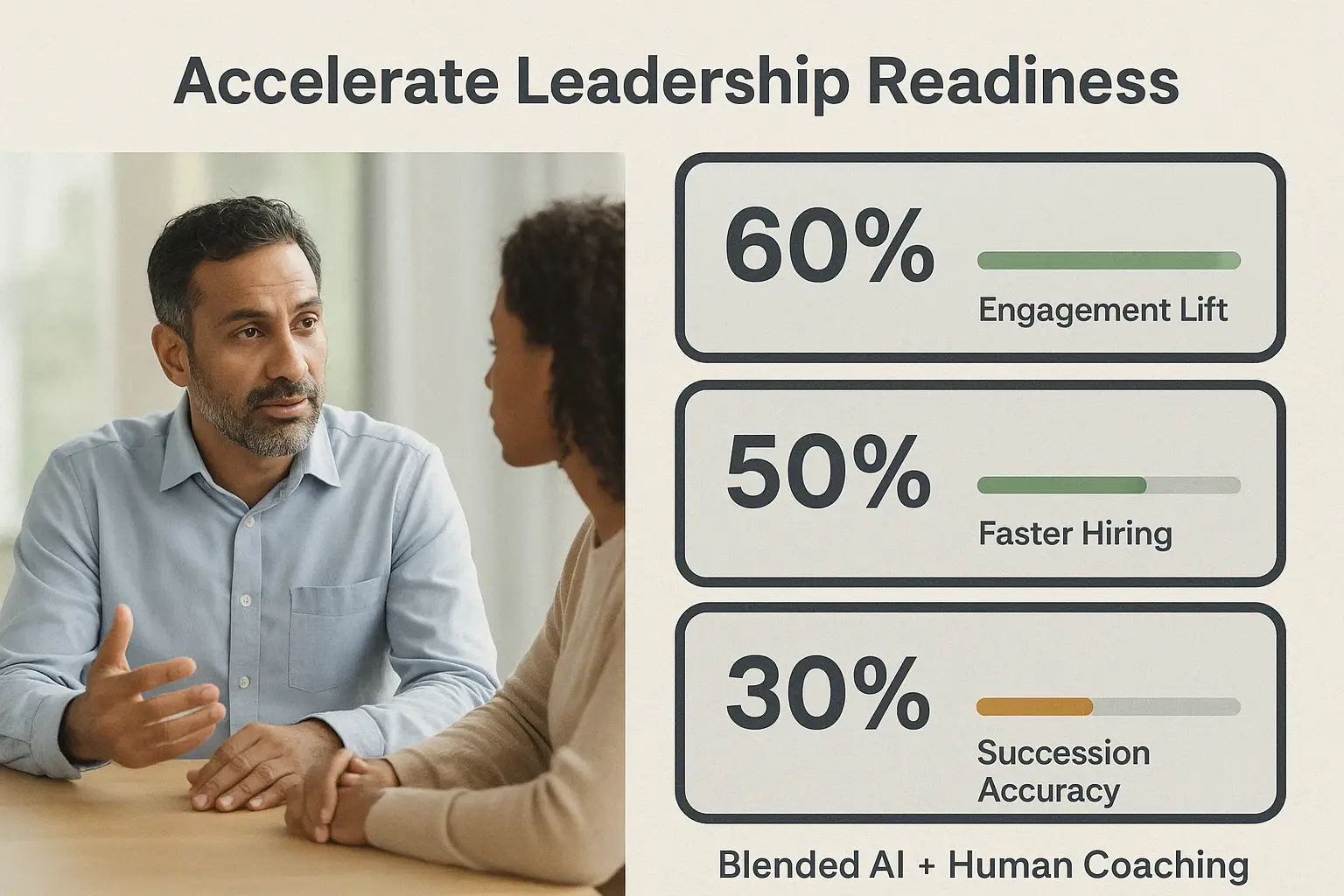
This hesitation creates a vulnerability. Traditional succession planning often relies on annual reviews and subjective manager feedback, which can be fraught with recency bias. In contrast, organizations integrating AI into their talent ecosystems are seeing a 30% improvement in succession accuracy and a 40% reduction in hiring time.
The goal isn’t to replace the human element—human mentorship is irreplaceable for nuance and empathy—but to handle the “heavy lifting” of skills practice, behavioral reinforcement, and data analysis that human managers simply don’t have time for.
Accelerating Leadership Readiness with AI Coaches
The primary bottleneck in leadership development is frequency. A human coach might meet with a leader once a month. An AI coach is available the moment a challenge arises—whether it’s preparing for a difficult conversation at 8 AM or reviewing a strategic plan at 10 PM.
This “in-the-flow of work” coaching drives engagement. IBM research indicates 60% higher engagement in AI-driven programs compared to traditional methods. When a high-potential employee can practice a pitch with an AI specialized in Communication Mastery and receive instant, objective feedback, their learning curve shortens dramatically.
The Mechanism of Acceleration
AI coaches don’t just “chat.” They utilize adaptive learning algorithms to:
- Simulate Real Scenarios: AI can role-play specific conflict resolution or negotiation scenarios, allowing leaders to fail safely and iterate quickly.
- Reinforce Cognitive Flexibility: A Berkeley study highlighted that AI interventions can enhance cognitive flexibility by 28%, a critical trait for modern leadership.
- Provide Consistent Methodology: Unlike a disjointed group of human contractors, an AI system built on proven frameworks ensures every leader is being evaluated and trained against the same high standards.
Identifying High-Potentials Using AI Coaching Insights
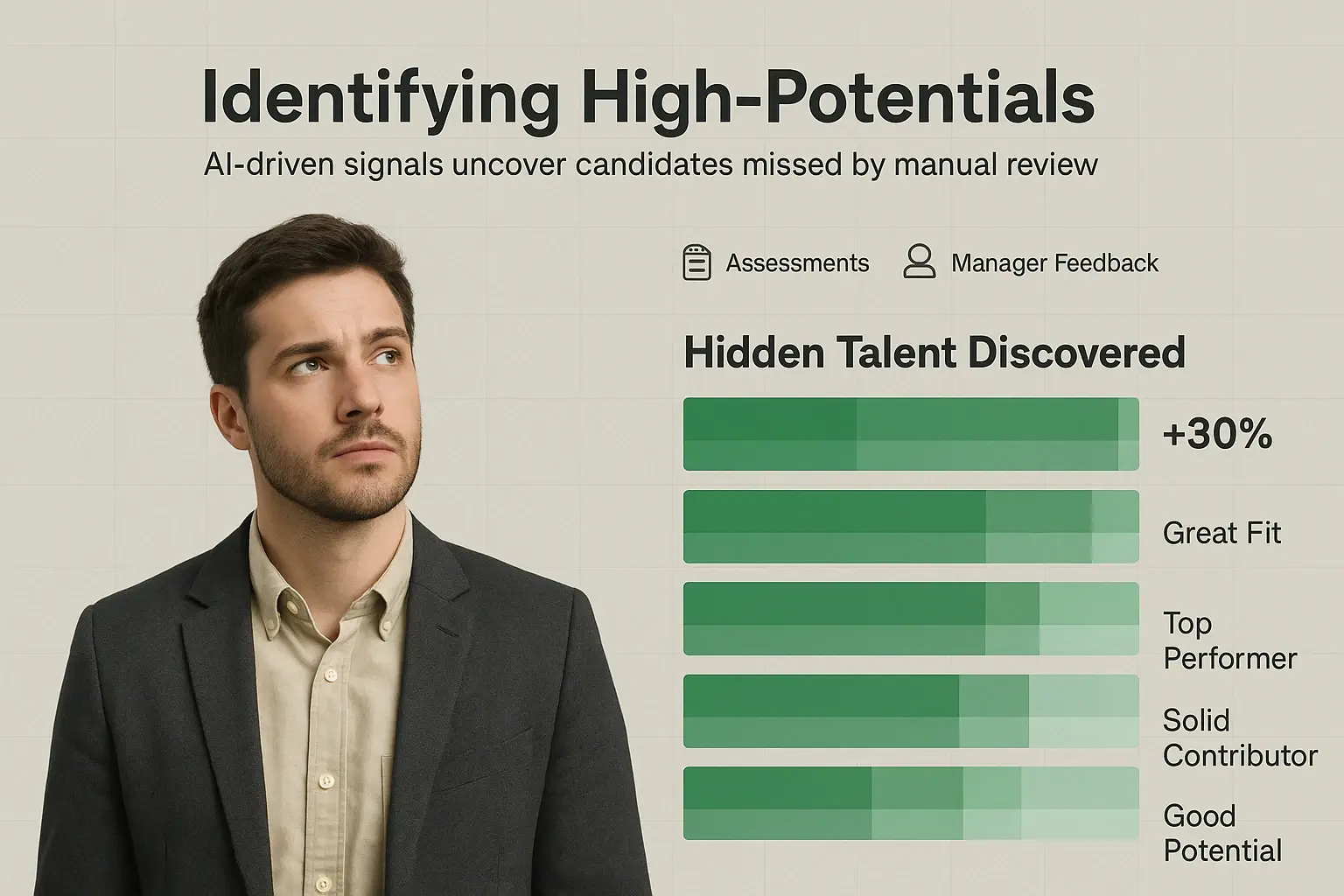
One of the most powerful applications of AI in talent management is its ability to surface “hidden” high-potentials—employees who may be overlooked due to implicit bias or quiet personalities.
Research from the Conference Board suggests that while humans excel at motivation, AI is superior at memory retention and pattern recognition. An AI coach tracks progress over hundreds of micro-interactions. It notices when an individual consistently seeks growth in Strategic Planning or demonstrates resilience during high-stress periods.
Mitigating Bias in Talent Discovery
Subjective bias is a known pipeline killer. AI helps neutralize this. The same Berkeley study noted above found that AI interventions reduced implicit biases by 35%. By focusing on data-driven skill acquisition and behavioral changes rather than personality fit or office politics, AI provides a cleaner signal of who is truly ready to step up.
Building a Robust Succession Plan with AI-Driven Development
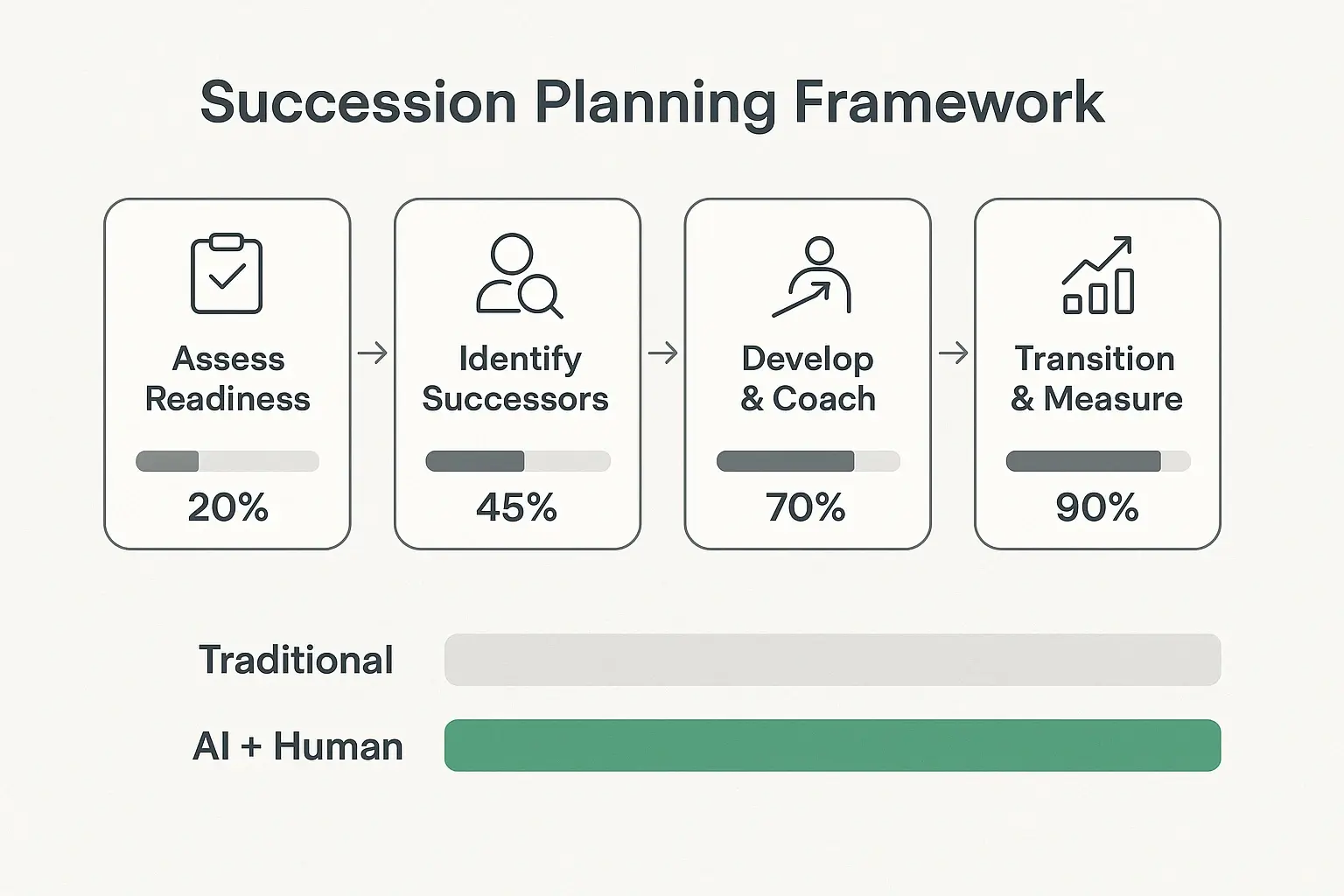
Succession planning has historically been a static exercise—names in boxes on a slide deck, updated once a year. AI transforms this into a dynamic ecosystem.
Instead of guessing who might be ready in three years, AI coaching platforms provide real-time analytics on skill proficiency. If your organization anticipates a need for Innovation Leadership, you can deploy specialized AI coaches to your bench of emerging leaders today, monitoring who engages most effectively with the material and demonstrates growth.
From “Pipeline” to “Portfolio”
Modern talent strategy is moving toward a “portfolio management” approach. You aren’t just filling a pipeline for one role; you are building a portfolio of skills across the organization. AI allows for:
- Scalability: You can run development programs for 500 potential successors simultaneously, something fiscally impossible with human coaches.
- Agility: If market conditions change, you can instantly pivot the coaching focus (e.g., from Performance Optimization to Crisis Management) across your entire cohort.
The ROI of Personalized Growth Paths
For the executive leadership team, the decision often comes down to the numbers. The cost efficiency of AI coaching creates a compelling business case.
While traditional coaching delivers a strong 5-7x ROI, the high barrier to entry limits its impact to the top 1-5% of the organization. AI coaching platforms can cost as little as $500 per user annually—a fraction of the $12,000+ required for human engagement.
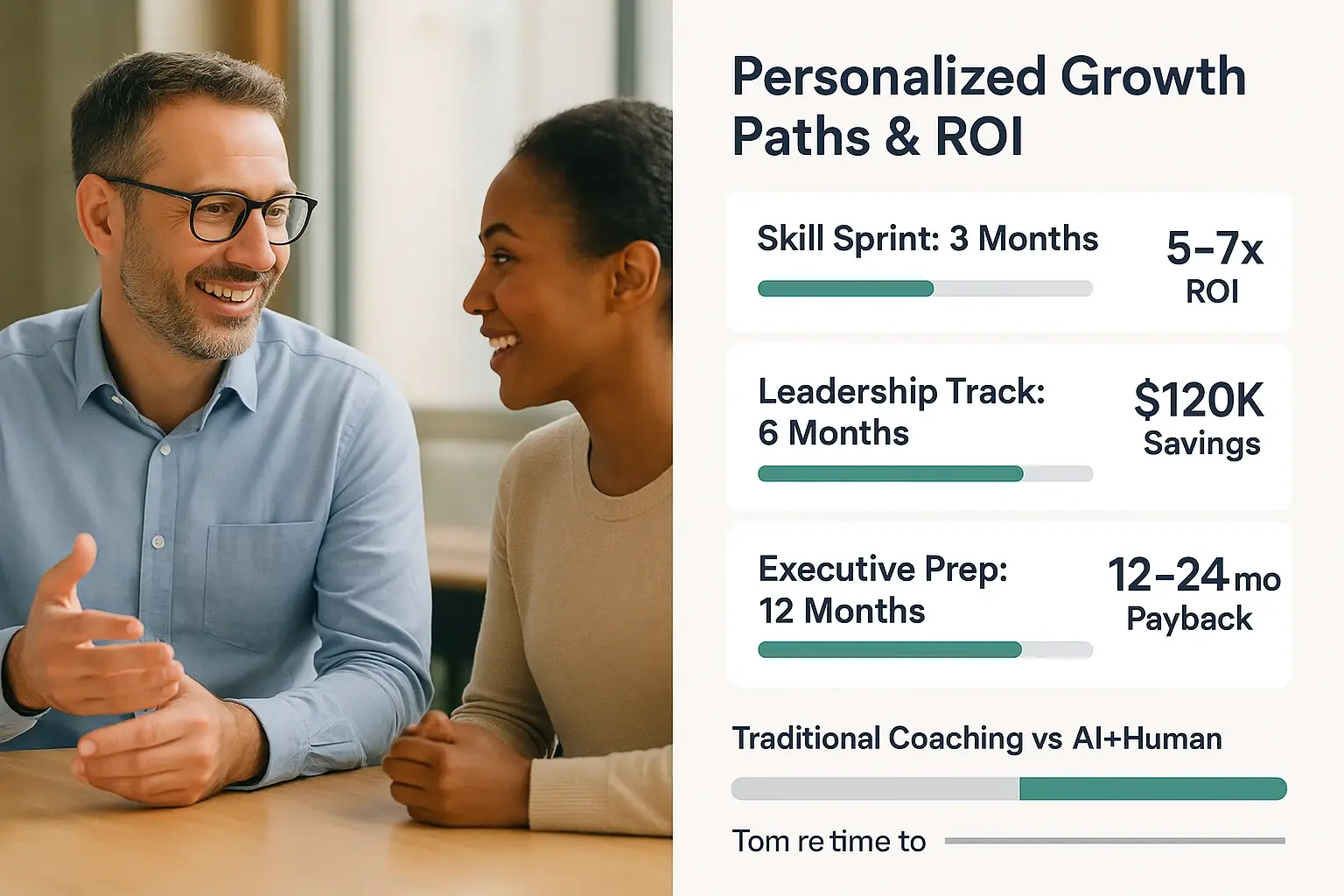
This cost structure allows for Personalized Growth Paths for the many, not just the few. When 96% of users feel AI responses are tailored to their specific context, the result is a workforce that feels invested in. This leads to retention. With hiring costs reduced and productivity gains measurable within 12-24 months, the Total Cost of Ownership (TCO) of an AI coaching solution is often recouped in the first year through retention savings alone.
Addressing the Risks: Ethics and The Human Element
Implementing AI in talent development is not without challenges. 70% of CHROs worry about data privacy and cybersecurity. It is vital to select a partner that prioritizes ethical AI use.
- Transparency: Employees must understand that the AI is a development tool, not a surveillance tool.
- The Hybrid Model: The most effective strategy is often a blended approach. Use AI for the daily “drudge work” of skill-building and continuous reinforcement, and reserve human coaches for deep psychological work or high-stakes strategic alignment.
- Data Security: Ensure your provider adheres to strict privacy standards (like SOC2 or ISO 27001) so that coaching conversations remain confidential.
Critical FAQ for Decision Makers
Q: Will employees actually trust an AI coach?A: Surprisingly, yes. Research shows that employees often feel safer confessing weaknesses to an AI because it is non-judgmental. With 96% of users reporting tailored responses, the utility quickly builds trust.
Q: Can AI really replace human mentorship?A: It shouldn’t replace it; it should scale it. AI handles the 80% of coaching related to skill acquisition, accountability, and routine problem-solving. This frees up your senior leaders to focus on the 20% of mentorship that requires human wisdom and network building.
Q: How long until we see results?A: Unlike human coaching engagements that may take months to schedule and start, AI coaching begins immediately. Most organizations see measurable productivity improvements and ROI within 12 to 24 months.
Q: Is this suitable for senior executives?A: Senior executives benefit from the “sounding board” nature of AI—a safe space to test ideas at 2 AM. However, the ideal deployment is often the “Growth” or “Leadership” tier where AI is supplemented with targeted human sessions for maximum impact.
Final Thoughts
The talent marketplace is becoming too fast and too complex to manage with spreadsheets and annual reviews. By integrating AI coaching into your talent development strategy, you aren’t just saving money; you are building a self-correcting, continuously improving leadership engine.
The question isn’t whether to use AI in coaching, but how quickly you can deploy it to secure your organization’s future.