
If you’re responsible for talent development in a fast-scaling or constantly evolving organization, you’ve probably noticed how traditional succession planning can’t keep up. Roles shift overnight, teams double in size after a funding round, or a merger suddenly brings in a wave of new leaders. The old annual review cycle starts to feel obsolete, and the risk of leadership gaps becomes a daily concern. By the end of this article, you’ll understand how deploying AI coaching transforms succession planning for agile and high-growth organizations—making it continuous, data-driven, and resilient to rapid change.
Why Succession Planning Breaks Down in High-Growth and Agile Organizations
Let’s be honest: most teams assume that having a succession plan means filling out a spreadsheet once a year with a list of “ready now” candidates. But in environments where priorities shift weekly, new business units spin up overnight, or mergers double your headcount, this static approach falls apart quickly.
Here’s the thing—agile and high-growth organizations face unique succession challenges:
- Constant role evolution: Job descriptions change faster than most people can update their LinkedIn profiles.
- Unpredictable growth: New markets, products, or acquisitions create leadership needs that didn’t exist a quarter ago.
- Talent volatility: High-potential employees are often promoted, poached, or pivoting to new roles at a moment’s notice.
- Pressure for diversity and inclusion: There’s an increasing expectation that leadership pipelines reflect the diversity of your workforce and customers.
Most leaders realize these issues, but what’s less obvious is that the very pace and unpredictability that drive your business forward also undermine traditional succession planning. It’s no wonder that even the most diligent HR teams struggle to keep their pipelines robust and relevant. The World Economic Forum estimates that 50% of all employees will need reskilling by 2025, with adaptive leadership and coaching competence emerging as critical capabilities.
What Is AI-Powered Succession Planning—and Why Does It Matter Now?
AI-powered succession planning uses machine learning and data analytics to continuously assess, predict, and develop leadership potential across your organization. It goes beyond static lists and gut-feel nominations, providing real-time insights into who’s ready for what role, where the gaps are, and how to accelerate readiness. According to DDI World research, only 14% of CEOs believe they have the leadership talent needed to drive growth, making structured leadership development a strategic imperative.
But what does this look like in practice? Imagine a system that:
- Continuously analyzes performance, skills, and potential across your workforce
- Flags emerging leaders and flight risks before they become urgent issues
- Suggests targeted development actions—like stretch assignments, peer learning, or coaching interventions—based on individual and organizational needs
In high-growth or agile contexts, this approach isn’t just a “nice to have.” It’s becoming essential for business continuity and resilience. Organizations that rely on annual reviews or subjective nominations are often blindsided by leadership gaps or miss out on hidden talent.
Internal hires are 70% more likely to stay long term with the company than external hires (Glean, 2025).
This means that investing in robust, real-time succession planning isn’t just about filling roles—it’s a core strategy for retention and organizational stability.
How Does AI Coaching Transform Succession Planning?
Most teams assume that AI in HR is just about automating administrative tasks or crunching numbers for workforce planning. But research shows that AI coaching can fundamentally reshape how organizations develop leaders and build succession pipelines—especially when speed and adaptability are critical.
Here’s how AI coaching stands apart:
- Scalability: AI can deliver personalized coaching to hundreds or thousands of employees simultaneously, something human coaches simply can’t match.
- Objectivity: By analyzing data from multiple sources, AI reduces the bias that often creeps into succession decisions.
- Real-time feedback: Instead of waiting for annual reviews, employees receive ongoing, context-specific guidance tailored to their growth areas.
- Integration with business needs: AI coaching platforms can align development goals with evolving organizational priorities, ensuring your pipeline is always relevant.
Organizations using AI-powered workforce planning reduced hiring time by 40% and improved succession planning accuracy by 30% (Glean, 2025).
This isn’t just about efficiency—it’s about building a living, breathing succession pipeline that adapts as quickly as your business does.

The “Always-On” Succession Pipeline: Moving Beyond Annual Reviews
Most organizations still operate under the assumption that succession planning is an annual event—a meeting, a spreadsheet, a box-ticking exercise. But in high-growth or agile companies, this approach is a recipe for missed opportunities and last-minute scrambles.
AI coaching enables what we might call an “always-on” succession pipeline. Instead of static lists, you have a dynamic, continuously updated map of leadership potential, readiness, and development needs.
What does this look like in practice?
- Continuous assessment: AI analyzes performance, engagement, and skill data in real time, surfacing emerging leaders as soon as they’re ready.
- Adaptive development: As business needs shift, AI coaching can pivot development plans—prioritizing new skills, competencies, or leadership styles.
- Real-time risk management: Potential gaps, flight risks, or bottlenecks are flagged early, allowing proactive interventions.
AI-driven algorithms using Random Forest models achieved over 80% accuracy in predicting employee turnover and job performance (Glean, 2025).
This level of predictive power is especially valuable in environments where yesterday’s high-potential could be tomorrow’s attrition risk.
Hybrid Human-AI Leadership Development: Striking the Right Balance
There’s a common worry that AI coaching will make leadership development impersonal or robotic. But the reality is more nuanced. While AI can deliver scalable, data-driven guidance, it’s most effective when paired with human mentorship and judgment.
Let’s break down the hybrid model:
- AI for scale and objectivity: Routine coaching topics, skill assessments, and progress tracking can be handled by AI, ensuring consistency and freeing up human coaches for more complex needs.
- Human coaches for empathy and ethics: High-stakes conversations, nuanced feedback, and ethical dilemmas still require the human touch.
- Integrated learning journeys: AI can recommend when to escalate from digital to human coaching, or when to blend experiential learning (like simulations or peer feedback) into the mix.
90% of routine workplace coaching could be delivered by AI, freeing human coaches for high-stakes or complex needs (The Conference Board, 2025).
This means organizations can democratize access to coaching—making it available to all, not just the top tier—while still preserving the depth and nuance of human development where it matters most.
For more on how AI coaching supports first-time and emerging leaders, see AI coaching for first-time leaders.
Real-World Example: Siemens Healthineers’ AI-Driven Succession Planning
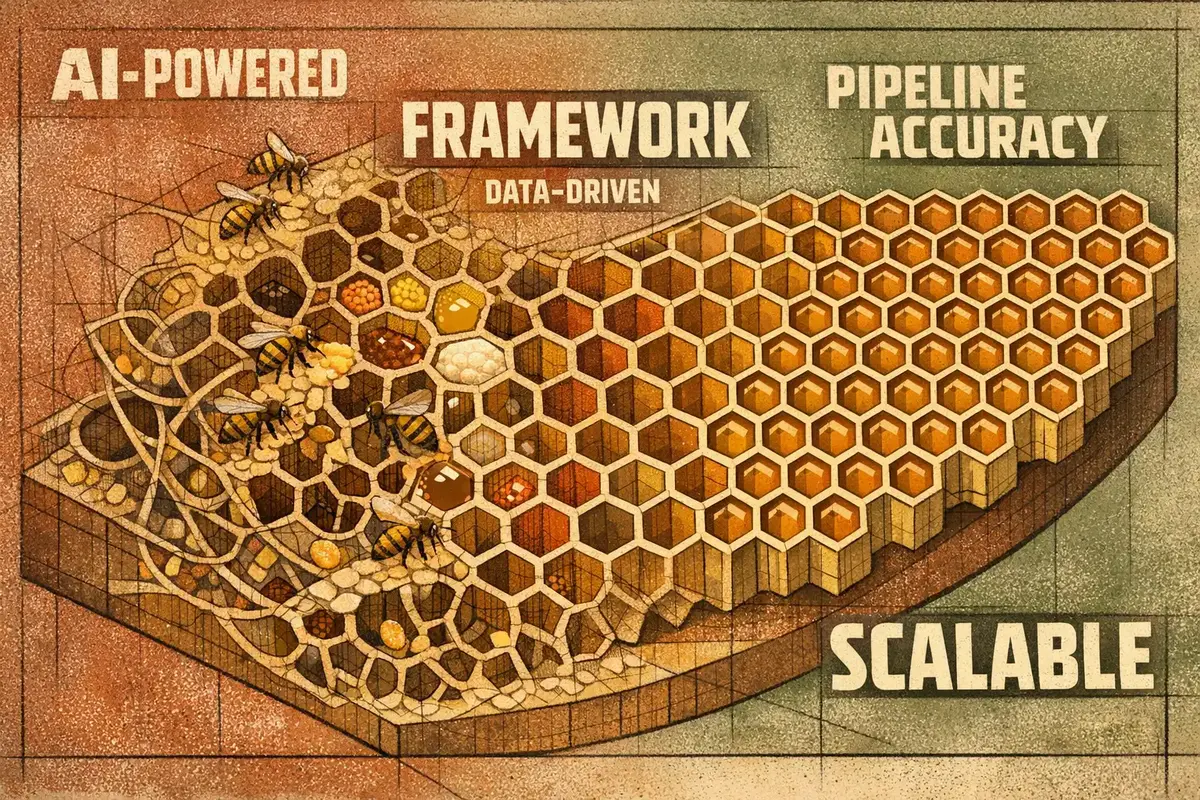
It’s easy to talk theory, but what does large-scale, AI-powered succession planning look like in the real world? Siemens Healthineers offers a compelling case:
- Built 15,000 active succession plans
- Rated 30,000 employees for talent pipeline visibility
- Used AI to continuously update and adapt plans as business needs evolved
This level of scale and adaptability would be nearly impossible with manual, spreadsheet-driven processes. The result? Greater visibility, reduced risk of leadership gaps, and a more resilient organization (Phenom, 2025).
For organizations aiming to enhance their talent development and succession planning, see AI-powered succession planning solutions.
Building an Agile Succession Planning Framework with AI Coaching
So, how do you actually deploy AI coaching for succession planning in an agile or high-growth setting? Let’s break it down into a practical, stepwise framework:
- Map critical roles and competencies: Identify which positions are essential for business continuity and what skills or mindsets they require.
- Integrate data sources: Feed your AI system with performance reviews, skills assessments, engagement surveys, and even informal feedback.
- Assess potential and readiness continuously: Use AI to monitor signals—like project outcomes, peer recognition, or learning progress—in real time.
- Personalize development actions: AI coaching can suggest targeted interventions, from microlearning modules to peer mentoring or stretch assignments.
- Monitor pipeline health: Dashboards track succession readiness, diversity metrics, and risk indicators, allowing for proactive management.
- Blend human and AI coaching: Escalate to human coaches for complex development needs, ethical dilemmas, or sensitive transitions.
Drawing on TII’s two-decade integral methodology, this approach ensures that both individual development and organizational needs are addressed holistically.
How Does AI Coaching Support DEI and Reduce Bias in Succession Planning?
A common assumption is that AI will simply replicate existing biases in succession planning. But when designed and governed carefully, AI can actually help organizations build more equitable and inclusive pipelines.
- Objective assessments: AI can analyze a broader range of data points—performance, growth, peer feedback—reducing overreliance on manager nominations or “gut feel.”
- Bias detection: Algorithms can be trained to flag patterns of exclusion or underrepresentation, prompting interventions.
- Democratizing access: AI coaching makes high-quality development support available to all employees, not just those tapped for “high-potential” programs.
Of course, this requires transparent algorithms, regular audits, and a commitment to ethical AI deployment. But in practice, organizations that embrace these principles find that their leadership pipelines become more diverse, resilient, and future-ready.
For more on democratizing coaching, see AI coaching accessibility for managers.
Governance, Data Privacy, and Trust: Laying the Foundation for Responsible AI Coaching
If you’re considering AI coaching for succession planning, you’re probably wondering: how do we ensure data privacy, transparency, and trust? These aren’t just technical questions—they’re critical to adoption and impact.
Key governance practices include:
- Clear data ownership policies: Employees should know what data is collected, how it’s used, and who has access.
- Transparent algorithms: Regularly audit AI models for bias, explainability, and fairness.
- Human oversight: Ensure that final succession decisions involve human judgment, especially for sensitive or high-impact roles.
- Continuous feedback loops: Encourage employees to provide input on their coaching experience and flag concerns.
Organizations that get this right see higher adoption, stronger trust, and better business outcomes. After all, AI coaching is only as effective as the confidence employees and leaders place in it.
Measuring the ROI and Effectiveness of AI Coaching in Succession Planning
Most teams assume that the value of succession planning is too intangible to measure. But with AI coaching, you gain access to a wealth of data that can be tracked, analyzed, and linked to real business outcomes.
Key metrics include:
- Time-to-fill critical roles: Are you filling key positions faster?
- Succession accuracy: Are your “ready now” candidates actually succeeding in new roles?
- Diversity and inclusion metrics: Is your pipeline becoming more representative?
- Retention rates: Are internal hires staying longer than external ones?
- Employee engagement: Are participants in AI coaching programs more engaged and promotable?
Organizations using AI-powered workforce planning reduced hiring time by 40% and improved succession planning accuracy by 30% (Glean, 2025).
For frameworks on measuring ROI of AI coaching, see measuring ROI of AI coaching and coaching effectiveness.
Common Pitfalls and How to Avoid Them
Even with the best intentions, deploying AI coaching for succession planning can go off track. Here are some common mistakes—and how to sidestep them:
- Over-reliance on AI: Treating AI as a replacement for human judgment, rather than a complement.
- Neglecting data quality: Feeding poor or incomplete data into AI models, leading to flawed recommendations.
- Ignoring change management: Underestimating the skepticism or resistance from employees and leaders.
- Lack of governance: Failing to establish clear policies around privacy, transparency, and accountability.
The solution? Take a balanced, transparent approach—combine robust data with human insight, communicate openly, and treat AI as a tool for empowerment, not automation.
FAQ: Deploying AI Coaching for Succession Planning in Agile or High-Growth Organizations
How does AI coaching differ from traditional succession planning?
AI coaching offers real-time, data-driven insights and personalized development, while traditional succession planning often relies on static lists and annual reviews. AI enables continuous assessment and scalable coaching, making it more adaptable to rapid organizational change.
Can AI coaching really identify high-potential leaders accurately?
Yes, AI-driven algorithms have achieved over 80% accuracy in predicting employee turnover and job performance, making them valuable for surfacing high-potential leaders in real time (Glean, 2025).
How does AI coaching support diversity and inclusion in leadership pipelines?
AI coaching can analyze a wider range of data points objectively, helping reduce bias and democratize access to development opportunities. With transparent governance, it can flag underrepresentation and promote more equitable succession pipelines.
What are the main risks of using AI in succession planning?
Risks include potential algorithmic bias, data privacy concerns, and overdependence on technology. These can be mitigated with transparent governance, regular audits, and maintaining human oversight in final decisions.
How do you measure the ROI of AI coaching in succession planning?
Key metrics include time-to-fill critical roles, succession accuracy, diversity metrics, retention rates, and employee engagement. AI-powered systems provide robust data for tracking and linking these outcomes to business impact.
Is AI coaching suitable for all organizational sizes?
While especially valuable in agile or high-growth organizations, AI coaching can benefit organizations of all sizes by making leadership development more scalable, objective, and responsive to change.
What’s the first step to implementing AI coaching for succession planning?
Begin by mapping critical roles, integrating relevant data sources, and piloting AI coaching with a targeted group. Ensure clear governance and blend AI with human mentorship for the best results.
Continue Your Leadership Journey
Deploying AI coaching for succession planning isn’t just about keeping up with change—it’s about building a resilient, future-ready organization where leadership potential is developed continuously and equitably. By moving beyond static plans and embracing an always-on, hybrid approach, agile and high-growth organizations can turn succession planning into a strategic advantage.
For those ready to explore further, resources on AI-powered succession planning solutions, leadership development frameworks, and integrating AI coaching with workforce planning offer practical next steps. As business environments evolve, so must our approach to developing the leaders who will shape what comes next.