
AI coaching for continuous performance conversations is the practice of using always-available, AI-powered guidance to transform static annual reviews into ongoing, real-time developmental dialogues—shifting performance management from event-driven to process-driven. Research from the Center for Creative Leadership shows that organizations using continuous feedback systems report 25% higher employee engagement and 18% better retention compared to annual review cycles. This guide reveals how to architect AI coaching into your performance management system, ensuring feedback is timely, contextual, and growth-oriented rather than compliance-focused. Brandon Hall Group research reveals that companies with strong coaching cultures are 130% more likely to achieve strong business results and significantly higher employee engagement. The ICF/PwC Global Coaching Study confirms that executive coaching delivers an average ROI of 529%, with organizations reporting measurable improvements in leadership effectiveness and business outcomes.
AI coaching for continuous performance conversations uses always-available, AI-powered guidance to transform static annual reviews into ongoing, developmental dialogues. This approach is for leaders, HR professionals, and managers who want to foster a culture of continuous feedback, learning, and improvement. By the end of this article, you’ll understand how 24/7 AI coaching can make performance management more proactive, personalized, and impactful—moving beyond outdated cycles toward truly dynamic development. Bersin by Deloitte found that organizations investing in coaching are 5.7x more likely to be high-performing, demonstrating the direct link between coaching culture and business outcomes.
Why Are Annual Reviews Failing Today’s Teams?
Let’s be honest—most teams assume annual reviews are the backbone of performance management. The thinking goes: set goals, check in once or twice, and deliver a formal assessment at year’s end. But research and real-world experience show this model is increasingly out of step with how people actually learn, grow, and stay motivated at work.
“Organizations that focus on employee performance are 4.2 times more likely to outperform peers, realizing an average 30% higher revenue growth and experiencing attrition five percentage points lower.” (McKinsey, 2023)
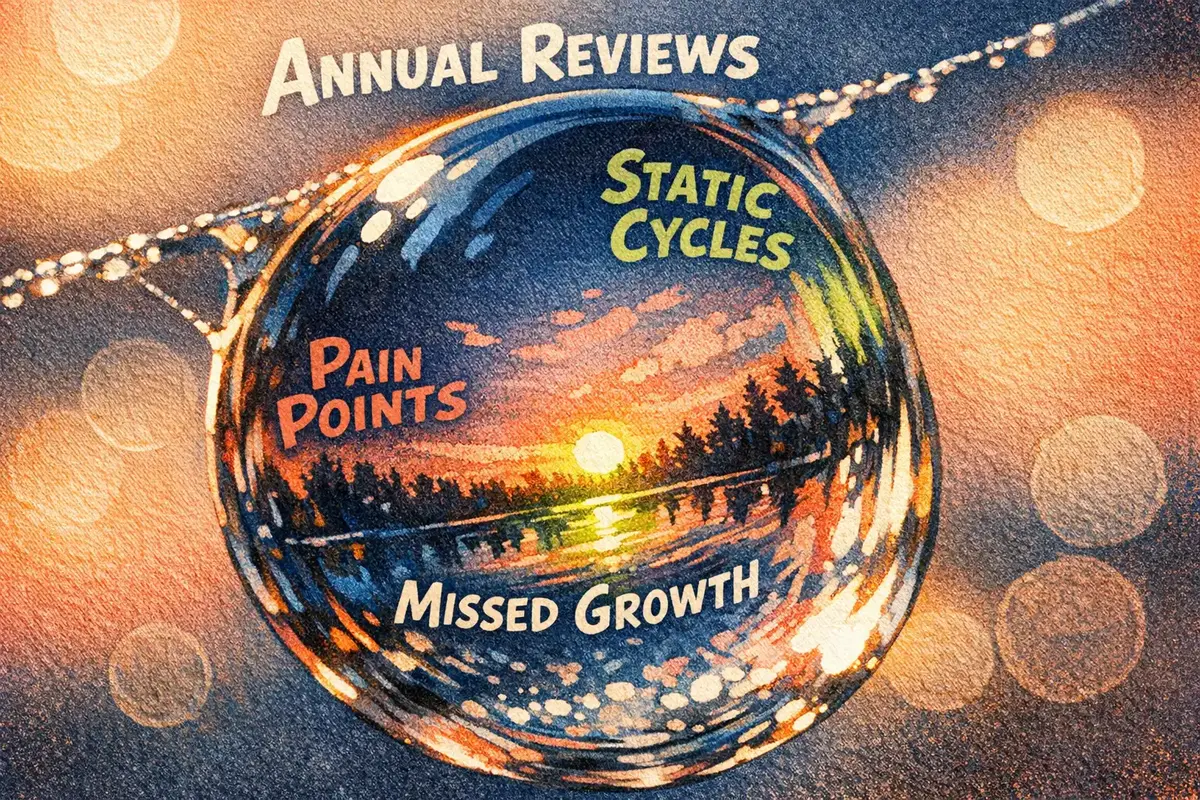
Here’s the thing: annual reviews are often too little, too late. By the time feedback is delivered, opportunities for course correction or skill-building have passed. Employees are left guessing about expectations, and managers struggle to recall specifics from months prior. It’s no wonder that 61% of HR professionals say fewer than half of their managers effectively address underperformance or areas for improvement among direct reports (SHRM, 2025).
What’s driving this breakdown? Two core issues stand out:
- Insufficient preparation: 43% of HR professionals report managers aren’t prepared to conduct effective reviews.
- Lack of data-driven insights: 60% say managers don’t have access to the right data to inform evaluations (SHRM, 2025).
These aren’t just HR headaches—they’re barriers to building high-performing, engaged teams.
What Is AI Coaching for Continuous Performance Conversations?
AI coaching refers to the use of artificial intelligence to provide on-demand, personalized coaching and feedback to employees and managers. Rather than waiting for a scheduled session or annual review, team members can access guidance, ask questions, and receive developmental support whenever challenges or opportunities arise. For a deeper look at how AI coaching works in practice, see AI coaching.
But what makes this approach different from traditional coaching or performance management tools?
- 24/7 Availability: AI coaches are always on, ready to support employees at the moment of need—not just during quarterly check-ins.
- Personalization at Scale: AI can tailor feedback and development plans to each individual’s skills, goals, and performance gaps, meeting the rising expectation for personalized growth opportunities (McKinsey, 2021).
- Real-Time Data and Insights: AI systems can synthesize performance data, behavioral signals, and feedback trends, giving managers and employees actionable insights that static review forms simply can’t.
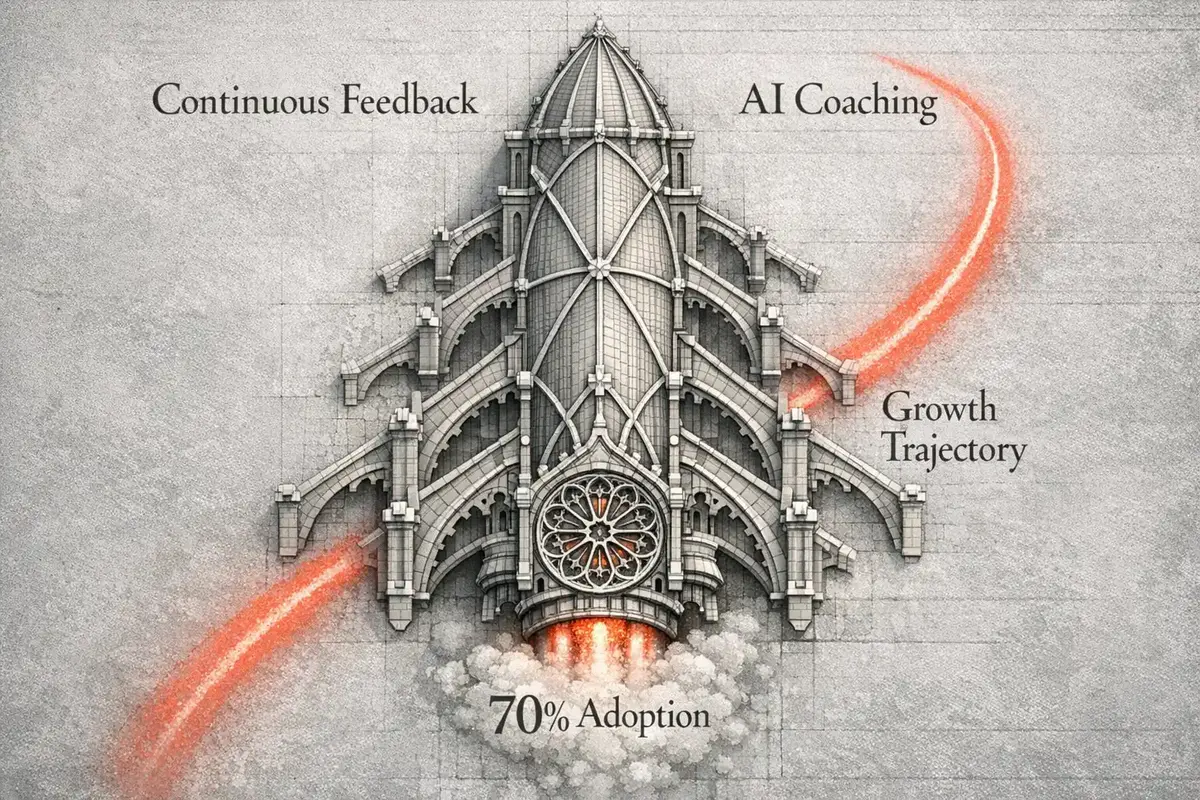
This shift isn’t just theoretical. Nearly half of organizations using AI tools for performance management (46%) already leverage them to facilitate employee goal setting (SHRM, 2024). And 70% of talent management executives expect that managers and leaders will increasingly use AI in developing performance reviews over the next year (SHRM, 2025).
How Does AI Enable Continuous Feedback and Development?
Most organizations still treat feedback as a periodic event. But imagine if feedback was as natural and ongoing as the work itself. That’s what AI coaching makes possible.
The Mechanics of Continuous Feedback
With AI-powered platforms, employees and managers can:
- Request feedback or coaching anytime, not just during formal cycles
- Set and track goals dynamically, adjusting as priorities shift
- Receive reminders and nudges to reflect, check in, or celebrate progress
This creates a living, breathing feedback loop—one that adapts to the pace of modern work. For a practical breakdown of how this works, explore the continuous feedback model.
The Human-AI Partnership
Most teams assume AI is here to replace the human touch. But research and practice suggest the real power lies in partnership. AI can handle the heavy lifting—data analysis, pattern recognition, unbiased reminders—freeing up managers to focus on empathy, context, and the nuances of human motivation.
The implication? Rather than making performance management more robotic, AI can actually make it more human—by giving people the tools and time to focus on meaningful conversations, not paperwork.
Manager Enablement: Bridging the Data Gap
Here’s a perspective shift: 60% of HR professionals say managers lack data-driven insights for reviews (SHRM, 2025). AI coaching can fill this gap—if, and only if, managers are trained to interpret and act on AI-generated insights. This isn’t about handing over decisions to algorithms; it’s about equipping managers with better information and frameworks for real-time coaching.
What Frameworks and Standards Guide Ethical AI Coaching?
With the rise of AI in performance management, new questions emerge: How do we ensure fairness? What about privacy and trust? This is where established frameworks come into play.
The ICF Six-Domain Framework
The International Coaching Federation (ICF) offers a comprehensive framework for AI coaching, organized into six domains:
- Foundation (Ethics): Ensuring AI systems operate with integrity and respect for human dignity
- Co-Creating the Relationship (Trust): Building confidence in AI as a reliable, transparent partner
- Communicating Effectively: Enabling clear, context-sensitive dialogue between AI, managers, and employees
- Cultivating Learning and Growth: Supporting ongoing development and reflection
- Assurance and Testing: Regularly evaluating AI systems for accuracy and fairness
- Technical Factors: Addressing privacy, security, and data protection
“The ICF AI Coaching Standards framework is organized into six domains: Foundation (ethics), Co-Creating the Relationship (trust), Communicating Effectively, Cultivating Learning and Growth, Assurance and Testing, and Technical Factors (privacy, security).” (ICF, 2024)
For organizations looking to implement AI coaching, these domains serve as a checklist for evaluating vendors, designing workflows, and training managers. For more on structured approaches, see AI coaching frameworks.
Auditing and Bias Mitigation
Ethical AI isn’t a “set it and forget it” proposition. Regular audits—testing for bias, transparency, and unintended consequences—are essential. Industry evidence suggests that organizations blending human oversight with AI-driven recommendations are better positioned to catch issues early and maintain trust. For practical approaches to this challenge, explore AI bias mitigation.
How Can Managers and Employees Use AI for Feedback in Daily Workflows?
Let’s get practical. The real challenge isn’t just deploying AI—it’s weaving it into the daily fabric of work so that feedback and coaching become habits, not events.
Scripts and Scenarios for Difficult Conversations
Most managers dread tough feedback conversations. AI can help by providing scenario-based scripts, prompts, and even role-play exercises. Imagine a manager preparing to address a recurring performance issue: the AI coach can offer language suggestions, highlight potential bias, and guide the manager through a psychologically safe approach.
For example:
- AI Prompt: “Would you like a script for discussing missed deadlines with empathy and clarity?”
- Manager Response: “Yes, and help me avoid sounding accusatory.”
- AI Guidance: “Try opening with, ‘I’ve noticed a few deadlines have slipped recently. Can we talk about what’s getting in the way and how I can support you?’”
This isn’t about replacing human judgment—it’s about scaffolding it, making difficult conversations less daunting and more constructive.
Real-Time Goal Setting and Progress Tracking
Nearly half of organizations deploying AI tools for performance management (46%) use them to help facilitate employee goal setting (SHRM, 2024). AI can prompt employees to set, update, and reflect on goals continuously, not just during review season. This keeps development top-of-mind and ensures that feedback is always relevant to current priorities.
Building a Feedback Culture
The most successful teams treat feedback as a shared responsibility. AI can nudge both managers and employees to check in regularly, celebrate wins, and address challenges early. Over time, this builds a culture where learning and growth are part of the everyday workflow—not a once-a-year event. For insights on empowering managers at every level, see manager training.
What Are the Benefits and Risks of AI Coaching for Performance Management?
The Upside: Personalization, Speed, and Scale
- Personalized Development: 71% of employees expect development opportunities tailored to their unique skills and career aspirations (McKinsey, 2021). AI coaching can deliver this at scale, something even the best human-only systems struggle to achieve.
- Proactive Support: With 24/7 access, employees no longer have to wait for scheduled reviews to get help or feedback.
- Manager Enablement: AI fills the data gap, providing managers with actionable insights and reducing the burden of manual prep.
The Risks: Bias, Over-Reliance, and Privacy
But let’s not gloss over the pitfalls. AI systems can inherit or amplify existing biases if not carefully designed and monitored. Over-reliance on AI can also diminish the human elements of coaching—empathy, intuition, and context. Privacy and data security are ongoing concerns, especially as more sensitive performance data is collected and analyzed.
The implication? Organizations must invest in robust frameworks, regular audits, and ongoing manager training to ensure AI coaching is both effective and ethical.
How Do You Measure the Impact of AI Coaching on Performance and Engagement?
Most organizations want to know: does this actually work? Measuring the impact of AI coaching requires a blend of qualitative and quantitative approaches.
Key Metrics to Track
- Engagement Scores: Are employees more engaged and motivated?
- Goal Achievement Rates: Are more goals being set, tracked, and achieved?
- Turnover and Retention: Are attrition rates improving?
- Manager Effectiveness: Are managers delivering more timely, actionable feedback?
- Business Outcomes: Are revenue growth and productivity increasing?
Remember, organizations that focus on performance are 4.2 times more likely to outperform peers, with 30% higher revenue growth and 5% lower attrition (McKinsey, 2023).
For a deeper dive into measuring ROI and impact, see measuring impact.
Auditing for Fairness and Transparency
Drawing on TII’s two-decade integral methodology, leading organizations regularly audit their AI coaching systems for fairness, transparency, and unintended consequences. This includes:
- Reviewing feedback patterns for bias
- Surveying employees on their experience with AI guidance
- Testing AI recommendations for consistency across demographics
This isn’t just about compliance—it’s about building trust and ensuring that AI coaching delivers on its promise of equitable, meaningful development.
What’s the Stepwise Path to Moving Beyond Annual Reviews?
So, how do you actually make the shift from annual reviews to continuous, AI-powered performance conversations? Here’s a practical roadmap:
- Assess Organizational Readiness: Audit current feedback culture, technology infrastructure, and manager capabilities.
- Select Standards-Aligned AI Tools: Use frameworks like the ICF’s six domains to evaluate vendors and solutions.
- Pilot with a Willing Team: Start small—choose a team open to experimenting with continuous feedback and AI coaching.
- Train Managers and Employees: Provide hands-on training, scripts, and scenario-based learning to build confidence.
- Integrate with Daily Workflows: Embed AI coaching into existing tools and routines, making it easy to access and use.
- Audit and Iterate: Regularly review outcomes, gather feedback, and refine processes to ensure fairness and effectiveness.
- Scale Across the Organization: Once proven, expand to more teams and functions, adapting for local cultures and needs.
This journey isn’t linear, and there will be bumps along the way. But by blending research-backed frameworks, robust training, and ongoing auditing, organizations can move from static reviews to a culture of continuous growth.
FAQ: AI Coaching for Continuous Performance Conversations
How is AI coaching different from traditional coaching?
AI coaching offers on-demand, personalized guidance using artificial intelligence, making expert support available 24/7. Unlike traditional coaching, which relies on scheduled sessions and human availability, AI coaching can deliver real-time feedback, track progress, and adapt to individual needs at scale. This enables more frequent, actionable conversations that fit the pace of modern work.
What are the main risks of using AI in performance management?
Key risks include potential bias in AI-generated feedback, over-reliance on technology at the expense of human judgment, and privacy concerns related to sensitive performance data. Mitigating these risks requires regular audits, transparent algorithms, and clear guidelines for human-AI collaboration, as outlined in frameworks like the ICF’s six domains.
Can AI coaching replace human managers or coaches?
AI coaching is designed to augment—not replace—human managers and coaches. It handles data analysis, reminders, and unbiased feedback, freeing up people to focus on empathy, context, and relationship-building. The most effective systems blend AI and human insight to create a balanced, supportive environment.
How do organizations ensure AI coaching is ethical and fair?
Ethical AI coaching relies on established standards, such as the ICF’s six-domain framework, which covers ethics, trust, communication, growth, assurance, and technical factors. Regular audits, bias testing, and transparent communication with employees help ensure fairness and build trust in AI-powered systems.
What training do managers need to use AI coaching effectively?
Managers need training on interpreting AI-generated insights, having psychologically safe feedback conversations, and integrating AI tools into daily workflows. Scenario-based scripts, hands-on practice, and ongoing support are essential to build confidence and maximize the value of AI coaching.
How can we measure the ROI of continuous, AI-powered feedback?
Organizations can track metrics such as engagement scores, goal achievement rates, retention, manager effectiveness, and business outcomes like revenue growth. Comparing these metrics before and after implementing AI coaching provides a clear picture of its impact on performance and culture.
Is AI coaching suitable for all types of organizations?
AI coaching can benefit organizations of all sizes and industries, especially those seeking scalable, personalized development solutions. However, success depends on readiness for change, commitment to ethical standards, and investment in training and integration.
Continue Your Leadership Journey
Moving beyond annual reviews isn’t just about adopting new technology—it’s about reimagining how we support growth, learning, and performance every day. By blending always-on AI coaching with human insight, organizations can create a culture where feedback is continuous, development is personalized, and everyone has the tools to thrive. The future of performance management is proactive, developmental, and—most importantly—human at its core.