
If you’ve ever tried to roll out a coaching program across multiple departments, you’ve probably noticed the same friction points cropping up again and again: Sales wants sharper negotiation skills, HR needs conflict resolution, and Operations is focused on process optimization. Yet, most digital coaching solutions offer a single, generic pathway—leaving HR and OD leaders struggling to bridge the gap between company-wide initiatives and the nuanced needs of each team. Customizing AI coaching journeys is about closing that gap: it empowers organizations to tailor development paths to the unique competency frameworks, strategic goals, and real-world challenges of every department or role. By the end of this article, you’ll understand how to leverage AI Coach System’s flexibility to design and implement coaching programs that truly fit your teams—driving engagement, performance, and measurable business outcomes.
Why “One-Size-Fits-All” Coaching Fails Modern Organizations
Most teams assume that a standardized coaching program will be “good enough” for everyone. The reality is that what works for one department can fall flat for another. Sales teams thrive on real-time feedback and scenario-based practice, while finance leaders may need structured decision-making frameworks and risk analysis tools. When we ignore these distinctions, coaching becomes a box-ticking exercise—engagement drops, and the business impact is minimal.
“Organizations using AI-personalized learning achieved about a 30% increase in engagement levels compared to traditional methods.” (McKinsey, 2024)
This means that tailoring coaching journeys to departmental needs isn’t just a “nice-to-have”—it’s a strategic imperative for organizations aiming to unlock true potential and ROI.
What Is AI Coaching and How Does It Enable Department-Specific Personalization?
At its core, AI coaching uses artificial intelligence to deliver personalized, on-demand coaching experiences. Unlike traditional coaching, which relies on scheduled sessions with a human coach, AI coaching platforms like AI Coach System provide 24/7 access to guidance, feedback, and learning resources—adapting in real time to each user’s context.
But here’s the thing: the real power of AI coaching lies in its ability to absorb and act on department-specific data. By feeding the system with information such as competency frameworks, role profiles, business objectives, and even current challenges, HR and OD leaders can create bespoke coaching journeys for every function.
- For sales, this might mean modules on advanced negotiation and objection handling.
- For HR, it could focus on conflict mediation and change management.
- For operations, the emphasis might be on process improvement and cross-functional collaboration.
The result? Coaching that feels relevant, actionable, and aligned with what each team actually needs.
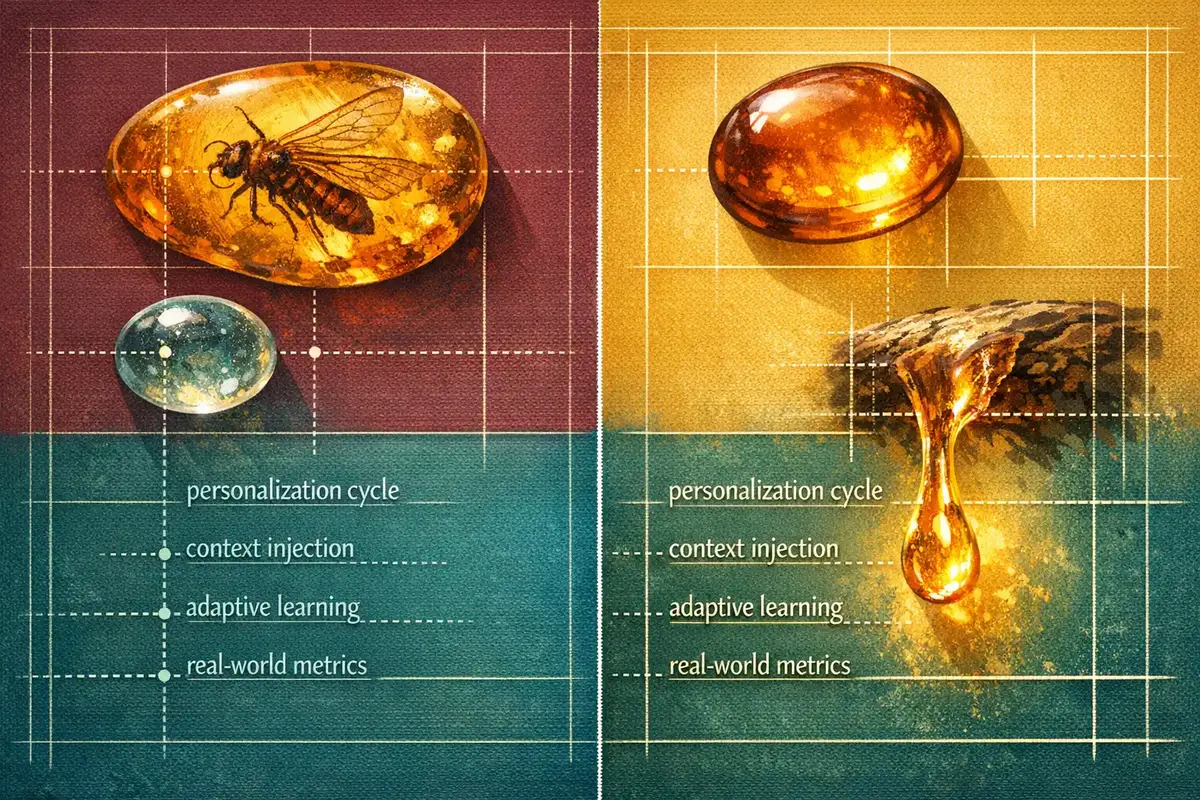
The Personalization Cycle: How AI Customizes Coaching Journeys
Let’s break down the Personalization Cycle—the process that takes generic coaching and transforms it into a department-specific growth engine:
- Needs Analysis: The system gathers data on departmental goals, competency models, and skill gaps.
- Context Injection: HR or OD leaders “inject” relevant context—think OKRs, team values, or recent business challenges—into the AI platform.
- Adaptive Pathing: The AI designs a learning and coaching journey tailored to the individual’s role, department, and objectives.
- Real-Time Coaching: Employees receive instant, scenario-based feedback and recommendations, adapting as their needs evolve.
- Content Recommendation: The system curates resources and exercises that align with both the individual’s and the department’s development priorities.
This cycle isn’t static. As business needs shift, so do the coaching journeys—ensuring that development stays aligned with strategy.
How Do You Map Department Competencies to AI Coaching Journeys?
Most HR leaders start with a company-wide competency model and try to “fit” everyone into it. But research consistently demonstrates that top-performing organizations go the other way: they map each department’s unique competencies to specific coaching objectives.
Here’s a practical framework for doing just that:
- Identify Departmental Competencies: Gather the critical skills, behaviors, and mindsets required for success in each function. For example, sales may prioritize persuasion and resilience, while IT values analytical thinking and project management.
- Translate Competencies into Coaching Objectives: Define what “good” looks like for each competency. What does effective communication mean for customer service versus finance?
- Contextualize with Real-World Scenarios: Feed the AI system with examples, case studies, and challenges that are relevant to each department.
- Set Measurable Outcomes: Link coaching objectives to business metrics—like deal closure rates for sales or process cycle time for operations.
This mapping process creates a blueprint for the AI to deliver coaching that’s not just personalized, but strategically aligned.
For a deeper look at how coaching frameworks can support talent development and succession planning, explore this resource on AI coaching solutions for talent development.
What Data Is Needed to Customize AI Coaching for Your Team?
Customizing AI coaching journeys hinges on the quality and relevance of the data you provide. But what exactly should you feed into the system?
- Competency Frameworks: The foundational skills and behaviors for each department or role.
- Performance Data: KPIs, 360 feedback, and recent performance reviews.
- Business Objectives: Departmental OKRs, strategic priorities, and current initiatives.
- Cultural Context: Values, norms, and any unique team dynamics.
- Learning Preferences: Insights from previous training programs or engagement surveys.
Most teams assume that more data is always better. But research shows that targeted, high-quality data—not just volume—drives the best outcomes. Overloading the system with irrelevant information can dilute the personalization effect.
This is where the concept of context injection comes into play. By selectively injecting only the most relevant data, HR and OD leaders can ensure that the AI coaching journey remains focused, actionable, and aligned with real business needs.
How Does Coaching Personalization Work in Practice?
Coaching personalization is not just about tailoring content; it’s about adapting the entire coaching experience to the learner’s context. AI Coach System, for example, uses advanced algorithms to analyze department-specific data and create individualized coaching paths that evolve as the user progresses.
Let’s consider a practical scenario:
- A new sales manager is onboarded. The AI system reviews the sales competency model, recent team performance, and the manager’s own assessment.
- The coaching journey starts with modules on team motivation and pipeline management, then adapts in real time based on feedback and performance data.
- If the manager struggles with negotiation, the AI shifts focus, offering targeted exercises and scenario-based practice.
This dynamic, adaptive approach is what sets AI-powered coaching apart from static e-learning or generic training. For a technical breakdown of how core coaching concepts translate into AI algorithms, see this guide on coaching personalization.
What Are the Measurable Business Outcomes of Personalized AI Coaching?
Most organizations assume that coaching is a “soft” investment—hard to measure, easy to cut. But the data tells a different story. Personalized, targeted training can yield a 17% boost in productivity and 21% higher profitability compared to generic instruction (TechClass, 2026).
SATO Holdings cut average onboarding time by 50% and reduced annual staff turnover from around 30% to under 10% after implementing AI-personalized training. (TechClass, 2026)
Brooks Automation saw course completion rates rise by 40% and training time for engineers drop by nearly a third with AI-personalized learning (TechClass, 2026).
These aren’t isolated wins—they point to a broader trend: when coaching is tailored to the real-world needs of each department, organizations see faster onboarding, lower turnover, higher engagement, and stronger business results.
How Can HR and OD Leaders Implement Department-Specific AI Coaching at Scale?
Rolling out customized AI coaching journeys across an enterprise can feel daunting. Where do you start? How do you avoid common pitfalls? Here’s a stepwise approach grounded in best practices and real-world outcomes:
- Stakeholder Alignment: Engage department heads early to define coaching goals and success metrics.
- Competency Mapping: Use the framework above to translate each department’s needs into coaching objectives.
- Data Collection: Gather only the most relevant data for context injection—avoid “data bloat.”
- Pilot Programs: Start with a single department or role, measure outcomes, and iterate.
- Integration: Connect the AI coaching platform with your existing HRIS, LMS, or performance management systems for seamless data flow. For technical integration strategies, see this guide on integrating AI coaching with LMS/LXP platforms.
- Scalable Rollout: Expand to other departments, using lessons learned from pilots to refine your approach.
- Continuous Feedback: Monitor engagement, collect feedback, and adjust coaching journeys as business needs evolve.
For a detailed overview of the foundational process and methodology behind AI coaching, review this explanation of how AI coaching works.
What Are the Ethical and Privacy Considerations in Customizing AI Coaching?
As we move toward greater personalization, new questions arise: How do we protect employee data? How do we ensure fairness and avoid bias in AI-driven coaching? The International Coaching Federation (ICF) has established global standards for ethical AI use in coaching, including frameworks for privacy, trust, and bias mitigation (International Coaching Federation, 2024).
Practical steps for HR and OD leaders include:
- Transparency: Clearly communicate how data will be used and who has access.
- Consent: Obtain explicit consent for collecting and using personal performance data.
- Bias Audits: Regularly review AI outputs for patterns of bias or unintended consequences.
- Human Oversight: Blend AI recommendations with human judgment, especially for sensitive or high-stakes topics.
Most teams assume that AI will “automatically” be fair and unbiased. But research and standards bodies stress the importance of ongoing monitoring and human-AI partnership to ensure ethical, inclusive outcomes.
How Do You Measure the ROI of Customized AI Coaching?
Measuring the impact of department-specific AI coaching goes beyond simple completion rates. Here’s what leading organizations track:
- Engagement Metrics: Usage frequency, session duration, and feedback scores.
- Skill Acquisition: Pre- and post-coaching assessments tied to departmental competencies.
- Business Outcomes: Changes in KPIs like sales conversion, time to productivity, or employee retention.
- Employee Sentiment: Surveys on coaching relevance, satisfaction, and perceived value.
“46% of organizations using AI in performance management apply it to facilitate employee goal setting.” (SHRM, 2026)
By linking coaching outcomes to real business metrics, HR and OD leaders can demonstrate the strategic value of customized AI coaching—securing ongoing investment and executive buy-in.
For guidance on strategic adoption and implementation of enterprise AI coaching, including best practices for achieving ROI, see this resource on AI coaching implementation.
What Are the Limitations and Future Directions of Department-Specific AI Coaching?
While AI coaching platforms have made significant strides, there are still limitations to consider:
- Depth of Specialization: Some highly technical or niche roles may require human expertise that AI cannot yet replicate.
- Cultural Nuance: AI systems are improving, but may still miss subtle cultural or regional differences without careful context injection.
- Change Management: Even the best-designed AI journeys need strong communication and support to drive adoption.
Looking ahead, the future of customized AI coaching will likely involve closer integration with business systems, real-time adaptation to changing needs, and more sophisticated human-AI partnership models. Drawing on TII’s two-decade integral methodology, platforms like AI Coach System are already pushing the boundaries of what’s possible—making department-specific coaching more accessible, scalable, and impactful than ever.
FAQ: Customizing AI Coaching Journeys
How does AI coaching differ from traditional coaching for specific departments?
AI coaching delivers on-demand, personalized guidance tailored to each department’s unique needs, using data-driven insights and adaptive learning paths. Unlike traditional coaching, which may be limited by human availability and generic content, AI coaching can scale across teams and roles, continuously updating to reflect changing business objectives and competency frameworks.
What is “context injection” and why is it important?
Context injection is the process of feeding department-specific data—such as competencies, goals, and real-world scenarios—into the AI coaching system. This ensures that the coaching journey is relevant and actionable for each team, rather than relying on generic advice. Effective context injection is the key to unlocking true personalization and business alignment.
Can AI coaching address sensitive topics or complex skills?
AI coaching is highly effective for many skills and scenarios, but some sensitive or deeply nuanced topics may still benefit from human coaching. The best approach is often a blended model, where AI handles scalable, day-to-day development and human coaches support areas that require empathy, judgment, or deep expertise.
How do we ensure privacy and data security in AI coaching?
Follow established standards such as those from the International Coaching Federation, which recommend transparency, explicit consent, regular bias audits, and human oversight. Choose AI coaching platforms with robust data protection measures and clear communication about how employee data is used and stored.
What business outcomes can we expect from customized AI coaching?
Organizations that implement personalized AI coaching see measurable improvements in productivity, engagement, onboarding speed, and retention. For example, some companies have reported up to a 17% productivity boost and significant reductions in staff turnover after adopting AI-personalized training.
How can we integrate AI coaching with our existing HR or learning platforms?
Most leading AI coaching platforms offer integration capabilities with HRIS, LMS, or performance management systems. This allows for seamless data flow, automated progress tracking, and unified reporting—making it easier to scale department-specific coaching across the organization.
What steps should we take to pilot and scale department-specific AI coaching?
Start by aligning with department heads to define goals, map competencies, and gather relevant data. Launch a pilot in one department, measure outcomes, and iterate based on feedback. Once proven, expand to other teams, leveraging lessons learned to refine your approach and maximize impact.
Continue Your Leadership Journey
Customizing AI coaching journeys for department-specific needs isn’t just about technology—it’s about rethinking how we develop people in a fast-changing world. By mapping competencies, injecting real context, and measuring what matters, HR and OD leaders can create coaching programs that drive real business results. The future belongs to organizations that treat personalization not as a buzzword, but as a strategic advantage—empowering every team to reach its full potential.